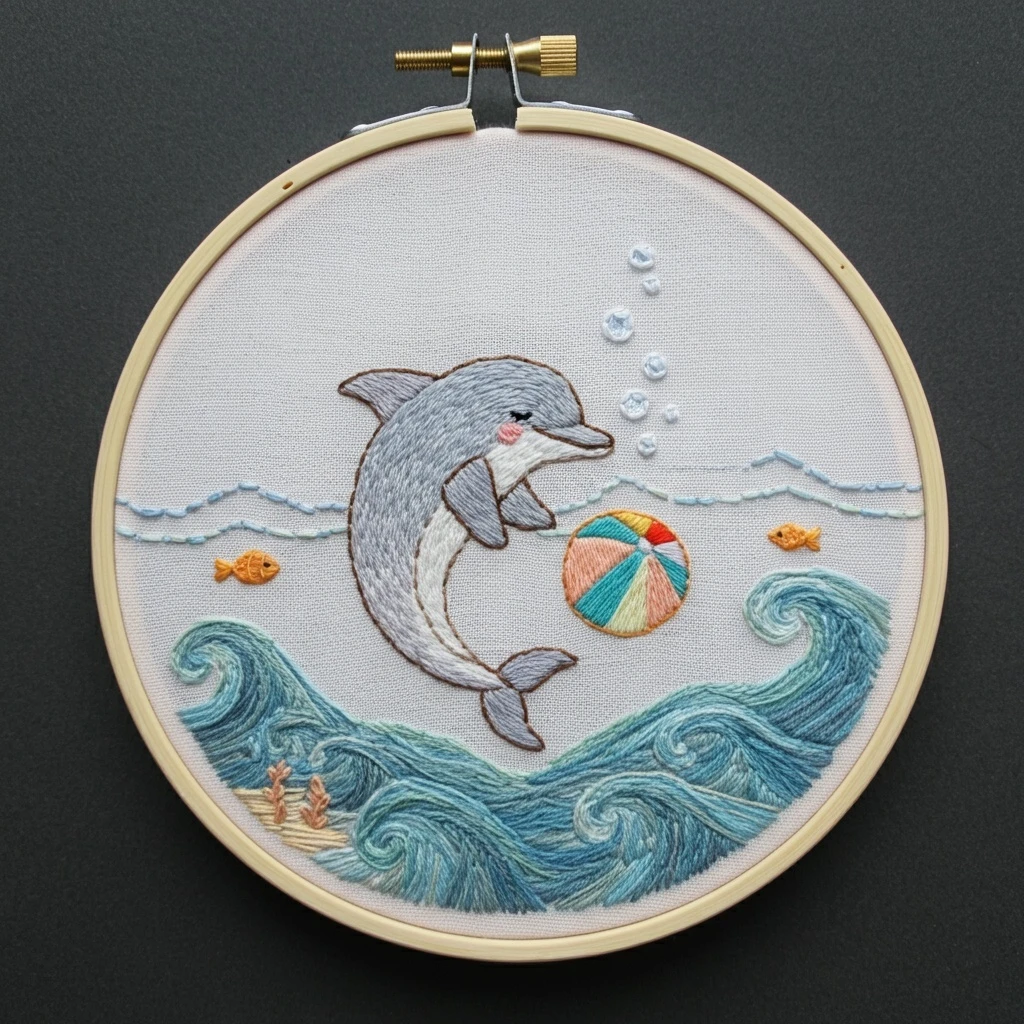

Playful Dolphin
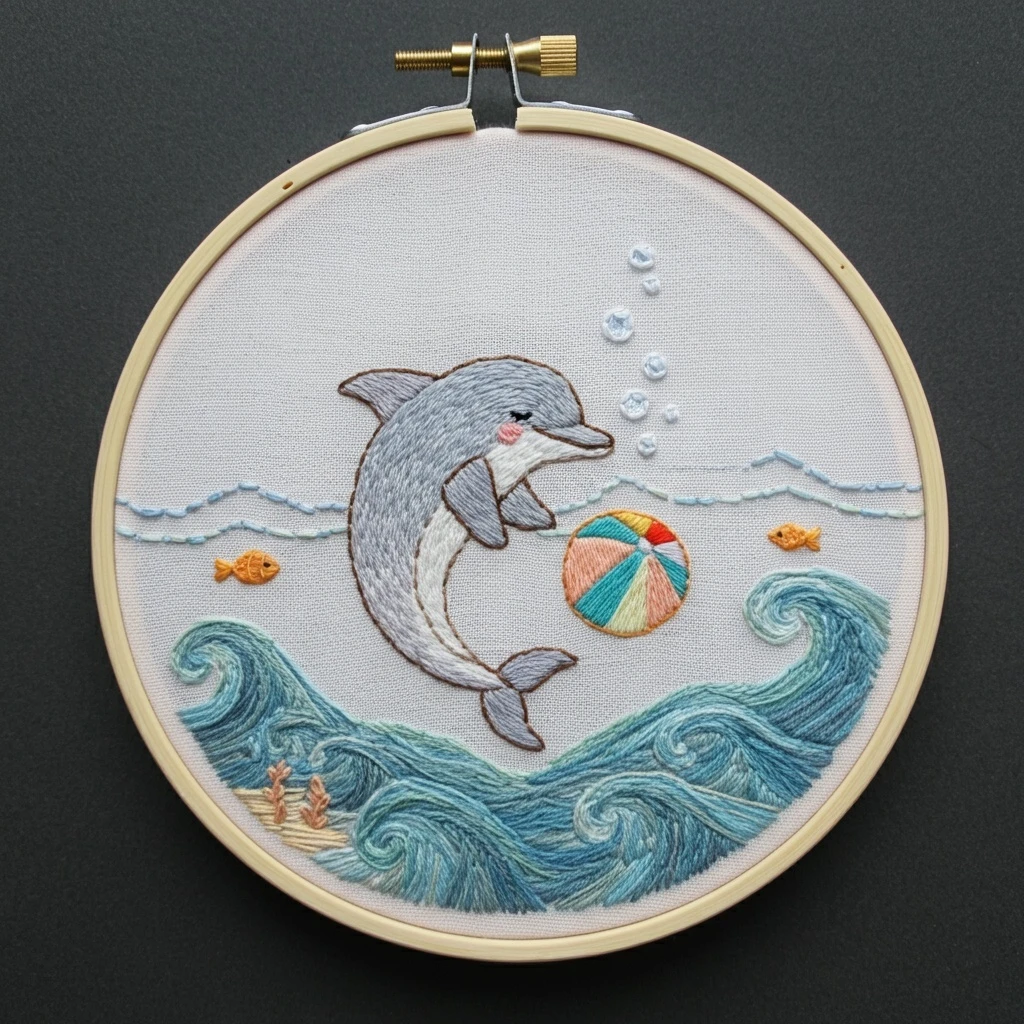
A cheerful hoop scene with a softly shaded grey dolphin, curling teal waves, tiny orange fish, pale bubbles, and a candy-bright beach ball. The stitching mood is breezy and beginner-friendly: flowing long-and-short texture, clean brown outlines, and bright accent colors used sparingly for sparkle.
Design color read
The design balances cool ocean blues with warm novelty accents. The dolphin is not flat grey; it shifts between blue-grey, pearl grey, white belly highlights, and a warm brown outline. The wave area carries the most texture, using layered teal, aqua, blue-green, and pale foam strokes that follow the curl of each wave.
Suggested DMC floss palette
These DMC choices aim for the pastel, stitched look in the reference rather than a high-contrast cartoon finish. Use the darkest colors mostly for outlines, wave depth, and tiny details.
Main dolphin body fill; ideal for soft satin or long-and-short base layers.
Light dolphin highlights, bubbles, and softened transitions on the belly edge.
Belly, eye sparkle, bubble glints, and a few wave-foam stitches.
Fine outline around dolphin, fins, tail, ball edges, fish eyes, and selected wave definition.
Upper water line, bubble shadows, and airy foam strokes around the wave crests.
Primary wave color; use in sweeping directional stitches across the wave bodies.
Wave undersides, curl shadows, and the deepest water movement near the base.
Pale foam and sea-glass highlights blended into waves and distant water lines.
Dolphin cheek blush and warm beach-ball sections; keep stitches small and smooth.
Beach-ball yellow panels and sunlit highlights on the tiny fish.
Fish bodies and the bright orange beach-ball wedge; use as a tiny focal pop.
Beach-ball teal panels and a few crisp wave accents where extra brightness is needed.
Stitch map by design element
Dolphin body
Use long-and-short stitch with 1–2 strands, following the arch from nose to tail. Keep strokes slightly curved so the body feels rounded.
Belly and fins
Use split stitch or satin stitch in pearl grey and winter white. Add a single darker grey line where fins tuck under the body.
Wave curls
Work stem stitch and long-and-short stitch in layered arcs. Let each row follow the spiral direction of the wave instead of stitching straight across.
Foam and waterline
Use whipped backstitch, tiny running stitches, or detached chain stitches in pale aqua and white for a dotted, light look.
Beach ball
Outline the circle first, then fill each wedge with short satin stitches that radiate from the center point.
Fish and bubbles
Fish can be tiny satin stitches with a backstitched tail. Bubbles look best as loose split-stitch circles with one white highlight stitch.
Thread-count and blending guidance
| Area | Strands | Blending idea | Practical note |
|---|---|---|---|
| Dolphin body | 1 strand for fine shading; 2 strands for faster fill | Alternate DMC 415 with 762, then add a few 3865 strokes on the belly. | Do not overpack stitches; a little fabric texture helps the dolphin stay soft. |
| Deep waves | 2 strands for base texture, 1 strand for foam details | Mix 597 and 3810 in the shadows; introduce 3811 and 955 near crests. | Change direction often to mimic rolling water and avoid a striped block. |
| Outlines | 1 strand | Use 838 for the warm brown cartoon-like edge; soften with 415 where needed. | Keep outlines even and light. Heavy outlines can overpower the pastel palette. |
| Beach ball accents | 2 strands | Pair 352, 744, 740, and 3846 in clean wedges; keep each color separate. | Stitch the ball after the dolphin so its edges stay crisp and bright. |
Order of stitching
- Transfer the main outlines lightly; avoid thick transfer marks under pale thread.
- Stitch distant water lines and bubbles first so they stay delicate.
- Fill the dolphin body, belly, fins, and tail before adding the brown outline.
- Build the waves from back to front, saving pale foam stitches for last.
- Finish with the beach ball, fish, cheek blush, eye, and tiny sparkle stitches.
Beginner-friendly tips
- Use a sharp embroidery needle for the dense wave areas and re-thread often to prevent fuzz.
- For smooth curves, make shorter stitches around tight turns and longer stitches on open wave sections.
- Keep the hoop drum-tight; loose fabric makes satin-filled fins and beach-ball wedges wobble.
- Use one strand for facial details, bubble rims, and outlines around small fish.
- Step back after each color family; the design should read light, airy, and playful.
Texture and finishing notes
The charm of this piece comes from contrast: the dolphin should look smooth and gentle, while the waves should look lively and brushed with motion.
Wave texture
Layer curved stitches in uneven lengths. Place darker turquoise in the lower troughs and tuck pale seafoam stitches along the inside of each curl. A few split-stitch spirals can suggest the rolling center of the wave without filling every gap.
Clean details
Use backstitch for the dolphin mouth and a tiny straight stitch for the closed eye. Work cheek blush with one or two small satin stitches in coral, not a large filled circle, so the expression stays sweet and subtle.