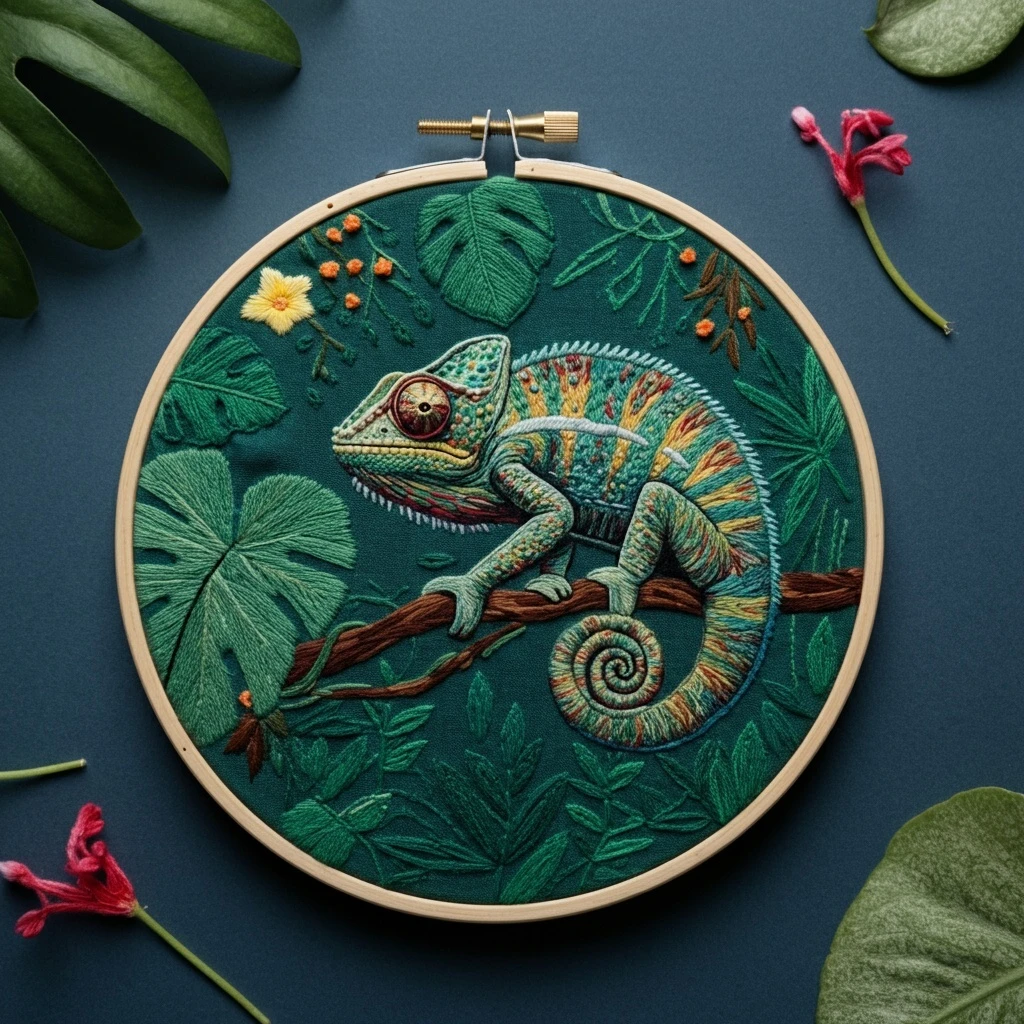

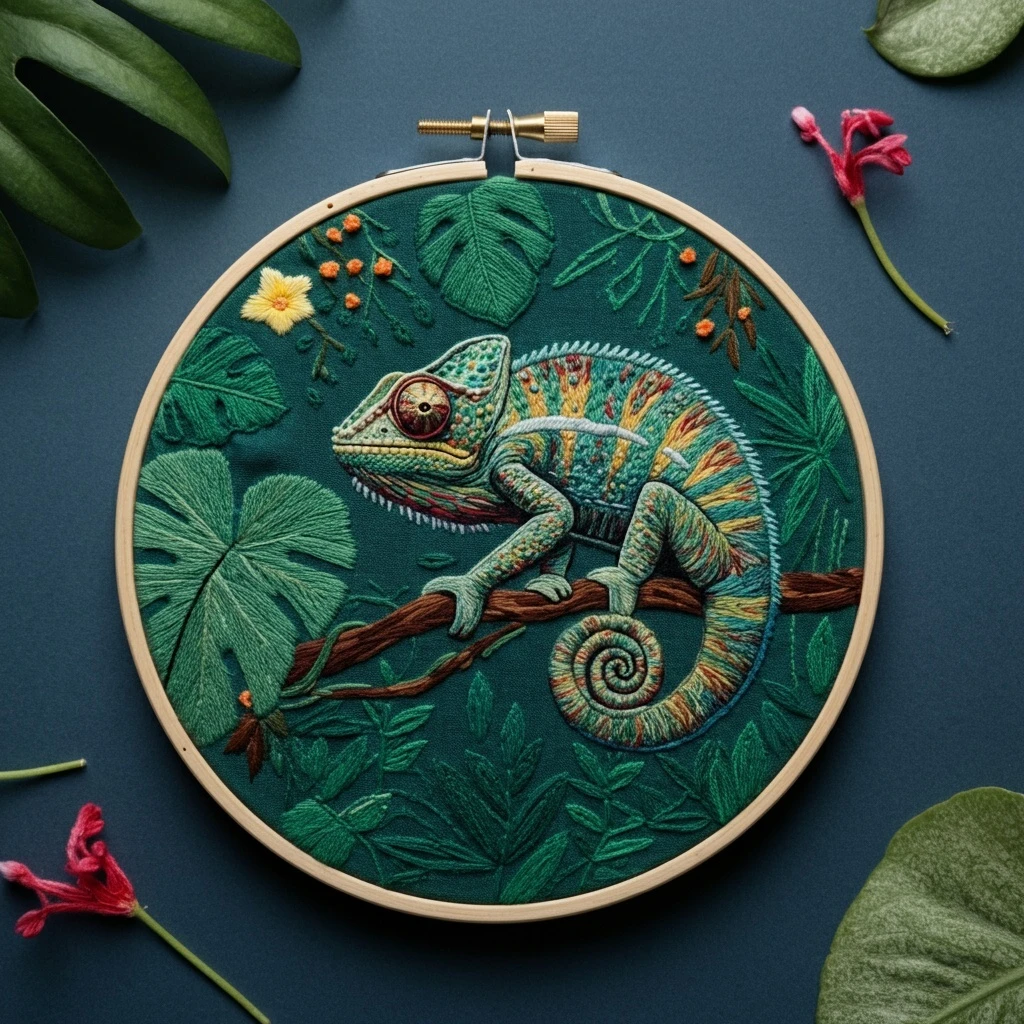
Chameleon in the Jungle
This jungle chameleon design calls for saturated greens, bright tropical accents, textured reptile skin, curling tail movement, gripping feet, leafy branches, and layered jungle foliage. The stitched version should feel lively and dimensional: a bright chameleon body, darker underside shadows, tiny scale-like texture, bold eye detail, branch bark contrast, and leaves that frame the animal without hiding its silhouette.
Polished DMC Color Palette
This palette combines jungle greens, lime highlights, teal shadows, warm yellow accents, bark browns, and small coral details. Keep the chameleon brighter than the foliage by using the lightest greens and yellows on the body, while reserving deeper greens for leaves and background depth.
Stitch Map by Design Element
Thread Count & Blending Guide
Fine details
Use 1 strand for eye detail, tiny scale dots, toe lines, leaf veins, bark marks, and final highlights. One strand keeps the reptile texture controlled and crisp.
Main fills
Use 2 strands for the chameleon body, tail, leaves, branch fills, and larger tropical accents. Two strands give enough color saturation for vivid jungle greens.
Raised texture
Use 2–3 strands for selected French-knot scale dots, flower centers, or raised leaf accents. Reserve three strands for foreground details only.
Shading, Outlining & Texture Suggestions
Chameleon dimension
- Keep the top ridge, face, and outer tail curve brightest.
- Use teal and dark green in the belly, leg bends, and tail inner curl.
- Follow the body contour with stitch direction so the animal looks rounded.
- Add scale texture last and only where it improves detail.
Jungle foliage
- Use deeper greens for background leaves and brighter greens near the chameleon.
- Vary leaf stitch direction to avoid a flat green mass.
- Use fishbone stitch on prominent leaves for a central vein and natural shape.
- Leave small gaps between leaves so the chameleon silhouette stays readable.
Branch texture
- Use brown shading under the feet to make the chameleon feel perched.
- Add short bark strokes rather than solid heavy outlines everywhere.
- Keep the branch simpler than the chameleon so it supports the focal subject.
- Use warm brown highlights only on the upper side of the branch.
Outlining approach
- Outline after filling so the body, tail, and feet remain crisp.
- Use 895, 699, or 3810 instead of black for most chameleon outlines.
- Use 801 for branch outlines and 3051/699-style greens for leaf outlines.
- Reserve very dark stitches for the eye, mouth, and deepest contact shadows.
Beginner-Friendly Stitching Order
- Transfer main shapes: mark the chameleon outline, eye, tail curl, branch, major leaves, and any large tropical flowers or spots. Save tiny scale dots for the end.
- Stitch the branch first: complete the perch so the feet and belly shadows have a clear grounding point.
- Fill the chameleon body: work from darker underside to brighter top ridge, following the body curve.
- Add tail, legs, and feet: keep toes delicate and add small contact shadows where feet grip the branch.
- Stitch leaves and flowers: build background foliage first, then foreground leaves and small coral or yellow accents.
- Finish with details: add eye catchlight, scale dots, leaf veins, final outlines, and tiny highlights last.
Practical Tips for a Clean Finish
Fabric & hoop
Warm cream, natural linen, or pale green-toned cotton-linen suits the jungle palette. Keep the hoop drum-tight so curved body stitches and leaf veins remain smooth.
Needle choice
Use a sharp embroidery needle size 7–9 for one- and two-strand stitching. For raised knots in scale or flower details, switch to a slightly larger needle to prevent tugging.
Managing bright greens
Use the brightest greens and yellows mostly on the chameleon, not the background, so the animal stays the focal point against the jungle foliage.
Preventing clutter
Stop adding scale dots before the body becomes too busy. A few well-placed texture stitches along the face, ridge, and tail are more effective than covering every area.