
DMC palette & stitching guide
Starlit Mountain and Lake
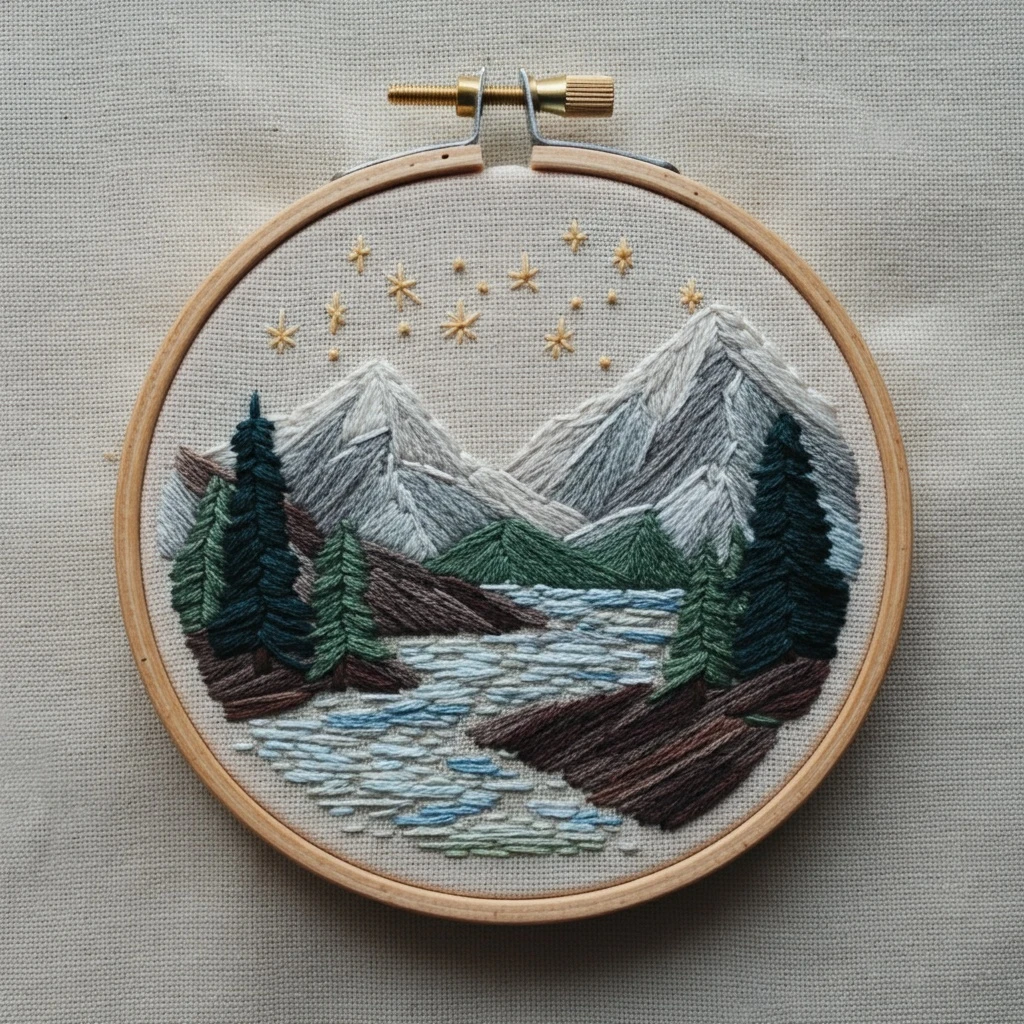
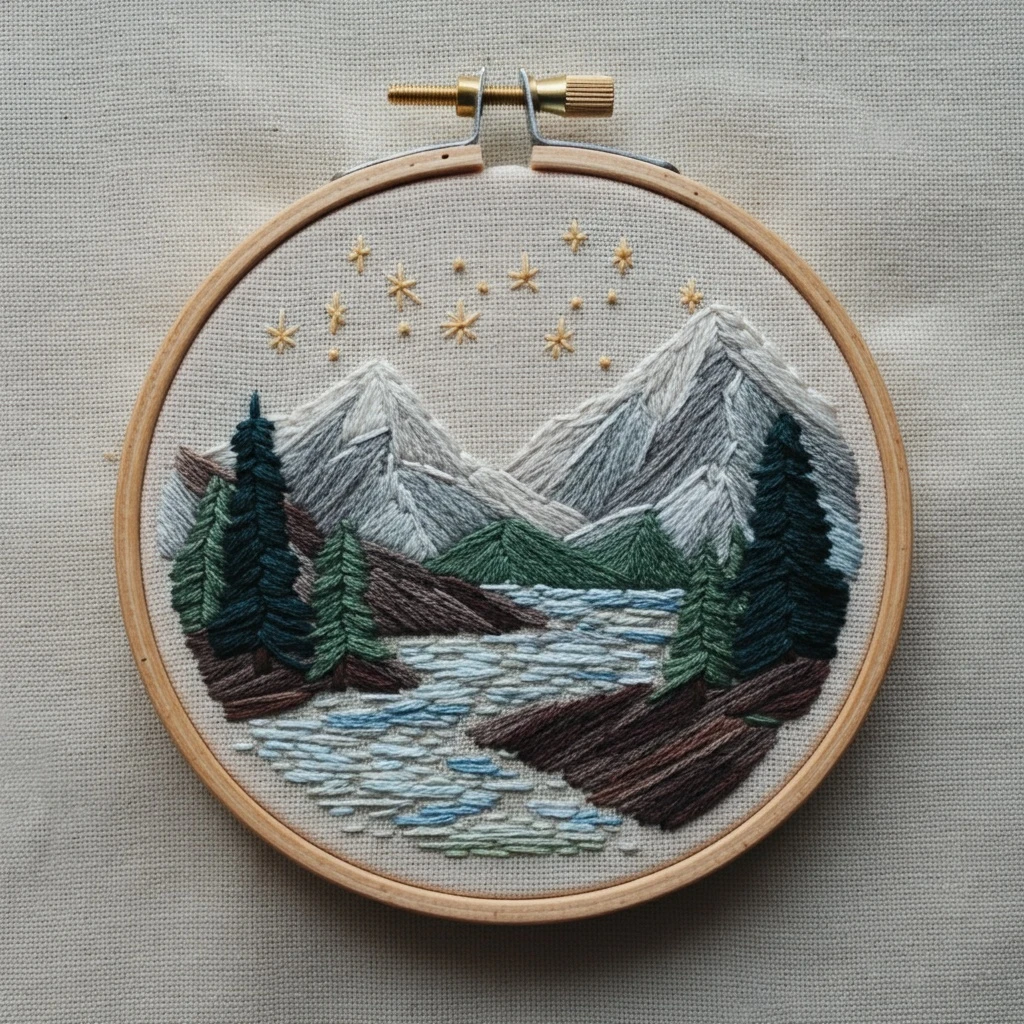
A calm alpine hoop with silver-gray mountains, deep evergreen trees, dark earth banks, reflective blue water, and tiny golden stars. The palette below keeps the design crisp and atmospheric while giving beginners clear choices for shading, texture, and thread count.
Suggested DMC Color Palette
The reference image is built from cool mineral grays, shadowy blue-greens, warm brown banks, soft lake blues, and small amber star accents. Use the lightest tones sparingly on ridge lines and water highlights so the darker pines and foreground slopes stay dramatic.
Snow White
Sharp snow caps, bright mountain ridge highlights, and the brightest lake sparkle stitches.
Pearl Gray
Soft upper mountain planes and misty transitions between white and darker granite.
Pewter Very Light
Mid-gray mountain strokes, distant tree haze, and cool reflections near the shore.
Pewter Gray Dark
Deep mountain creases, shaded rock faces, and occasional dark broken water lines.
Blue Green Very Dark
Main evergreen silhouettes, darkest pine centers, and strong foreground tree shadows.
Hunter Green Very Dark
Needle clusters, mid-tone pine branches, and darker grassy slopes below the mountains.
Blue Green Dark
Lighter evergreen tips, small trees, and cool green reflections in the lake foreground.
Black Brown
Deepest soil shadows, tree trunk bases, and the underside of banks for contrast.
Coffee Brown Ultra Dark
Layered hillside texture, slope direction lines, and warm shadows beside the water.
Peacock Blue
Clear lake ripples and brighter blue reflections near the lower center of the water.
Sky Blue Very Light
Pale water highlights, distant lake shimmer, and airy strokes between darker ripples.
Old Gold Light
Starbursts and tiny dot stars; use with one strand for delicate points of light.
Stitch Map by Design Area
Keep the stitch direction visible. This design looks best when the thread strokes mimic the natural movement of snow, branches, slopes, and water.
Thread Count, Blending & Shading
Blending Ideas
- Blend one strand 762 with one strand 168 for a soft granite mid-tone.
- Blend one strand 413 with one strand 168 for shadowed mountain gullies without a harsh black line.
- Blend one strand 747 with one strand 807 for watery blue-gray reflections.
- Blend one strand 500 with one strand 895 for dense pine branches that still show green depth.
Shading Guidance
- Reserve B5200 for the highest snow catches and the brightest water sparkle.
- Place the darkest 413 strokes under ridges, not everywhere, so the mountains remain luminous.
- Keep foreground trees darker than the distant hills to create a clear sense of depth.
- Add lake highlights after the banks are finished so the ripples can overlap cleanly.
Outlining & Texture Suggestions
Outlining Details
Use one strand of 413 for the most important mountain separations and one strand of 3371 at the base of the banks. Avoid outlining every stitch; instead, outline only where shapes overlap, such as tree against mountain or bank against water.
Natural Texture
Let individual stitches remain slightly uneven. The mountains should look striated, the pines should look feathery, and the lake should look broken and reflective rather than like a solid filled area.
Practical Embroidery Tips
Fabric & Hoop
A natural linen or oatmeal cotton works beautifully because it becomes the open night sky. Keep the fabric drum-tight; long satin stitches on mountains can pucker if the hoop loosens.
Needle & Tension
Use a size 7 or 8 embroidery needle for two strands. Smooth each long stitch before pulling it snug, and avoid over-tightening lake ripples so the surface stays flat.
Clean Color Changes
For the gray mountains, park nearby colors in separate needles if possible. This makes it easier to place alternating tones while preserving the directional rock texture.
Finishing Touches
After stitching, gently steam from the back over a towel. Do not press the star knots or pine branches flat; the raised texture gives the hoop its handcrafted depth.