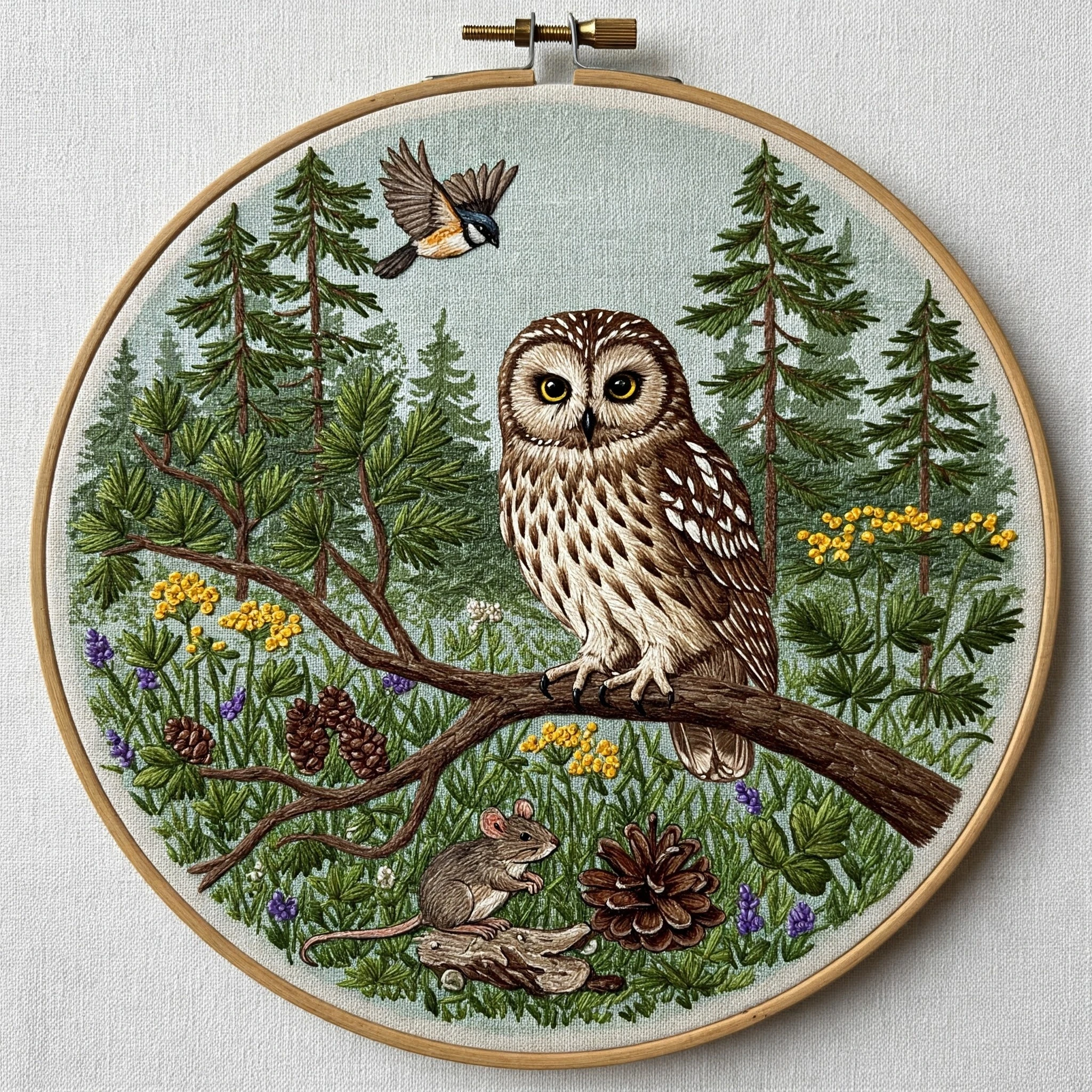


Forest Owl Wildlife
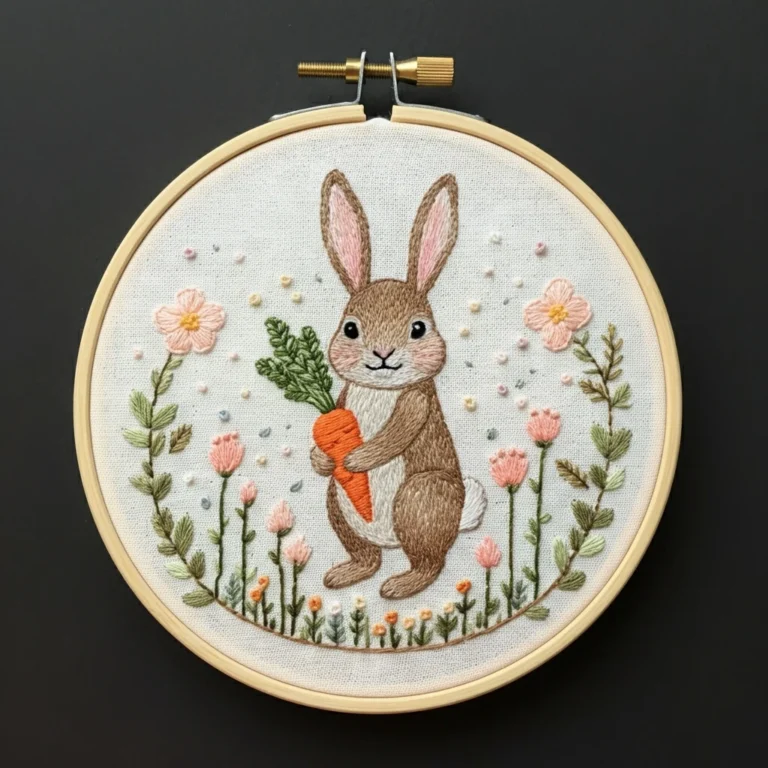
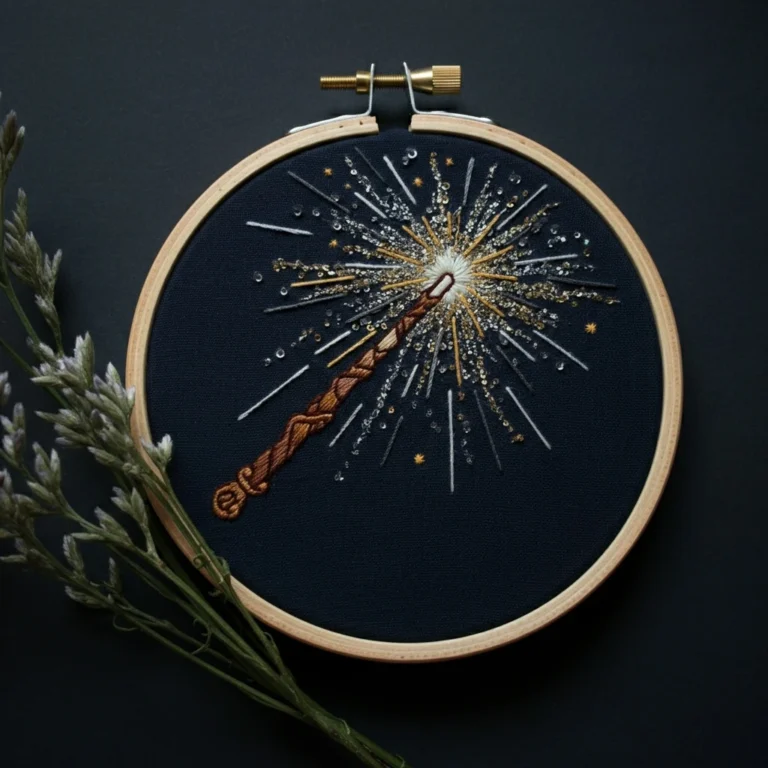
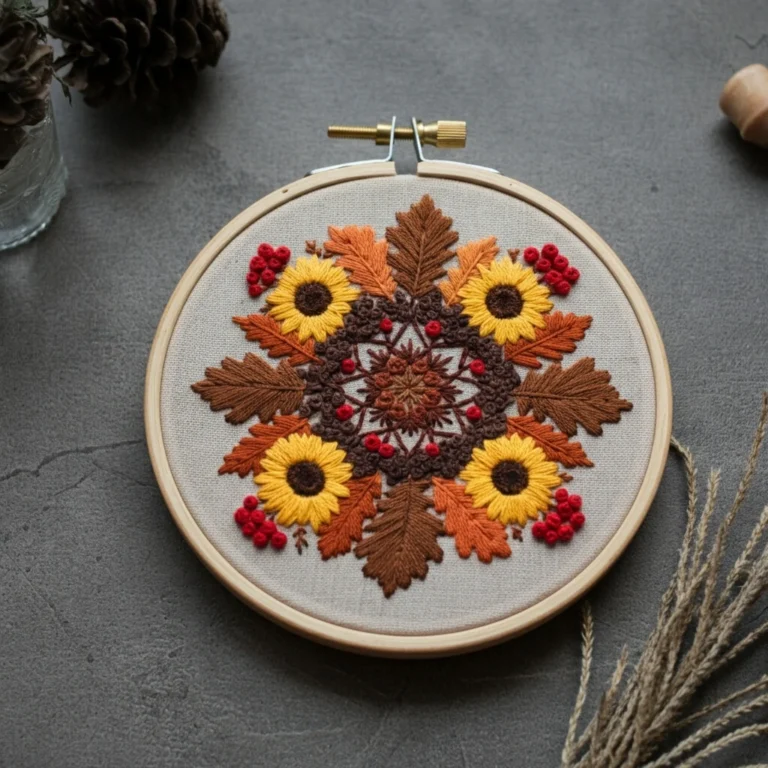
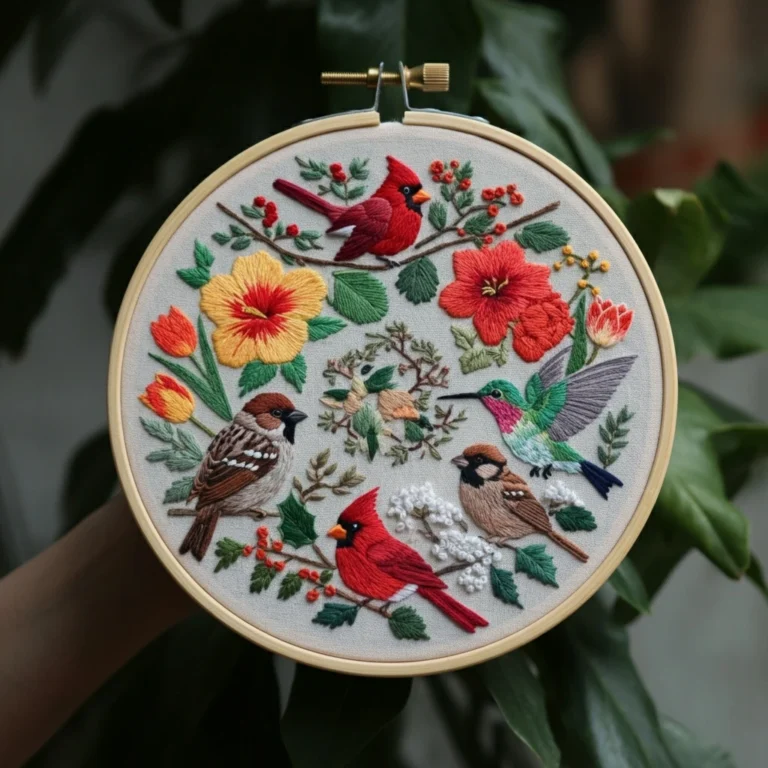
A richly textured woodland hoop with a watchful brown-and-cream owl perched on a sweeping branch, layered evergreens, pine boughs, cones, yellow flower clusters, purple meadow blooms, a small mouse, and a tiny bird in flight.
Color Story
The design is built around forest greens and bark browns, with the owl as the warm focal point. Cream feathers, dark chocolate wing shadows, and golden eyes sit against soft sage background trees. Yellow flower clusters and purple blossoms add small bright accents, while the mouse and pinecones keep the bottom of the hoop earthy and detailed.
Stitch Plan by Design Area
| Area | Recommended stitches | Practical guidance |
|---|---|---|
| Owl face and eyes | Split stitch, satin stitch, tiny backstitch, French knots | Build the cream facial disks with 1-strand split stitch following the circular feather direction. Satin the yellow iris, place a tiny black pupil last, and outline the beak with one fine dark stitch. |
| Owl chest feathers | Long-and-short stitch, fly stitch, straight stitch | Fill the base with 3865/3860, then add short V-shaped brown strokes in 839 and 938. Keep each mark separate so the chest reads as soft feathers, not stripes. |
| Owl wings and tail | Long-and-short stitch, satin stitch, split stitch outline | Use dark browns at the outer wing and lighter cocoa toward the feather spots. Add white wing marks after the brown fill so they sit cleanly on top. |
| Main branch and trunk lines | Stem stitch, whipped backstitch, couching, seed stitch | Follow the branch curve with 2 strands of 839, deepen underside grooves with 938, and add a few 3828 stitches along the upper edge for bark highlights. |
| Evergreen trees | Detached fly stitch, straight stitch, fishbone stitch | Work from trunk outward with angled needle strokes. Put darker greens underneath and lighter 3348 tips on top, especially on the foreground pine clusters. |
| Pinecones | Lazy daisy, satin stitch, French knots, backstitch | Use small overlapping teardrop stitches for cone scales. Darken the base of each scale with 938 and touch the top with 840 or 3828. |
| Mouse and log | Split stitch, tiny straight stitch, seed stitch | Keep the mouse soft with 1 strand of 840/3860. Add whiskers and claws only after nearby grass is done so they remain visible. |
| Wildflowers and meadow grass | French knots, colonial knots, pistil stitch, straight stitch | Use yellow knots in tight clusters, purple detached chains for taller flowers, and varied green straight stitches for grass. Let some grass overlap the branch base for depth. |
| Flying bird | Satin stitch, split stitch, tiny straight stitch | Stitch the bird with one strand so it stays airy. Use tan and cream for the breast, dark brown for wing tips, and black only for the beak and head accent. |
Thread Count, Blending & Shading
Thread-count guide
- 1 strand: owl facial lines, pupils, beak, claws, mouse whiskers, distant trees, tiny bird details.
- 2 strands: owl body fills, main branch, pine boughs, pinecones, flower clusters, foreground leaves.
- 3 strands: optional for dense lower grass or the heaviest branch underside on larger hoops.
Blending ideas
- For owl chest shadows, blend one strand 3865 with one strand 3860 for a creamy tan transition.
- For rich wing feathers, blend 839 + 938 in the darkest sections and 839 + 840 in midtone sections.
- For evergreen highlights, blend 469 + 3348 and stitch only the outer needle tips.
Outlining details
- Use dark brown outlines on the owl and branches rather than heavy black; it keeps the wildlife scene natural.
- Outline the owl eyes carefully with one strand so the gaze remains crisp and centered.
- Use broken outlines for pine boughs and grasses. Continuous lines can make foliage look flat.
Shading approach
- Shade the owl from dark outer wings toward a lighter cream face and chest.
- Keep background trees pale and sparse with 928/469 so the foreground owl and branch stand forward.
- Cluster the brightest yellows in small groups instead of spreading them everywhere; this makes the flower dots sparkle.
Texture Suggestions
Feather texture
Use stitch direction as the main texture: circular around the face, downward on the chest, and lengthwise along the wings. Small separated strokes are better than dense solid filling for the owl's patterned plumage.
Bark texture
Let the branch curve guide every stitch. Work a mid-brown base first, then add dark broken grooves and occasional tan highlights so the branch looks rough and dimensional.
Evergreen texture
Layer needles from dark to light. Detached fly stitches make the distant trees soft, while straight stitches and fishbone leaves make foreground pine boughs sharper.
Meadow texture
Mix grass stitch lengths and directions. Raised yellow knots, flatter purple petals, and thin green stems create an embroidered forest floor without excessive bulk.
Beginner-Friendly Working Order
- Transfer the large shapes. Mark the owl outline, facial disks, main branch, tree trunks, pinecone clusters, mouse, bird, and flower masses. Add individual grass blades later by eye.
- Stitch background trees first. Use pale, thin stitches so they sit behind the owl and branch.
- Complete the main branch. The owl's feet and lower grass should overlap it, so finish bark before those details.
- Work the owl from light to dark. Begin with cream face and chest areas, then add brown wings, feather marks, eyes, beak, and claws.
- Add foreground foliage, pinecones, mouse, and flowers. Finish with knots and white feather spots last to avoid snagging or staining light details.
Clean stitching habits
Keep needle lengths short when using dark browns near cream feathers. If a dark thread fuzzes, trim it immediately so it does not dull the owl's face.
Practice first
Test one eye, one chest feather V, one pine branch, and one yellow knot cluster on scrap fabric. These small samples cover the most visible parts of the design.