
DMC palette & embroidery notes
Embroidered Water Lilies in a Hoop
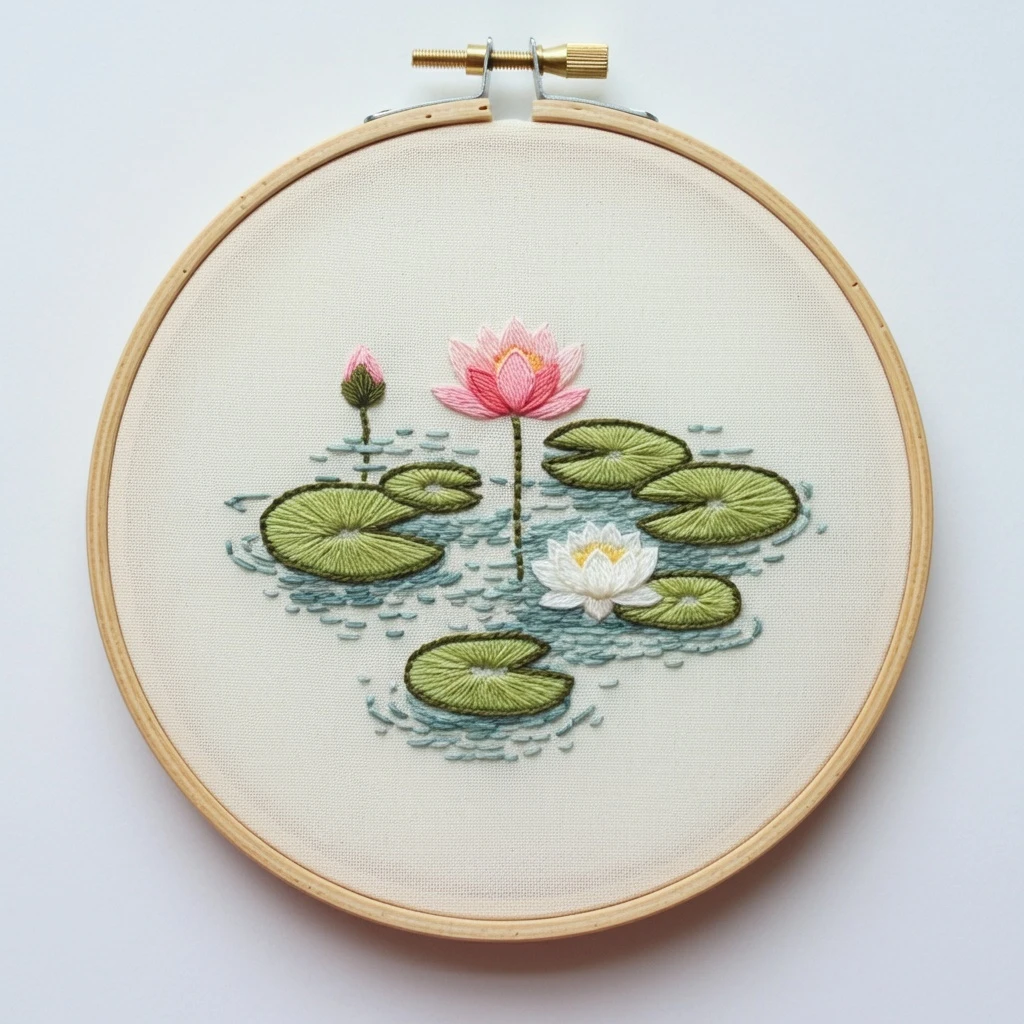
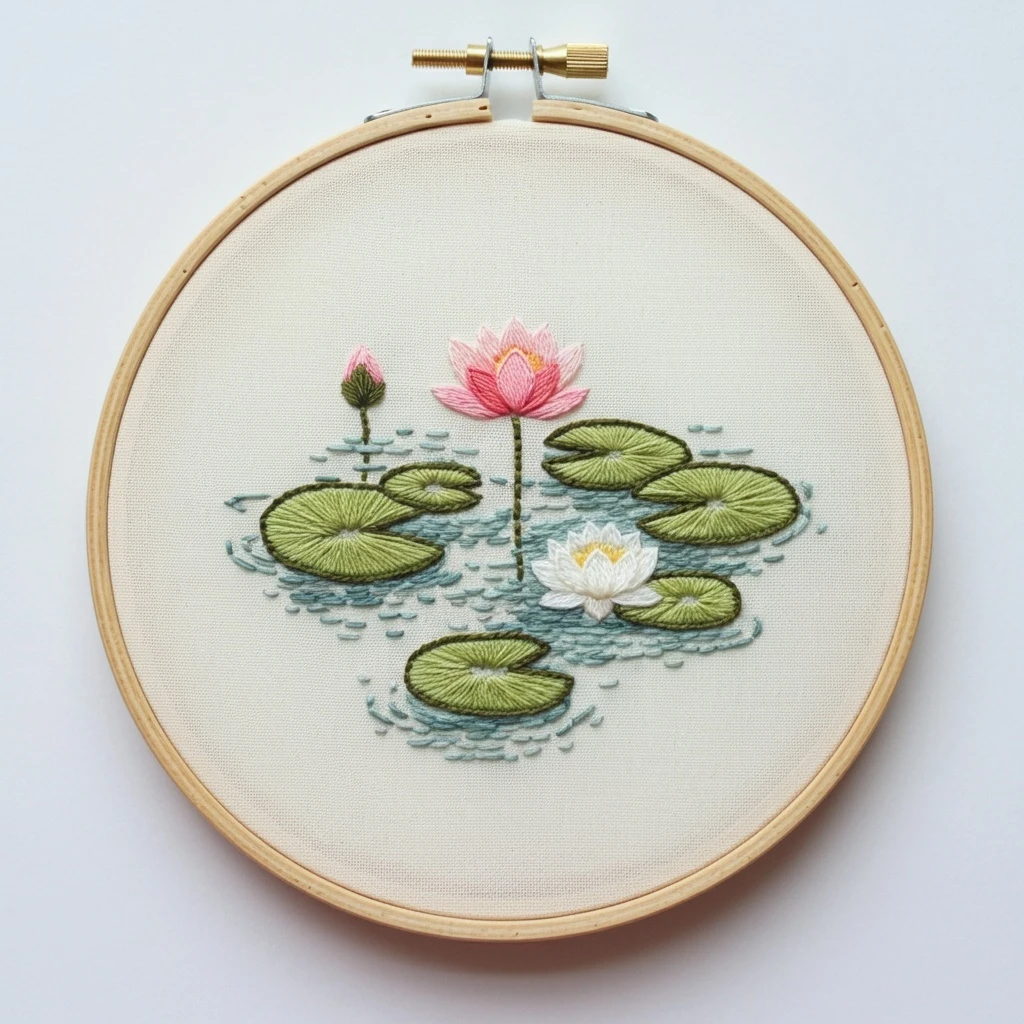
A calm pond study with floating lily pads, soft ripples, a pink lotus-style bloom, a white water lily, and a small unopened bud. The stitching works best when the water stays light and airy while the leaf outlines and flower centers provide crisp focal contrast.
Design read: what to capture
The piece is built around a quiet oval of water stitched in short horizontal marks, with rounded lily pads radiating from pale centers. Dark olive outlines define the pads, while the flowers use petal-by-petal shading rather than heavy filling. Keep the background fabric visible between stitches so the hoop feels fresh, delicate, and handmade.
Suggested DMC floss palette
Use these colors as a practical matching set. The palette favors natural lily-pad greens, muted blue-greens for water, soft petal pinks, and warm cream/yellow highlights for flower centers.
Stitch plan by design area
Thread-count and blending guidance
Fine details
Use 1 strand for water dashes, flower separation lines, leaf veins, and tiny centers. This keeps the design light on pale fabric.
Main shapes
Use 2 strands for pad outlines, petal fills, and stems. Two strands give enough coverage without bulky edges.
Extra texture
Use 3 strands sparingly for the darkest pad outline in the foreground only, or for a raised French-knot flower center.
Useful blends
- Soft pad fill: 1 strand 3012 + 1 strand 3013 for natural mid-green transitions.
- Sunlit pad edge: 1 strand 3013 + 1 strand 772 near the top of large leaves.
- Deep pond shadow: 1 strand 926 + 1 strand 3052 under overlapping pads.
- Pink petal shift: 1 strand 335 + 1 strand 818 for soft, blended bloom tips.
- Warm white petal: 1 strand B5200 + 1 strand 3865 where white petals fold inward.
Shading and texture tips
- Let the fabric breathe: do not fill every water space. The pale linen ground acts like reflected sky and keeps the pond from becoming heavy.
- Dark edges first, highlights last: outline lily pads before filling, then add pale center spokes and water glints after the main stitches are secure.
- Vary ripple length: use short, staggered stitches around the pads, longer curved strokes at the outside, and a few isolated dashes to suggest movement.
- Petals need direction: stitch from base to tip so the thread grain follows the natural fold of each petal.
- Avoid knots on pale fabric: start with waste knots or tiny away knots, then weave tails under nearby stitches so the back stays neat.
Beginner-friendly workflow
Work from the back of the pond forward: pale ripples first, then stems, lily pads, flowers, and final highlights. This order keeps the small water marks from fighting with the larger raised elements.
- Transfer only essential outlines: pad shapes, stems, bloom centers, and a few ripple guides. Leave room for improvising water texture.
- Stitch water ripples in 1 strand before adding leaves. Stop often and view the hoop from arm’s length.
- Outline each lily pad in 3011, then fill with radial stitches. Rotate the hoop so stitches always travel comfortably from center to edge.
- Add flowers last with clean hands and short thread lengths, especially for B5200 and 3865.
- Finish with single-strand highlight marks, then gently steam from the back without pressing the raised petals flat.