Winter Bunny Embroidery Guide

Winter Bunny Embroidery — DMC Palette & Stitching Guide
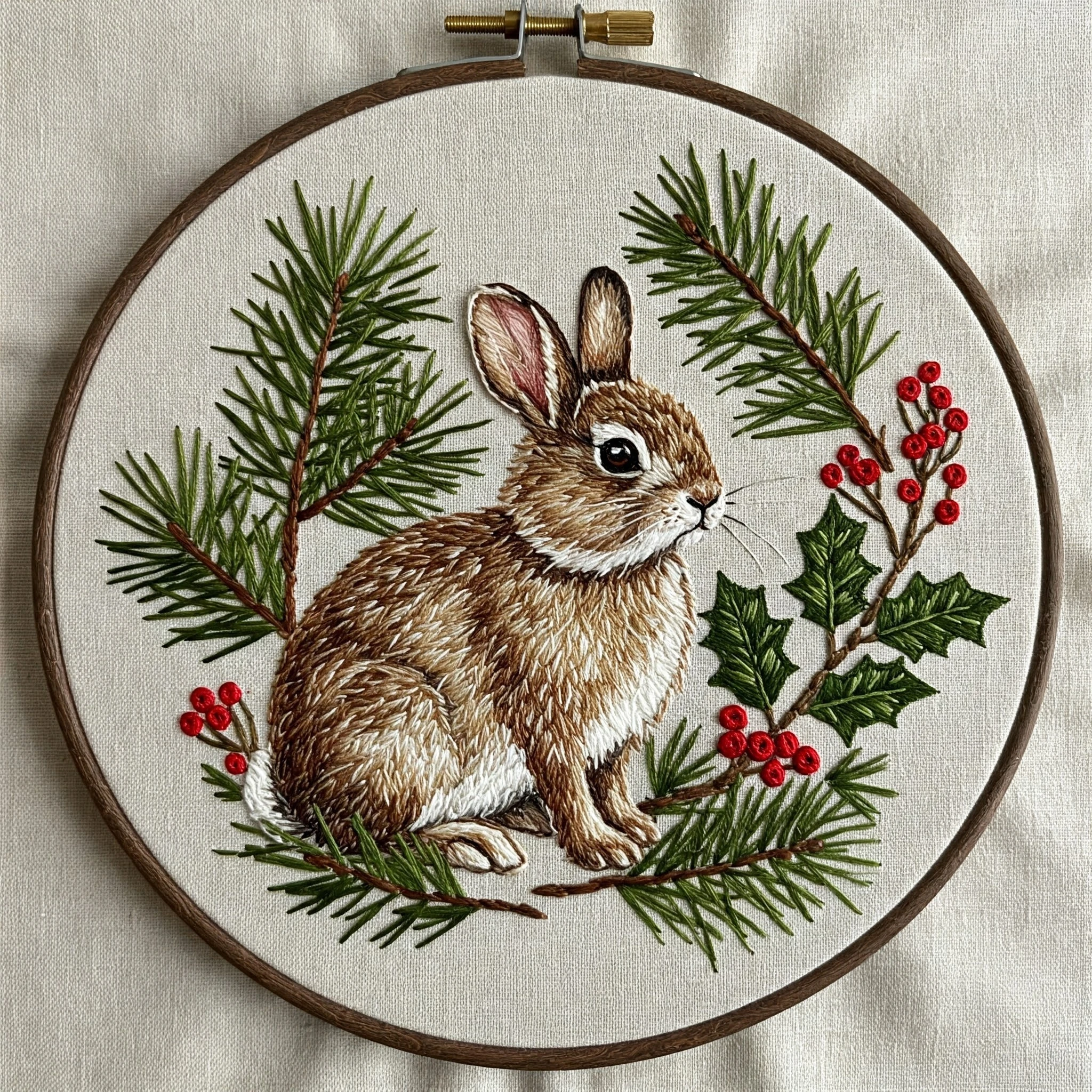
Winter Bunny Embroidery Hoop
DMC palette & hand embroidery notes

Winter Bunny Embroidery Guide

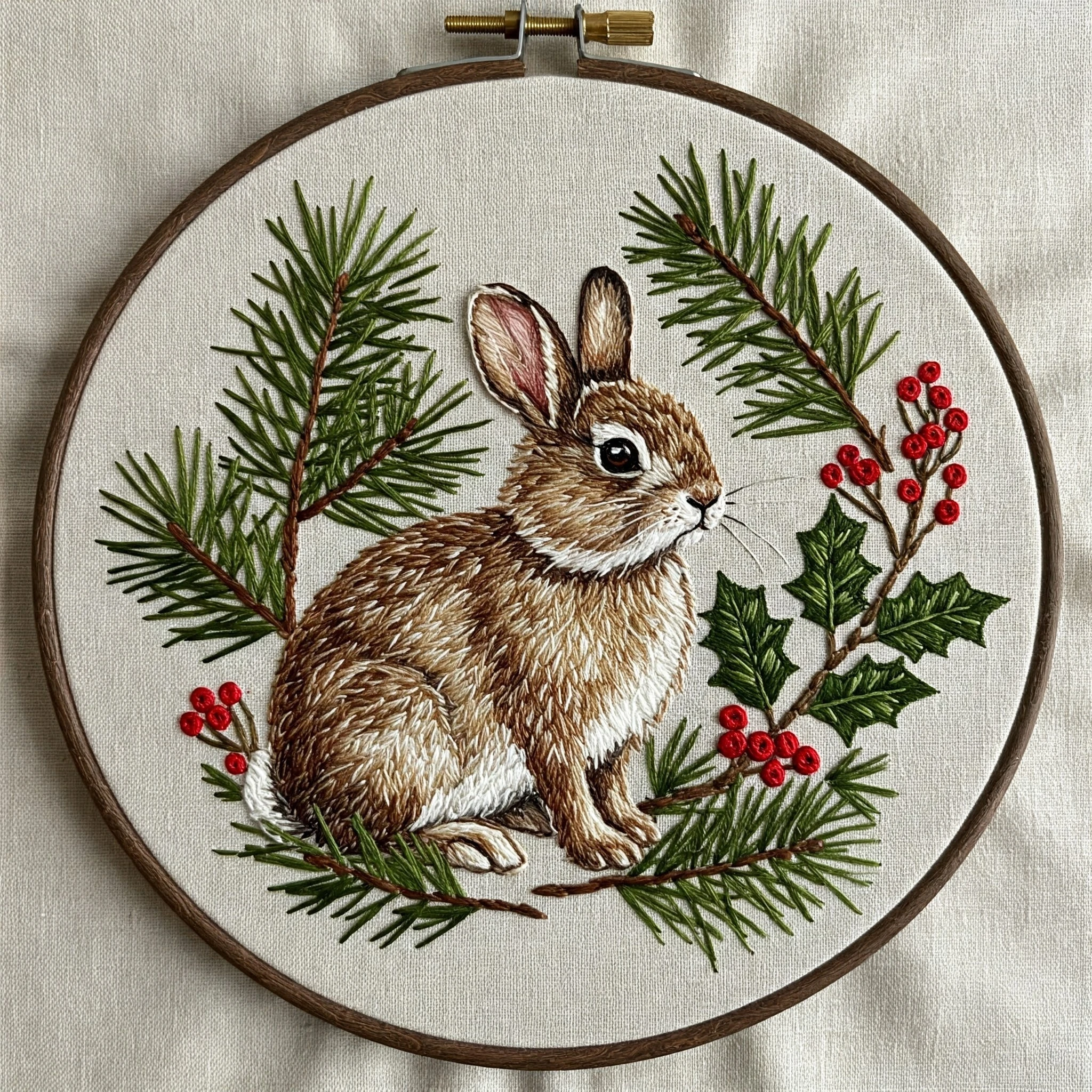
A soft woodland hoop with a pale winter bunny, evergreen sprigs, frosty berries, warm beige shadows, and tiny seasonal botanicals. The stitching plan below keeps the rabbit plush and gentle while giving the greenery crisp, wintry texture.

Beginner friendlySoft fur shadingEvergreen textureWinter berries

Design color read

The artwork is built around a quiet winter palette: creamy rabbit fur, gray-beige contour shadows, blue-white highlights, pine and olive greenery, muted brown stems, and small berry or blush accents. Use delicate contrasts rather than heavy outlines so the bunny remains soft against the decorative foliage.

Main mood

Snowy neutrals with gentle woodland greens and a few warm rose-red accents.

Best fabric

Natural linen, oatmeal cotton, pale sage, or warm ivory fabric. Avoid stark white fabric unless you strengthen the bunny outline.

Thread style

Mostly 1–2 strands. Use 3 strands only for berries, bold leaf bases, or foreground texture.

Suggested DMC palette

This palette focuses on practical substitutions for the visible tones in the winter bunny design. Place lighter colors first, then add shadows gradually.

B5200
Snow White
Brightest fur glints, snow-touched petals, and tiny catchlights.
3865
Winter White
Main bunny fur fill; softer than pure white on ivory cloth.
762
Pearl Gray - Very Light
Cool fur shadows under chin, ear folds, belly curve, and paw edges.
644
Beige Gray - Medium
Warmest rabbit contour shadows and grounding under foliage.
839
Beige Brown - Dark
Eye, nose, deepest ear crease, and fine twig accents.
500
Blue Green - Very Dark
Deep evergreen bases, hidden leaf undersides, and strongest foliage contrast.
934
Avocado Green - Black
Pine needle shadows and dark stems around the bunny.
3052
Green Gray - Medium
Muted winter leaves, soft eucalyptus tones, and mid-green blending.
3051
Green Gray - Dark
Leaf veins, olive sprigs, and the darker side of broad leaves.
3011
Khaki Green - Dark
Dry winter grasses, seed heads, and muted golden leaf highlights.
815
Garnet - Medium
Winter berries, tiny red buds, and warm focal dots.
223
Shell Pink - Light
Inner ear blush, nose warmth, and optional cheek softness.
Blending idea: for rabbit fur, thread one strand 3865 with one strand 762 for gentle gray-white shading; for warmer underside shadows, blend 3865 with 644. Keep blends short and directional so the fur looks soft rather than striped.

Stitch map

Bunny furUse short-and-long stitch in tiny curved rows. Vary stitch length and angle around cheeks, belly, haunch, and ears.
Face detailsUse 1 strand split stitch or back stitch for mouth and nose edges. Work the eye as a satin stitch or two small straight stitches with a B5200 highlight.
Inner earsLay 1 strand 223 as fine satin or long split stitches, then feather 762/3865 over the edge so the pink melts into the fur.
Pine needlesUse straight stitch or fly stitch in 1–2 strands, alternating 500, 934, and 3052 for depth.
Round berriesUse padded satin stitch, colonial knots, or French knots in 815. Add a tiny 3865 highlight on the upper side.
Delicate stemsUse stem stitch with 839 or 934, then add small detached chain leaves in 3052/3051.

Thread-count guidance

1 strand

  • Face lines, whisker hints, eye shine, nose outline, tiny leaf veins.
  • Final fur wisps over the body after the base fill is complete.

2 strands

  • Main rabbit fill, broad leaf stitches, pine needles, soft stems, most outlines.
  • Blend two colors in the needle for smoother winter shadows.

3 strands

Reserve for raised berries, foreground seed heads, or a decorative hoop border. Too many thick stitches in the bunny can make the fur bulky, so keep the body mostly 1–2 strands.

Shading & texture plan

Start with the palest fur. Fill the bunny with 3865 using short-and-long stitch. Leave very small gaps where B5200 highlights will sit on forehead, cheek, back, and tail.
Map the cool shadows. Add 762 beneath the chin, around the lower belly, under ears, behind the foreleg, and along the side nearest the foliage.
Warm the deepest curves. Touch in 644 sparingly at the underside, paw separations, and base contact shadow. A little warmth keeps the animal from looking flat blue-gray.
Work foliage behind before final fur wisps. Stitch dark greenery first, then return with single-strand 3865 and B5200 fur strokes over edges where the bunny overlaps leaves.
Add raised accents last. Finish with berry knots, eye, nose, whiskers, and tiny highlights so they stay crisp and clean.

Outlining details

Use broken outlines rather than a continuous dark border. A winter bunny looks softer when the contour is implied with shadow stitches and only the important edges are reinforced.

Rabbit edge

Use 1 strand 762 for pale contouring, switching to 644 only under the body and behind the ear.

Eye & nose

Use 839 with one careful stitch at a time. Add the smallest B5200 dot or straight stitch for life.

Foliage silhouette

Use 934/500 in short segments where pine needles overlap. Avoid outlining every leaf.

Beginner-friendly practical tips

  • Transfer the rabbit outline lightly; dark transfer marks may show through pale thread.
  • Stitch the largest pale areas before dark berries, but keep your hands clean and cover finished sections with tissue while working.
  • Use shorter needles for knot berries and a sharp needle for dense pine clusters.
  • When blending strands, let them untwist before threading so the combined color stays smooth.
  • Test berry knots on scrap fabric first; one extra wrap can change the scale dramatically in a small hoop.
  • Steam from the back after stitching. Do not press directly on raised berries or padded satin areas.
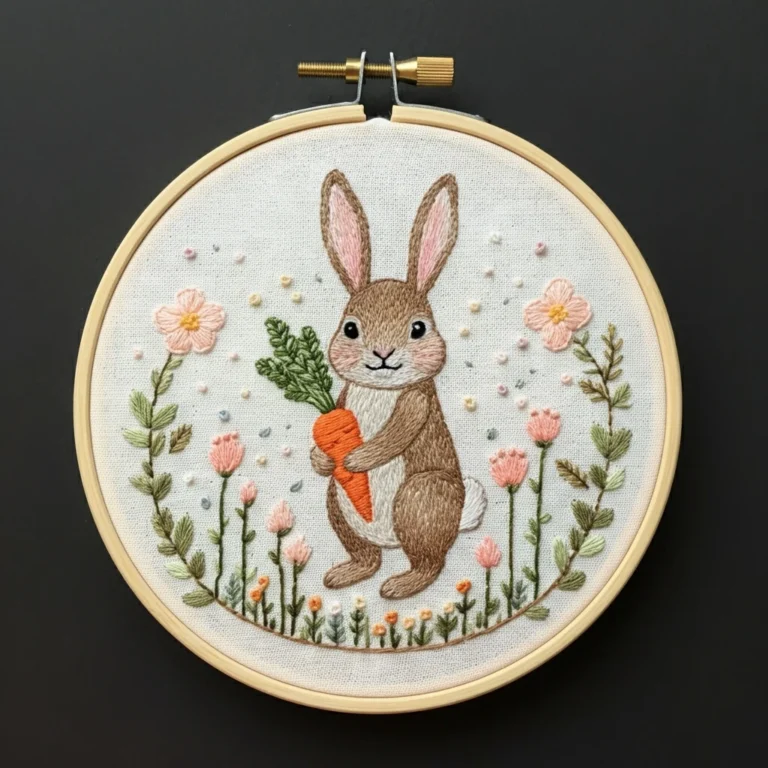
Best hoop finish: mount over thin cotton batting to make the pale bunny look softly rounded, then lace the back evenly so the fabric remains taut without warping the circular composition.

Leave a Reply

Your email address will not be published. Required fields are marked *