
Sunset Beach
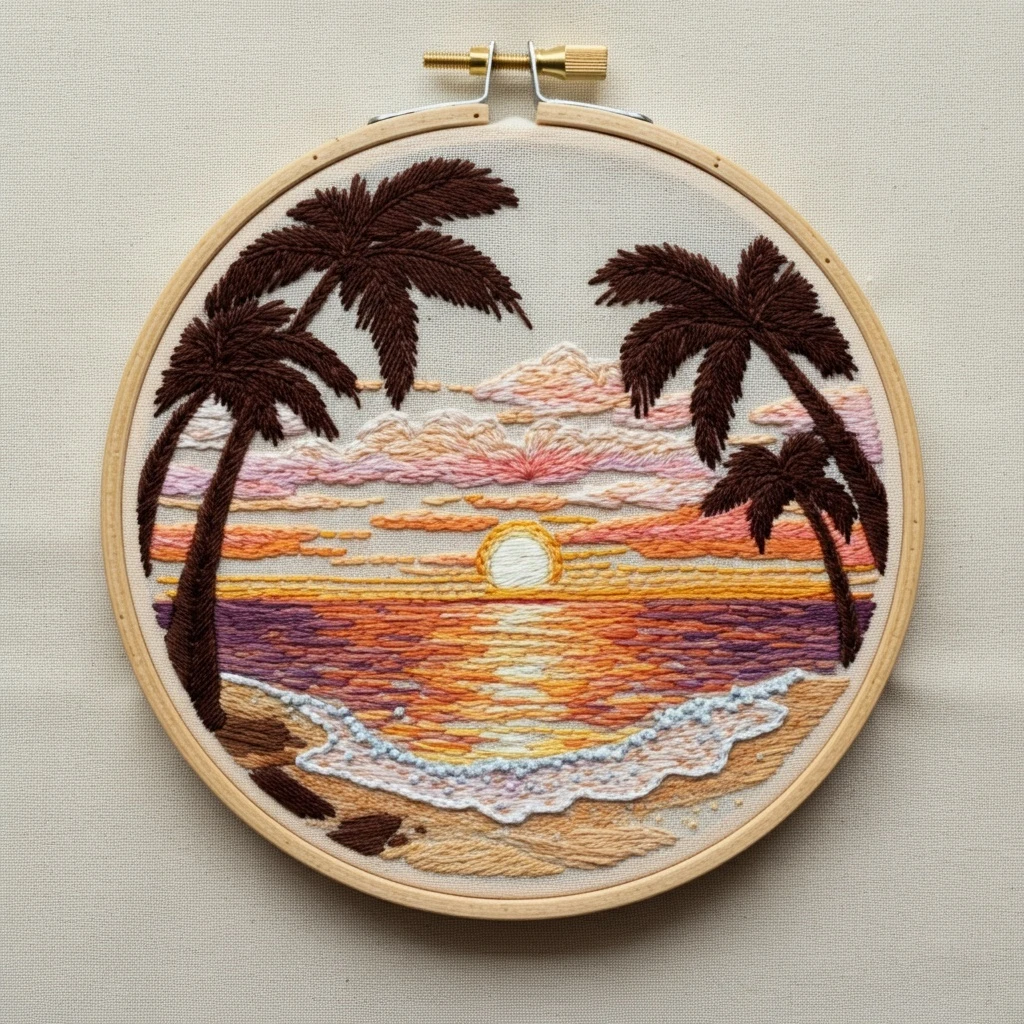
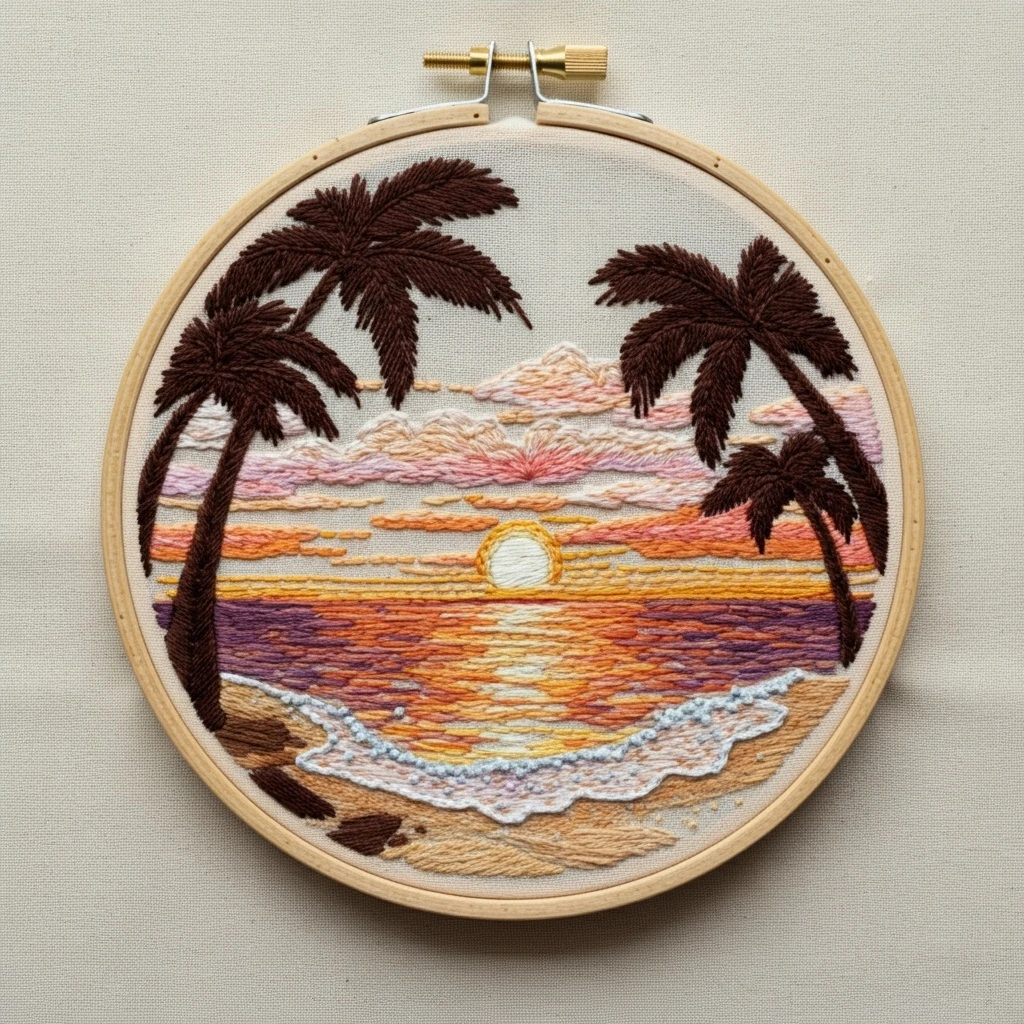
A polished DMC floss palette and practical stitching plan for a warm beach scene with glowing sun, layered sunset clouds, rippled ocean reflection, foamy surf, sandy foreground, and dramatic dark palm silhouettes.
Likely DMC Color Palette
Palette based on the sunset sky, yellow-orange sun, coral cloud bands, purple ocean shadows, golden water reflection, pale foam, tan sand, and near-black palm silhouettes. Percentages are visual estimates, not exact thread usage.
Stitching Suggestions
Palm silhouettes
1–3 strandsSun and glowing rim
2 strandsLayered sunset clouds
1–2 strandsOcean ripples
1–2 strandsFoamy surf
1–3 strandsSand and foreground
1–2 strandsThread Count, Blending & Shading
Sky softness
Use 1 strand for distant cloud wisps and 2 strands for the brighter lower sky. Blend one strand of 352 with one strand of 316 for a dusty coral-pink transition.
Golden reflection
For the vertical reflection below the sun, alternate short 725 and 3865 stitches, then scatter 741 on both sides. Avoid perfectly even rows; a staggered rhythm looks more like water.
Deep water
Use 3834 and 3837 in thin horizontal strokes beneath the sunset colors. A few stitches of 900 over purple areas will make the orange light feel reflected rather than painted on top.
Foam dimension
Outline the foam in 3865, shade the underside with 3756, and add a few tiny 977 or 316 stitches inside the foam to echo sand and sunset reflections.
Palm texture
Use 3371 for the silhouette mass, then place sparse 938 stitches in the same direction as the fronds. Keep the palms darker than everything else for the strong sunset contrast.
Clean outlining
Use 1 strand for fine horizon lines and cloud edges, 2 strands for the sun ring and surf contour, and 3 strands only where the palm trunks need extra weight.
Beginner-Friendly Order of Work
1. Start with the horizon
Lightly mark the sun, horizon, and main wave curve. Stitch the sky first from lightest to darker tones so the later palm silhouettes can sit crisply on top.
2. Build the water in layers
Work the ocean from the horizon downward. Use short broken lines rather than large filled blocks; this is easier for beginners and creates the rippled look naturally.
3. Add foam before sand details
Place the white surf outline and foam knots before adding tiny sand stitches. This keeps the beach edge clean and helps you avoid crowding the lower foreground.
4. Save palms for last
The dark palms are the focal frame. Stitch them after the background is complete, using confident directional stitches that follow each trunk and frond shape.
- Use a sharp needle for dense palm areas and a slightly larger needle for 3-strand foam knots.
- Keep the fabric taut in the hoop, especially while stitching long horizontal water lines.
- Step back often: the sunset glow reads best from a little distance, so tiny gaps between stitches are welcome.
- Trim thread tails carefully behind the pale sky and sun so dark tails do not show through lighter fabric.