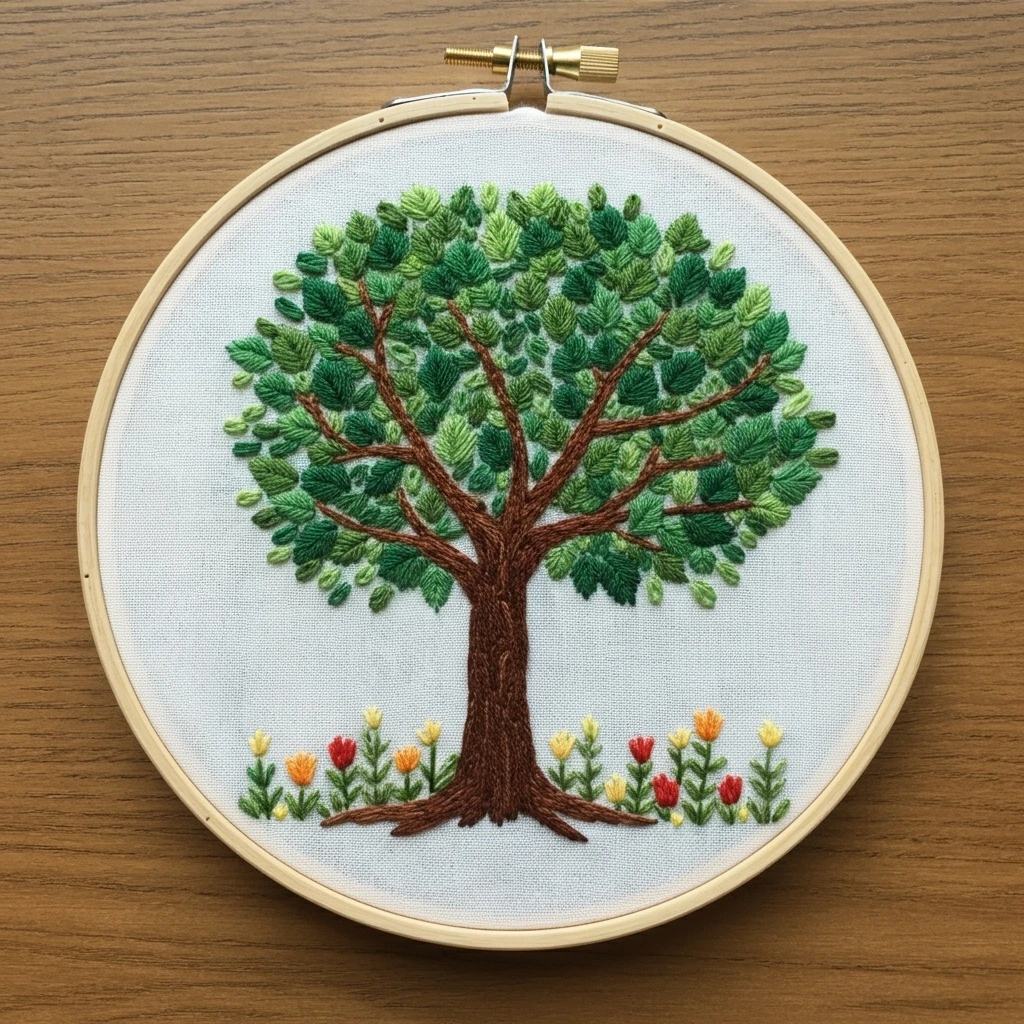

Four Seasons Garden Tree
A nature-inspired hoop design featuring a strong brown tree, full leafy canopy in layered greens, and a simple flower border at the base in red, yellow, and orange.
Preview
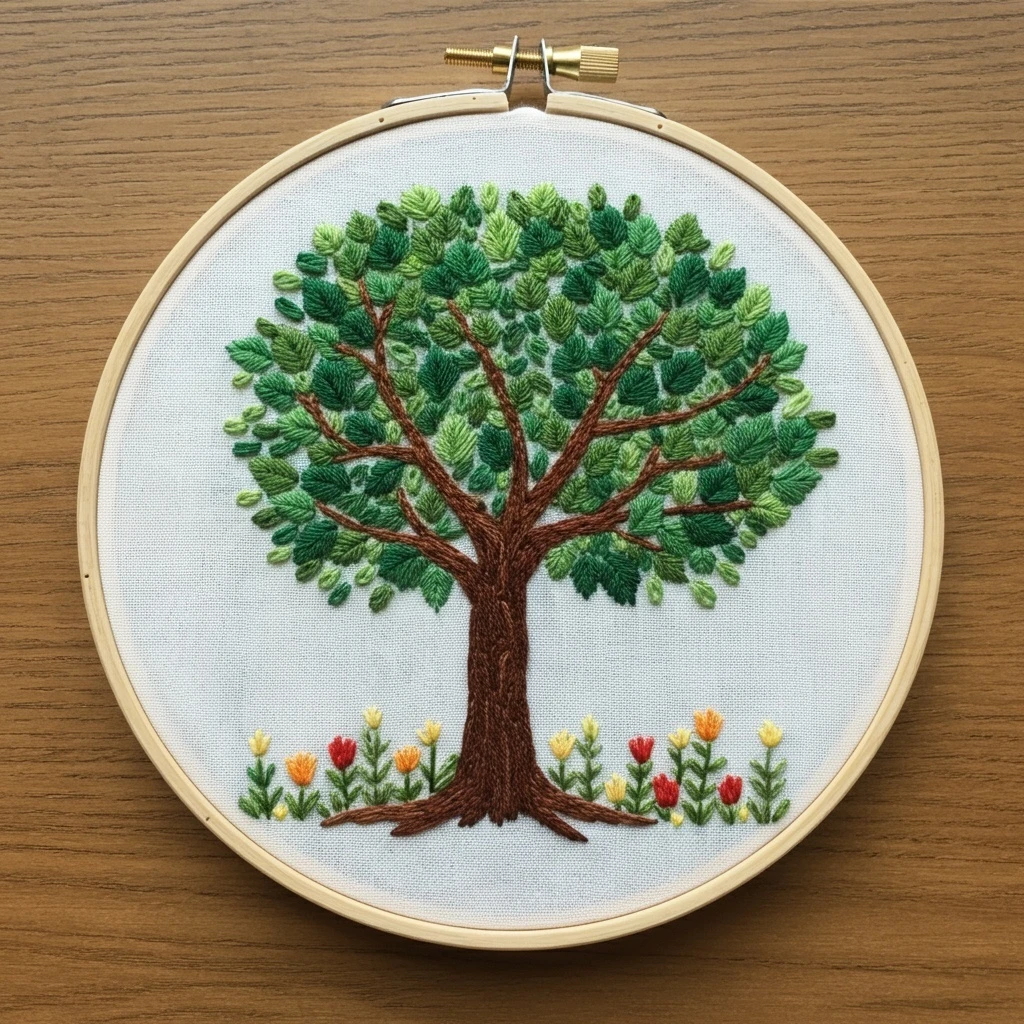
This guide is based on the visible embroidery preview: a centered tree worked on pale fabric inside a wooden hoop. The design shows a textured brown trunk with branching limbs, a rounded canopy made from many small leaf stitches in mixed greens, and a neat row of tiny garden flowers along the lower edge.
Likely DMC Color Palette
The coverage percentages are visual estimates from the preview image, intended to help plan floss colors. They are not exact thread usage, stitch counts, or a substitute for a pattern’s official materials list.
| DMC | Approx. Hex | Thread Name | Est. Coverage | Where It Appears |
|---|---|---|---|---|
| 938 | #361F14 | Ultra Dark Coffee Brown | 24% | Main tree trunk, darkest bark lines, roots, and deeper branch shadows. |
| 433 | #7A3F1D | Medium Brown | 9% | Warm highlights through the trunk, roots, and visible branch texture. |
| 699 | #00633A | Green | 17% | Deepest leaves in the canopy, especially clustered toward the center and lower leaf masses. |
| 905 | #07713F | Dark Parrot Green | 14% | Medium-dark leaf clusters and background foliage that fill out the rounded crown. |
| 702 | #2F8F46 | Kelly Green | 12% | Fresh mid-green leaves throughout the canopy and some stems in the lower flower border. |
| 907 | #61B34C | Light Parrot Green | 9% | Bright leaf highlights around the outer canopy and lighter leaf tips. |
| 704 | #9ACB66 | Bright Chartreuse | 6% | Lightest spring-green leaves and small highlighted buds near the canopy edges. |
| 743 | #F6C04B | Medium Yellow | 3% | Yellow tulip-like flowers along the bottom border. |
| 740 | #F47B20 | Tangerine | 3% | Orange blossoms in the small flower row below the tree. |
| 321 | #C72B2B | Red | 3% | Red flowers placed between the yellow and orange blooms at the base. |
Stitching Suggestions
Tree Trunk and Roots
Use split stitch, stem stitch, or long-and-short stitch to build the bark vertically. Blend the dark and medium browns in uneven lines so the trunk looks organic rather than flat.
Branches
Work branches with stem stitch or whipped back stitch. Let the stitches taper as branches reach into the leaves, and keep the direction of the thread following the natural branch angle.
Leaf Canopy
Detached chain stitch, fishbone stitch, or small satin leaves will suit the visible leaf shapes. Alternate dark, mid, and light greens so the canopy feels layered and full.
Lower Garden Flowers
Use tiny lazy daisy stitches for petals, straight stitches for small stems, and a single French knot or short vertical stitch for flower centers. Keep the flowers light and airy so they do not overpower the tree.
Where to Start
- Begin with the main trunk and roots, since they anchor the whole design and help position the lower flower border.
- Add the primary branches next, keeping the line weight slightly lighter as they extend outward.
- Fill the canopy in layers: dark greens first for depth, then mid greens, then the lightest greens as highlights around the edges.
- Finish with the small flowers and stems at the bottom so their bright colors stay crisp and clean.
Helpful Notes
- For a soft leafy texture, use 2 strands for most canopy leaves; use 1 strand only if your hoop is small or the printed leaf shapes are delicate.
- Vary the angle of each leaf stitch. The preview has a hand-stitched, natural look because the leaves do not all point in the same direction.
- Keep the trunk slightly denser than the canopy so it reads as a sturdy central form.
- The color coverage percentages are visual estimates from the preview image, not exact thread usage. Actual floss needs depend on fabric size, strand count, stitch length, and stitching density.
Use these DMC shades as close visual matches. Lighting, screen settings, and the original photo can shift how the colors appear.
Encouraging Finish
This is a forgiving, satisfying design because the leafy canopy welcomes natural variation. Let the greens mingle, keep the bark lines expressive, and enjoy the final pop of tiny flowers at the base. When finished, the piece should feel like a bright little seasons garden held inside the hoop.