
Tropical Houseplant Trio
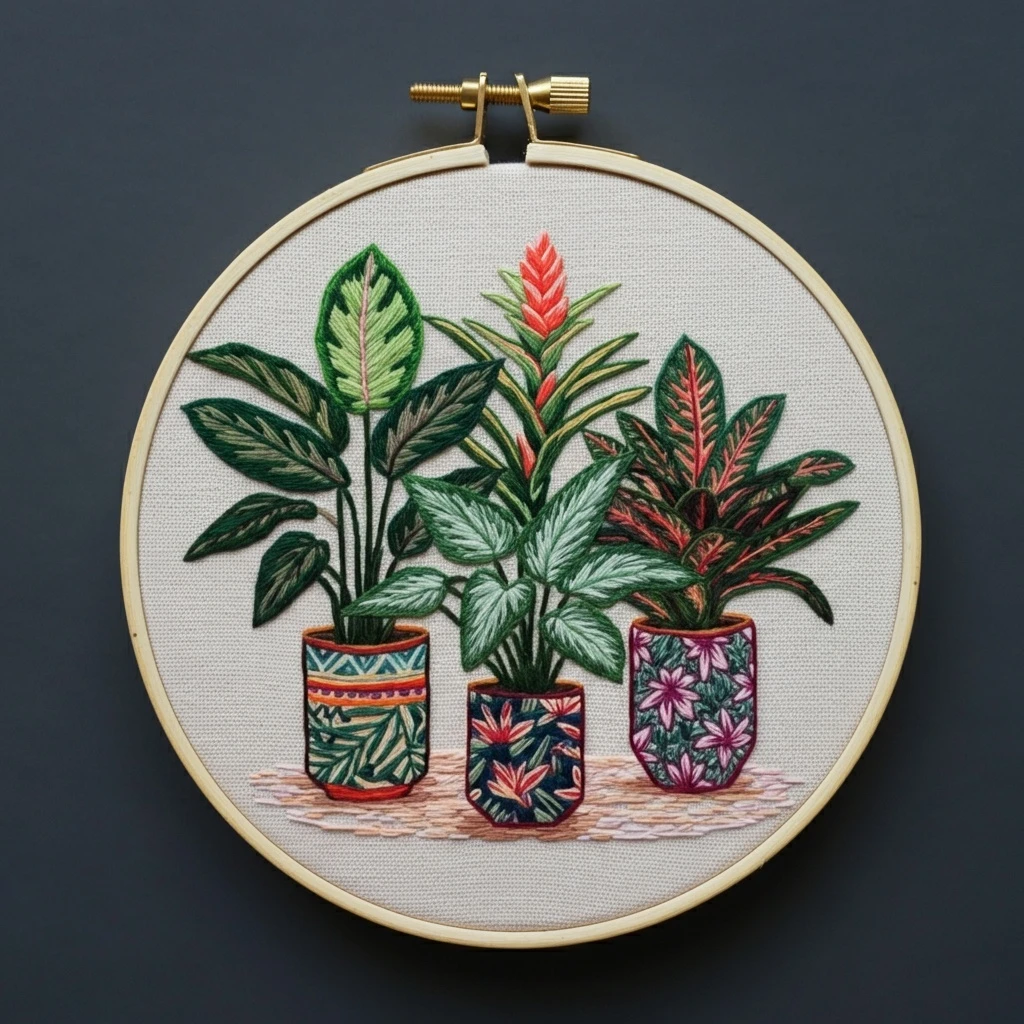
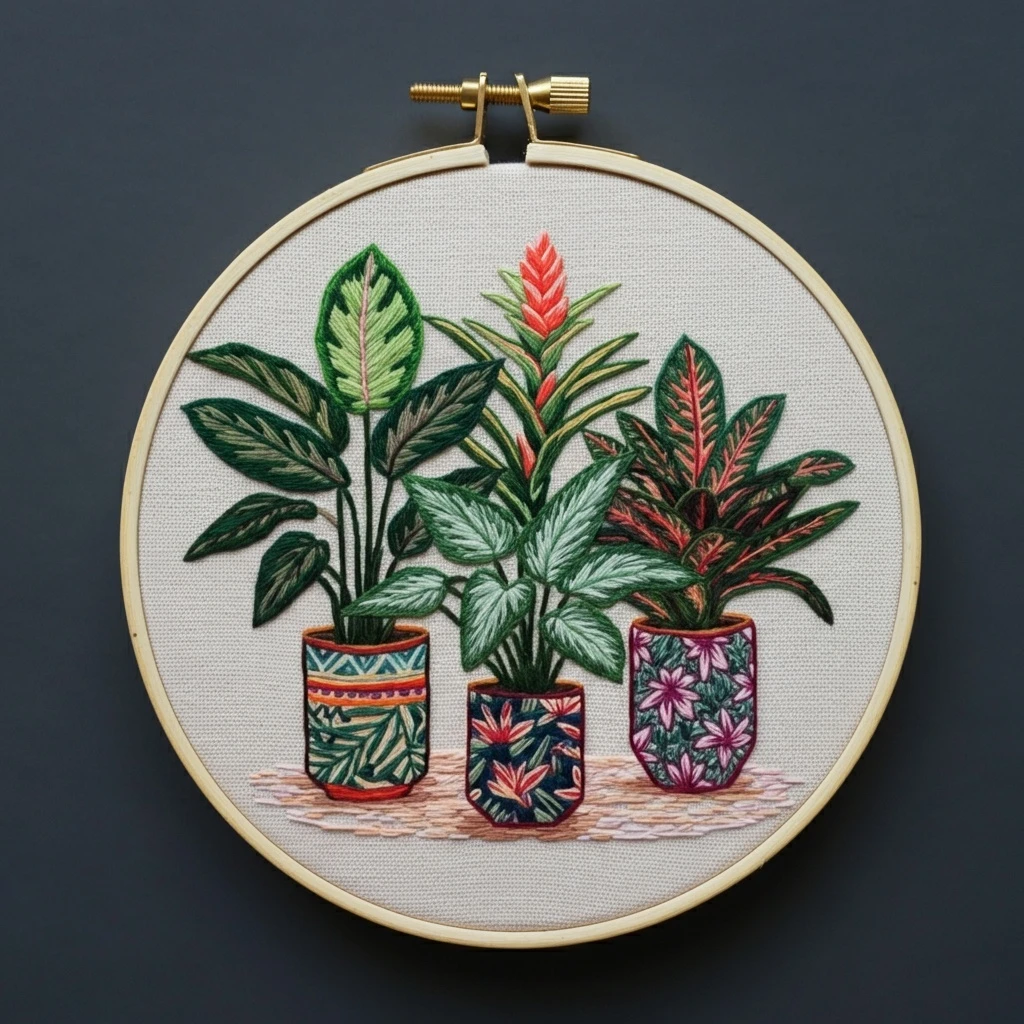
A lush hoop design with three patterned pots, layered tropical leaves, coral flower spikes, pale variegated foliage, and small floral motifs. These color and stitch notes are estimated from the visible preview and matched to practical DMC floss choices.
Preview
The design features a balanced trio of potted plants: a tall calathea-style plant on the left, a lighter variegated plant in the center, and dark dramatic foliage with pink veins on the right.
Likely DMC Color Palette
Deepest leaf shadows, strong plant stems, pot foliage outlines, and the darkest separation lines between overlapping leaves.
Primary tropical leaf outlines, long side leaves, and dark fill areas on the left and right plants.
Mid-depth green for leaf bodies, central veins, and the inner shading that keeps large leaves from looking flat.
Fresh highlights on slender leaves, variegated stripes, and the pale green segments in the tall left leaf.
Minty central plant leaves, cool highlights, and soft transition stitches in the variegated foliage.
Bright tropical flower spike, red bird-of-paradise pot motif, and lively accents on the plant leaves.
Lighter petal tips, warm vein highlights, and the upper strokes of the coral flower spike.
Right pot outlines, magenta flower decorations, deep pink leaf veins, and ornamental accents.
Teal bands on the left pot, cool pot patterning, and blue-green shadow touches among the leaves.
Terracotta pot rims, warm bases, red-orange lower pot shadows, and grounding accents.
Soft tabletop/floor stitches, pale pottery highlights, and gentle warm reflections under the trio.
Crisp outline substitute where pure black would feel too harsh: pot edges, deep creases, and fine final detailing.
Coverage is a visual estimate from the preview rather than exact floss usage. Substitute nearby greens freely if your stash is limited.
Stitching Suggestions
| Element | Recommended stitch | Practical notes |
|---|---|---|
| Large left plant leaves | Fishbone stitch, split stitch outline | Work from the center vein outward. Use 2 strands for the leaf fill, then sharpen the edge with 1 strand of dark green split stitch. |
| Center variegated leaves | Long and short stitch | Blend DMC 504 with 986 by alternating short strokes. Keep the stitch direction radiating from the leaf base for a natural folded look. |
| Right dark foliage | Satin stitch panels plus backstitch veins | Fill leaf sections in deep green, then add plum/coral veins on top. A final dark outline makes the dramatic plant read clearly. |
| Coral flower spike | Detached chain, straight stitch, or satin stitch | Build the spike from bottom to top in small V-shaped strokes. Use the darker coral near the base and the lighter coral on upper petal tips. |
| Fine stems | Stem stitch | Use 1 strand for narrow stems and 2 strands for the central clustered stems. Keep tension relaxed so the stems curve smoothly. |
| Patterned pots | Backstitch, satin stitch, straight stitch | Stitch the pot outline first, fill large color blocks second, then add tiny geometric and floral decorations last so they stay crisp. |
| Pot flowers and motifs | Lazy daisy, tiny straight stitch, French knots | Use 1 strand for small flowers on the right pot. Add French knots only after the pot fill is complete to avoid snagging. |
| Ground shadow | Horizontal straight stitch or running stitch | Scatter peach and tan strokes under the pots. Leave small gaps of fabric showing so the base stays light and airy. |
Thread Count, Blending & Texture Guidance
Strand plan
- 2 strands: most leaf fills, large pot fills, coral flower spike, and bold outlines.
- 1 strand: leaf veins, tiny pot patterns, small flower details, and final definition lines.
- 3 strands: only for extra-heavy dark stems or raised terracotta rims if you want stronger relief.
Blending ideas
- Mix one strand of DMC 895 with one strand of DMC 986 for dimensional dark-green leaves.
- Blend DMC 504 with DMC 3347 for soft minty variegation in the center plant.
- Pair DMC 350 with DMC 351 on the flower spike to create warm petal highlights without a harsh color jump.
Outlining and shading
Outline the pots and leaf clusters after the main fills are complete. Use black-brown or very dark green instead of true black for a softer botanical finish. For shading, keep the darkest stitches tucked under overlapping leaves, near pot rims, and at the base of each plant; reserve the lightest stitches for leaf tips and central veins.
Beginner-Friendly Working Order
- Stitch the three pot outlines first so the composition has clear anchors.
- Fill the largest dark leaves, then the pale center leaves, then the slender background leaves.
- Add the coral flower spike and red accents after the greens are complete.
- Complete the pot patterns with 1-strand details, working slowly so the small motifs stay neat.
- Finish with leaf veins, French knots, tabletop stitches, and any final outline corrections.
Helpful Notes
- Use shorter stitches on curved leaves; long stitches can loosen around the curve.
- Keep pot decoration stitches very fine so the patterns look printed rather than bulky.
- For clean leaf points, bring the needle down just outside the drawn point and cover it with the final outline stitch.
- Do not overfill the ground shadow. Sparse horizontal strokes make the pots feel seated without distracting from the foliage.
- Press the finished piece from the back over a folded towel to preserve raised knots and textured veins.