
DMC palette & stitching guide
Frost Foxes’ Winter Embrace
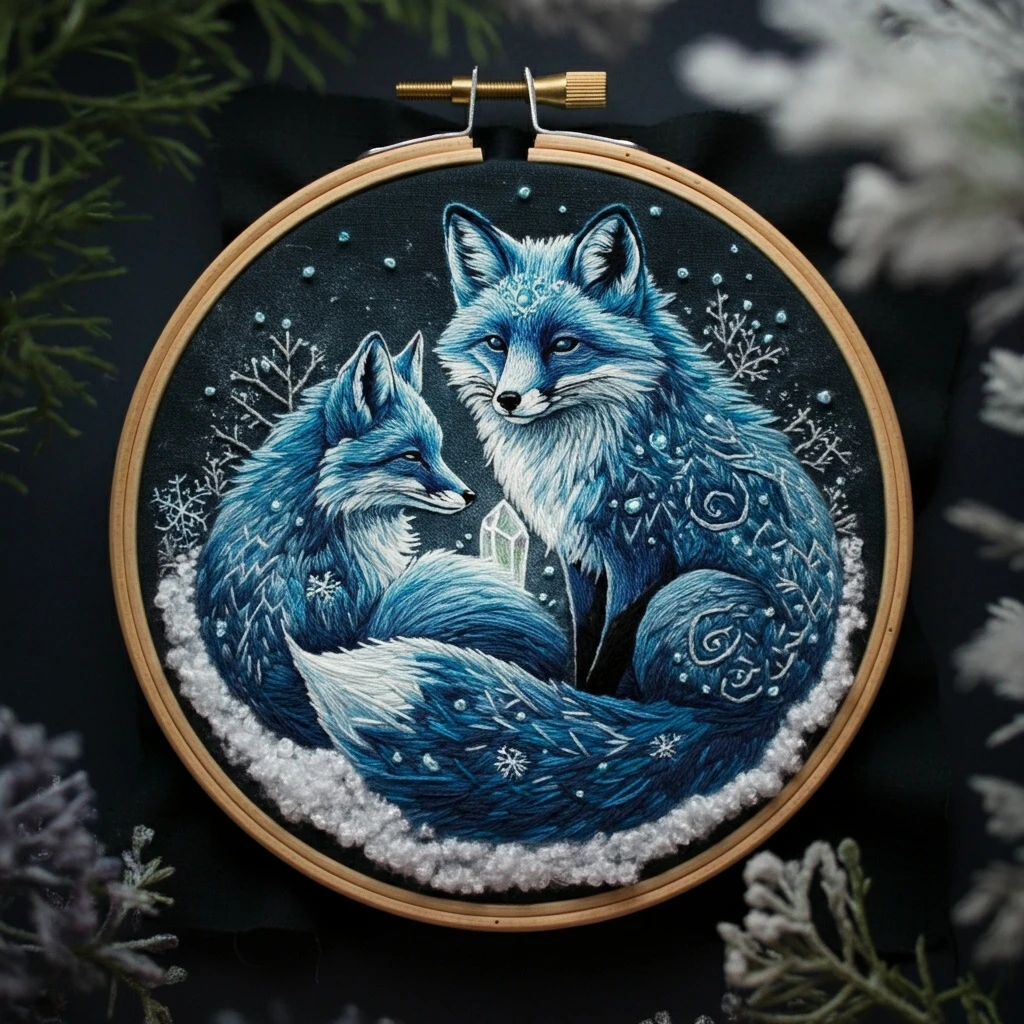
A serene woodland hoop design featuring two curled foxes, frosty blue accents, soft snowy neutrals, and a quiet winter-guardian mood.
Palette based on the visible preview image onlyPreview
-Winter's-Guardians-Hand-Embroidery-Pattern-PDF-sample.webp)
This guide is written from the visible preview of the design: a pair of foxes arranged in a close, protective composition with cool winter tones, warm fox fur, dark facial accents, and delicate surrounding details that suggest snow, frost, or quiet woodland texture.
The linked source preview is embedded directly so the page remains simple to publish while still pointing back to the original image file:
Likely DMC Color Palette
Important: the coverage percentages below are visual estimates from the preview image, not exact thread usage. Final floss needs can vary with hoop size, strand count, fabric color, stitch density, and personal stitching style.
| DMC | Approx. Hex | Thread Name | Est. Coverage | Where It Appears |
|---|---|---|---|---|
| 922 | #B85C38 | Copper | 20% | Main orange fox fur, especially the warm body curves and outer tail areas. |
| 919 | #D57945 | Red Copper | 14% | Brighter fur highlights on the foxes, cheek curves, ears, and places where the fur catches light. |
| 921 | #8A4B32 | Copper | 11% | Deeper fox shading, underside contours, tail shadows, and warm definition around the bodies. |
| 948 | #F7E6D5 | Peach Very Light | 10% | Pale muzzle areas, inner ear touches, chest accents, and soft transitions in the fox fur. |
| 3865 | #F2F1EA | Winter White | 10% | Snowy highlights, pale tail tips, small frost details, and any light decorative specks. |
| 3753 | #B7CDD8 | Antique Blue Ultra Very Light | 9% | Soft icy background accents, pale blue winter details, and delicate cold-weather shading. |
| 932 | #6F91A8 | Antique Blue Light | 8% | Cooler blue outlines, frosty leaves or flourishes, and mid-tone winter accents around the foxes. |
| 930 | #4E6F82 | Antique Blue Dark | 6% | Deeper blue detail lines, shadowed frost elements, and contrast in the winter framing accents. |
| 3371 | #4B3B35 | Black Brown | 6% | Eyes, noses, fine facial details, paw definition, and the darkest contour stitches. |
| 3023 | #AFA59D | Brown Gray Light | 4% | Soft neutral shadows, fur blending, and understated grounding lines where pure white would feel too stark. |
| B5200 | #FFFFFF | Snow White | 2% | Brightest snow dots, tiny sparkle highlights, and crisp points on pale winter details. |
Stitching Suggestions
Because this design depends on the contrast between soft fox fur and crisp winter details, aim for smooth outlines first, then add texture gradually. Two strands will suit most outline and fill areas; one strand is helpful for tiny faces, frost lines, and delicate accents.
Fox body outlines
Use back stitch, split stitch, or stem stitch for the flowing outer contours. Keep the curves gentle and consistent so the foxes feel curled together rather than rigid.
Warm fur fills
Use long and short stitch for shaded fur areas, blending copper, red copper, and deeper brown-orange tones. Work in the direction the fur would naturally lie.
Muzzles, chests, and tail tips
Use satin stitch for small smooth light patches, or short split stitches if the area is narrow. A soft off-white is often more forgiving than bright white for larger fur highlights.
Eyes, noses, and tiny details
Use one strand of dark brown-black with tiny straight stitches or French knots. Add these late in the project so facial details stay clean and expressive.
Frosty blue accents
Use stem stitch for curved icy stems or flourishes, straight stitch for small snow rays, and lazy daisy stitches if small leaves or petal-like frost marks are visible.
Snow and sparkle dots
Use French knots, colonial knots, or tiny seed stitches. Vary the spacing rather than making a perfect grid so the winter texture feels natural.
Where to Start
Best first stitches
- Begin with the main fox outlines so the composition is anchored.
- Add the warm fur fills and shading while the shapes are still easy to read.
- Stitch the pale muzzle, chest, and tail-tip areas after the copper tones are complete.
- Finish with the frosty blue accents, snow dots, and tiny dark facial details.
Thread planning
Keep the warm copper family grouped together and test them on a scrap of fabric before filling the foxes. For a soft winter look, let the pale blues and whites act as accents rather than overpowering the foxes.
Helpful Notes
- The DMC shades listed are close visual matches selected from the preview, not a verified kit list.
- Coverage percentages are visual estimates only and should not be used as exact floss-yardage calculations.
- If stitching on darker fabric, consider using B5200 for the brightest snow marks and a slightly heavier outline for pale blue details.
- If stitching on white or cream fabric, keep the snowy accents in off-white, pale blue, or light gray so they do not disappear.
- Use one strand for the smallest facial features; bulky eyes or noses can change the gentle expression of the foxes.
- Press from the back on a padded towel when finished to protect knots, satin stitches, and raised snow details.
Encouraging Finish
This design will be especially charming if you let the foxes stay soft and warm while the surrounding winter details remain light and airy. Do not worry if every fur blend is not identical; small variations make the animals feel more natural and hand stitched.
Take your time with the faces and final snow details. Those small finishing touches are what give the hoop its quiet, storybook feeling.