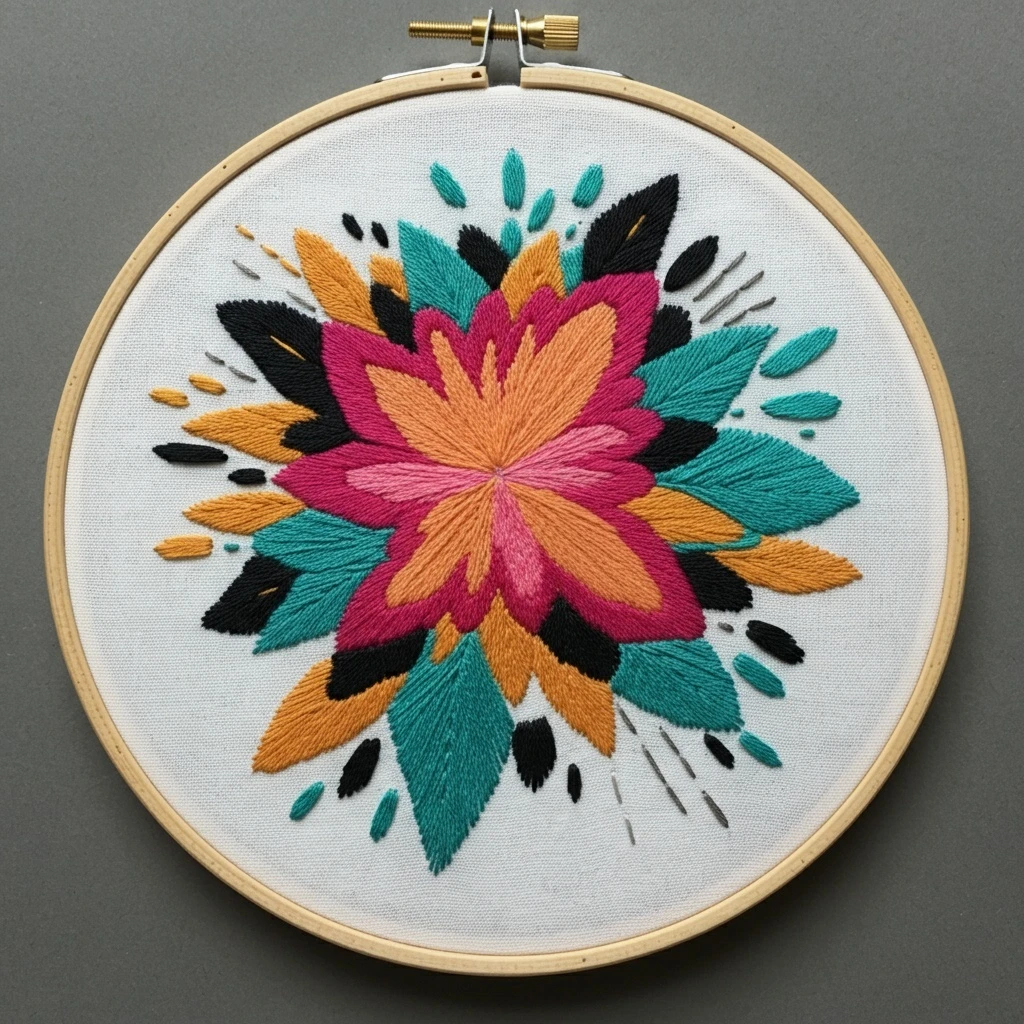

DMC palette & stitching notes
Vibrant Abstract Bloom
A bold modern hoop design with a central stylized flower, hot magenta petals, warm orange-gold lobes, teal foliage, black graphic accents, and fine grey radiating marks. The strongest effect comes from clean satin areas, directional long-and-short shading, and crisp dark contrast around the bloom.
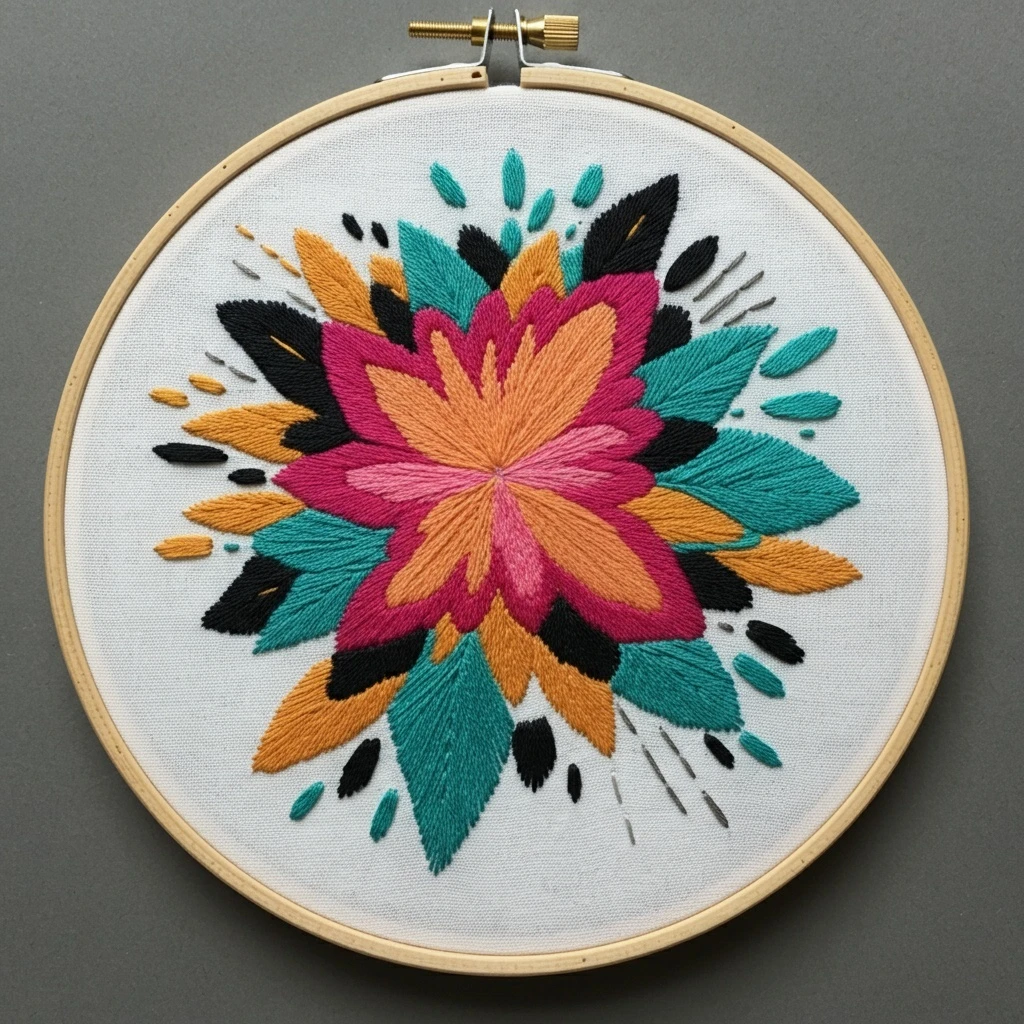
Likely DMC Color Palette
Colors are matched to the visible hoop preview: saturated magenta and coral-pink flower sections, orange-gold petal shapes, bright turquoise foliage, almost-black accents, and soft grey line details. Percentages are visual estimates rather than exact thread usage.
Thread Count & Blending
Main fill areas
Use 2 strands for satin stitch and long-and-short fills. This keeps the modern flower smooth while still allowing directional texture to show.
Fine details
Use 1 strand for grey rays, small black marks, thin petal veins, and any outline corrections. One strand prevents the background details from becoming bulky.
Blended highlights
For softer shifts, thread one strand of DMC 604 with one strand of DMC 3805 in pink petals, or one strand of DMC 741 with one strand of DMC 742 in the orange-gold areas.
Suggested Work Order
- Transfer the design lightly so the pale ground fabric stays clean.
- Stitch the hidden black and teal background leaves first, especially shapes tucked behind the flower.
- Fill the large central bloom from the center outward, keeping all stitches angled toward the flower center.
- Add small floating ovals, grey lines, and accent stitches last for a crisp graphic finish.
- Press from the back over a towel to protect raised satin and long-and-short texture.
Stitching Suggestions
| Design element | Best stitch types | Practical notes |
|---|---|---|
| Central magenta petals | Long-and-short stitch, satin stitch | Angle stitches from the petal edge toward the center point. Use DMC 3805 for the body, DMC 604 for bright streaks, and DMC 3806 where one petal tucks under another. |
| Orange-gold petal lobes | Satin stitch with directional split-stitch guide lines | Lay split-stitch outlines first, then cover with smooth satin or long-and-short stitches. Blend 741 and 742 so the orange shapes feel warm but not flat. |
| Teal leaves | Fishbone stitch, satin stitch, long-and-short stitch | Use fishbone stitch on pointed leaves for a visible center vein. Place darker 3844 along lower edges and lighter 3846 on tips facing outward. |
| Black graphic accents | Satin stitch, padded satin, backstitch edge | Keep these shapes dense and clean. If the black area is wide, split it into short satin sections rather than making overly long stitches that may snag. |
| Small floating ovals | Satin stitch or detached chain | Use 1-2 strands depending on size. For tiny marks, two straight stitches side by side can look neater than a full satin fill. |
| Grey motion lines | Straight stitch, backstitch | Use one strand of DMC 414 and keep lines irregular in length. These marks should frame the flower without competing with the saturated colors. |
| Center point | Tiny straight stitches, seed stitch, single French knot | Anchor the visual movement with a small warm knot or crossed stitches. Avoid a bulky center because the design is mostly flat and graphic. |
Outlining Details
Most edges can be left clean without heavy outlines. Where a petal edge needs definition, use one strand of the darker neighboring color in split stitch rather than black. Reserve DMC 310 for the intentional bold black shapes only.
Shading Guidance
The design reads as abstract, so shading should be graphic rather than realistic. Use short bands of lighter pink and darker teal to suggest depth while preserving strong flat color blocks.
Texture Suggestions
Contrast smooth satin black accents with slightly feathered long-and-short petals. Use fishbone leaves to add a woven botanical texture without making the whole hoop too busy.
Beginner-Friendly Practical Tips
- Use a sharp embroidery needle and keep the fabric drum-tight; satin stitches look much cleaner on a firm surface.
- Shorten long satin spans by dividing large shapes invisibly along the stitch direction.
- Keep thread lengths around 18 inches to reduce fuzzing in the bright turquoise and magenta floss.
- Park similar colors together: stitch all teal background leaves, then all orange pieces, then all magenta petal sections.
- For crisp points, bring the needle up just inside the outline and go down exactly at the point rather than pulling too tightly.
- Step back often. This pattern depends on balance between saturated color and white space, so the small accents should feel airy.