
DMC palette & stitching guide
Neutral Baroque Damask Beaded
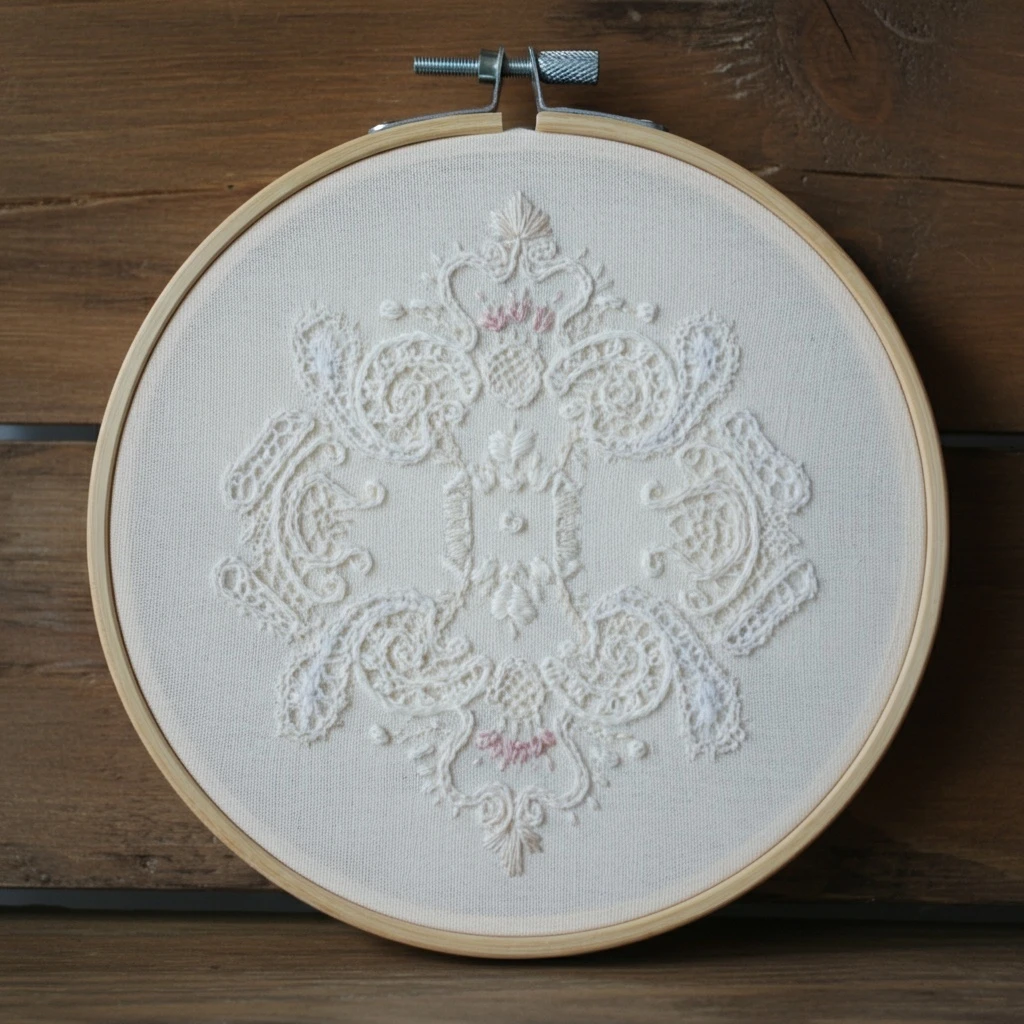
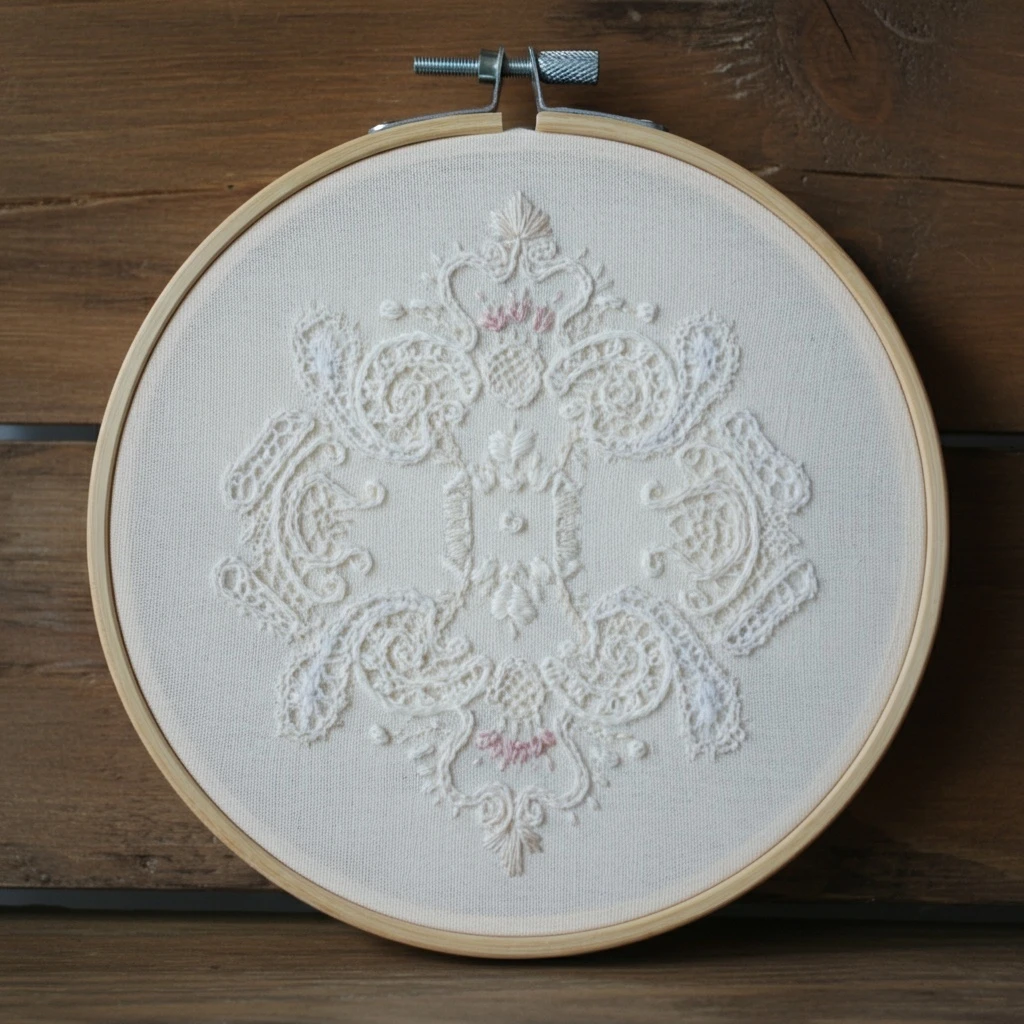
A refined embroidery planning page for an ivory-on-linen baroque damask motif with raised scrollwork, symmetrical leafy curls, soft champagne shadows, tiny blush accents, and bead-like highlights. The palette stays intentionally quiet so texture, padding, and shine become the star of the finished hoop.
Likely DMC Color Palette
The preview reads as a low-contrast neutral damask on pale linen: creamy raised scrolls, beige-taupe shadow lines, tiny pearly bead points, and very restrained dusty rose accents. Coverage percentages are visual planning estimates, not exact thread yardage.
Stitching Suggestions
Padded satin + split stitch
Build the ornate curls with a split-stitch outline first, add a narrow padding layer, then cover with satin stitches that follow each curve.
Chain stitch and whipped backstitch
Use chain stitch for plush raised vines and whipped backstitch for rounded tendrils without adding too much bulk.
Fishbone or closed fly stitch
Work leaves from base to tip in 3865, then add one-strand 739 or 3033 vein lines for carved relief.
Seed-bead anchoring
Attach each bead with a double pass of matching thread. Keep beads at scroll tips, center dots, and symmetry points rather than scattering heavily.
Tiny straight stitches
Use 1 strand of 223 with a few 3722 base stitches for the delicate pink tufts; keep them small so they feel antique, not floral-heavy.
1-strand backstitch
Outline only the shadow side of major shapes with 3033 or 3864. Broken outlines look more elegant than a full dark border.
Thread Count, Blending & Shading
Recommended strand counts
- 2 strands: most satin fills, chain-stitch curls, and raised scroll bands.
- 1 strand: taupe outlines, blush marks, feathered shading, and tiny inner curls.
- 3 strands: only for the thickest padded central accents if the fabric can support extra height.
- Beading thread: use one strand doubled or a fine beading thread in ivory for better durability.
Neutral blending ideas
- Blend 3865 + Ecru for soft antique ivory scrolls.
- Blend 739 + 3033 for gentle shadow without making the motif look brown.
- Use B5200 only on the highest ridges and bead-adjacent highlights.
- Blend 223 + 3865 for powdery pink accents that stay muted.
Raised ivory
Pad with Ecru or 712, then satin over with 3865. Add B5200 sparingly on the top edge of curves.
Carved shadow
Place 3033 on the lower or inner side of curls. Add 642 only in the deepest recesses to avoid harsh contrast.
Blush detail
Use three to five short stitches per accent cluster. A tiny 3722 base with 223 over the top creates soft petal-like warmth.
Beaded Damask Details
The reference design has a soft, pearly look rather than a jewel-heavy look. Choose small beads that echo the neutral palette and place them after all stitching is complete.
Ivory pearl seed beads
Best for the central dots and scroll endpoints. Size 11/0 gives sparkle without overpowering fine threadwork.
Clear or crystal beads
Use only where light should catch: top flourish, side bead dots, and the center medallion.
Pale rose beads
Optional for the blush clusters. Limit to one or two beads per cluster so the damask stays neutral.
Where to Start
Transfer lightly. Use a fine washable pen or pale transfer method. Heavy marks can show through ivory thread on neutral fabric.
Establish symmetry. Stitch the central vertical ornaments first, then match the left and right scrolls so the damask stays balanced.
Pad the main scrolls. Work split-stitch padding under the thickest curves before satin or chain stitches.
Add shadows last. Place taupe outlines after the ivory fills so you can judge exactly where more definition is needed.
Finish with beads. Add beads after pressing the embroidery from the back. Avoid ironing directly over beads.
Beginner-Friendly Practical Tips
Keep the texture elegant
- Use short satin stitches on tight curves; long stitches can snag or twist.
- Turn the hoop as you stitch so your needle follows the scroll direction naturally.
- For raised areas, padding should be smaller than the final shape so edges remain clean.
- Repeat the same stitch direction on mirrored elements for a professional damask finish.
Avoid common issues
- Do not over-outline every ivory shape; choose shadow edges only.
- Use a sharp needle for dense satin and a beading needle for seed beads.
- Keep thread lengths under 18 inches to prevent ivory floss from dulling or fuzzing.
- Test bead placement on top of the hoop before stitching them down permanently.
Encouraging Finish
This design will look most luxurious when the contrast is subtle and the surface is dimensional: creamy raised scrolls, taupe shadows tucked into the curves, tiny blush notes, and restrained pearl-like beads. Work slowly from the center outward, compare mirrored sections often, and let the neutral texture create the baroque drama.