
DMC color palette & hand embroidery guide
Whimsical Floral Wreath
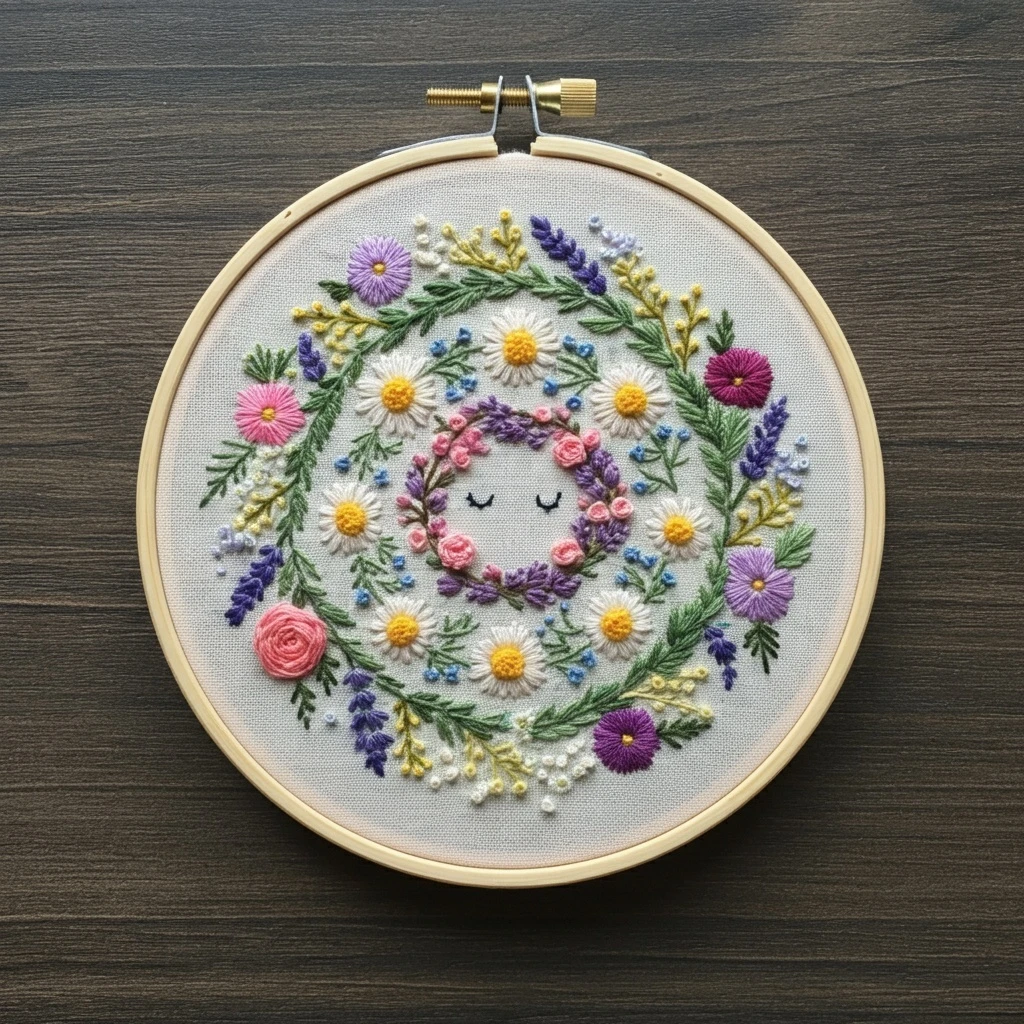
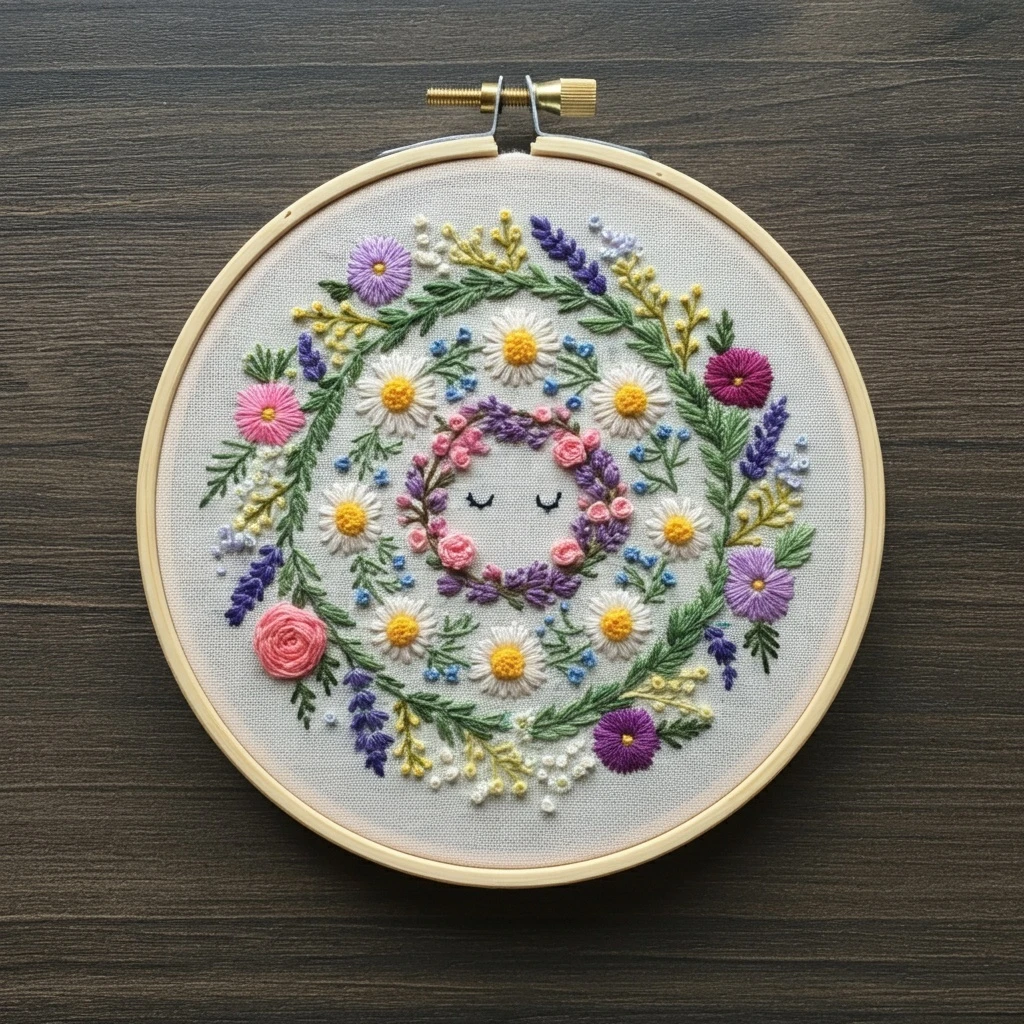
A light, storybook-style wreath works best when the stitching feels airy rather than packed: rounded blossoms, small leafy sprigs, tender vine curves, and cheerful color pops arranged around an open center. This guide translates the design into a practical DMC palette with stitch choices that keep the wreath soft, bright, and beginner friendly.
Design read & color story
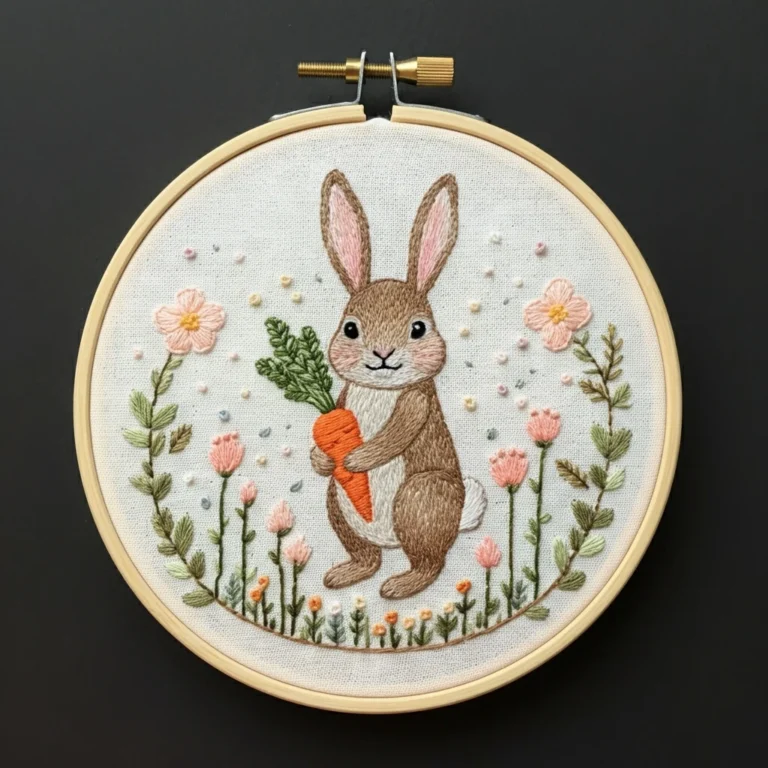
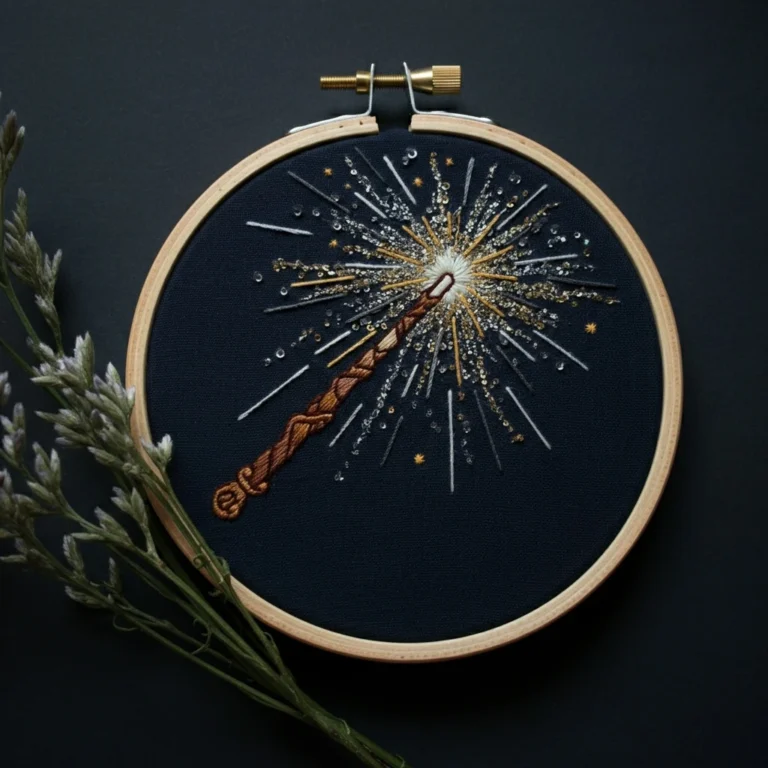
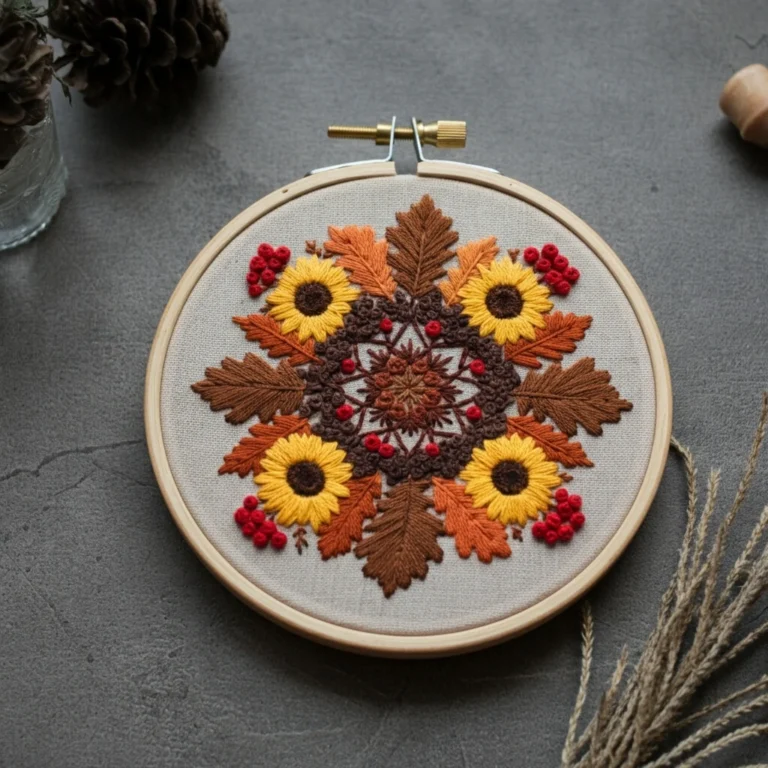
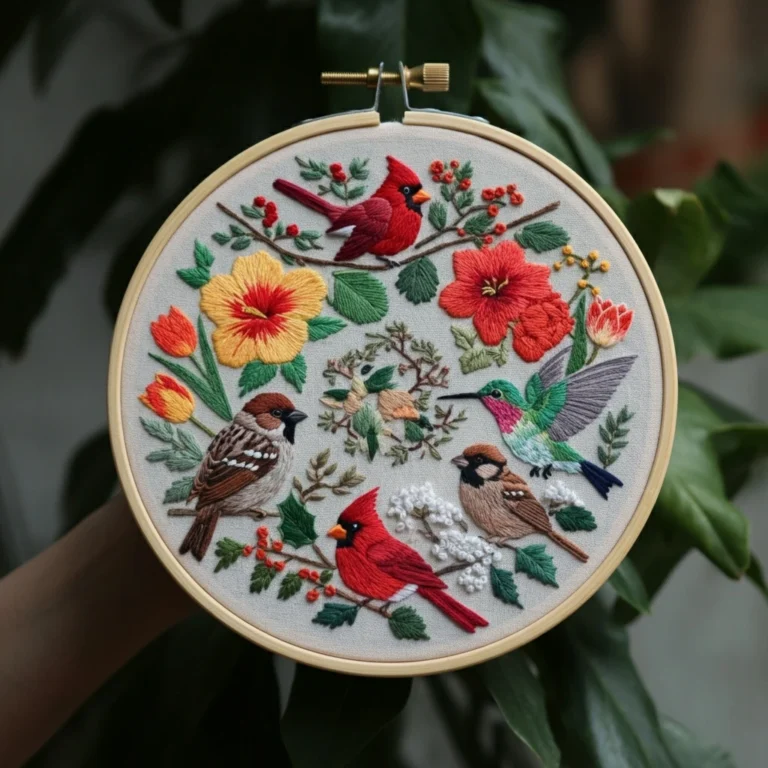
The reference suggests a charming floral hoop with a circular wreath rhythm: small blossoms clustered along a curved vine, fresh green leaves, warm accent flowers, and lighter filler details. Keep the center open and let the embroidery breathe.
Whimsical, garden-sweet, and decorative rather than realistic. Use clean outlines, rounded petal groups, and small repeated motifs.
Mix satin stitch petals with lazy-daisy leaves, French knot flower centers, and split-stitch stems for a lively wreath edge.
Use pink/coral/purple as accents, sage and medium greens as structure, and cream/yellow knots to add sparkle without crowding.
Suggested DMC palette
Use these as close practical floss matches. The palette is designed for clear contrast on natural linen, cotton, or pale cream fabric.
Stitch plan by design area
Rounded flowers
Use satin stitch for larger petals, starting at the petal base and angling toward the outer curve. For tiny blossoms, use detached chain petals or simple lazy-daisy stitches around a French-knot center.
satin stitchlazy daisyFrench knotsVines and stems
Work the wreath circle first with split stitch or stem stitch in 1–2 strands. Keep the curve smooth by using short stitches around tight bends and slightly longer stitches along open arcs.
stem stitchsplit stitch1–2 strandsLeaves and sprigs
Use lazy-daisy leaves for the whimsical look. Add a straight stitch vein in darker green only on larger leaves; leave tiny leaves plain so they do not look heavy.
detached chainstraight stitch veinsFiller dots and sparkle
Use French knots and seed stitches to fill gaps. Place them in uneven groups of three or five so the wreath feels organic, not mechanically spaced.
French knotsseed stitchThread-count guidance
| Area | Recommended strands | Why it works |
|---|---|---|
| Fine wreath stems | 1 strand for delicate lines, 2 strands for visible curves | Keeps the circular vine graceful and prevents bulky intersections. |
| Main flower petals | 2 strands | Gives good coverage while preserving petal shape and stitch direction. |
| Large focal blossoms | 2–3 strands | Adds fullness only where the eye should land first. |
| French knot centers | 1–2 strands, one or two wraps | Small knots look cleaner; extra wraps can overwhelm tiny petals. |
| Outlines and details | 1 strand | Fine outlining gives definition without cartoon-heavy borders. |
Blending, shading & outlining
For larger flowers, thread one strand of DMC 3716 with one strand of DMC 3806. Work the inner half of the petal with the blend, then use pure 3806 or 352 at the outer tip.
Stitch back leaves in 3012, front leaves in 470, and add tiny shadow stitches in 3345 where leaves tuck under flowers.
Use split stitch in a darker version of the local color instead of black. Pink flowers can be edged with 3806, coral with 352, and leaves with 3345.
Cluster 744 and 3820 French knots. Put the deeper 3820 toward the lower edge of a flower center to suggest shadow.
Beginner-friendly stitching order
Texture and finishing suggestions
- Airy spacing: leave small fabric gaps between flowers and leaves; negative space is what keeps a whimsical wreath light.
- Petal direction: fan satin stitches from the center outward rather than stitching all petals vertically.
- Raised accents: use French knots for pollen and berry-like dots, but keep the wraps consistent for a polished finish.
- Hoop tension: tighten fabric before stitching long curves; slack fabric makes stems look wobbly.
- Back neatness: carry threads only short distances behind pale fabric, especially between scattered filler flowers.
- Final press: press face down on a towel after stitching so knots and petals keep their raised texture.