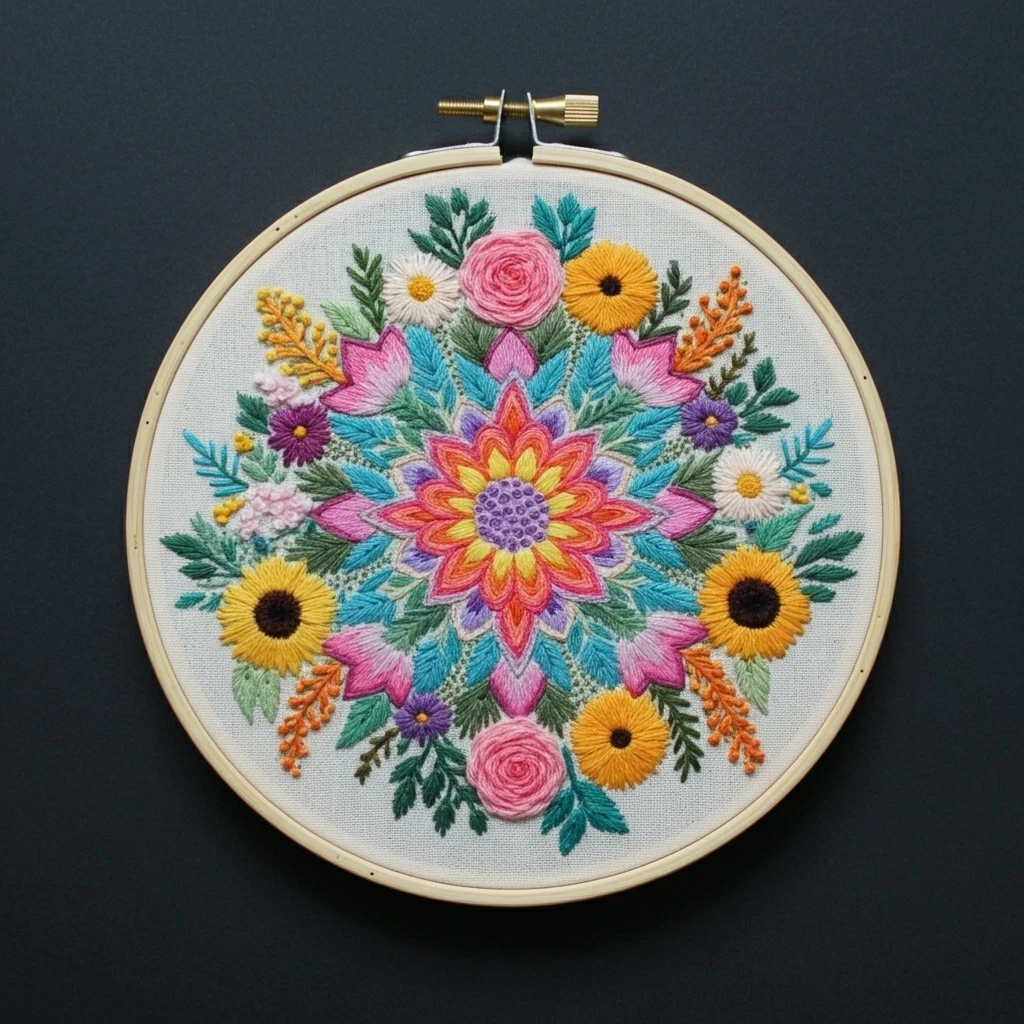

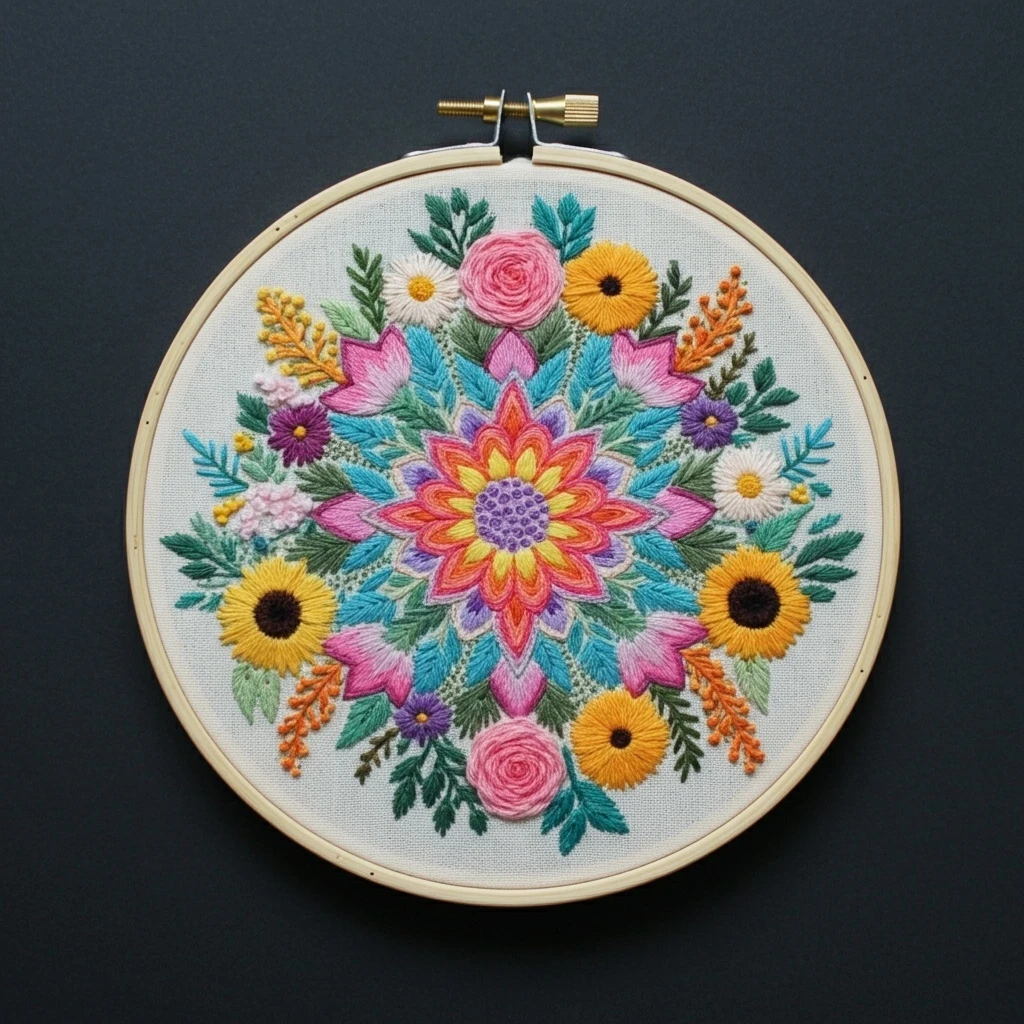
Pumpkin Patch Autumn Harvest
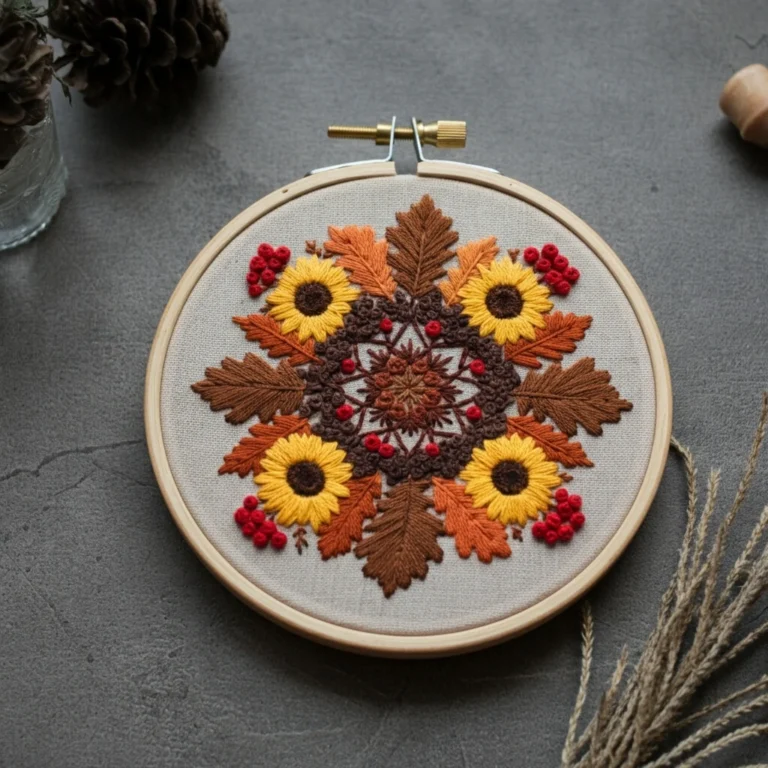
A warm harvest hoop filled with plump pumpkins, curling vines, autumn leaves, wheat-like stems, and cozy golden-brown fall texture. The design should feel abundant and rustic: rounded pumpkin shading, soft botanical movement, and small seed-stitch details that create the impression of a lively patch.
Design color read
This harvest design uses layered oranges, golden yellows, muted greens, tan wheat, and warm browns. The pumpkins need several orange values so each rib looks rounded. The surrounding foliage should stay softer and earthier, with olive, sage, straw, and coffee-brown accents giving the patch a natural autumn finish.
Suggested DMC floss palette
These DMC colors create a grounded autumn palette with enough contrast for pumpkin dimension and enough muted tones for foliage and harvest fillers.
Rich pumpkin midtone and rusty autumn leaf accents.
Deep pumpkin grooves, shadowed lower edges, and saturated harvest warmth.
Main pumpkin body color for satin or long-and-short rib fills.
Raised pumpkin rib highlights and small glowing harvest accents.
Tiny highlight stitches on pumpkin tops, wheat tips, and warm light flecks.
Wheat stalks, straw details, and golden-brown seed textures.
Deeper wheat shadows, acorn-like accents, and dry harvest stems.
Pumpkin stems, vine outlines, grounding shadows, and dark seed details.
Main muted leaves and curling pumpkin vines.
Deep leaf shadows and vine bases tucked behind pumpkins.
Leaf highlights and soft sage touches around the pumpkin patch edges.
Muted rusty leaves, warm shadows, and subtle color variation in the harvest bed.
Stitch map by design element
Pumpkin bodies
Use long-and-short stitch or satin stitch rib by rib. Curve each stitch direction to follow the rounded pumpkin form.
Rib grooves
Use split stitch or backstitch in darker orange/copper along groove lines. Add one-strand highlights on the raised rib centers.
Leaves
Use fishbone stitch for larger leaves and detached chain for small leaves. Blend khaki green with pine green at the base.
Vines and tendrils
Use stem stitch or whipped backstitch for curling lines. Keep tendrils one strand so they stay delicate.
Wheat and straw
Use straight stitches and fly stitches in hazelnut and topaz. Add pale yellow tips for dry autumn texture.
Ground texture
Use seed stitch, tiny detached chains, and small straight stitches in brown, rust, and straw tones to suggest patch fullness.
Thread-count and blending guidance
| Area | Strands | Blending idea | Practical note |
|---|---|---|---|
| Pumpkins | 2 strands for fill, 1 strand for final highlights | Use 720 or 921 in grooves, 741 through the main rib, and 742/744 on the raised center. | Stitch each pumpkin rib separately to avoid a flat orange oval. |
| Leaves and vines | 1–2 strands | Pair 3362 at leaf bases with 3012 midtones and 3013 at tips. | Use one strand for vine curls; bulky curls can distract from the pumpkins. |
| Wheat and straw | 1 strand for fine stalks, 2 strands for focal stems | Alternate 3828 and 780, then add occasional 744 straight stitches at tips. | Vary stalk height and angle so the harvest filler looks natural. |
| Outlines and shadows | 1 strand | Use 898 for stems and grounding; use 3859 for softer rusty shadows where brown feels too heavy. | Outline selectively—main pumpkin edges, stem bases, and a few overlapping forms only. |
Recommended stitching order
- Transfer pumpkin rib lines, major stems, vine curls, wheat stalks, and leaf shapes with a fine removable mark.
- Stitch background wheat, small leaves, and vine lines that sit behind the pumpkins.
- Fill pumpkins from back to front, stitching each rib as its own small curved section.
- Add stems, leaf details, tendrils, and seed-stitch ground texture around the pumpkin bases.
- Finish with highlights, tiny warm flecks, and selective outlines to clarify overlaps.
Beginner-friendly practical tips
- Keep the fabric taut so satin-filled pumpkin ribs do not pucker.
- Use shorter stitches near pumpkin tops and bottoms where the ribs narrow.
- Do not make every pumpkin the same orange; even a few copper and yellow stitches add depth.
- Work vines after pumpkins only if they cross over the front; otherwise stitch them first.
- Step back often to check that the design still reads as a patch, not a cluster of separate objects.
Texture, shading, and finishing notes
The finished design should feel full but not crowded. Let the pumpkins carry smooth rounded stitchwork, then use loose botanical stitches around them for rustic harvest movement.
Pumpkin dimension
Think of each rib as a curved wedge. Darker stitches belong in the grooves and lower edges; lighter tangerine stitches belong on the raised centers and top shoulders. A few pale yellow threads can suggest autumn sunlight.
Harvest texture
Use uneven seed stitches and small straight stitches around the base of the pumpkins. Vary green, straw, rust, and brown so the patch looks organic, but keep the densest texture near the ground line.