
DMC palette & embroidery notes
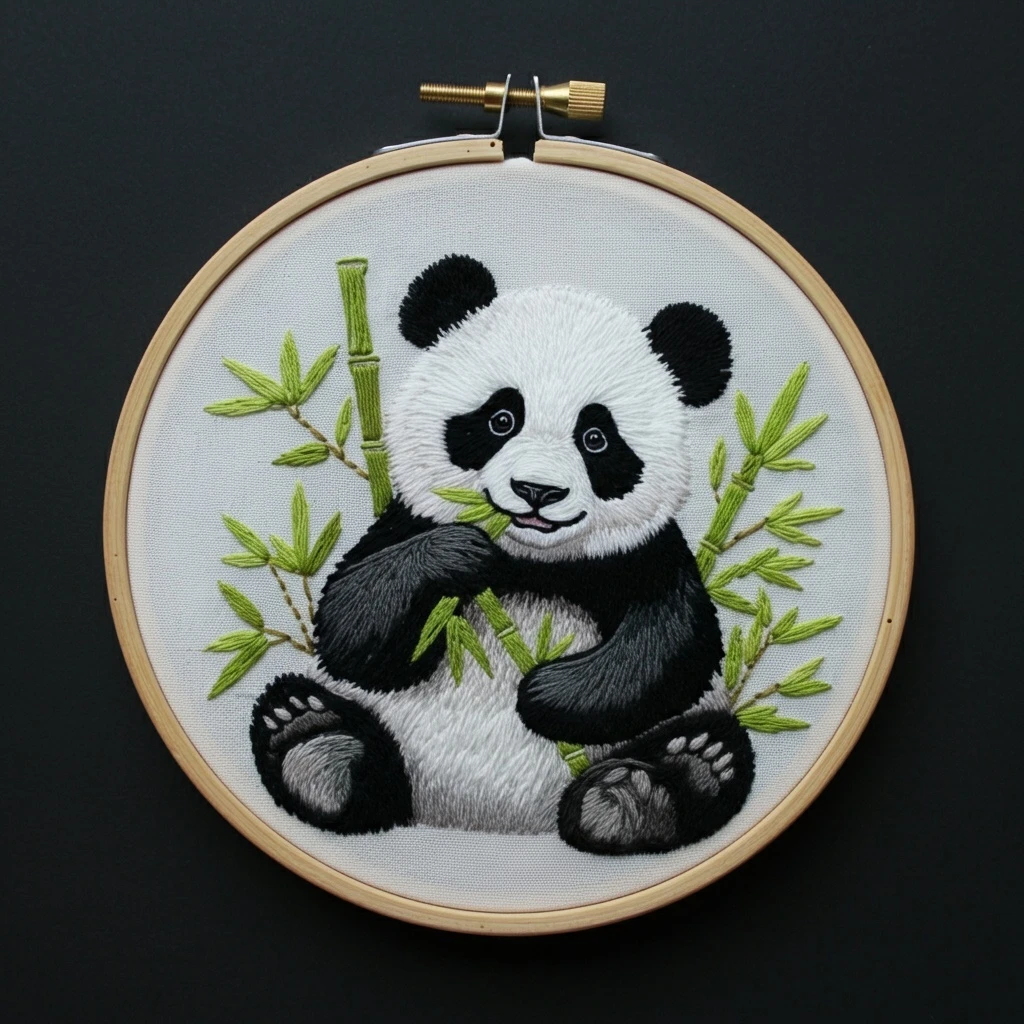
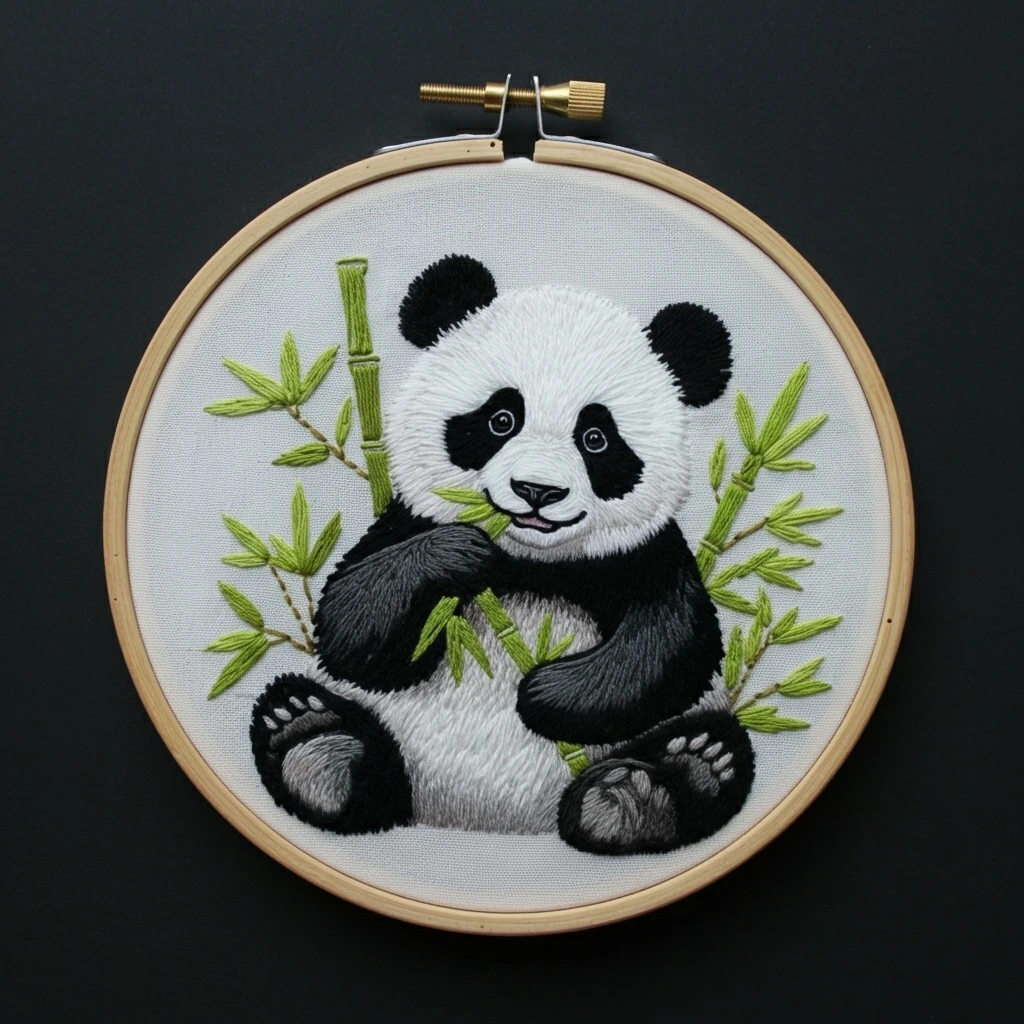
Cute Panda Eating Bamboo
A soft, rounded panda portrait with fluffy black-and-white fur, glossy eyes, tiny nose details, and fresh bamboo leaves. The look depends on gentle directional stitches, clean dark patches, and lively layered greens.
Beginner friendlyFur textureBamboo leavesSoft shadingClean outlines
Suggested DMC Color Palette
Use these shades as a practical floss map. The panda needs high contrast, but the finished embroidery looks softer when the black areas include charcoal highlights and the white fur includes pearl-gray shadows.
DMC Blanc White
Main panda face, muzzle, belly, toe highlights, and the brightest fur strokes.
DMC 3865 Winter White
Warm undertone for face and belly so the white areas do not look flat or stark.
DMC 762 Very Light Pearl Gray
Soft fur shadows around cheeks, belly curve, paws, and lower face.
DMC 318 Light Steel Gray
Medium gray strokes on arms, feet, and the shaded underside of white fur.
DMC 413 Dark Pewter Gray
Charcoal highlight lines inside black limbs and paws; blend sparingly with black.
DMC 310 Black
Ears, arms, legs, eye patches, nose, mouth outline, and final crisp definition.
DMC 469 Avocado Green
Deep bamboo stem shading and leaf bases tucked behind the panda.
DMC 470 Light Avocado Green
Main bamboo leaves and mid-tone stem sections.
DMC 471 Very Light Avocado Green
Leaf tips, center veins, and bright lifted strokes on the bamboo the panda is eating.
DMC 3348 Light Yellow Green
Small springy highlights on young leaves and fresh bamboo shoots.
DMC 839 Dark Beige Brown
Tiny branch joints and fine twig lines behind bamboo leaves.
DMC 761 Light Salmon
A single delicate touch for the panda’s mouth/tongue accent, used very lightly.
Stitch Types & Where to Use Them
Long and short stitchPrimary fill for the face, belly, arms, ears, and feet. Follow the fur direction: radiating outward on the face, downward on the belly, and curved around paws.
Satin stitchUse for compact bamboo leaves, nose top, small toe pads, and smooth inner eye highlights. Keep leaf stitches angled from base to tip.
Stem stitchIdeal for bamboo stems, twig lines, the mouth curve, and gentle contour lines around cheeks and paws.
Split stitchUse as a neat boundary before filling the panda body, especially around the face circle, ears, limbs, and eye patches.
Back stitchFor final crisp details: eye rings, nose bridge, mouth, small claw/toe separations, and bamboo segment edges.
French knotsAdd tiny eye shine or optional texture dots in the bamboo joints. Use one strand for very small accents.
Thread Count Guidance
| Area | Strands | Reason |
|---|---|---|
| Face and belly fur | 1–2 strands | One strand gives realistic wispy fur; two strands fill faster for beginner projects. |
| Black ears and limbs | 2 strands | Provides full coverage while still allowing charcoal highlight stitches on top. |
| Bamboo leaves | 2 strands | Produces bright, plump leaves that stand out against the panda body. |
| Outlines and facial details | 1 strand | Keeps the expression cute and delicate rather than heavy. |
| Stem sections | 2–3 strands | Use three strands only for the thick upright bamboo cane. |
Blending & Shading Ideas
- Soft white blend: Alternate Blanc and 3865 in the face; add 762 near the edge of the cheeks, under the chin, and around the belly sides.
- Charcoal black blend: Place DMC 413 over DMC 310 in short curved strokes on arms and feet so the fur has visible direction.
- Fresh bamboo blend: Use 469 at leaf bases, 470 through the center, and 471/3348 at tips for a sunny, dimensional leaf.
- Eye sparkle: After black eye patches are complete, add a tiny dot or small straight stitch in Blanc or 762.
Beginner shortcut: Outline each major panda shape with split stitch first. This creates a tidy border that hides uneven fill edges.
Step-by-Step Stitching Order
| Step | What to stitch | Practical note |
|---|---|---|
| 1 | Transfer and stabilize | Use a fine washable pen; keep the hoop drum-tight so long-and-short stitches do not pucker. |
| 2 | Bamboo behind the panda | Work background leaves and stems first so the panda can overlap them cleanly. |
| 3 | White face and belly | Stitch fur directionally, starting with the lightest shades and layering gray shadows last. |
| 4 | Black ears, limbs, patches | Fill with 310, then add 413/318 highlights while following the curve of each shape. |
| 5 | Bamboo in the paws | Use brighter greens here because this foreground bamboo is the playful focal accent. |
| 6 | Face and finishing details | Use one strand for eyes, nose, mouth, toe marks, and final outline corrections. |
Texture Suggestions
- Keep fur stitches slightly uneven in length; perfectly even stitches can make the panda look flat.
- For the round cheeks, angle stitches outward from the muzzle toward the face edge.
- Use tiny overlapping stitches on the feet to suggest soft pads and rounded toes.
- Make bamboo leaves pointed by bringing each satin stitch to a shared leaf tip.
- Leave small open spaces between some green leaves for a light, airy bamboo cluster.
Outlining Details
- Use DMC 310 in one strand for the nose, mouth, eye patches, and the deepest separation lines.
- Use DMC 413 instead of black along some black-fur edges if you want a softer plush-toy look.
- Outline bamboo stems with 469 on the shadow side and 471 on the light side.
- Keep the mouth very fine; one small 761 stitch is enough for the pink accent.
Finishing tip: Step back before adding the final outline. Too much black around the white face can reduce the fluffy effect.