What is the best embroidery machine for a beginner – Essential Information

What this means (and why it gets annoying fast)
If you’ve been searching what is the best embroidery machine for a beginner, I’m guessing something went a little… off. Don’t worry—most embroidery “disasters” are just tiny, fixable problems (and not a personal failure).
Think of this as your what is the best embroidery machine for a beginner tips that doesn’t assume you were born holding an embroidery hoop. We’ll go step-by-step, call out the common mistakes, and I’ll point out when to slow down so you don’t stretch needle holes or fray floss strands.
Also, if you want a cute project to practice on after this, Textured Autumn Forest and River Embroidery | Hand Embroidery Pattern PDF is a fun one (and it’s way more forgiving than it looks).
- Which tools make the job easier (and which ones are optional)
- How to avoid puckering, fraying, and messy backs
- How to prep your fabric so it doesn’t fight you
- A step-by-step process you can repeat on any project
- Quick fixes when things go sideways
Tools + materials you’ll want nearby
Before you jump in, grab a few basics. The right tools keep you from accidentally shredding thread or stretching fabric fibers. If you’re marking placement or guidelines, a beginner embroidery kit can be really handy (especially if you’re a “measure once, panic twice” person).

- Embroidery scissors (sharp enough to actually cut, not just bully the thread)
- Seam ripper (for clean undo work—no stabbing required)
- Tweezers (great for grabbing tiny thread tails)
- Needle threader (because eyes get tired)
- Embroidery hoop (stability = fewer stretched needle holes)
- Stabilizer (especially for knits or machine work)
- Thread conditioner (optional, but nice for smooth floss strands)
If you’re doing machine embroidery, also keep an eye on machine settings/tension—tiny tweaks can change everything.
What is the best embroidery machine for a beginner: step-by-step
Alright—here’s the repeatable process. Once you do it once, you’ll basically be able to do it in autopilot.

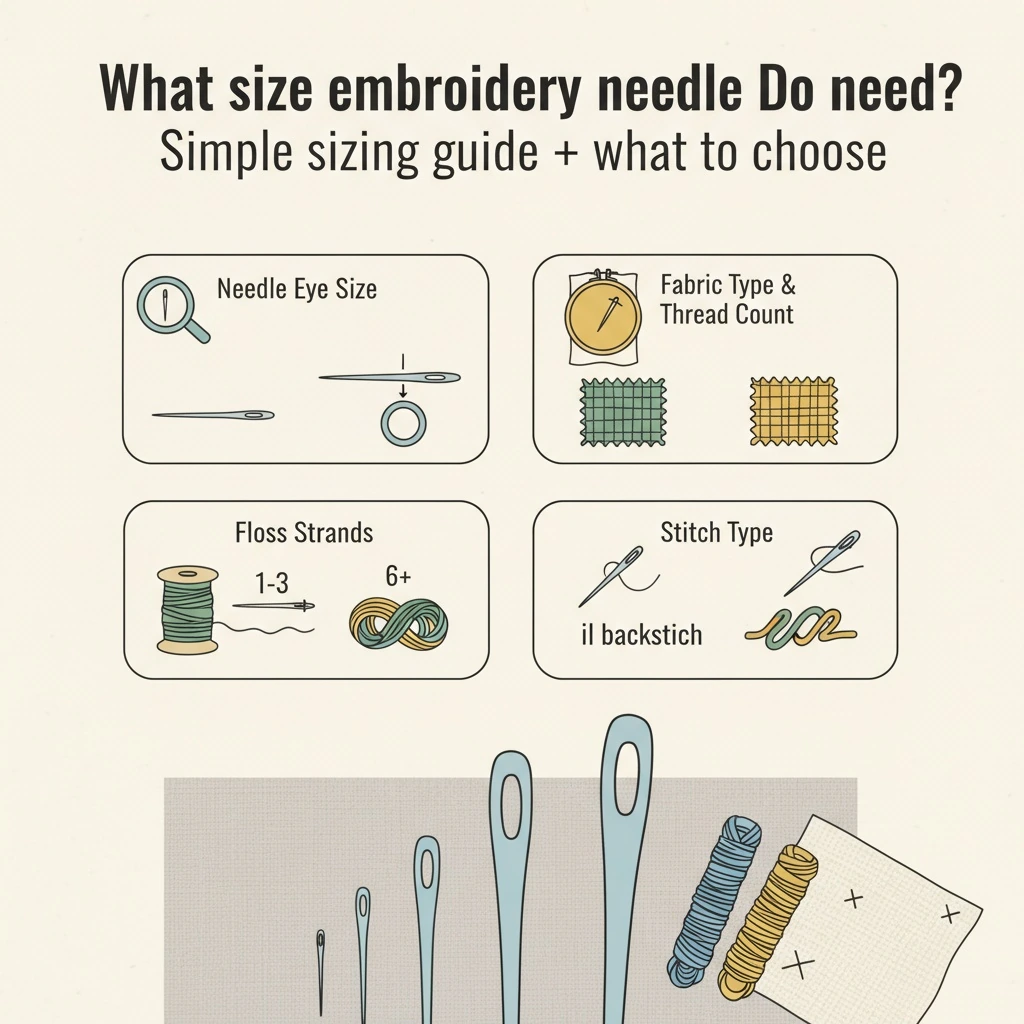
- Choose the right needle size and a fresh needle (seriously). A dull needle can shred thread and mess with tension fast.
- Hoop your fabric with the correct stabilizer so it’s drum-tight but not stretched. This keeps fabric fibers from warping.
- Thread the top and bobbin carefully, then do a quick tension check. If bobbin thread is peeking up, pause and adjust.
- Load the design and double-check placement. A washable marking tool or template helps you avoid the “why is it crooked?” moment.
- Run a small test on scrap with the same layers. Watch for puckering, looping, or thread breaks before you commit.
- Stitch the full design at a steady speed. If you hear angry clunking or see nests, stop—don’t power through it.
- Finish by trimming jump threads, removing stabilizer neatly, and pressing from the back with a pressing cloth.
Finish strong: trim cleanly, smooth the fabric, and don’t forget to remove stabilizer the right way (slowly, not violently).
Troubleshooting + common mistakes
If it didn’t go perfectly on the first try, welcome to the club. Here are the usual culprits (and easy fixes).
- Puckering: add/adjust stabilizer, reduce density, and make sure the hoop is tight (not stretched).
- Thread breaks: swap to a fresh needle, rethread top + bobbin, and slow down the stitch speed.
- Loops on the back: check machine settings/tension and confirm the bobbin is inserted correctly.
- Gaps at edges: try a different underlay or add a tiny bit of pull compensation.
- Shredded thread: needle eye might be too small—bump up needle size or switch thread type.
If you’re switching between hand embroidery and machine embroidery, remember: the rules are similar, but the “fix” is often different.
You might also like: Textured Autumn Forest and River Embroidery | Hand Embroidery Pattern PDF
Fabric, thread types, and when to avoid the “just force it” method
Different fabrics behave differently, and embroidery doesn’t always play nice with every material. A stable weave is usually the easiest place to start.
If you’re working on knits, stretchy tees, or anything drapey, stabilizer is your best friend. It supports the stitches and keeps the design from warping.
If you’re ready for more practice projects, browsing hand embroidery patterns is a fun way to find something at your skill level.
- Delicate fabrics: test first and keep tension relaxed
- Knits: use stabilizer and avoid pulling tight
- Thick fabrics: choose a sturdy needle and go slower
If something feels “fight-y,” it’s usually the fabric-stabilizer-thread combo—not you.
Final thoughts on what is the best embroidery machine for a beginner
At the end of the day, what is the best embroidery machine for a beginner is mostly about patience and good habits. Keep your tools sharp, watch your tension, and don’t be afraid to undo a few stitches when something looks off.
You don’t need “perfect hands.” You just need a repeatable process and a little practice.
You might also like: Bradove Classic Embroidery Stitches Practice Kit • DMC step-by-step embroidery stitch guide
FAQ
Here are the common “wait, but what about…” questions:
Can beginners really learn what is the best embroidery machine for a beginner?
If it feels fiddly, that’s normal—your hands learn faster than your brain. Don’t be afraid to undo a few stitches—clean fixes always look better.
What needle size should I use for what is the best embroidery machine for a beginner?
If it feels fiddly, that’s normal—your hands learn faster than your brain. For machine work, recheck needle size, bobbin thread, and machine settings/tension.
Do I always need stabilizer for what is the best embroidery machine for a beginner?
A quick sample stitch-out (or mini practice patch) saves a ton of frustration. For machine work, recheck needle size, bobbin thread, and machine settings/tension.
Why is my bobbin thread showing during what is the best embroidery machine for a beginner?
Most issues come down to tension, stabilizer, or pulling the thread too hard. Don’t be afraid to undo a few stitches—clean fixes always look better.
How do I fix tension issues with what is the best embroidery machine for a beginner?
A quick sample stitch-out (or mini practice patch) saves a ton of frustration. Don’t be afraid to undo a few stitches—clean fixes always look better.
What fabric works best for what is the best embroidery machine for a beginner?
If it feels fiddly, that’s normal—your hands learn faster than your brain. If you’re unsure, ask a local shop or a more experienced stitcher for a quick second opinion.
Key Takeaways
Pin this list in your brain for later:
- Test on scrap fabric before doing the real thing
- Trim cleanly with embroidery scissors (not kitchen scissors)
- Support the fabric with a hoop so stitches stay neat
- When it’s messy, undo a few stitches and reset calmly
- Use stabilizer on stretchy or tricky fabrics
- Keep tension even—no yanking, no slack spaghetti
- Match needle size to thread so needle holes don’t get huge