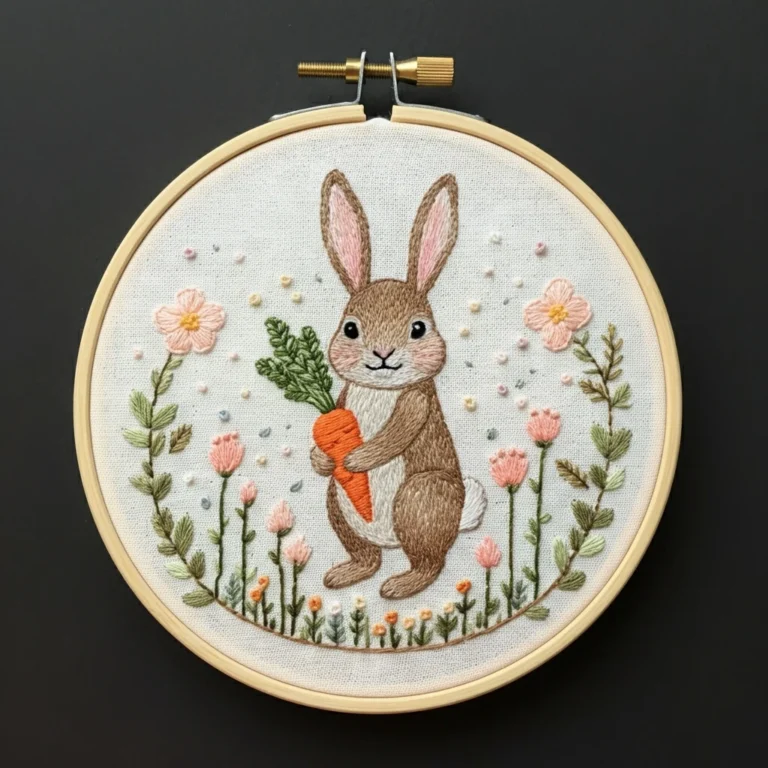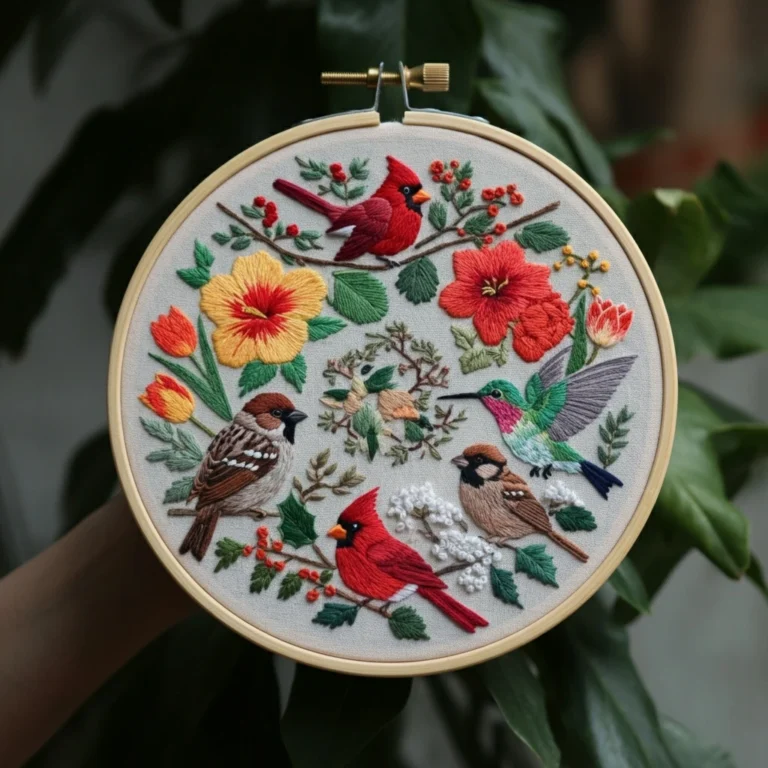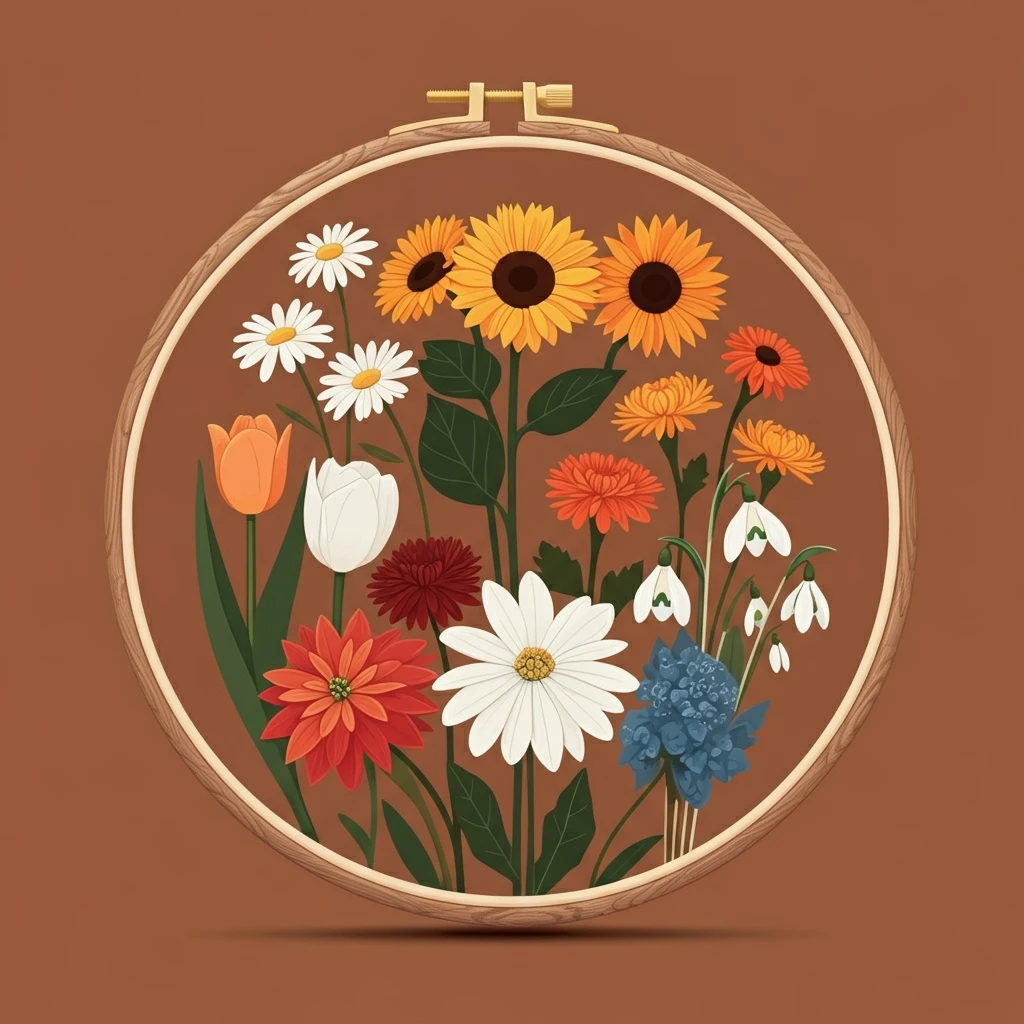

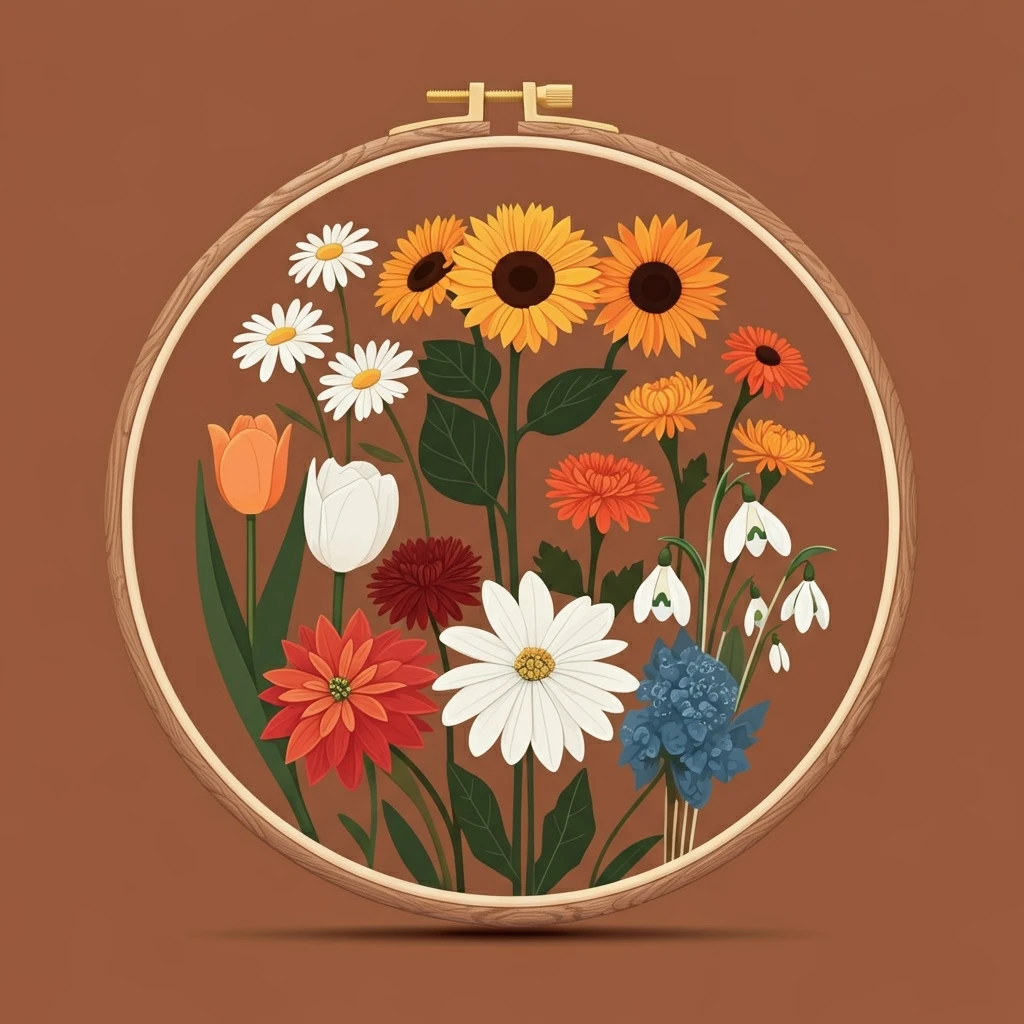
Botanical Floral Hoop Illustration
A botanical hoop illustration is all about graceful stems, layered leaves, open blossoms, tiny buds, and airy negative space. This guide uses a garden-inspired palette of dusty pinks, golden centers, soft creams, plum accents, and fresh sage greens so the embroidery feels delicate, natural, and polished.
Polished DMC Color Palette
This palette is designed for a balanced botanical hoop: greens for stems and leaves, dusty roses for petals, warm yellows for flower centers, creamy highlights, and deeper mauve-plum tones for shadows and small accent blooms.
Stitch Map by Design Element
Thread Count & Blending Guide
Delicate linework
Use 1 strand for tendrils, leaf veins, thin outlines, tiny buds, and any botanical sketch lines. One strand keeps the illustration light and elegant.
Main floral fills
Use 2 strands for satin petals, fishbone leaves, larger lazy-daisy leaves, and most visible flowers. This gives clean coverage without making the design bulky.
Raised centers
Use 2–3 strands for French knots or colonial knots in flower centers. Three strands creates plump pollen texture; two strands is neater for small blossoms.
Shading, Outlining & Texture Suggestions
Petal shading
- Place darker stitches at the base of each petal and lighter stitches at the outer tip.
- Angle long-and-short stitches toward the flower center so petals look cupped.
- Use 3716 sparingly as a highlight; too much pale pink can flatten the bloom.
- Add a few 316 mauve stitches only where flowers overlap or sit in shadow.
Leaf texture
- Use fishbone stitch for a central-vein effect on larger leaves.
- Let 3051 appear at the stem connection and 3053 at the pointed tip.
- Vary leaf direction so the wreath feels organic instead of mirrored.
- Leave small spaces between leaf groups to preserve the airy botanical style.
Outlining approach
- Outline flowers after filling so edges stay crisp and sit above the color.
- Use 3721 for rose-pink petal outlines and 3051 for leaves and stems.
- Use split stitch for curved petal edges and back stitch for tiny straight accents.
- Skip some outlines on pale highlight petals for a softer watercolor-like edge.
Botanical balance
- Repeat each color at least three times across the hoop to make the palette cohesive.
- Use golden knots in clusters, not isolated single dots, for a natural pollen effect.
- Keep the darkest greens close to stems and lower leaf bases.
- Finish with a few cream seed stitches to brighten open areas without adding clutter.
Beginner-Friendly Stitching Order
- Transfer lightly: mark the main hoop shape, stems, leaf clusters, flower centers, and petal outlines. Avoid heavy lines under pale pink or cream petals.
- Stitch stems first: use stem stitch in 3051 or 3052 so the botanical structure is established before adding fills.
- Add leaves: work larger leaves with fishbone stitch and smaller leaves with lazy daisy stitch, varying green tones as you go.
- Fill main flowers: stitch the largest petals first, moving from darker bases to lighter tips.
- Add buds and accent blooms: use mauve and pale pink touches to distribute color evenly around the hoop.
- Finish with centers and details: add French knots, seed stitches, tiny veins, and final outlines last so the raised texture stays clean.
Practical Tips for a Clean Finish
Fabric & hoop
Natural linen, cotton-linen, or tightly woven cotton works beautifully for botanical designs. A warm cream ground complements rose, sage, and gold tones while keeping the hoop soft and handmade.
Needle choice
Use a sharp embroidery needle size 7–9 for one- and two-strand stitching. For three-strand knots, choose a slightly larger needle so the knots pull through smoothly without distorting the fabric.
Thread control
Strip floss strands before recombining them. This helps satin petals lie smoothly and keeps fishbone leaves from looking ropey. Use shorter lengths for pinks and greens to reduce fuzz.
Composition tip
Step back after every major color group. If one side feels heavy, balance it with a few seed stitches, small leaves, or a tiny bud rather than adding another large flower.