
Romantic Rose Bouquet
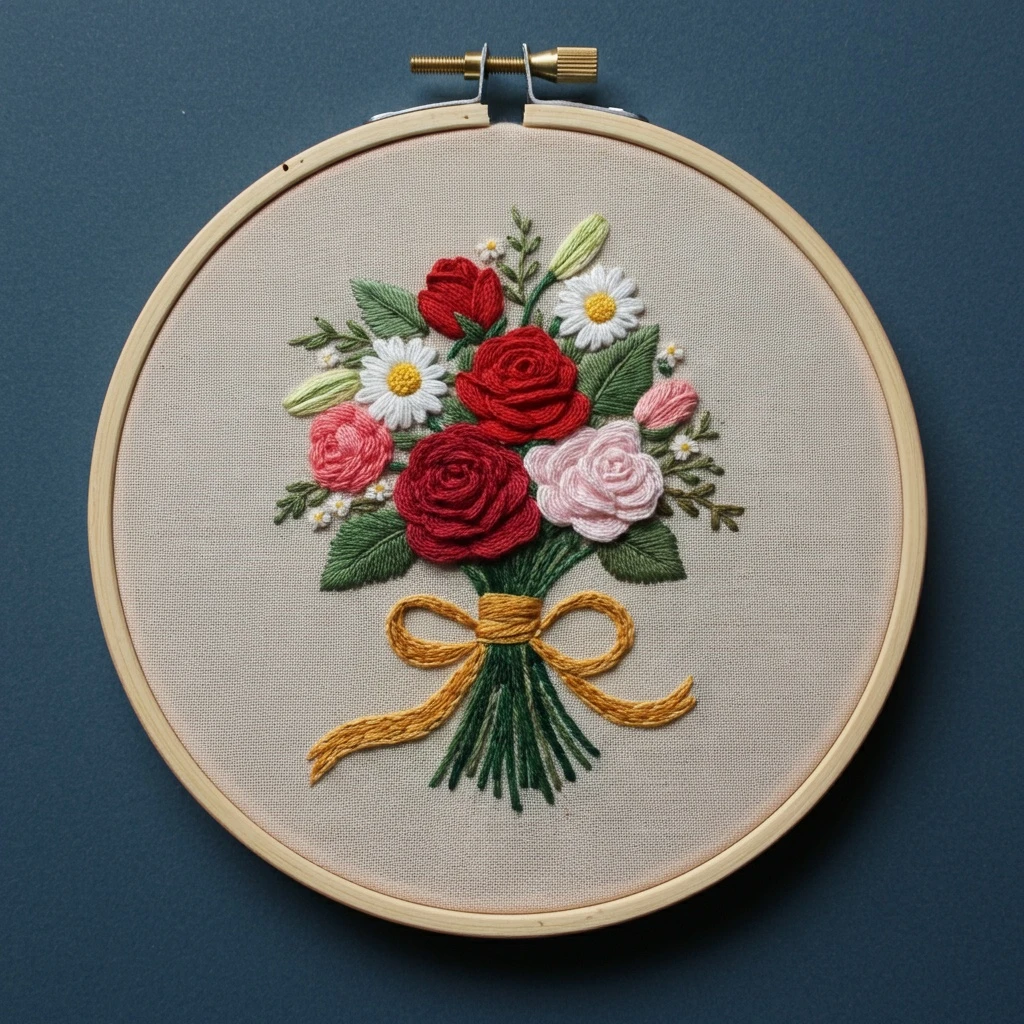
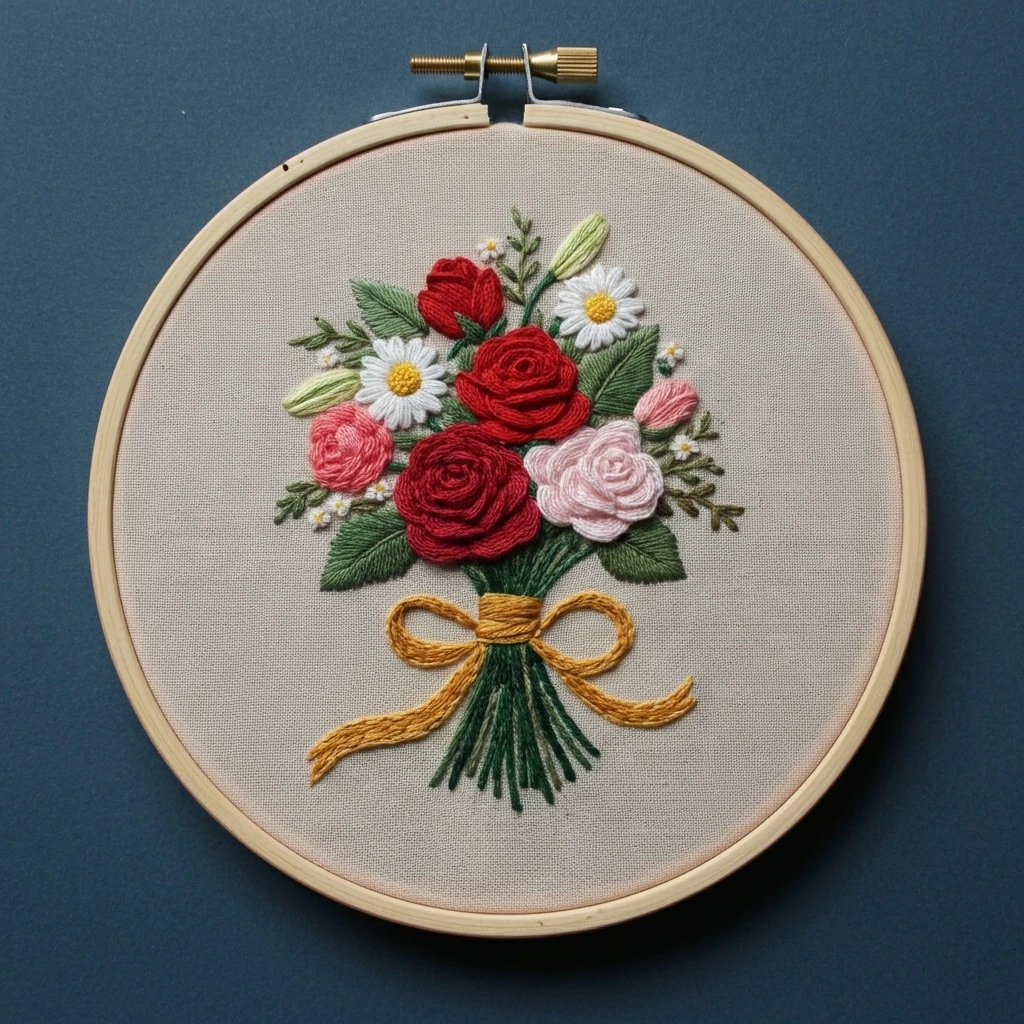
A lush hand-embroidery bouquet built around layered roses, soft buds, leafy stems, and warm romantic highlights. This guide translates the design into practical DMC choices, dimensional petal shading, graceful stem work, and beginner-friendly sequencing.
Color Story
The artwork reads as a classic romantic rose bouquet: deep wine shadows anchor the inner petals, rich rose and coral pinks form the main bloom bodies, creamy blush softens the highlights, and olive greens give the stems a natural gathered look. Keep the darkest colors inside petal curls and under overlapping leaves so the bouquet stays luminous rather than heavy.
Recommended Stitch Map
| Design Area | Best Stitches | Thread Guidance | Practical Notes |
|---|---|---|---|
| Large rose heads | Long-and-short stitch, padded satin stitch, split stitch outline | 2 strands for filling; 1 strand for creases | Start with DMC 814 or 815 in the curled center, blend outward through 3831 and 760, then add 818 only at the rim. |
| Rose buds | Satin stitch, detached chain, tiny straight stitches | 2 strands for bud bodies; 1 strand for tips | Use darker garnet at the base and a single pale stitch at the tip to make each bud look rounded. |
| Open petal edges | Split stitch, short satin stitch, feathered straight stitch | 1 strand for delicate edge definition | Outline selectively rather than tracing every petal. A few fine lines keep the bouquet soft and romantic. |
| Leaves and sepals | Fishbone stitch, satin stitch, fly stitch | 2 strands for leaves; 1 strand for veins | Angle leaf stitches toward the center vein. Place DMC 3345 along one lower side for easy depth. |
| Gathered stems | Stem stitch, whipped backstitch, couching for thick stems | 2 strands for stems; 1 strand for ties and fine twigs | Stitch stems after the flower placement is clear so they tuck naturally behind the bouquet heads. |
| Small filler dots | French knots, colonial knots, seed stitch | 1-2 strands; one or two wraps | Add only a few knots near empty pockets to suggest pollen or tiny filler flowers without crowding the roses. |
Blending & Shading
- Classic rose blend: combine 1 strand DMC 3831 + 1 strand DMC 760 for a smooth middle shade between red and pink.
- Deep inner fold: use 1 strand DMC 814 + 1 strand DMC 815 only in the tightest rose curls and under folded petals.
- Petal glow: place DMC 818 and 746 sparingly on the upper-left or outermost petal tips to create a consistent light source.
- Green balance: let DMC 469 dominate the foliage, then use DMC 3345 in thin strokes so the greens do not overpower the roses.
Texture Suggestions
- Pad the largest rose petals with a base layer of straight stitches before satin stitching over them for a plush bouquet effect.
- Vary long-and-short stitch lengths around petal curves to avoid a striped look.
- Use detached chain stitches for tiny sepals and baby leaves around rose buds.
- Add a few single-strand seed stitches in the background spaces only if the design needs extra movement.
Outlining, Thread Count & Finishing
Outlining Details
Use a single strand of DMC 815 for the most important rose separation lines and a single strand of DMC 3345 for leaf veins. Avoid outlining every petal; romantic rose work looks more polished when some edges are implied by shading instead of dark borders.
Beginner-Friendly Thread Plan
Use 2 strands for most flower fills and leaves, 1 strand for outlines, veins, and petal crease details, and 3 strands only for occasional raised knots or extra-bold stem accents. Separate the six floss strands first, then recombine them so satin stitches lie smooth and glossy.
Simple Working Sequence
- Transfer the design lightly, especially around pale petal tips where heavy lines may show through.
- Stitch the main stems and largest leaves first with stem stitch and fishbone stitch.
- Block in rose centers with the darkest garnets, keeping stitches short and curved.
- Fill the main petals with long-and-short shading, moving from DMC 815 to 3831, 760, and finally 818.
- Add buds, sepals, and small leaves, using darker green only where pieces tuck behind flowers.
- Finish with cream highlights, tiny knots, and a gentle steam from the back over a towel to lift the raised petals.