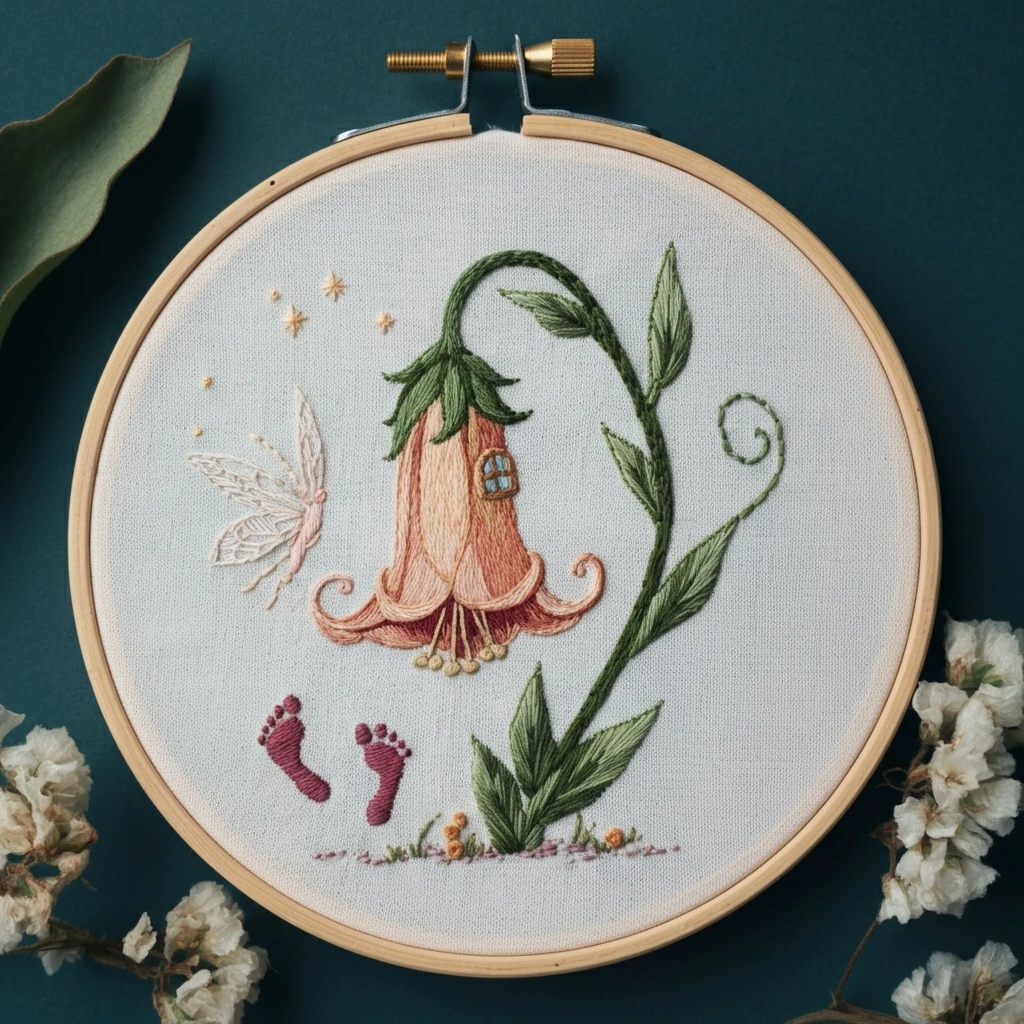

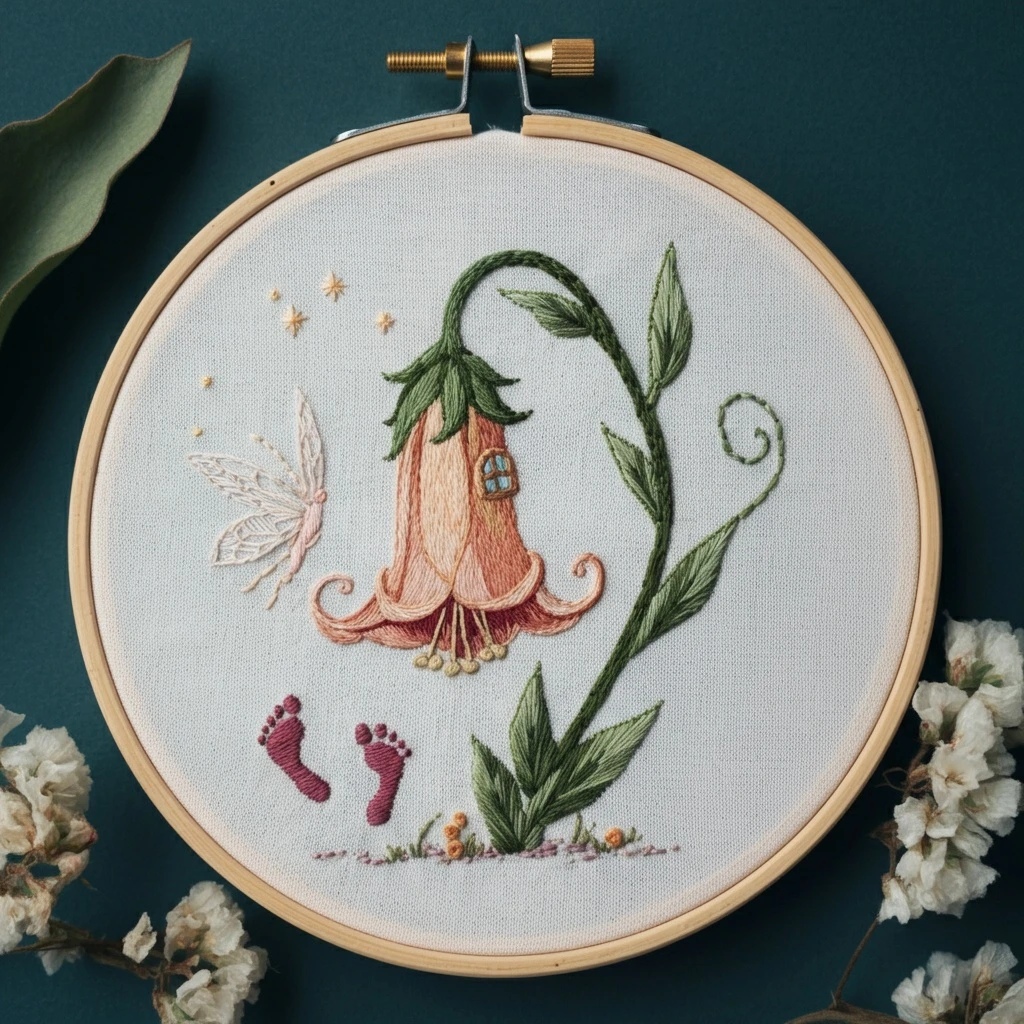
Fairy Blossom Cottage
This design reads like a storybook cottage scene: a cozy little home nestled beneath airy blossom sprays, with warm window light, weathered stone-and-wood details, leafy greens, and a soft blue-teal atmosphere. The palette below keeps the cottage inviting while preserving depth in the roof, doorway, foliage, and petal clusters, so the piece feels whimsical rather than flat.
Polished DMC color palette
The image appears to balance dusky teal surroundings with soft stone neutrals, petal pinks, sage foliage, and a few warm golden accents. Use the darkest shades as small anchors around the windows, roofline, and deepest foliage, then let the softer tones carry most of the visible surface area.
Stitch map by design area
Thread-count and blending guidance
| Area | Strands | Recommended blend | How to use it |
|---|---|---|---|
| Stone or plaster walls | 1 strand | 3864 + 420 + a touch of 762 | Blend softly so the cottage body stays gentle and luminous. Place the coolest gray only where a plane turns away from the light. |
| Roof and timber | 1–2 strands | 838 + 839 + 420 | Begin with the darkest grooves, then layer mid-brown texture strokes on top. Highlight only the upper or outer roof edge so the form stays dimensional. |
| Blossoms | 2 strands | 3726 + 3716 + 761 | Use 3726 at petal bases, 3716 through the mid-petal, and 761 at the outer rim or top edge for a soft blossom gradient. |
| Leaves and vines | 1–2 strands | 3011 + 3012 + 3053 | Keep the darkest green tucked underneath blossoms and near branch joints. Use the lightest green only on top leaves or tips catching light. |
| Window glow | 1 strand | 3823 + 729 + B5200 | Fill the panes with pale yellow first, deepen the center or lower edge slightly with 729, then place a tiny white glint for sparkle. |
| Background atmosphere | 1 strand | 924 + 926 + 928 | Work these as sparse texture, not a dense fill. Let the fabric breathe so the cottage remains the focal point. |
Practical stitching order
1. Transfer the main structure first
Mark the cottage silhouette, door and window placement, main roofline, large blossom clusters, and principal branch/vine paths. Avoid tracing every single petal—small floral stitching looks more natural when improvised slightly.
2. Build the cottage before the flowers
Complete the house body, roof, and window glow before adding blossoms. This lets you overlap flowers onto the cottage edge in a convincing way and keeps the architectural lines clean.
3. Use contrast by texture
Keep the cottage smoother, the roof slightly broken and textured, the blossoms raised and soft, and the surrounding atmosphere airy. A change in texture helps each area read clearly even in a small hoop.
4. Add the tiniest sparkle last
Finish with blossom centers, window glints, pale highlights, and a few tiny fairy-like dots or knots only after the main stitching is complete. These details make the piece feel magical without overwhelming it.
Shading, outlining, and texture suggestions
- Roof depth: use 838 in the deepest overlaps or underside of the roof, then pull 839 outward with short angled stitches so the roof gains shape without looking heavy.
- Wall shape: fade 420 into 3864 with long-and-short stitch or closely placed split stitch; keep highlights toward the upper or front-facing walls.
- Window glow: for a fairy-lit feel, stitch the glow first in 3823, outline the frame lightly, then soften the edge with one or two stitches of 3864 or 420 around the frame.
- Blossoms: cluster French knots and detached chain stitches together, then add a few loose straight-stitch petals around the edges so the floral sprays feel wind-touched.
- Vines and stems: stem stitch works well for curving lines. On very fine tendrils, a single-strand backstitch can look cleaner.
- Leaves: place darker greens behind flower clusters, then top with lighter fishbone leaves. This layering keeps the blossoms forward.
- Atmospheric background: avoid filling every inch. Teal seed stitches, faint fly stitches, or tiny scattered knots create a dreamy setting while letting the ground fabric show through.
- Outline strategy: skip a hard full outline. Instead, outline only the shadow side of the cottage and major leaves, leaving the lit edges softer and more painterly.
Beginner-friendly finishing tips
Start with one strand more often
Architectural details, vines, highlights, and light shading look cleaner in one strand. Save 2 strands mainly for blossoms, a few leaves, and French knots.
Let the fabric help you
If you stitch on a soft natural, pale gray, or light blue-green fabric, you can leave small gaps in the background and even around stonework to keep the page light and elegant.
Test flower density first
Before filling every blossom cluster, stitch one complete sample group. This helps you decide whether you want a more airy cottage wreath or a fuller, lush bloom effect.
Press from the back
When finished, place the work face-down on a towel and press from the back only. This protects the raised blossom texture and keeps the cottage details crisp.