Lavender Garden

Lavender Garden — DMC Palette & Stitching Suggestions
Lavender Garden Embroidery Art
DMC palette & embroidery guide

Lavender Garden

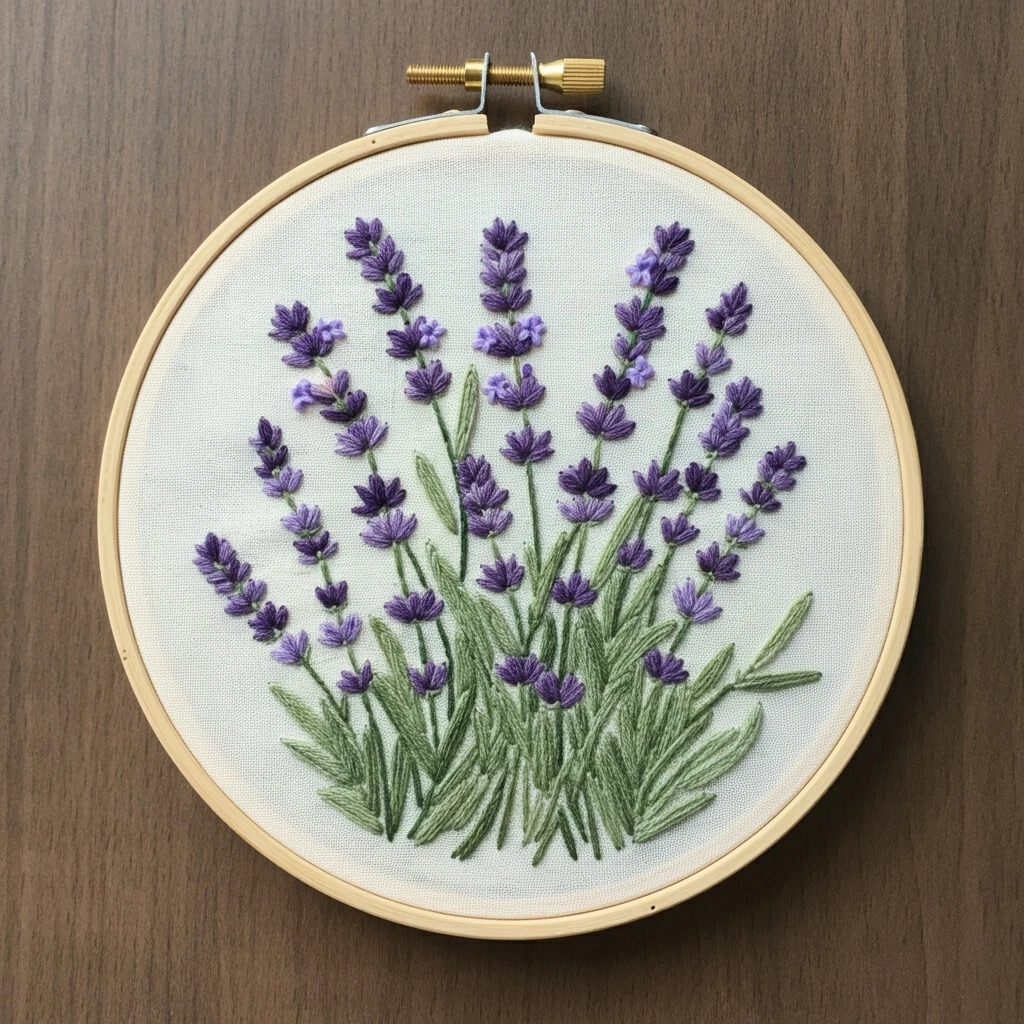
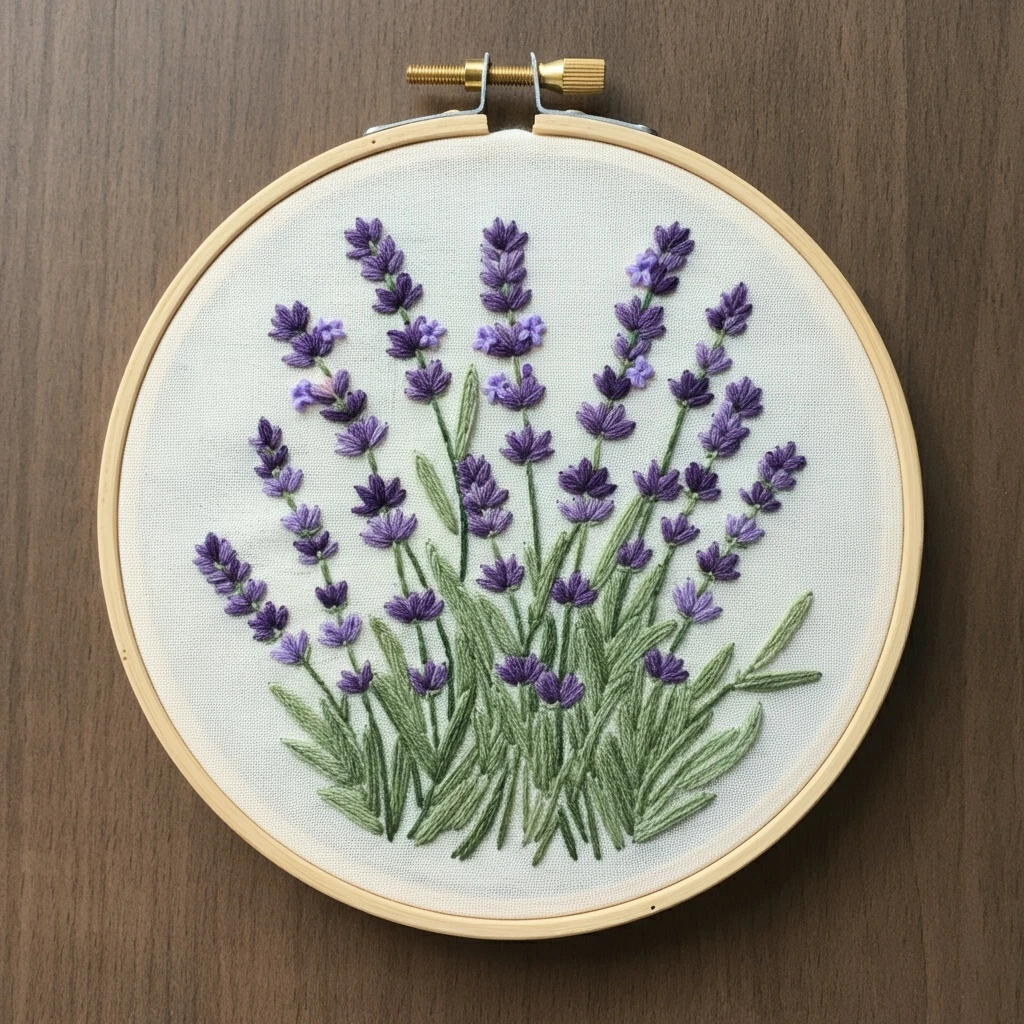
A calm botanical hoop with upright lavender stems, loose grassy leaves, and clustered purple flower spikes. The stitching plan below keeps the design soft and beginner-friendly while giving the blossoms layered depth and the greenery natural movement.

lavender purplessage greenssimple floral texturebeginner friendly

Reference focus: airy lavender spikes, deep violet shadow petals, pale lilac highlights, layered sage leaves, fine green stems, and a warm natural hoop on cream fabric.

Overall color read

The design is built from two families: cool purples for the flower heads and muted greens for the stems and long leaves. Use darker violets at the base and center of each blossom cluster, then add lighter lavender stitches toward the tips so every spike looks dimensional instead of flat.

Best fabric & hoop pairing: cream cotton or linen in a 6–7 inch hoop. A slightly open weave helps the detached floral stitches sit softly, while a neutral ground lets the violet and sage palette stay clear and botanical.

Suggested DMC floss palette

DMC 550
Very Dark Violet
Deep shadow petals, lower flower clusters, and small accent knots.
DMC 552
Medium Violet
Main lavender petal tone for most blossom spikes.
DMC 553
Violet
Mid-light petals and bridge shade between dark and pale stitches.
DMC 554
Light Violet
Tiny highlights on flower tips and the lilac side blooms.
DMC 211
Light Lavender
Softest sparkle on open blossoms; use sparingly to keep contrast.
DMC 3362
Dark Pine Green
Deepest stem lines, leaf bases, and areas where foliage overlaps.
DMC 3363
Medium Pine Green
Primary stems and central leaf veins.
DMC 3364
Light Pine Green
Leaf fill, outer grass blades, and soft foliage highlights.
DMC 3052
Medium Green Gray
Muted leaf shading to give the foliage a dusty lavender-garden feel.
DMC 3822
Straw
Optional warm stitch accents for hoop-like warmth or tiny pollen dots.

Stitch plan by area

Lavender flower spikes: Work lazy daisy stitches or detached chain stitches in small stacked pairs. Angle each petal outward from the stem, alternating DMC 550, 552, and 553 for a natural, uneven bloom.
Pale lilac blossoms: Use French knots, colonial knots, or tiny detached chains in DMC 554 and 211. Place them as bright notes near the tops and sides of the spikes.
Stems: Use stem stitch or split stitch with 1–2 strands of DMC 3363. For thinner distant stems, use one strand and keep the line slightly irregular.
Long leaves: Fill with fishbone stitch, straight stitch, or long-and-short stitch. Start with DMC 3362 at the base, blend into 3363, then add 3364 along the outer edge.
Grassy base: Layer long straight stitches in mixed greens. Vary length and direction so the base looks airy rather than like a solid block.

Thread-count guidance

  • Flower petals: 2 strands for clean detached chains; 3 strands if you want fuller, raised lavender heads.
  • Small knots: 2 wraps with 2 strands for neat buds; 3 wraps only for foreground accent blossoms.
  • Main stems: 2 strands for visible structure; 1 strand for thin upper stems and background lines.
  • Leaf fill: 2 strands for most leaves. Use 1 strand for final highlight strokes on top.
  • Outlining: Use 1 strand of dark violet or pine green only where a shape needs definition; avoid outlining every petal.

Blending, shading & texture suggestions

Petal depthBlend one strand DMC 550 with one strand DMC 552 for shadow petals in the lower half of each spike. Switch to 552 + 553 in the middle, then 553 + 554 at the tips.
Soft lavender glowAdd a few single-strand DMC 211 straight stitches over finished petals. Keep these short and off-center so they look like light catching the thread.
Leaf movementUse long-and-short stitches that follow the leaf direction from base to tip. A dark central vein plus lighter side stitches makes narrow leaves readable.
Natural irregularityDo not make every blossom identical. Vary petal length, spacing, and color so the lavender looks hand-picked and organic.
Raised textureFor a slightly dimensional version, use turkey work or small bullion knots on two or three foreground flower heads only.
Clean negative spaceLeave small gaps between stems and leaves. The cream fabric acts as breathing room and keeps the design delicate.

Beginner-friendly workflow

  • Transfer the stems and largest leaves first; flower clusters can be placed more freely as you stitch.
  • Stitch all stems before adding petals so blossoms sit neatly on top of the green structure.
  • Complete the darker purple petals first, then add mid and light tones as highlights.
  • Keep thread lengths around 14–16 inches to reduce fuzzing, especially with dense violet areas.
  • Step back often: lavender designs look best when the spikes are balanced but not perfectly symmetrical.

Finishing details

After stitching, add a few one-strand green fly stitches at the base to soften the foliage. If the flower heads need more definition, place tiny dark violet seed stitches at the underside of selected petals rather than drawing a heavy outline. Press face down on a towel so the raised petals and knots are not flattened.

For a display-ready hoop, pair the finished embroidery with a natural wood hoop and trim the back neatly. The warm hoop color complements the muted greens and makes the cool violets feel brighter.
Leave a Reply

Your email address will not be published. Required fields are marked *