
DMC palette & hand embroidery notes
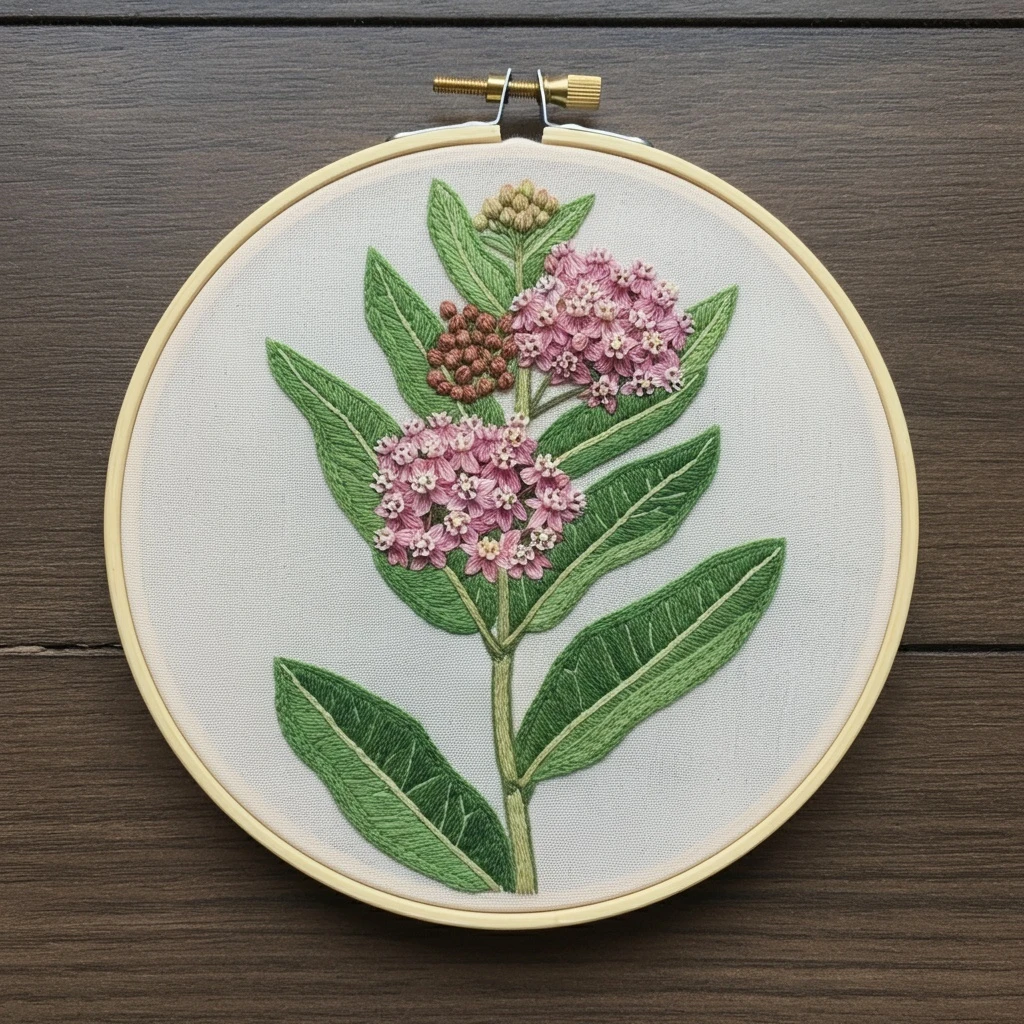
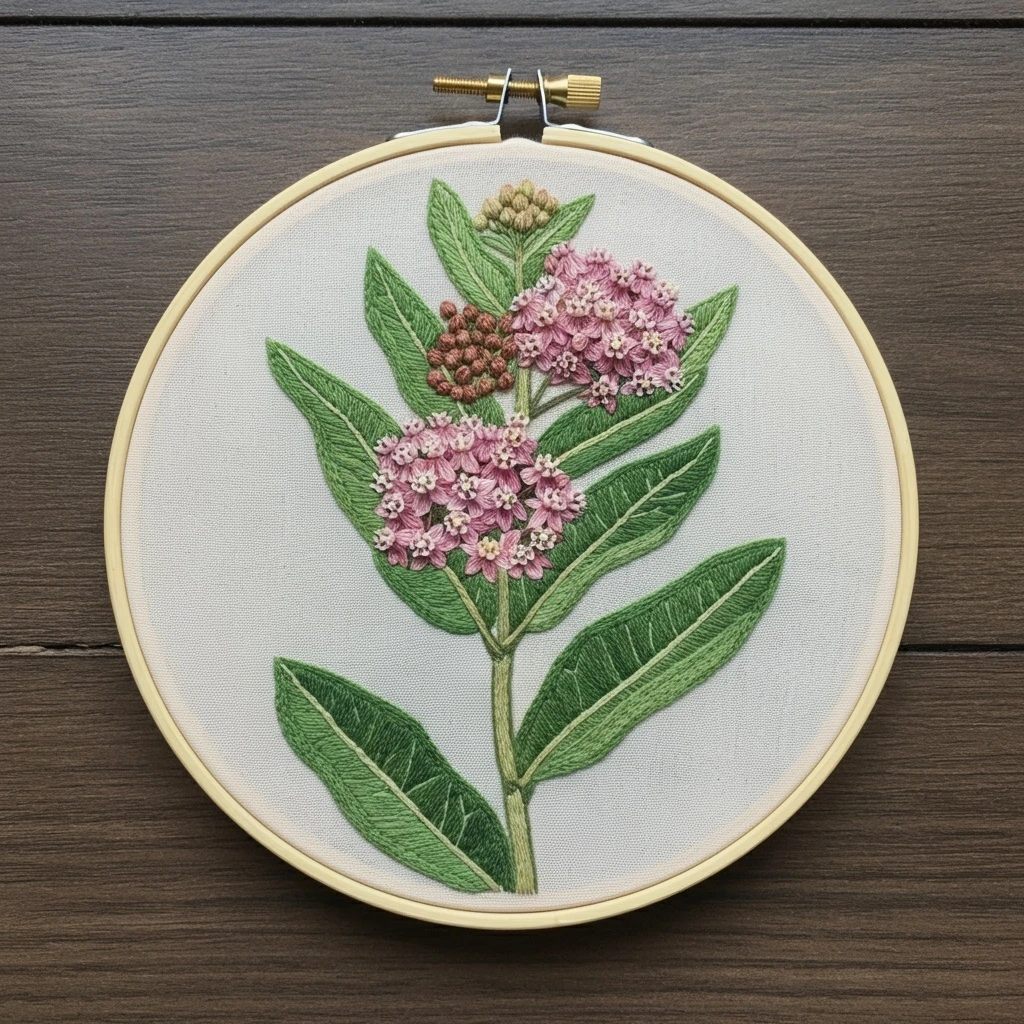
Pink Wildflower Botanical
A delicate botanical sprig with airy pink wildflowers, fine green stems, and soft leaf accents. The overall look is light, modern, and watercolor-like, so the floss choices favor dusty pinks, rose shading, pale creams, sage greens, and a few deeper accents for definition.
Recommended DMC Color Palette
Use these shades as a practical stitching map rather than a strict rule. Keep the flower heads pale and fresh, then reserve the deeper rose and green tones for the smallest shadow, center, and outline details.
Main pale petal color for open wildflower faces and soft outer petal edges.
Mid-pink petal turns, lower petal folds, and gentle contrast beside 818.
Small shadow touches at petal bases, buds, and darker blossom tips.
Use sparingly for flower centers, tiny inner folds, and definition dots.
Petal highlights, pollen glints, and softening blends where pink should look pastel.
Tiny flower centers, stamens, and warm botanical sparkle without becoming bright.
Main leaf fill and soft green areas; ideal for calm, muted botanical foliage.
Stem lines, leaf veins, and shaded undersides where the greenery needs depth.
Fresh leaf tips, small new shoots, and blended highlights on narrow leaves.
Fine outline accents at stem junctions and a few dark leaf bases only.
Optional warm neutral for seed pods, tiny branch marks, or grounding details.
Use on dark fabric for glow, or mix with pinks to keep the floral palette airy.
Stitch Suggestions by Design Area
| Area | Best stitches | Thread guidance & practical notes |
|---|---|---|
| Pink wildflower petals | Long and short stitch, satin stitch, fishbone stitch for narrow petals | Use 1 strand for painterly shading or 2 strands for fuller coverage. Start with DMC 818 at the petal tips, work 3326 through the middle, and touch 3354 only near the center or overlap points. |
| Flower centers | French knots, colonial knots, tiny straight stitches | Use 1-2 strands of 745 with a few 3731 or 3860 dots for depth. Keep knots small so they do not overpower the delicate petals. |
| Stems and tendrils | Stem stitch, split stitch, back stitch | Use 1 strand of 3052 for thin graceful stems. For a more visible stem on linen, use 2 strands but shorten each stitch around curves. |
| Leaves | Fishbone stitch, satin stitch, detached chain, straight stitch veins | Blend 522 and 3347 for leaf surfaces. Add 3052 along one side of each leaf to create a soft shadow and give the sprig direction. |
| Buds and small side blooms | Detached chain, lazy daisy, woven picot, small satin stitch | Use 3326 with a single stitch of 3354 at the base. Add 522 or 3052 as a tiny calyx underneath each bud. |
| Fine botanical outlines | Whipped back stitch, split stitch, couching | Outline only the key edges. A full dark outline can make the design look heavy; instead use 1 strand of 3731 or 3363 in short broken accents. |
Blending, Shading & Texture
Soft petal blending
For a pastel watercolor effect, thread the needle with one strand of 818 and one strand of 3326. Use this two-color blend on the transition zone between light petal tips and deeper flower centers.
Rose depth without harsh lines
Add 3354 with scattered short stitches rather than solid blocks. Place the darkest tone near overlaps, tucked petals, and places where a flower meets the stem.
Botanical green variation
Alternate 522 and 3347 across leaves so the foliage feels hand-drawn and natural. Use 3052 for the underside of leaves and for the strongest stem sections.
Airy texture
Leave small slivers of fabric visible between petal stitches. This keeps the wildflower look light and prevents the flower heads from turning into heavy satin patches.
Thread Count & Needle Guidance
Recommended strands
- 1 strand: tiny stems, veins, outlines, and subtle petal shading.
- 2 strands: most petals, leaves, lazy daisy buds, and visible flower centers.
- 3 strands: only for raised knots or bolder accent blossoms on a larger hoop.
Needle and fabric
- Use a size 7-9 embroidery needle for 1-2 strands.
- Choose cotton, linen, or cotton-linen blend in cream, ivory, or pale blush.
- Keep fabric drum-tight in the hoop to maintain clean botanical curves.
Beginner-Friendly Stitching Order
Stitch stems first
Work the long central stems in 1 strand of 3052 using stem stitch. This sets the flow and keeps the floral placement tidy.
Add leaves
Fill larger leaves with fishbone stitch, then add small detached-chain leaves along the side stems.
Build flowers light to dark
Start petals with 818, layer 3326 toward the center, then add tiny 3354 shadows last.
Finish with accents
Place French knots, pollen dots, and short outline accents only after the main shapes are complete.
Practical Finishing Tips
Outline restraint
Use broken outlines rather than continuous borders. A few short stitches in 3731 under petals and 3363 at stem junctions will define the design while preserving its soft style.
Hoop display
Mount in a natural wood hoop or a pale painted hoop. A cream backing fabric helps the pinks look fresh, while a blush backing makes the design feel warmer and more romantic.