
Embroidery color palette & stitching notes
Red Hibiscus Floral
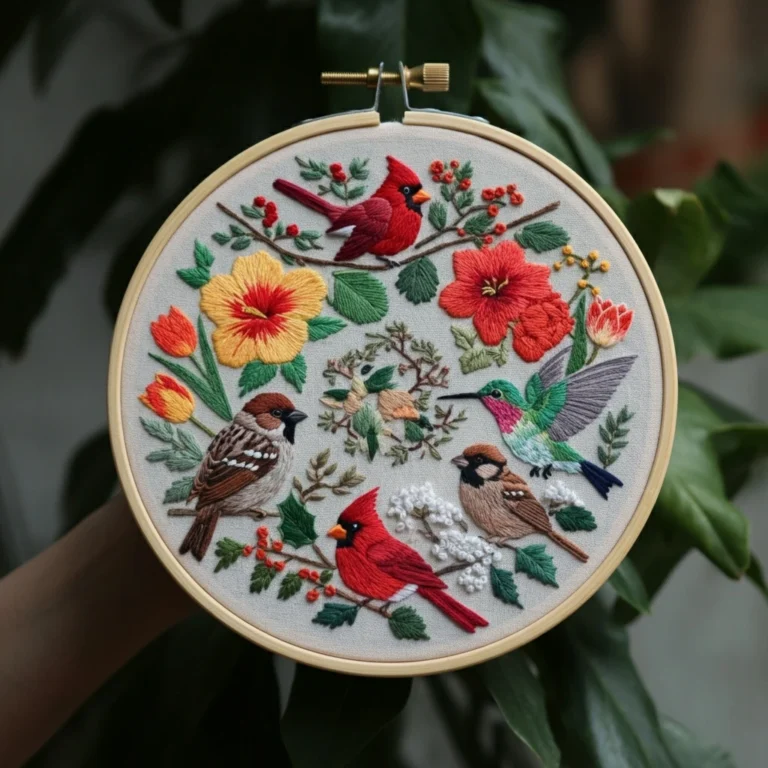
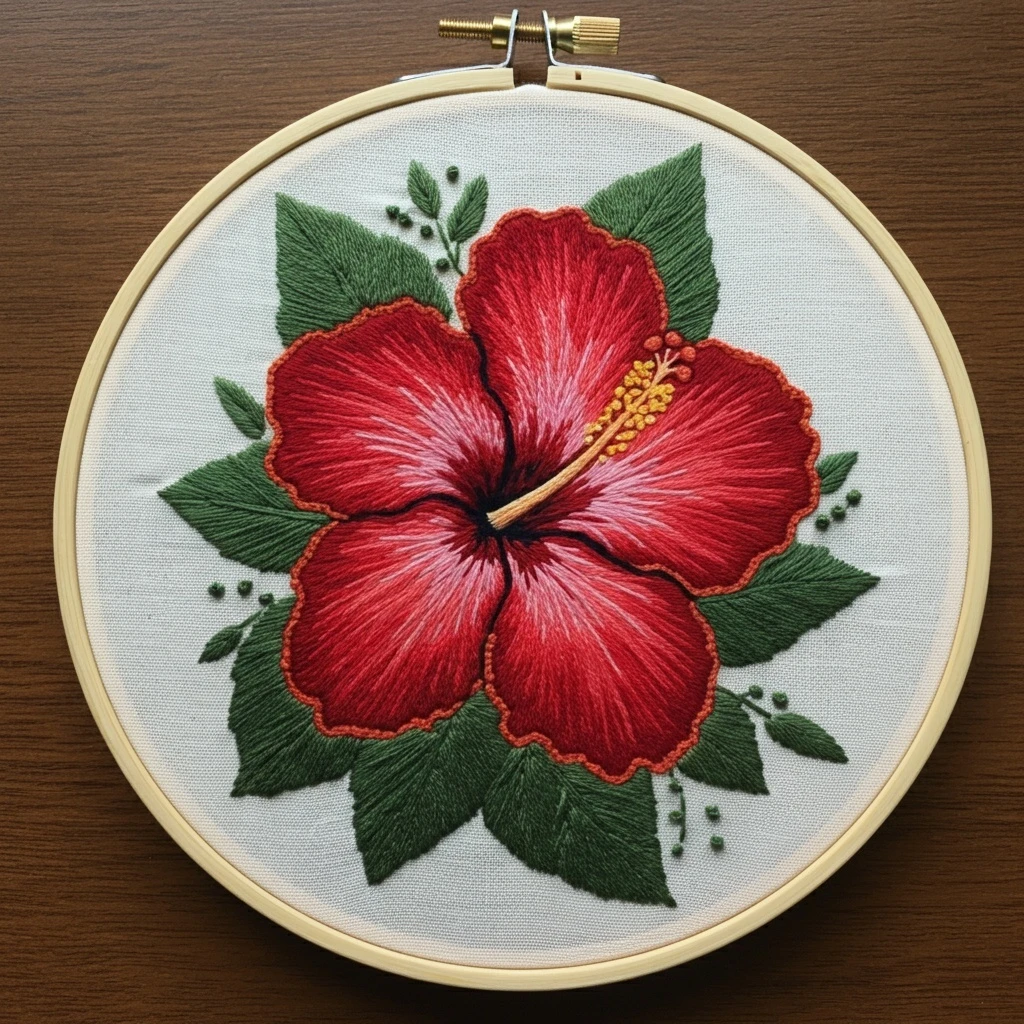
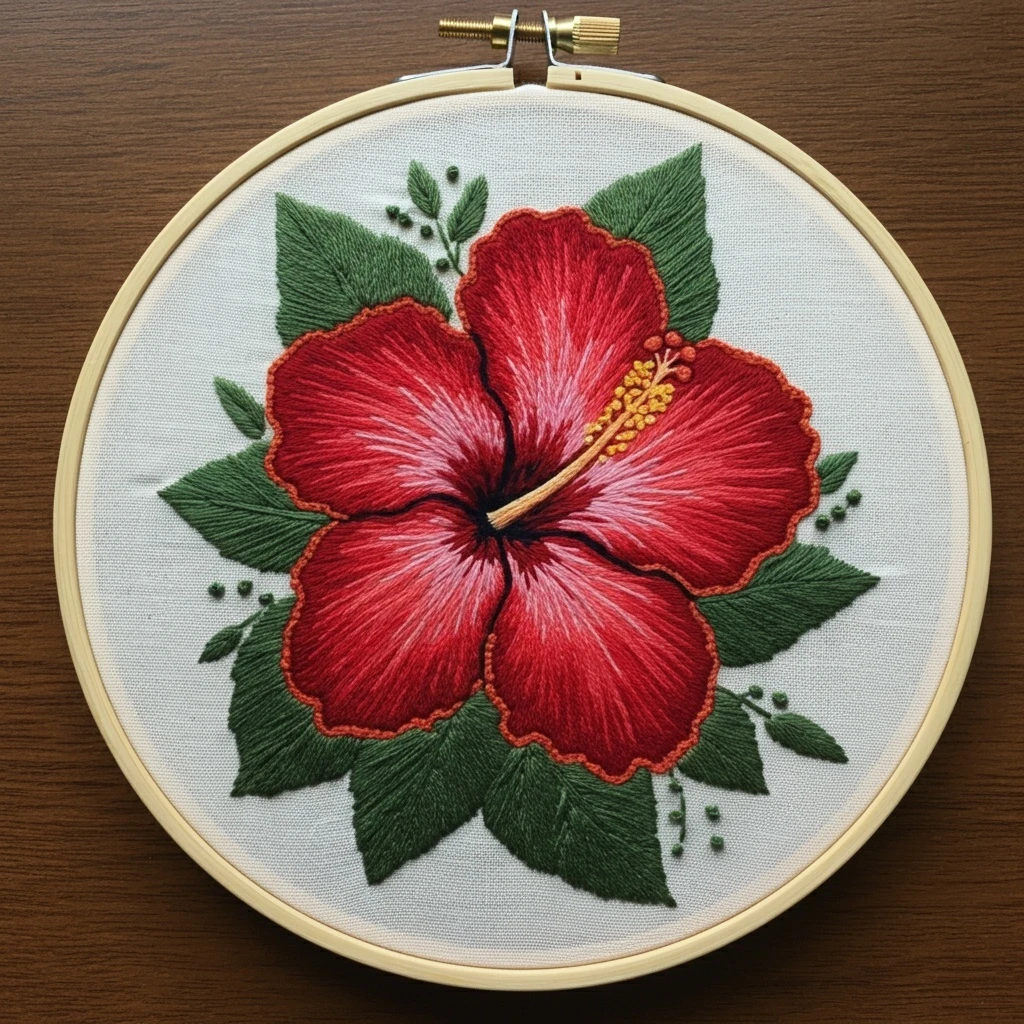
A dramatic tropical hibiscus with ruby petals, pale pink vein highlights, a dark center, golden stamens, and deep green foliage. This guide translates the reference image into practical DMC choices and hand-embroidery methods for a dimensional, polished finish.
Suggested DMC Palette
Stitch Plan by Design Element
Thread Counts
- Petal shading: 1 strand for fine needle-painting; 2 strands for a bolder beginner version.
- Outlines: 2 strands for a clear rim; 1 strand if your fabric is fine or the motif is small.
- French knots: 2 strands with 2 wraps for neat pollen beads; increase wraps only for foreground dots.
Blending Ideas
- Blend one strand 321 with one strand 350 for glowing petal midtones.
- Blend 816 + 321 where the petal edge rolls into shadow.
- Use 895 + 3012 on leaves to soften highlights without making them too bright.
Texture Suggestions
- Keep stitches slightly uneven in length so petal shading feels natural.
- Use directional leaf stitching instead of a flat fill to show ribbed foliage.
- Raise the stamen with a second pass of stem stitch if you want it to sit above the petals.
Beginner-Friendly Workflow
1. Establish the structure
Transfer the hibiscus outline, main petal separations, leaf centers, and stamen curve. Do not overdraw every tiny highlight; leave room to decide those as you stitch.
2. Stitch from background to foreground
Complete the leaves first, then the red petal fills, then the dark center, outline, stamen, and final highlights. This keeps the bloom sitting clearly on top of the foliage.
3. Shade one petal at a time
For each petal, place 814/902 near the throat, 816 around dark folds and outer scallops, 321 through the main body, 350 in lifted areas, and just a few 3716 strokes for shine.
4. Keep tension relaxed
Hibiscus petals need smooth, satin-like coverage. Avoid pulling tightly; the fabric should remain flat in the hoop, and the long stitches should lie gently on the surface.
5. Finish with definition
After filling, add split-stitch separations between petals in a single strand of 814 or 816. This gives the flower the bold lobed shape visible in the reference without heavy black outlining.
Practical Notes
Fabric: A natural cotton or linen in warm white supports the vivid reds and greens. If using a dark fabric, add an extra highlight strand in 350 or 3716 so the petals stay visible.
Needle: Use a size 7–9 embroidery needle for 1–2 strands. Switch to a slightly larger needle for French knots so the thread does not abrade.
Hoop care: The dense petal fill can distort fabric if it is slack. Tighten the hoop before each session and remove the fabric between sessions to prevent hoop marks.
Substitutions: If you prefer a cooler crimson, replace DMC 350 with 349. For warmer tropical red, keep 350 and add a few DMC 351 accents near the brightest petal areas.