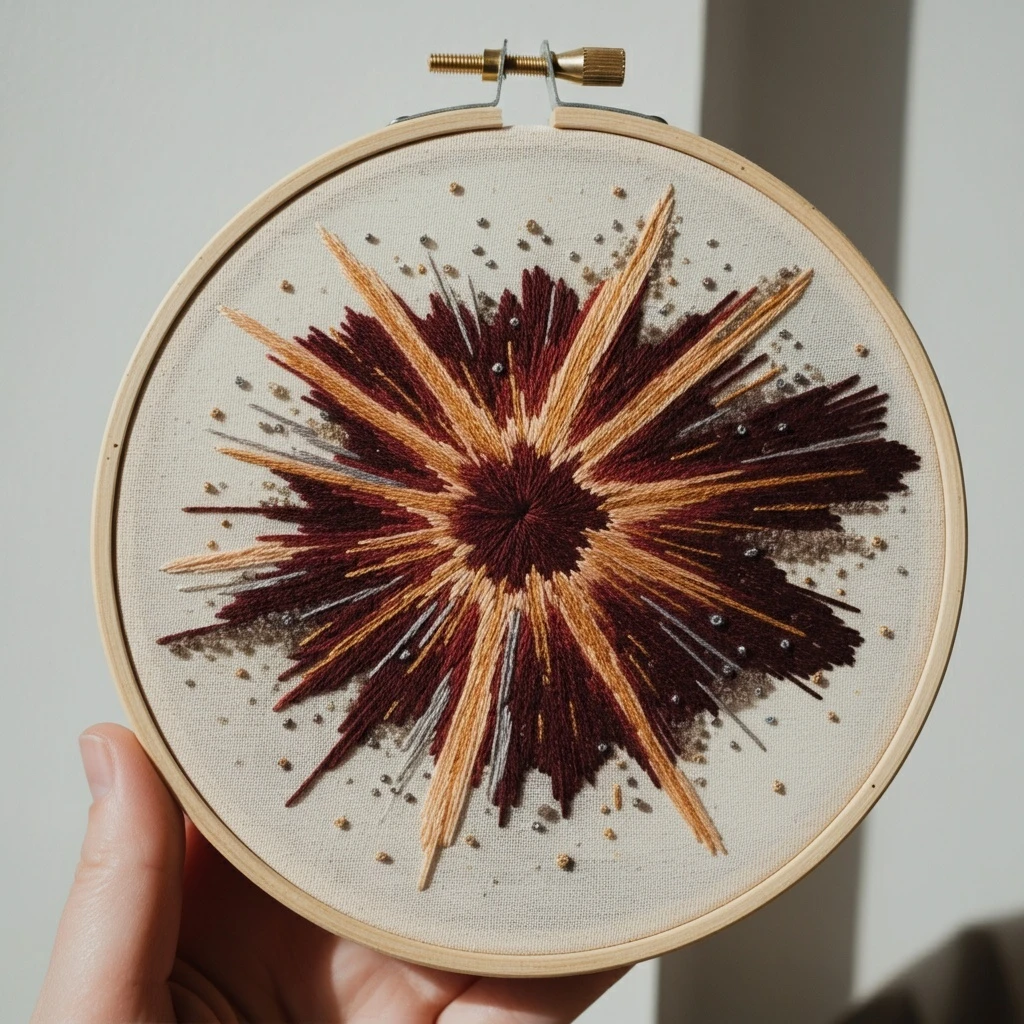

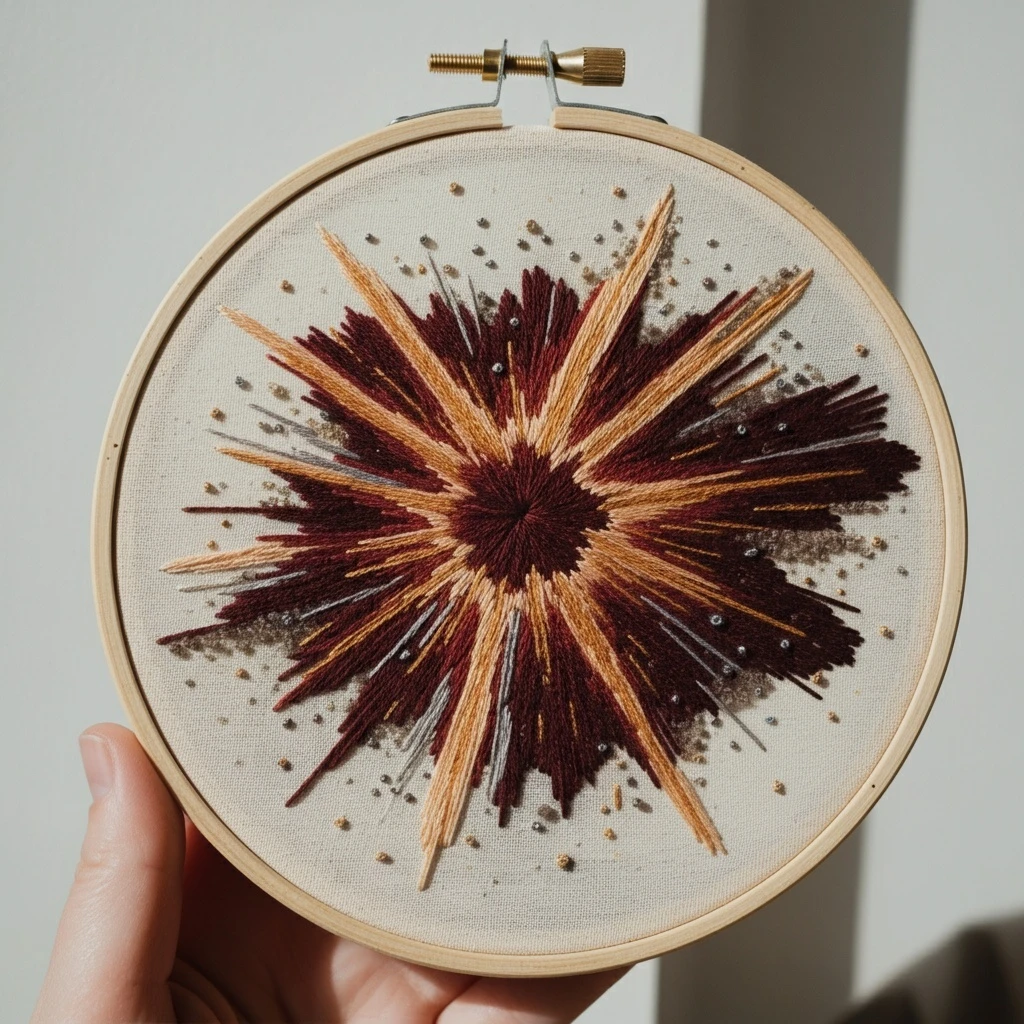
Cosmic Burst Thread Art
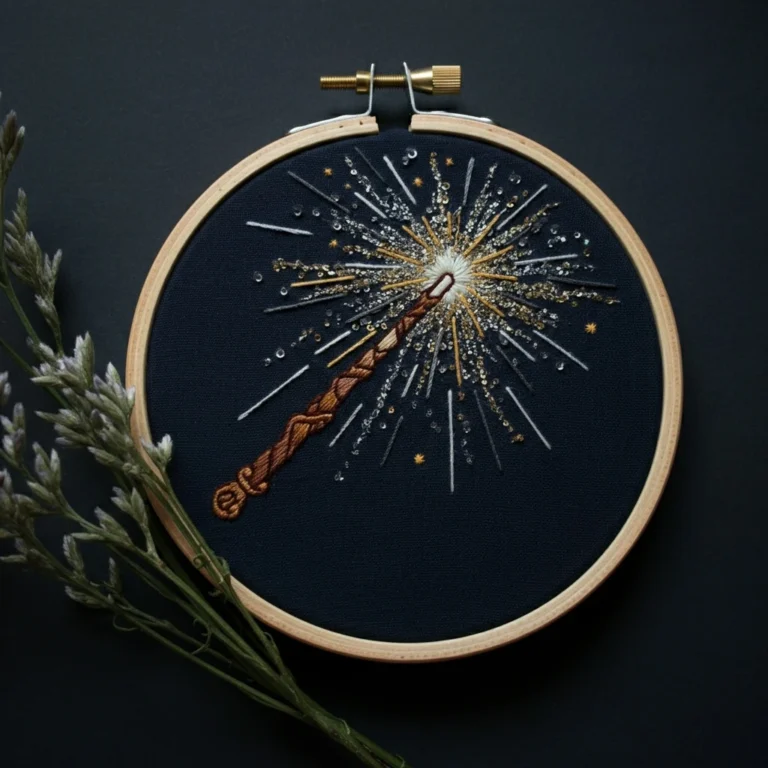
This celestial burst design is all about movement: radiating lines, glowing star points, deep galaxy shadows, and bright threads that seem to shoot outward from the center. The embroidery should feel energetic but controlled, with midnight purples and blues anchoring the design, lavender and aqua creating a luminous halo, and tiny gold-white stars placed last for crisp sparkle.
Polished DMC Color Palette
This palette is designed for a dramatic cosmic burst: deep night shades for the base, saturated violets and blues for rays, aqua for electric glow, and gold-white for stars and explosive highlights. Use the brightest colors sparingly so they look like light.
Stitch Map by Design Element
Thread Count & Blending Guide
Fine stars and arcs
Use 1 strand for tiny stars, orbit arcs, seed stitches, small ray tips, and crisp white pinpoints. One strand gives the cleanest celestial detail.
Main burst rays
Use 2 strands for the main radiating rays and stronger color paths. Two strands adds enough weight without pulling the fabric out of shape.
Raised sparkle
Use 2–3 strands for selected French-knot stars or a bright center cluster. Use three strands only in a few focal sparkles so the burst remains crisp.
Shading, Outlining & Texture Suggestions
Radial movement
- Mark the center point clearly and stitch rays outward from that point.
- Vary ray length, color, and thickness to avoid a stiff wheel shape.
- Keep the brightest rays slightly longer and more open so they feel like light escaping.
- Use darker spokes between bright rays for depth and contrast.
Thread tension
- Do not pull long straight stitches too tight; they can pucker the fabric.
- Couch very long rays with one or two tiny stitches in matching thread.
- Use shorter stitches near the center where many lines meet.
- Rotate the hoop often so each ray lies straight and smooth.
Starfield texture
- Place star knots after the main rays so they sit on top cleanly.
- Mix white, gold, lavender, and aqua stars for a layered galaxy effect.
- Make a few large stars and many tiny dots for natural scale.
- Leave open fabric between stars so the burst has breathing room.
Outlining approach
- Use dark violet or navy for selected ray shadows rather than outlining the whole design.
- Use split stitch for orbit arcs and straight stitches for explosive rays.
- Keep outlines broken so the thread-art effect stays light and dynamic.
- Add final dark accents before the brightest white and gold sparkles.
Beginner-Friendly Stitching Order
- Mark the center: lightly mark the center burst point, longest rays, orbit arcs, and a few major star positions. Save tiny dust dots for freehand placement.
- Stitch dark foundation rays: add a few deep purple and navy spokes first to anchor the shape.
- Add mid-tone rays: layer violet, lavender, blue, and teal straight stitches outward from the center.
- Add bright rays: place aqua, gold, cream, and white ray highlights on top, keeping tension gentle.
- Stitch orbit arcs: work smooth curved lines around or through the burst with one strand or couching.
- Finish with sparkle: add stars, French knots, nebula dust, tiny white pinpoints, and final correction stitches last.
Practical Tips for a Clean Finish
Fabric & hoop
Soft black, navy, deep purple, pale lavender, or warm cream fabric can all work. Dark fabric makes the starburst dramatic; pale fabric gives a softer thread-art look. Keep the hoop drum-tight to prevent long rays from puckering.
Needle choice
Use a sharp embroidery needle size 7–9 for one- and two-strand stitching. For raised star knots with three strands, use a slightly larger needle so the knot pulls through cleanly.
Keeping the burst readable
Do not fill every gap with rays. A successful cosmic burst needs strong lines, medium rays, and open space so the direction of movement stays clear.
Preventing thread snags
Work long straight stitches in sections and avoid dragging loose working thread across raised star knots. Add raised knots near the end to keep the surface clean.