
Cosmic Dreaming Cat
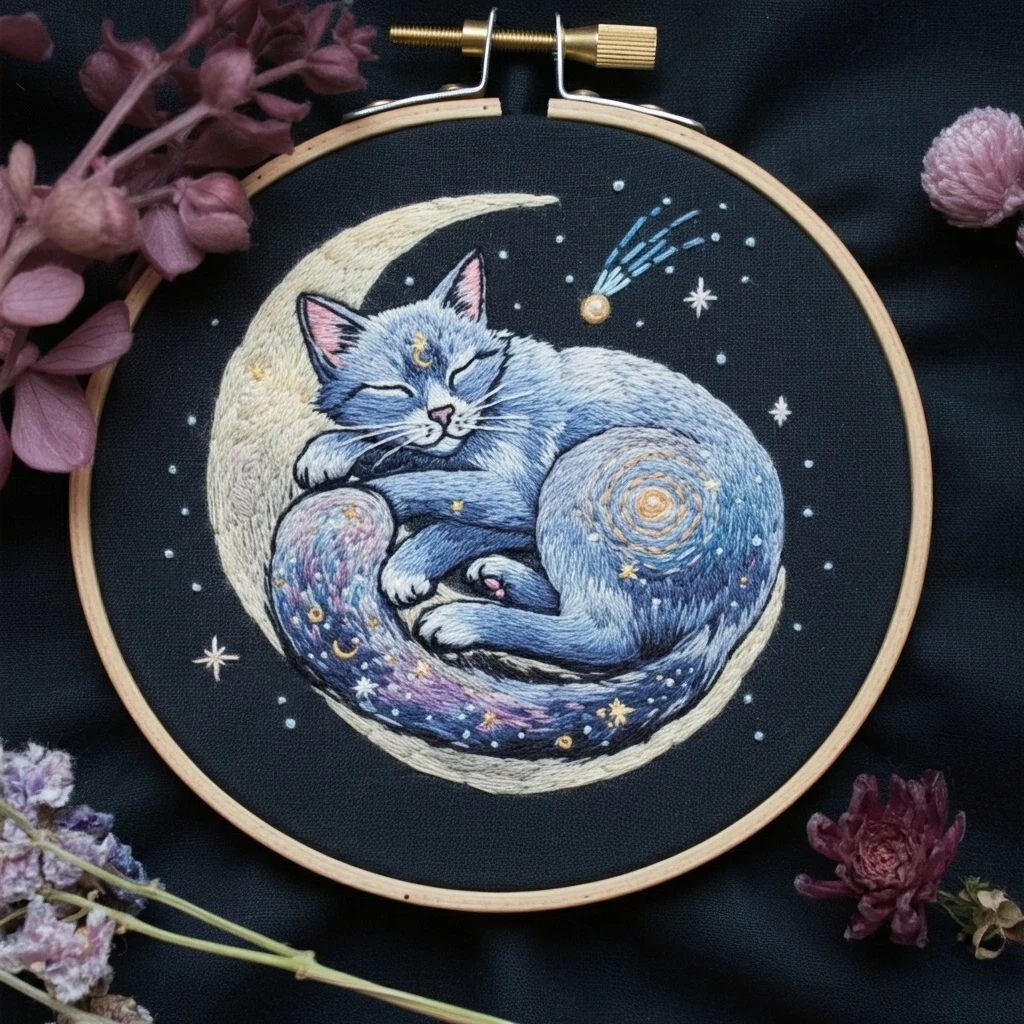
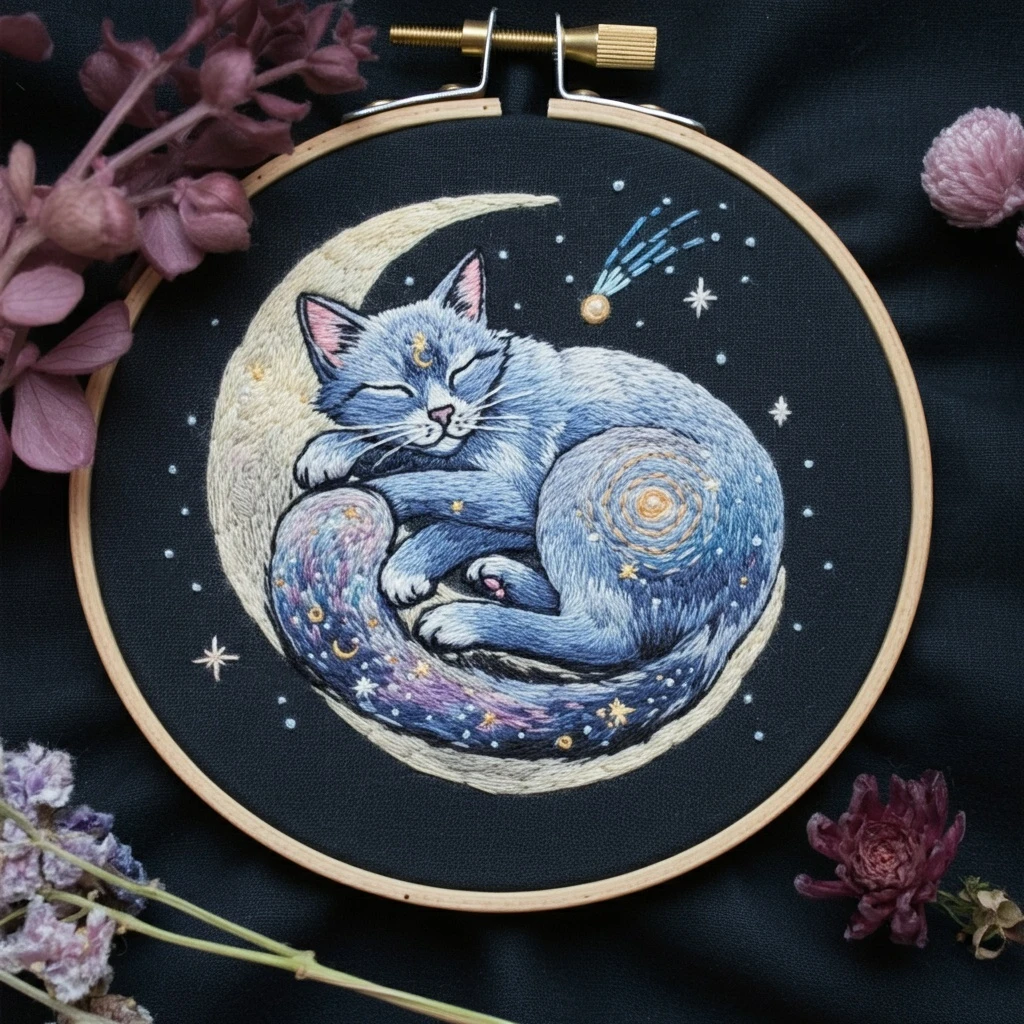
This dreamy celestial cat design blends a peaceful feline silhouette with moonlit galaxy accents, soft stars, and gentle cosmic color. The embroidery should feel calm and magical: smooth cat contours, velvety dark shadows, lavender-blue highlights, delicate whiskers, glowing moon and star details, and a few warm gold sparkles that make the sleeping cat feel tucked into a night sky.
Polished DMC Color Palette
This palette combines soft cat neutrals with cosmic purples, blues, aqua highlights, and starry gold. Keep the cat form readable with controlled dark outlines and subtle fur texture, then add celestial details last so they sparkle cleanly.
Stitch Map by Design Element
Thread Count & Blending Guide
Fine details
Use 1 strand for whiskers, closed eyes, star points, tiny dots, orbit lines, paw marks, and final fur flicks. This keeps the cat’s expression delicate.
Main fills
Use 2 strands for cat body shading, larger moon sections, dreamy clouds, and broader cosmic accents. Two strands gives soft coverage without bulky fur.
Raised sparkle
Use 2–3 strands for a few French-knot stars or decorative moon dots. Use three strands only on selected focal sparkles so the design stays calm.
Shading, Outlining & Texture Suggestions
Dreamy cat softness
- Keep the cat outline smooth and rounded, especially along the back and tail.
- Use darker gray only in tucked areas: under the chin, tail base, paws, and belly curve.
- Add short fur flicks sparingly so the cat remains soft, not scratchy.
- Place pale highlights on the upper curve where moonlight would touch.
Face and whisker clarity
- Stitch the face after the head fill is complete so features stay crisp.
- Use one clean stitch for each whisker rather than many overlapping lines.
- Keep the closed eye simple and curved for a peaceful sleeping expression.
- Use the tiniest amount of pink for the nose or ear so it stays subtle.
Cosmic glow
- Use deep violet and navy near the cat for shadow and lavender, aqua, or pale blue for glow.
- Cluster stars more densely near the moon or dream swirl, then fade outward.
- Use gold for a few warm stars and white for the brightest pinpoints.
- Leave open fabric between sparkles so the sky looks airy.
Outlining approach
- Use dark gray, navy, or violet outlines rather than harsh black throughout.
- Use split stitch for the cat silhouette and stem stitch for celestial curves.
- Break the outline where soft fur or glow should feel gentle.
- Add final outlines before the last stars, whiskers, and white highlights.
Beginner-Friendly Stitching Order
- Transfer lightly: mark the cat outline, closed eye, nose, whiskers, moon, major stars, and any swirls. Save tiny star dust for later placement.
- Stitch the cat base: fill the main body and head with gray tones, following the curve of the fur and tail.
- Add soft fur shading: place darker shadows in tucked areas and pale highlights on moonlit edges.
- Stitch the moon and swirls: add crescent or orbit shapes with smooth split stitch, satin stitch, or couching.
- Add face details: stitch the closed eye, nose, mouth, paws, and whiskers with one strand.
- Finish with stars: add gold and white stars, aqua dots, tiny French knots, and final highlight corrections last.
Practical Tips for a Clean Finish
Fabric & hoop
Soft black, deep navy, pale lavender, warm cream, or natural linen all work. Dark fabric makes the stars dramatic; pale fabric gives the cat a softer bedtime-story mood. Keep the hoop drum-tight for smooth body fills.
Needle choice
Use a sharp embroidery needle size 7–9 for one- and two-strand stitching. Use a slightly larger needle only for raised star knots if the thread feels tight.
Keeping it peaceful
Do not overfill the sky with stars. A dreaming cat design feels best when the cat’s silhouette is calm and the celestial accents are light, scattered, and intentional.
Avoiding bulky whiskers
Whiskers should be stitched last with one strand and minimal tension. Pulling too tight can pucker the face and distort the sleeping expression.