Knitting Kitty

Knitting Kitty — DMC Palette & Stitching Guide
Knitting Kitty
DMC palette & embroidery tips

Knitting Kitty

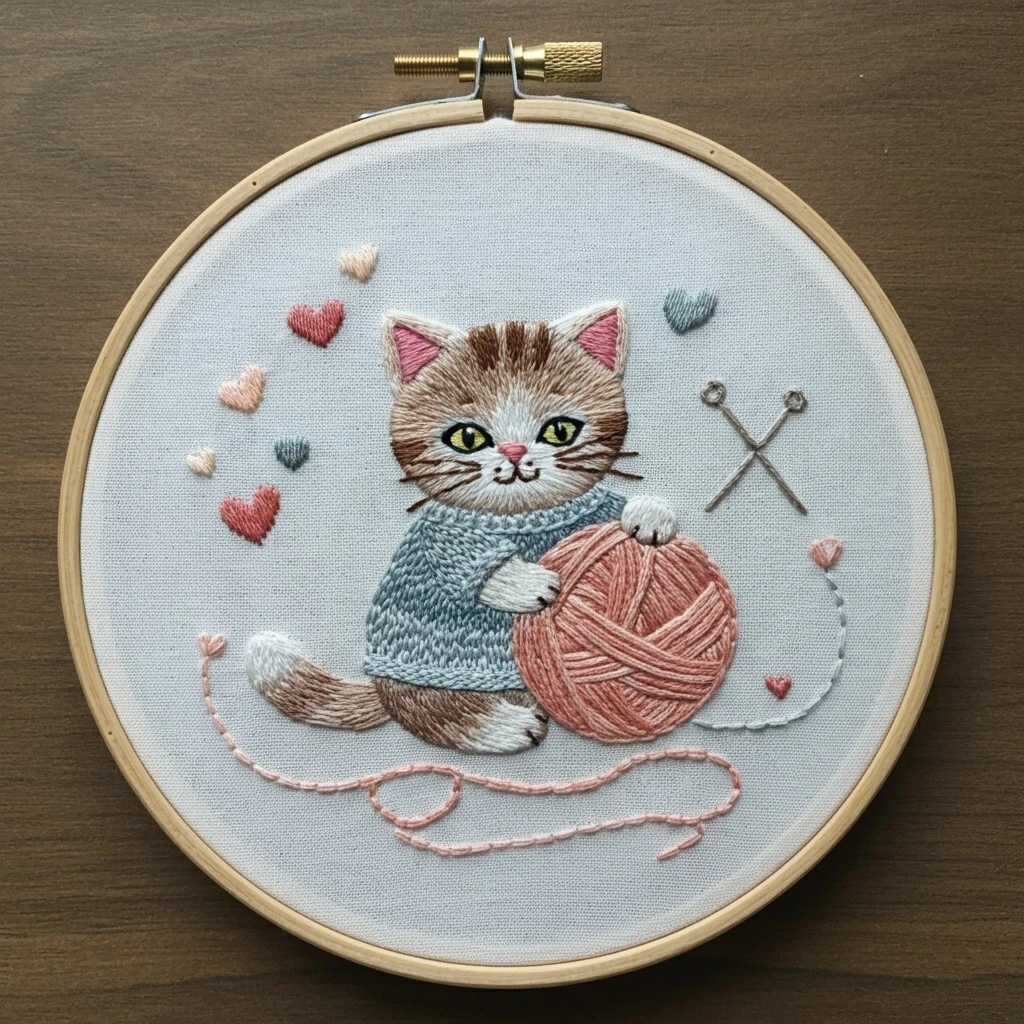
A cozy craft-room hoop centered on a sweet cat with knitting needles, soft yarn balls, looped strands, and warm handmade details. The design works best with creamy fur neutrals, ginger or taupe shadows, rosy inner ears and cheeks, and cheerful yarn colors that make the stitches feel plush and touchable.

Mood: cozy, crafty, playful Best fabric: natural linen or warm cream cotton Skill level: beginner to confident beginner

Color read from the artwork

The stitched look should feel soft rather than high-contrast. Use creamy whites and warm tans for the cat, reserving darker browns for whiskers, paws, needle shadows, and facial definition. Rosy pinks keep the expression gentle, while teal, lavender, golden yellow, or dusty coral yarn colors add a handmade pop. Keep the background marks light so the yarn remains the decorative focus.

DMC Ecru
Ecru
Main pale kitty fur, muzzle, paw highlights, and soft yarn shine on light areas.
DMC 739
Tan Ultra Very Light
Warm fur base, belly fill, forehead patches, and gentle shading around paws.
DMC 738
Tan Very Light
Medium kitty shadows, tail curves, ear base shading, and rounded cheek contours.
DMC 434
Brown Light
Ginger markings, deeper fur stripes, wooden needle shadows, and paw separations.
DMC 801
Coffee Brown Dark
Fine outlines, whiskers, eye accents, needle tips, and darkest fur creases.
DMC 761
Salmon Light
Inner ears, nose, cheeks, paw pads, and tiny blush stitches near the smile.
DMC 3354
Dusty Rose Light
Deeper ear folds, cheek centers, pink yarn shadows, and little heart accents.
DMC 3846
Bright Turquoise Light
Fresh teal yarn ball, loose loops, decorative stitches, and cool contrast beside warm fur.
DMC 3844
Bright Turquoise Dark
Teal yarn grooves, underside shadows, and crisp twist lines on thicker strands.
DMC 209
Lavender Dark
Lavender yarn, small accent loops, and subtle shadow contrast with pink details.
DMC 211
Lavender Light
Lavender yarn highlights, soft background knots, and blended transitions on purple skeins.
DMC 743
Yellow Medium
Golden yarn, needle highlights, warm sparkle dots, and optional bell or tag accents.
DMC 782
Topaz Dark
Wooden knitting needles, golden yarn shadows, and warm outlines on tan areas.
DMC 3052
Green Gray Medium
Muted craft-room greenery, tiny leaves, or background sprigs if included in the motif.
DMC Blanc
White
Eye sparkle, nose shine, yarn highlights, and small white glints on the knitting needles.
DMC 310
Black
Only for the tiniest pupils or facial dots when brown is not crisp enough.
Palette balance: Let Ecru, 739, and 738 do most of the cat work. Use saturated teal, lavender, rose, and gold mainly in the yarn balls and loops so the kitty remains soft and the knitting feels lively.

Stitch map by design element

Kitty body and headUse split stitch or long-and-short stitch in Ecru and 739 for rounded fur fills. Follow the curve of the cheeks, belly, and paws rather than stitching straight across; this makes the cat look plush and dimensional.
Fur markingsWork ginger or taupe patches with short directional stitches in 738 and 434. Add only a few darker 801 strokes at stripe ends, under the chin, and where paws overlap the yarn.
Face and whiskersUse one strand of 801 for eyes, mouth, and whiskers. Make the nose with a tiny satin triangle in 761 or 3354, then add a single Blanc stitch for shine if the face is large enough.
Ears and cheeksFill inner ears with satin stitch in 761, shading the base with 3354. Cheeks can be two or three tiny straight stitches, seed stitches, or very small French knots for a rosy kawaii effect.
Yarn ballsBuild each yarn ball with curved stem stitch, split stitch, or couching rows. Alternate light and dark shades of the same color, such as 3846 with 3844 or 211 with 209, to imitate wrapped strands.
Loose yarn strandsUse stem stitch for smooth curves and couching for long sweeping loops. Keep tension relaxed so the strand looks rounded, not pulled tight into the fabric.
Knitting needlesStitch needles with straight stitch or whipped back stitch in 782, adding a narrow 743 highlight along the upper edge. Darken the tips and crossing point with one strand of 801.
Background accentsUse French knots, lazy daisies, tiny stars, or seed stitches sparingly around the cat. Repeat the yarn colors in these small accents to make the whole hoop feel coordinated.

Thread-count and blending guidance

Recommended strand counts

Use 2 strands for most fur fills, yarn balls, and larger shapes. Use 1 strand for whiskers, facial features, needle edges, paw separations, and delicate yarn loops. Use 3 strands only for raised yarn knots or extra-plump ball texture.

Soft fur blending

For creamy fur, blend one strand Ecru + one strand 739. For warmer shadows, blend one strand 739 + one strand 738. Keep the darkest brown as fine linework, not a broad fill.

Yarn color shifts

Use paired shades inside each yarn ball: 3846/3844 for teal, 211/209 for lavender, and 743/782 for gold. Place darker rows under overlaps and lighter rows on top curves.

Outlining details

Outline the cat with warm brown rather than black when possible. A whipped back stitch in 801 gives a clean handmade edge while keeping the expression softer than a heavy black contour.

Suggested stitching order

Transfer the main shapes lightly. Mark the cat outline, paws, face, yarn balls, needle angles, and the largest loose loops. Keep small fur lines and background dots faint so they can be adjusted as you stitch.
Start with pale cat fills. Work the face, chest, belly, and paw highlights first in Ecru and 739. This avoids dragging dark yarn or outline colors through light fur.
Add fur shadows and markings. Place tan and ginger patches with short stitches that follow the body curve. Blend edges with scattered stitches rather than hard blocks.
Stitch yarn balls before loose strands. Fill the balls with curved rows, then connect them with stem-stitched or couched strands. Let some strands tuck visually behind the paws.
Work needles and paw overlaps. Add the wooden needles, then define paws where they hold the yarn. Use very fine brown lines so the paws remain cute, not claw-like.
Finish the face last. Add eyes, whiskers, nose, cheeks, and tiny shine stitches after all surrounding fills are complete. This keeps the expression crisp and prevents accidental distortion.

Texture and beginner-friendly tips

Make yarn look wrapped

Do not fill a yarn ball like a flat circle. Stitch curved bands in several directions, leaving some rows to cross over earlier rows so the ball looks wound.

Keep the cat fluffy

Use short, slightly uneven fur stitches along cheeks, chest, and tail. A perfectly smooth edge can look flat; tiny directional stitches suggest soft fur.

Protect small face details

Use a sharp needle and one strand for eyes and whiskers. If a stitch looks too long, split it into two smaller stitches so curves stay sweet and controlled.
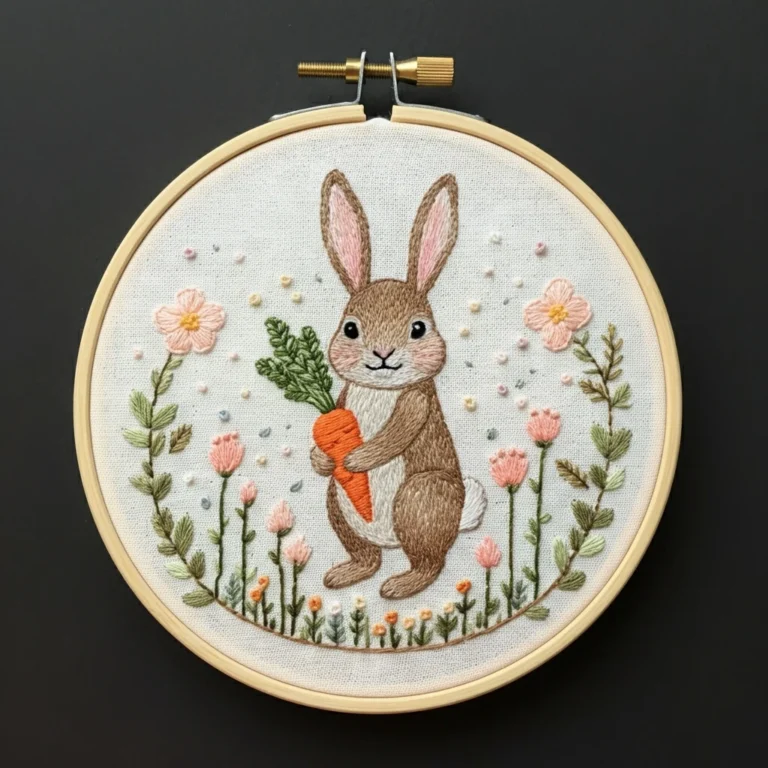
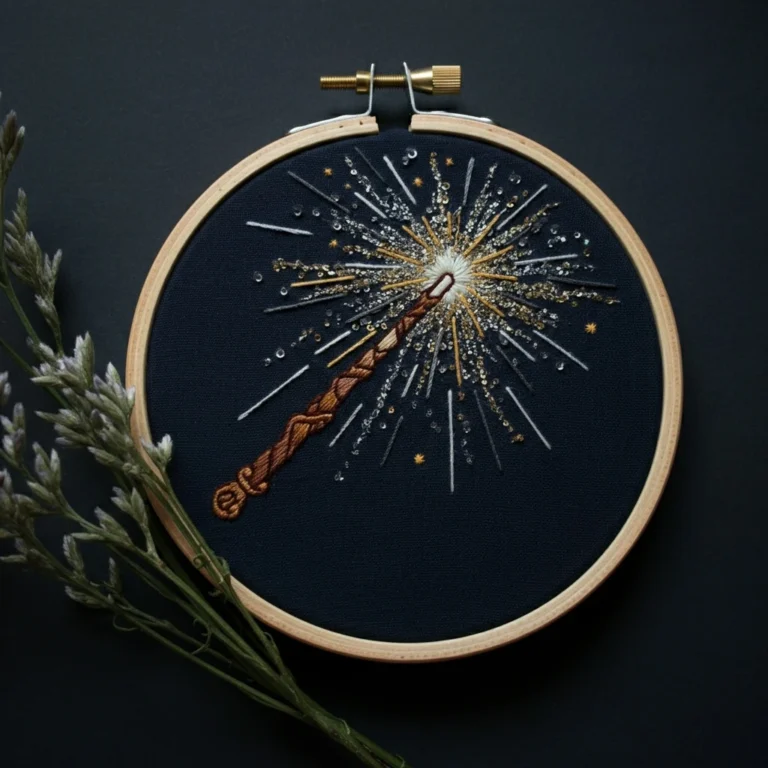
Practical hoop note: On natural linen, pale fur and yarn highlights may blend into the fabric. Add a few one-strand 738 shadow stitches under the chin, paws, and belly to separate the kitty without heavy outlining.

Leave a Reply

Your email address will not be published. Required fields are marked *