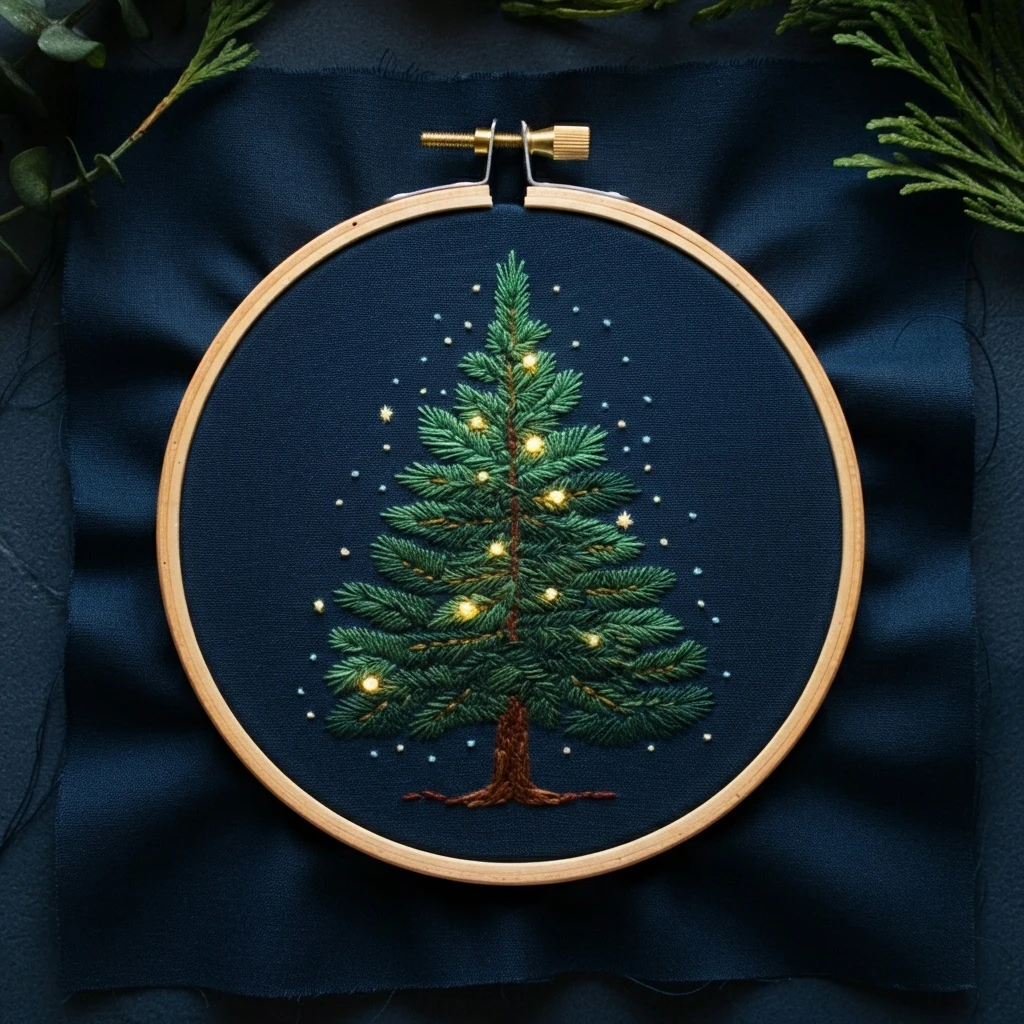

Gateway To The Cosmos
A luminous stitching guide for a celestial portal design: deep space blues and violets, antique gold highlights, creamy starlight, and warm architectural details that frame the glowing gateway.
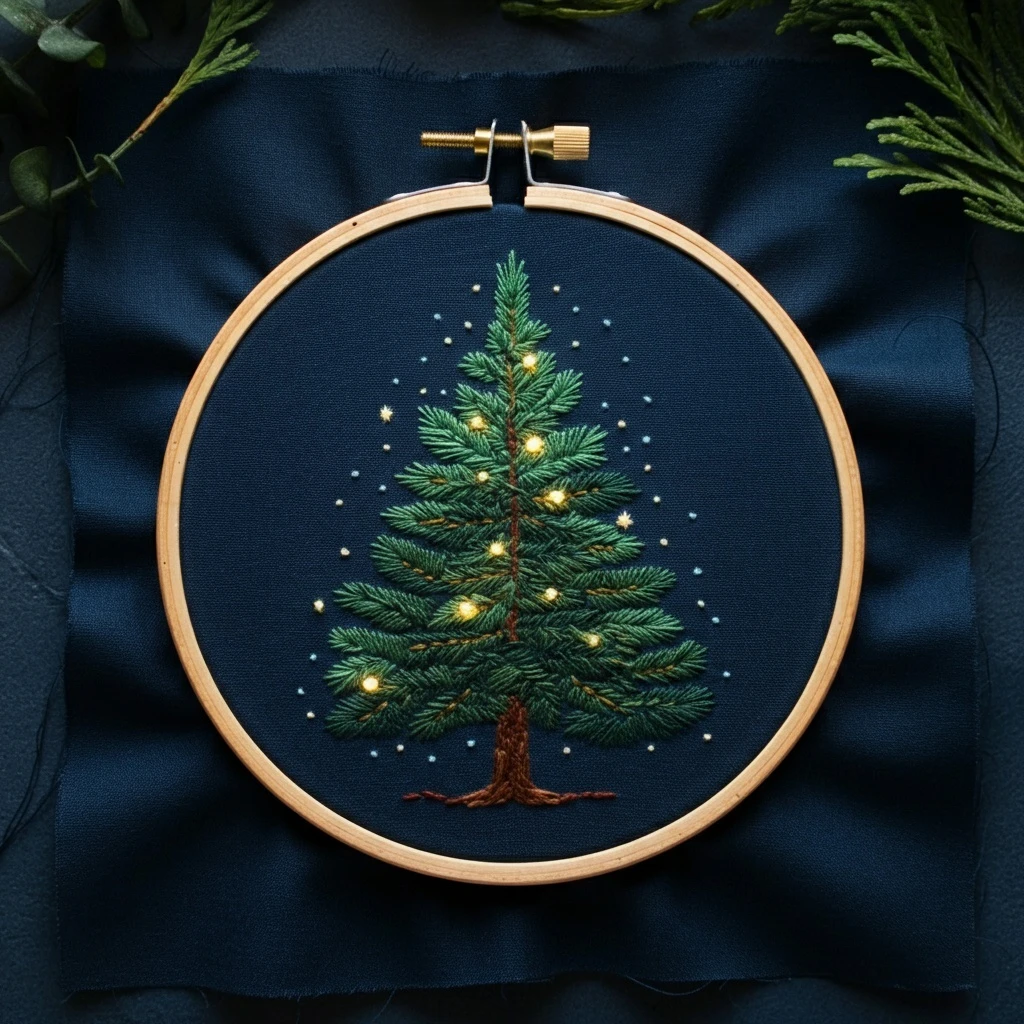
Suggested DMC Color Palette
Use the dark colors to establish the cosmic depth first, then add glowing golds, soft whites, and violet-blue blends on top. The palette below is designed to keep the portal radiant without losing the clean silhouette of the design.
Stitching Suggestions by Design Area
Cosmic sky and portal glow
long & short stitchseed stitchFrench knots
- Fill larger dark sky areas with 2 strands of DMC 823, feathering into 939 at the edges for depth.
- Use loose long-and-short stitches in 333, 340, and 3747 around the gateway to create a soft violet halo.
- Scatter 1-wrap French knots in 3865 for small stars; use 2 wraps only for the few brightest stars.
Golden framework and ornate details
split stitchstem stitchsatin stitch
- Outline the arch and chandelier curves with split stitch in 783 for crisp, controlled curves.
- Add DMC 780 along lower/right edges as a shadow line, then touch the light-facing edges with 3821.
- For small gold panels, use satin stitch with short stitches rather than long spans to prevent snagging.
Stars, sparks, and magical dust
straight stitchcross sparklecouching
- Make starbursts with tiny crossed straight stitches in 3865; keep most stars irregular for a natural sky.
- Use one strand of 3747 around selected stars to create pale-blue halos.
- If using metallic thread, couch a single gold strand rather than stitching through the fabric repeatedly.
Fine outlines and finishing lines
backstitchwhipped backstitchsingle-strand detail
- Use 1 strand of 839 for the most delicate inner markings; reserve 939 for the darkest external contour.
- Whip selected gold backstitch lines with 3821 to make the portal look polished and slightly raised.
- Keep tiny curls and geometric details slow and short: one stitch per curve change is cleaner than long stitches.
Thread Count & Shading Plan
| Area | Recommended strands | Why it works |
|---|---|---|
| Outer space background | 2 strands | Good coverage without bulky ridges; blend 823 and 939 in alternating rows. |
| Violet glow and nebula haze | 1–2 strands | One strand gives transparent softness; two strands make stronger glow near the gateway. |
| Gold architectural lines | 2 strands for main lines, 1 strand for details | Creates a readable frame while preserving fine ornamental patterning. |
| Stars and sparkle points | 1 strand | Prevents knots and starbursts from overpowering the central design. |
| Final outline | 1 strand | Keeps the design elegant and avoids cartoon-heavy borders. |
Beginner-Friendly Practical Tips
Start with the structure
Stitch the main arch or gateway outline first in a medium gold-brown. It acts like a map and helps place the stars and glow evenly.
Control dark floss
Dark navy can fuzz quickly. Use shorter lengths, separate all six strands first, then recombine only the strands you need for smoother coverage.
Make sparkle intentional
Place the largest stars closest to the portal and keep smaller specks toward the edges. This makes the eye travel naturally into the cosmic doorway.
Use a hoop-friendly tension
Cosmic fills can pucker if pulled tight. Keep stitches relaxed and re-tighten the hoop fabric before each large fill section.
Blend without overthinking
Alternate short stitches of 333 and 340, then add a few 3747 stitches on top. Irregular spacing looks more atmospheric than perfect stripes.
Finish with highlights
Save DMC 3865 and 3821 until the end. A few final bright stitches will sharpen the glow and make the whole piece feel polished.