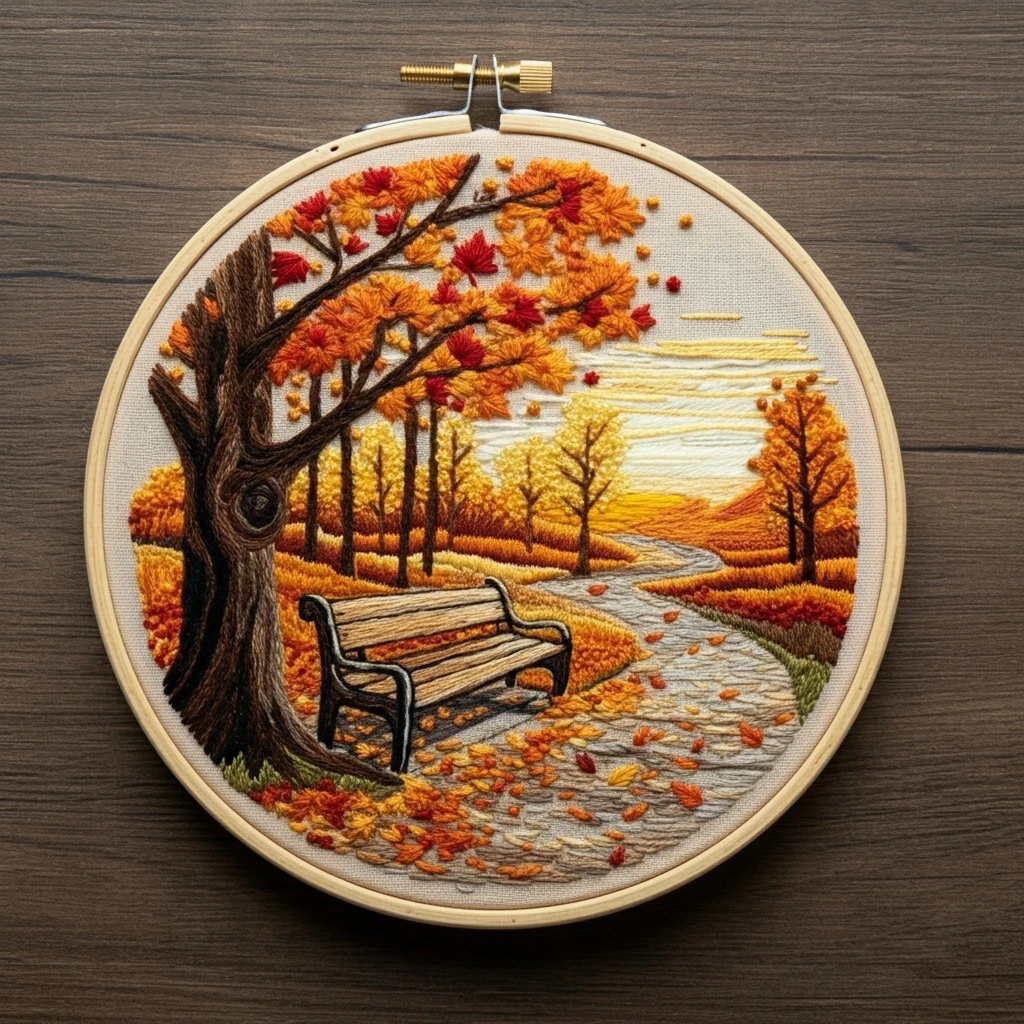

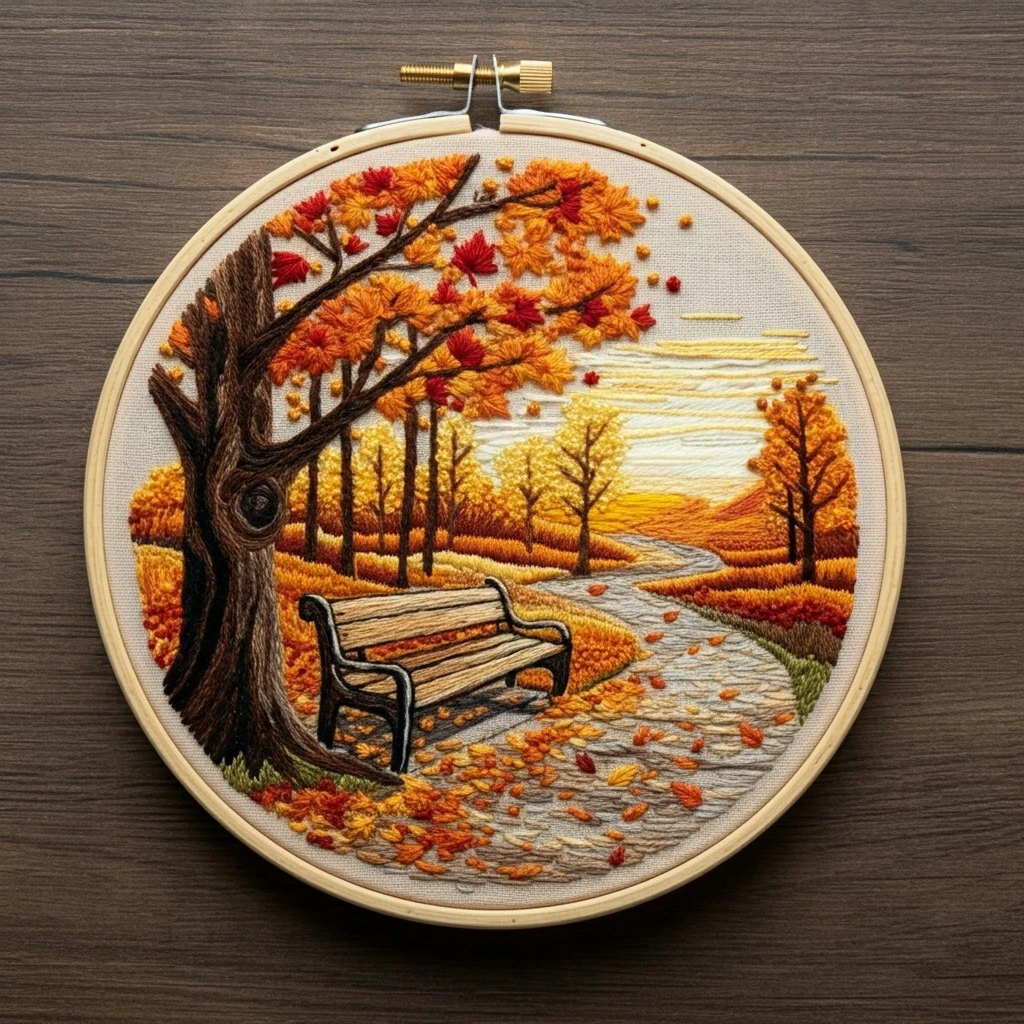
Lavender Garden Cottage
A gentle cottage-garden embroidery plan built around lavender sprays, soft greenery, warm cream architecture, earthy roof and path details, and small floral accents. The palette keeps the scene calm and storybook-like while giving enough contrast for tiny windows, stems, and garden textures to stay readable.
Color read from the artwork
Treat the design as a layered garden scene: lavender and violet should carry the floral mood, sage and moss greens should keep the foliage natural, and warm neutrals should define the cottage, roof, pathway, and sunlit edges. Use the brighter pinks and golds sparingly so they feel like small blooms and glints rather than competing focal points.
Stitch map by design element
Thread-count and blending guide
1 strand
Use for window panes, roof seams, tiny stem lines, distant flower dots, and path texture. One strand keeps the miniature details tidy.
2 strands
Use for most lavender, leaves, cottage fill, and visible flower beds. This is the best all-purpose count for a clean hoop with good coverage.
3 strands
Reserve for foreground lavender knots, dense shrubs, or a chunky cottage roof accent. Avoid using 3 strands in tight window or door areas.
Useful blends
Lavender glow: 1 strand 210 + 1 strand 211.
Deep lavender: 1 strand 209 + 1 strand 333.
Soft foliage: 1 strand 522 + 1 strand 520.
Warm cottage wall: 1 strand 822 + 1 strand 3865.
Shading direction
Shade lavender from dark bases to pale tips, foliage from dark underside to lighter top edge, and cottage walls from darker roofline/door edges into lighter central panels.
Suggested stitching order
Texture and outlining details
Lavender texture
For a soft cottage-garden look, combine lazy daisy stitches with scattered French knots. Keep knots small and irregular; lavender should look airy rather than like a solid purple block.
Cottage texture
Use short satin or long-and-short stitches for walls, then add a few 1-strand horizontal strokes in 644 or 822 to suggest plaster, stone, or aged wood.
Path movement
Curve running stitches along the path shape. Make foreground stitches slightly longer and darker, then use smaller pale dashes as the path recedes.
Clean outlines
Outline after filling, not before, so edges can be corrected. Use split stitch for cottage contours and stem stitch for plant lines.
Practical finishing tips
Fabric choice
Natural linen or oatmeal cotton complements lavender and cream. Avoid very dark fabric unless you plan to strengthen the cottage outlines and lighten the lavender tips.
Needle and hoop
Use a size 7 or 8 embroidery needle for 2 strands and a snug hoop so the roof and path lines do not pucker.
Thread length
Cut floss around 14–16 inches for knots and dense flower beds. Shorter lengths reduce tangling when switching between lavender shades.
Back neatness
Carry thread only under nearby stitched areas. Long carries behind pale cottage walls can shadow through light fabric.
Pressing
Press face down on a towel after stitching. This protects raised lavender knots and keeps cottage wall stitches from flattening too hard.
Personalization
Add initials on a tiny garden sign, use metallic gold for one window glow, or deepen the lavender with extra 333 for a duskier cottage mood.