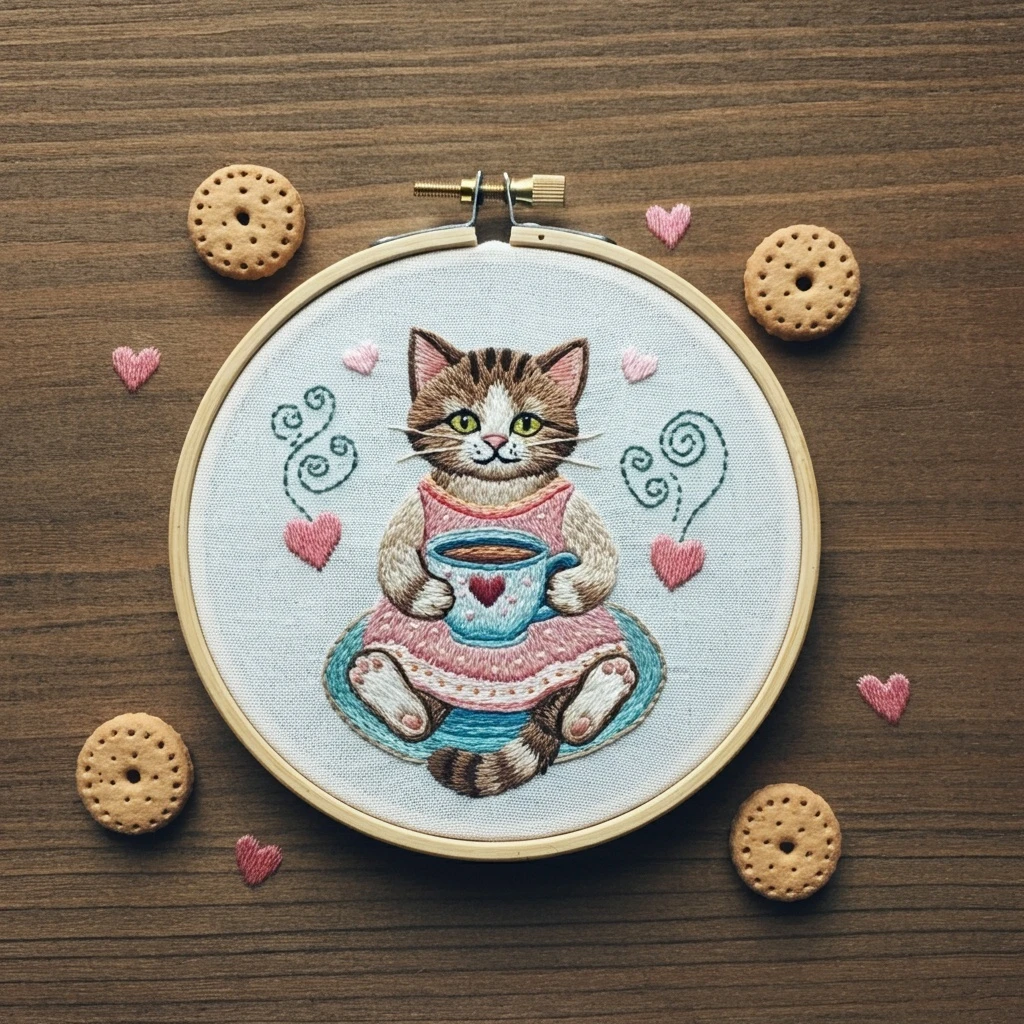

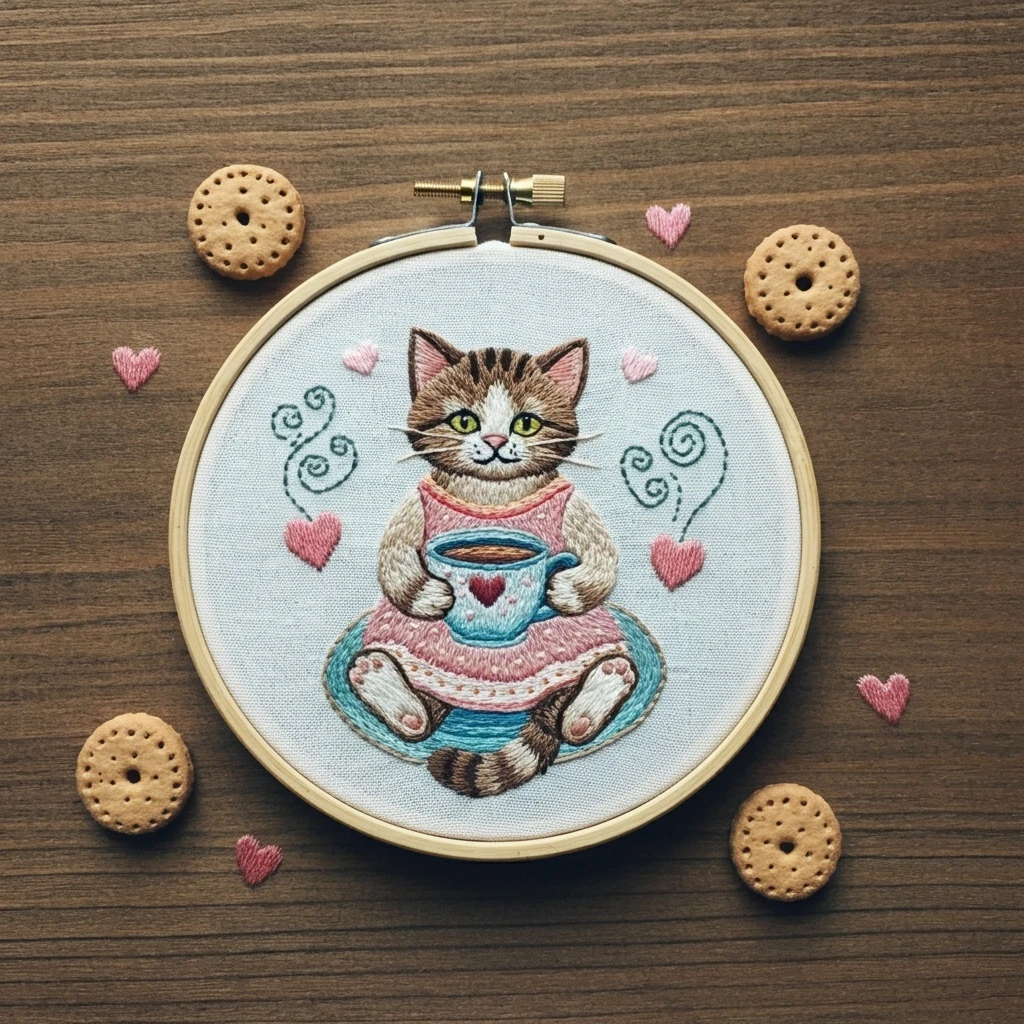
Cozy Kitty Tea Time
This charming tea-time design centers on a soft kitty paired with a teacup or tea setting, gentle steam, and small cozy details. The embroidery should feel warm, sweet, and relaxed: plush gray or cream cat fur, delicate whiskers, a rounded cup and saucer, amber tea shading, soft floral or leaf accents, tiny pink ear and nose details, and crisp pale highlights that make the ceramic and cat face look polished.
Polished DMC Color Palette
This palette keeps the kitty soft and the tea setting warm: gray-beige fur tones, cream ceramic highlights, amber tea browns, blush pink details, and gentle garden accents in green, rose, blue, and aqua.
Stitch Map by Design Element
Thread Count & Blending Guide
Fine facial and steam details
Use 1 strand for whiskers, eyes, nose, mouth, cup rim, handle outline, steam curls, tiny leaf stems, saucer lines, and final correction stitches.
Main fills
Use 2 strands for kitty fur, teacup body, saucer, tea surface, flowers, leaves, and small biscuits or accents. Two strands gives soft coverage without hiding facial detail.
Raised cozy texture
Use 2–3 strands for flower-center knots, sugar dots, tiny biscuit crumbs, or decorative cup dots. Use three strands sparingly so the tea setting stays delicate.
Shading, Outlining & Texture Suggestions
Soft kitty expression
- Use short stitches following the cat’s face, ears, paws, and body curves.
- Keep darker fur inside ears, under the chin, below paws, and along any curled tail shadow.
- Add pale cream to the muzzle and chest so the face feels sweet and readable.
- Stitch whiskers last with one strand and gentle tension to prevent puckering.
Rounded teacup form
- Use curved horizontal stitches across the cup body and saucer.
- Shade the lower cup and handle join with muted beige-gray or pale blue.
- Keep the rim and handle thin; heavy outlines can make the cup look clumsy.
- Add bright ceramic highlights only after the cup color and shadows are complete.
Tea-time warmth
- Use the darkest brown at the tea rim and under floating details.
- Add golden highlights in small strokes so the tea looks warm and glossy.
- Place flowers and leaves as accents around the cup, not over the kitty’s face.
- Keep steam curls light so they frame the scene without overpowering it.
Outlining approach
- Use soft gray for kitty outlines, warm brown for tea and biscuit details, and cool blue-gray for cup shadows.
- Avoid heavy black outlines except for tiny eyes or pinpoint face details.
- Use split stitch for cat and cup curves, back stitch for saucer lines, and stem stitch for steam.
- Add final outlines before whiskers, eye glints, flower centers, and bright cup shine.
Beginner-Friendly Stitching Order
- Transfer cleanly: mark the kitty face, ears, paws, body or tail, teacup rim, handle, saucer, tea surface, steam, flowers, leaves, and tiny accents.
- Stitch the cup and saucer: build the ceramic body, rim, handle, saucer shadows, and any decorative trim first.
- Add tea surface: stitch warm tea browns and golden highlights inside the cup.
- Build the kitty: stitch fur shadows, mid-tones, muzzle and chest highlights, then add ears and paws.
- Add facial details: stitch eyes, nose, mouth, whiskers, and tiny glints with one strand.
- Finish with atmosphere: add steam curls, flowers, leaves, spoon or biscuit details, knots, sparkle, and final corrections last.
Practical Tips for a Clean Finish
Fabric & hoop
Warm cream, natural linen, pale oatmeal, soft pink, or light blue-gray cotton-linen works well. Keep the hoop drum-tight so the cup rim, whiskers, and steam curls stay smooth.
Needle choice
Use a sharp embroidery needle size 7–9 for one- and two-strand stitching. A size 9 needle is ideal for whiskers, facial details, cup rim lines, and delicate steam curls.
Keeping the kitty sweet
Do not overwork the face. A few soft fur shadows, clean eyes, a tiny nose, and delicate whiskers create more charm than dense texture.
Avoiding clutter
Let the teacup and kitty stay central. Use flowers, leaves, and tea-time extras as small framing details rather than filling every empty space.