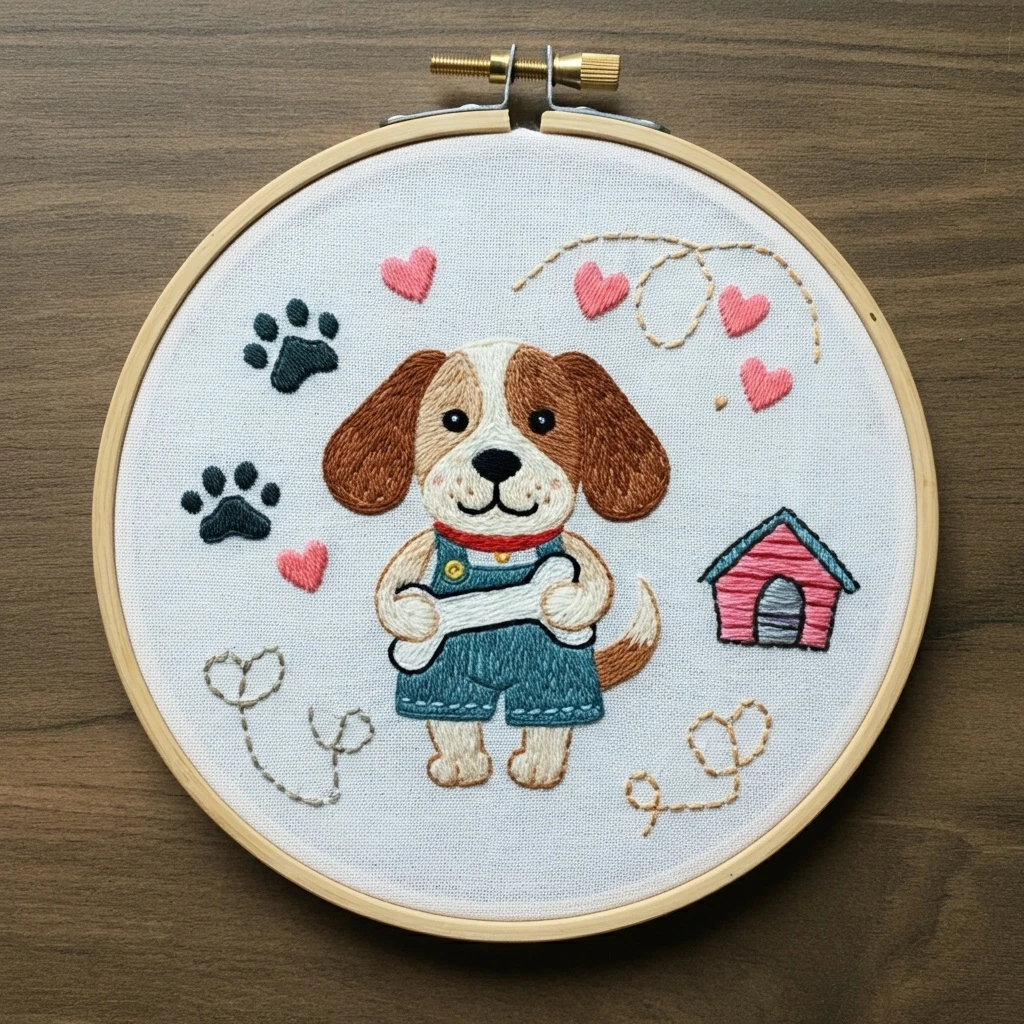

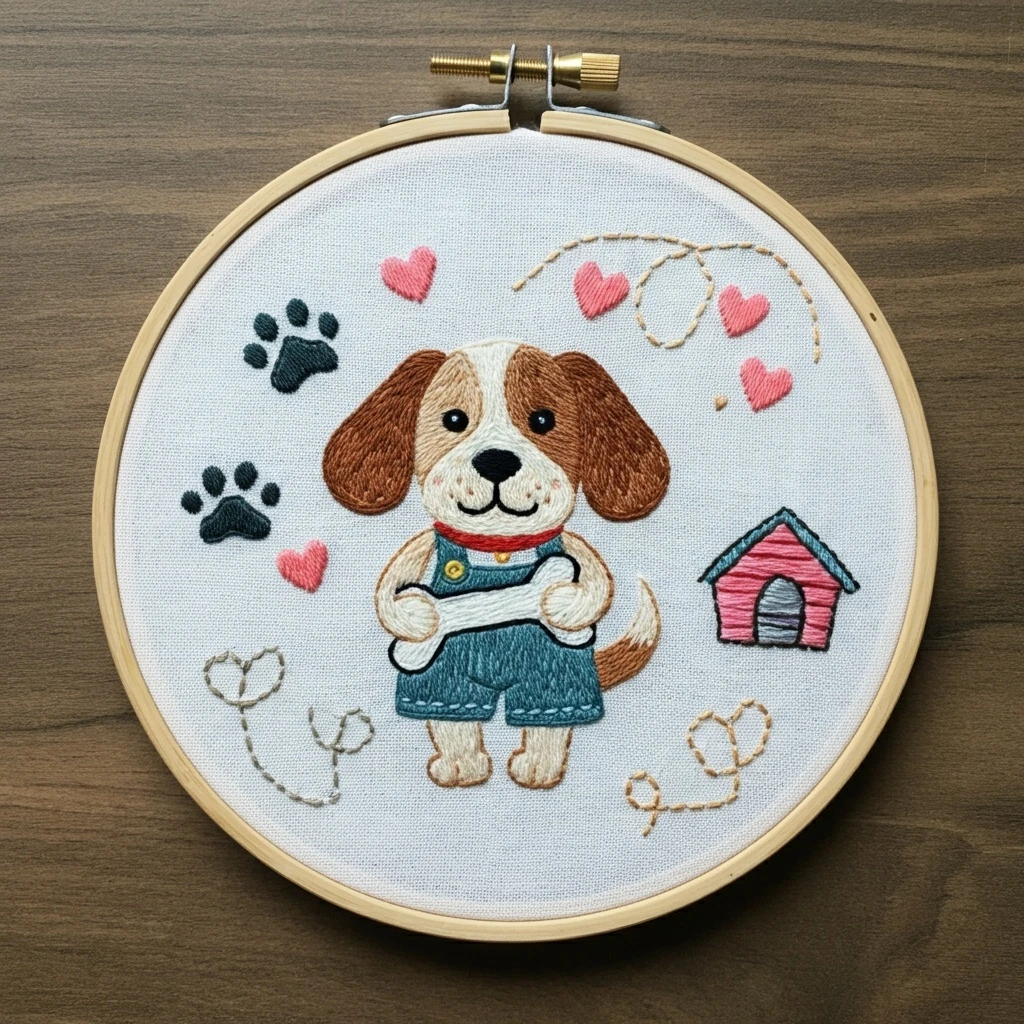
DMC palette & stitching suggestions
Adorable Winter Fawn Embroidery
A soft winter woodland guide for a sweet fawn design: warm tawny fur, creamy muzzle and chest, delicate white spots, expressive dark eyes, and seasonal foliage or snowy accents rendered with gentle texture and subtle shading.
Design Color Story
This winter fawn design is best interpreted with gentle natural contrast rather than bold outlining. The main coat should feel warm and velvety, using pale biscuit and honey-brown tones with deeper caramel and chestnut shadows where the body curves under the neck, legs, and belly. The muzzle, inner ears, chest, and spot details benefit from creamy off-whites rather than bright stark white, while the eyes, nose, and hooves should be defined in deep brown-black for sweetness and clarity.
If the design includes seasonal embellishment such as evergreen sprigs, red berries, frosty leaves, or tiny snow accents, keep those secondary to the fawn. Muted pine greens, berry reds, and cool white highlights give a winter feel without overwhelming the animal.
Suggested DMC Floss Palette
Stitch Plan by Design Area
| Area | Recommended stitches | Thread count | Technique notes |
|---|---|---|---|
| Main fawn coat | Long and short stitch, split stitch guide line, directional straight stitch | 1 strand for realistic fur; 2 strands for broad underlayers only | Build the coat with 842, 435, and 434 first, then feather in 436, 3033, and 3782 where the form tucks under the neck, belly, and legs. Keep strokes short around the face and slightly longer on the body. |
| Muzzle, chest, and pale facial areas | Long and short stitch, satin stitch for tiny compact areas, seed stitch for soft fluff | 1 strand; 2 strands only if the chest section is large | Use 3865 and 739 as the main light tones. Shade softly with 738 at the jawline and where cream areas meet the tan fur so the face stays rounded and sweet. |
| White spots | Satin stitch, padded satin stitch, detached straight stitch | 1-2 strands depending on spot size | Use 3865 for most spots and add tiny touches of B5200 only on a few bright top spots. Slightly vary spot size and spacing for a more natural juvenile-deer look. |
| Eyes, nose, and expression | Satin stitch, back stitch, split stitch, tiny French knots | 1 strand for lines and lashes; 2 strands for larger satin nose areas | Stitch most features in 3864 with 3371 reserved for pupils, nostrils, and the deepest corners. One tiny catchlight in B5200 makes the expression come alive. |
| Ears, legs, and hooves | Long and short stitch, small satin stitch, stem stitch | 1 strand | Warm the inner ear with 407 and 739. Use 3033, 3782, and 3864 along leg edges and hoof separation lines, but keep transitions soft so the fawn stays delicate rather than graphic. |
| Winter foliage, berries, or snowy accents | Fishbone stitch, lazy daisy, stem stitch, couching, French knots | 1-2 strands | Use 3011 as the main foliage tone, 3053 for highlights, and 469 for depth. Stitch berries in 814 with small 3371 shadow accents. Add B5200 or 3753 only sparingly for frosty sparkle. |
Blending, Outlining & Shading Guidance
Blending ideas
- Main coat blend: combine 842, 435, and 434 for the soft tawny base, then drop in 436 and 3033 as the body turns away from the light.
- Deep shadow blend: use 3033 into 3782 in the underside, between the legs, and at the neck base, then soften with a few returning stitches of 434.
- Cream fur blend: begin with 739, brighten with 3865, and shadow lightly with 738 so the pale sections stay plush instead of flat.
- Spot treatment: add 3865 spots over the finished coat and edge a few lower spots with 738 or 842 to make them sit naturally on the body.
- Winter accent blend: use 3011 and 469 for greenery depth, and add 3053 or a whisper of 3753 where you want a frosty seasonal finish.
Outlining details
- Use one strand of 3033 or 3864 for soft split stitch outlines around the face, ears, and outer silhouette.
- Avoid outlining every white spot. Let the color contrast do most of the work so the coat remains natural.
- Outline the eyes and nose more clearly than the body; these features carry the personality of the design.
- For foliage, use 469 or 3011 as selective outlines where greenery overlaps the fawn.
- Reserve 3371 for tiny crisp accents only, such as pupils, nostrils, or the deepest shadow point inside the eye.
Practical Embroidery Tips
For the fawn
- Transfer the facial landmarks carefully before stitching: eyes, nose, muzzle line, ear placement, and spot clusters all help keep the fawn recognizable.
- Work the pale muzzle and chest first, then feather the tawny coat into those edges for the softest transitions.
- Keep thread lengths short when using 3865, 3864, or 3371 so light and dark details stay crisp rather than fuzzy.
- Use one strand around the face and eye area almost exclusively; this keeps the expression refined and youthful.
- If the body looks too smooth, add scattered top-layer fur strokes in 435 and 436 to create a velvety animal texture.
For winter details & finishing
- Stitch stems or evergreen branches first, then leaves, then berries, knots, or tiny frosty highlights so the embellishments layer naturally.
- Use 2 strands only for larger berries, bolder leaves, or decorative satin areas; the fawn itself generally looks best in 1 strand.
- Keep snow or frost details sparse. Too much bright white can overpower the softness of the deer.
- A firm hoop tension helps long-and-short shading lie smoothly, especially through the neck and body curves.
- Press finished work from the back on a towel to preserve raised French knots, detached leaves, or padded white spots.
Recommended Stitching Formula
For the most polished winter fawn result, use 1 strand long-and-short stitch for the coat, careful satin or seed stitch for the muzzle and spots, and delicate outlining concentrated mainly around the face. The overall palette should stay soft and woodland-natural, with winter accents acting as a gentle seasonal frame.
- Best fawn coat set: 842, 435, 434, 436, 3033, 3782
- Best pale detail set: B5200, 3865, 739, 738
- Best feature set: 407, 3864, 3371
- Best winter accent set: 3053, 3011, 469, 814, optional 3753