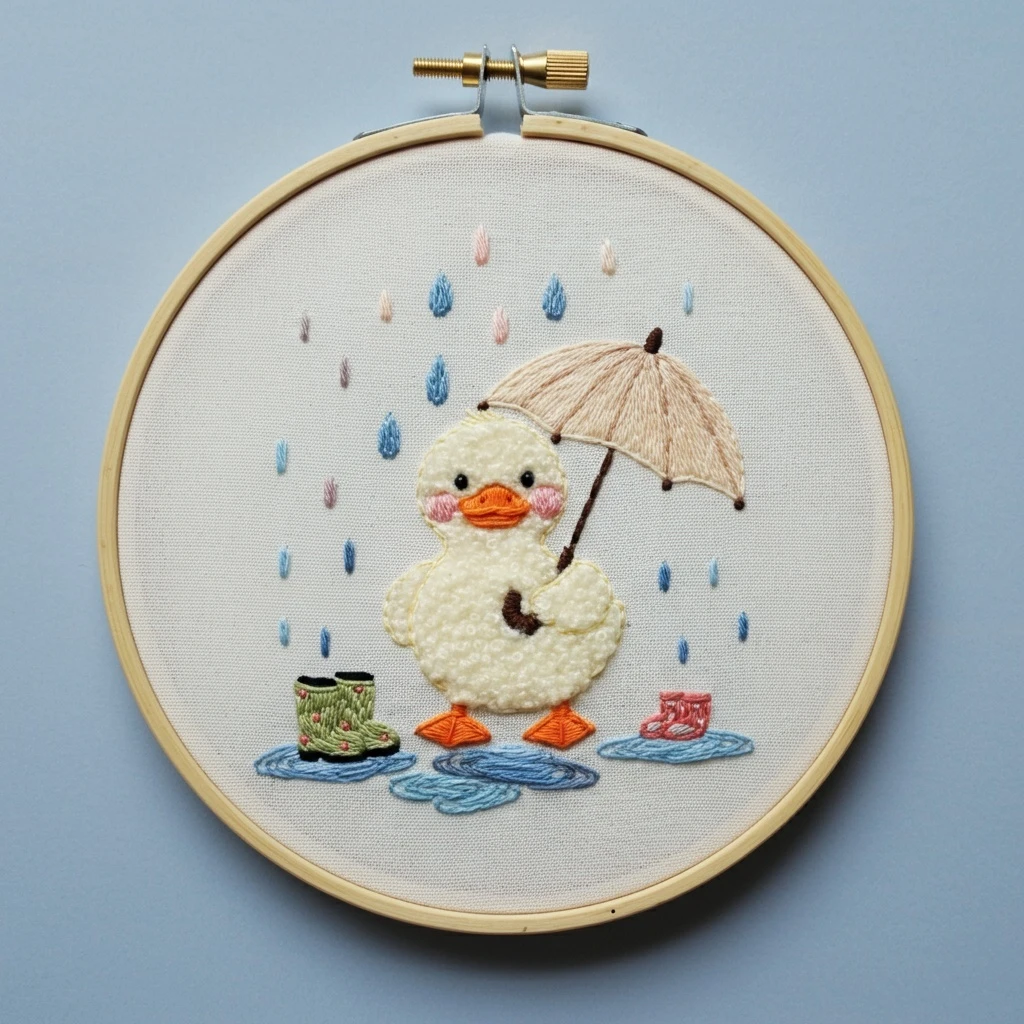

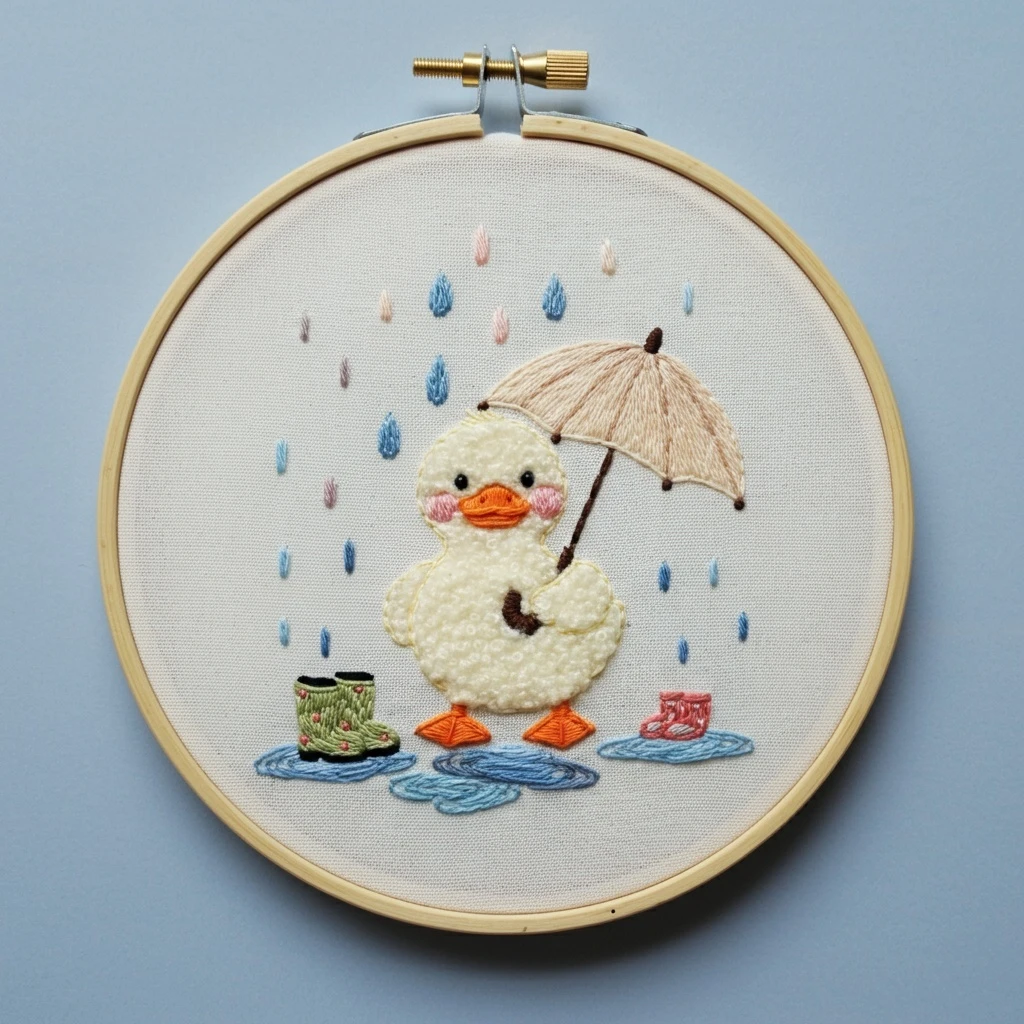
Happy Puppy in Overalls
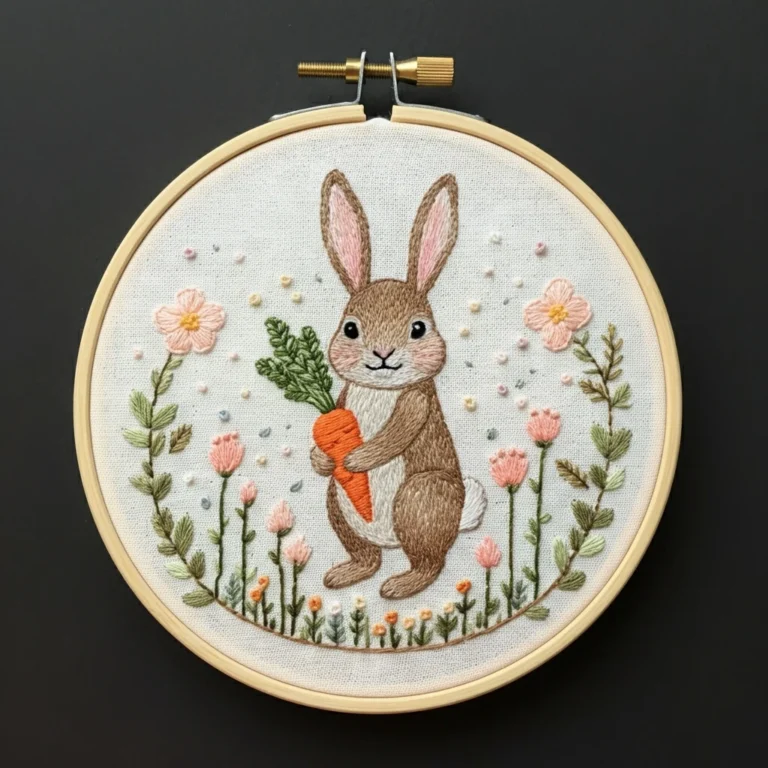
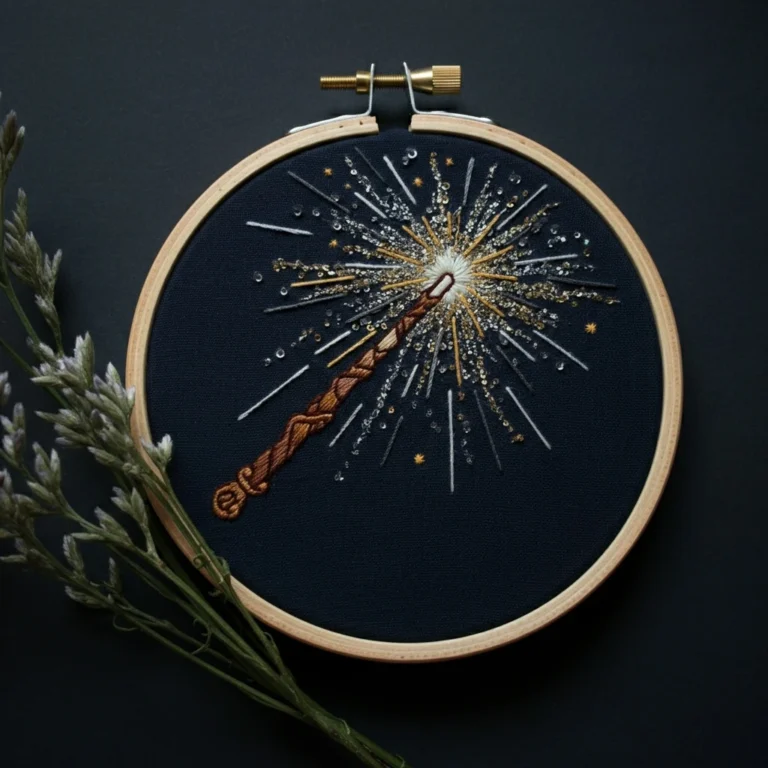
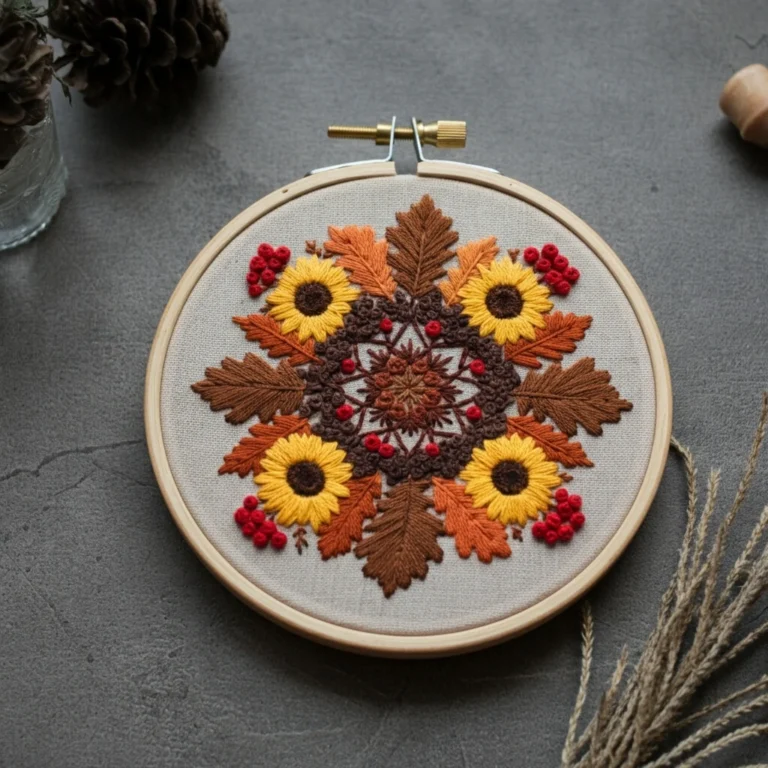
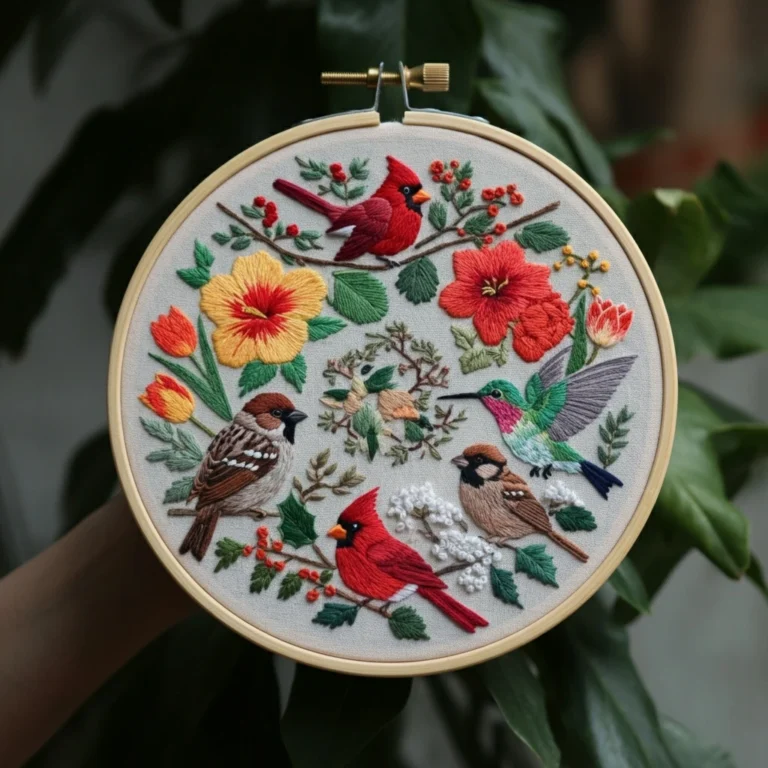
A cheerful character hoop built around soft puppy fur, expressive facial details, denim-blue overalls, warm tan paws, and playful small accents. The embroidery should feel bright and friendly: tidy outlines, plush fur texture, smooth clothing fills, and lively highlights around the eyes and muzzle.
Suggested DMC Floss Palette
Use warm browns and creams for the puppy, denim blues for the overalls, a small set of pinks for cheeks and tongue, and crisp darks for eyes, nose, and defining stitches. The palette is designed for soft shading without becoming too complicated.
DMC 3371 — Black Brown
Deepest eye, nose, mouth, and small outline accents. Softer than black for a cuddly puppy expression.
DMC 801 — Dark Coffee Brown
Ear shadows, fur folds, paw creases, and darker contouring around the face and body.
DMC 433 — Medium Brown
Main golden-brown fur tone. Use for head, ears, paws, and any warm body patches.
DMC 435 — Very Light Brown
Mid-light fur, forehead highlights, and round cheek areas. Blends smoothly with 433.
DMC 738 — Very Light Tan
Muzzle, inner ears, paws, and soft highlight patches where the fur needs a plush look.
DMC 948 — Very Light Peach
Warmest muzzle and cheek glow. Use lightly to keep the puppy face gentle and animated.
DMC B5200 — Snow White
Eye catchlights, tiny nose shine, and the brightest fur or button highlights. Add last.
DMC 312 — Baby Blue Very Dark
Deepest denim seams, pocket outlines, and shaded strap edges on the overalls.
DMC 931 — Antique Blue Medium
Main overall color. Works well in smooth satin stitch or split-stitch fill.
DMC 932 — Antique Blue Light
Denim highlights, strap centers, and top edges of pockets or cuffs.
DMC 3733 — Dusty Rose
Tongue, cheeks, inner ear warmth, and tiny blush accents. Keep stitches small and soft.
DMC 761 — Salmon Light
Light cheek and tongue highlight. Blend with 3733 for a rounded, happy expression.
DMC 3821 — Straw
Buttons, tiny buckles, toy accents, or warm decorative details around the overalls.
DMC 3012 — Khaki Green Medium
Optional grass, leaf, or background accent color if the design includes small outdoor details.
Stitch Map by Design Area
Puppy fur
- Use long-and-short stitch in the direction the fur grows, radiating around the cheeks and muzzle.
- Blend 433 with 435 for main areas, then add 738 and 948 on raised facial planes.
- Use 1 strand for final wisps along ears, forehead, and paws.
Eyes, nose, and smile
- Work eyes with satin stitch or padded satin in 3371.
- Add tiny B5200 catchlights after all dark stitching is complete.
- Use back stitch or split stitch for the mouth; keep the curve light and friendly.
Overalls
- Fill broad denim areas with split stitch rows or satin stitch in 931.
- Use 312 for seams, pocket lines, and shaded strap edges.
- Add 932 as short highlight stitches along folds and upper edges.
Buttons and details
- Use 3821 for warm button accents and tiny hardware.
- Small French knots or padded satin circles make the buttons stand out.
- Outline only the lower edge in 312 or 3371 for dimension.
Cheeks and tongue
- Use 3733 as the base and 761 for the bright center highlight.
- Keep blush in scattered 1-strand stitches rather than dense fill.
- For a tongue, use curved satin stitches with a fine darker center line.
Background accents
- Use detached chain for small leaves or simple flowers if included.
- Keep accent colors quieter than the face so the expression remains the focal point.
- Use seed stitch sparingly for playful texture around the character.
Thread Counts, Blending & Texture
| Area | Recommended strands | Practical guidance |
|---|---|---|
| Fine facial details | 1 strand | Use for mouth curves, whisker dots, eye creases, and delicate fur wisps so the face stays sweet and precise. |
| Main fur fill | 2 strands | Long-and-short stitch gives coverage while allowing soft shading. Change direction with the contours of the head. |
| Denim overalls | 2 strands | Use smooth split stitch or satin stitch. Add seam lines over the fill after the main blue areas are complete. |
| Buttons and highlights | 1–2 strands | Use 2 strands for raised button knots, 1 strand for white sparkle and small highlight marks. |
| Blended needle | 1 + 1 strands | Blend 433/435 for fur transitions, 435/738 for muzzle softness, and 931/932 for faded denim areas. |
Beginner-Friendly Stitching Sequence
Transfer the face and clothing clearly
Mark the eyes, nose, muzzle, overall straps, pockets, and main fur patches. Keep tiny fur marks minimal because they look more natural when stitched freehand.
Start with the overalls
Fill the denim areas first using 931, then add 312 seam lines and 932 highlights. This creates a clean base behind the puppy’s paws and face.
Build the fur from dark to light
Place 801 and 433 shadow strokes first, then blend through 435 and 738. Use shorter stitches around the muzzle and longer stitches on ears and body.
Add expression details
Stitch eyes, nose, smile, cheeks, and tongue carefully. A single misplaced dark stitch can change the expression, so use short stitches and check symmetry often.
Finish with accents and highlights
Add buttons, tiny decorative stitches, white catchlights, and final fur wisps. Press face-down on a towel to preserve raised knots and texture.
Finishing Notes
For the happiest puppy expression, keep the eyes glossy, the muzzle softly shaded, and the overalls tidy. The contrast between plush, directional fur stitches and smooth denim fills makes the character feel lively. Avoid over-outlining the face; use darker browns only where shadow or expression needs definition.