
Mountain Sunrise River
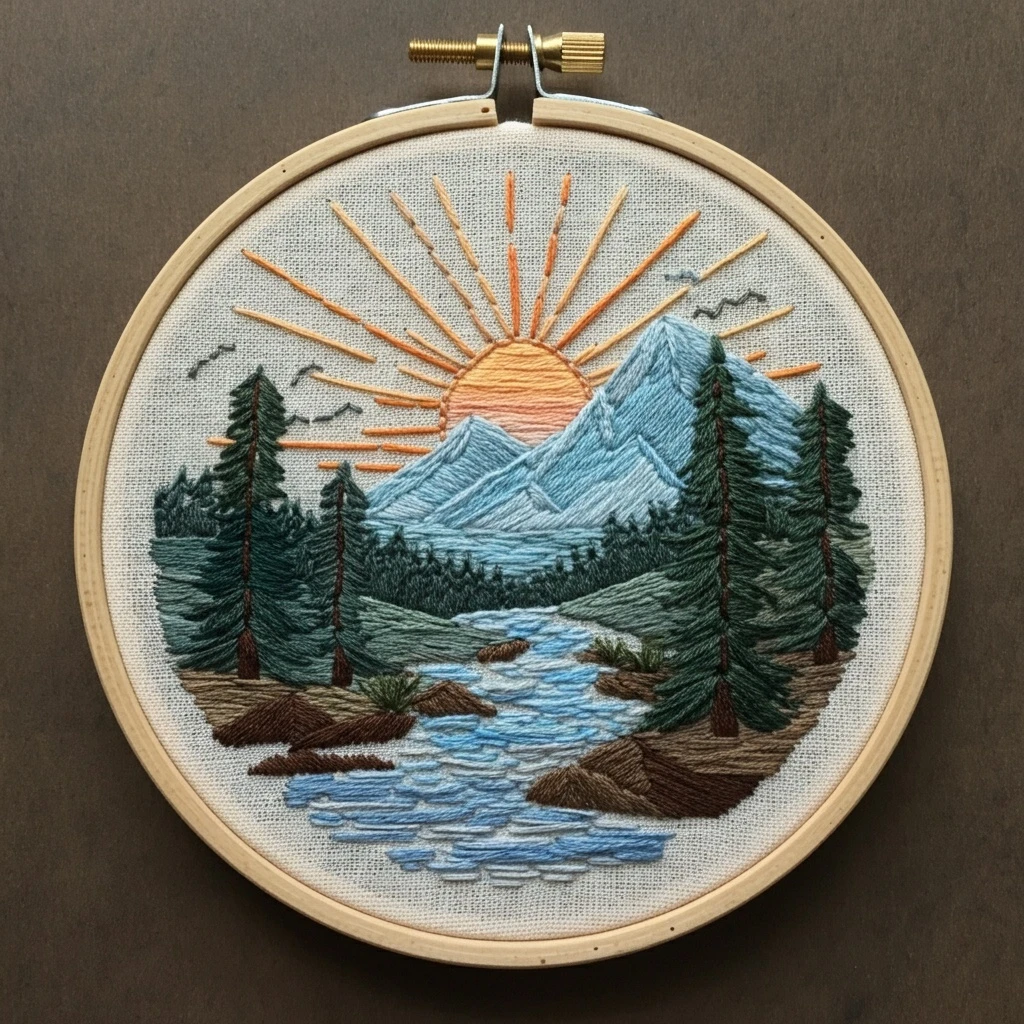
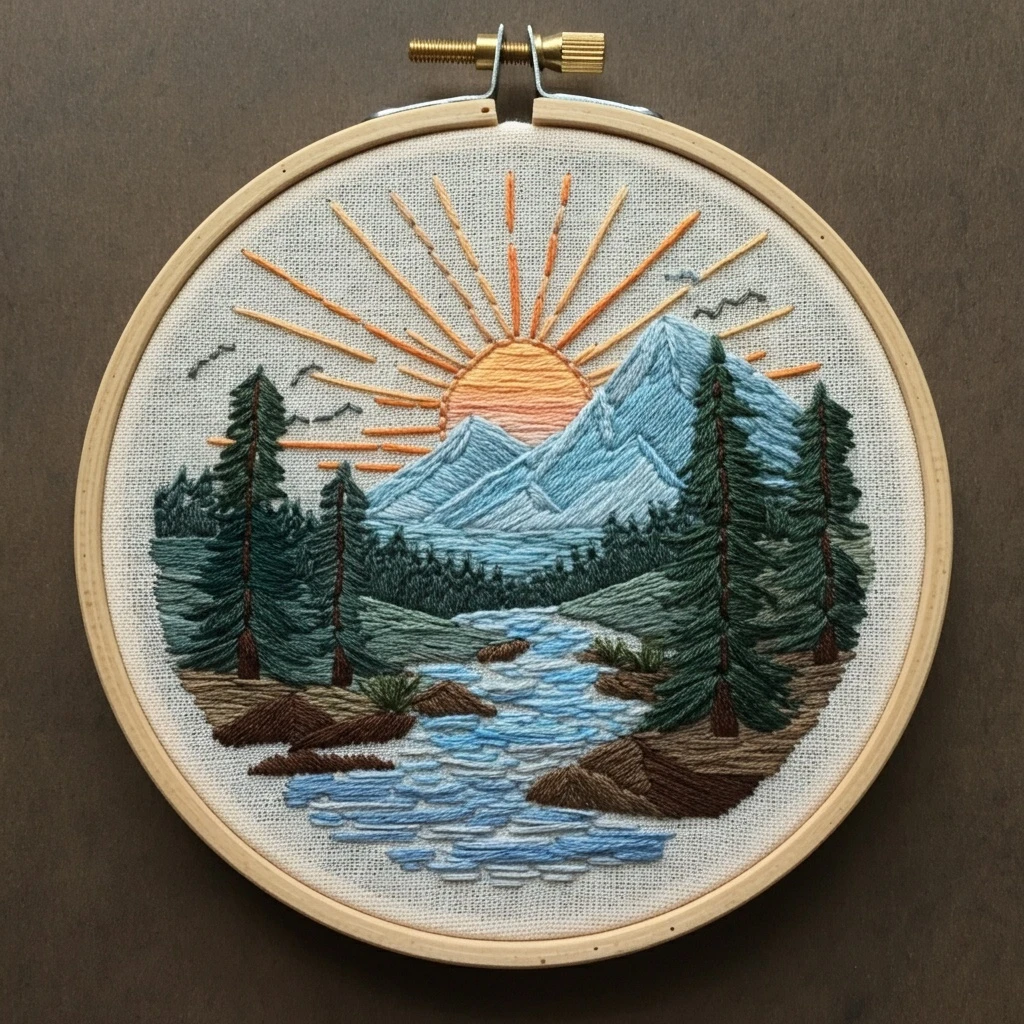
A polished stitching plan for a warm sunrise behind cool blue mountains, dense evergreen silhouettes, rocky riverbanks, and a softly rippled stream. The palette balances apricot light, misty glacier blues, deep pine greens, and grounding woodland browns.
Suggested DMC Palette
Match the image’s soft linen ground, peach sunrise, icy mountains, blue river, dark conifers, and earthy bank shadows. Use these as practical substitutions if your floss stash is close but not exact.
Where each stitch works best
Build from far to near
- Start with the sun and rays so the warm lines sit cleanly behind the mountain peaks.
- Stitch distant mountains next, keeping the thread direction aligned with the slopes.
- Add distant forest bands in muted 924/501 before the foreground pines.
- Complete the river from horizon to foreground, increasing stitch length and contrast as it comes toward the viewer.
- Finish foreground trees, rocks, and grasses last with darker outlines and richer texture.
Thread-count guidance
Use fewer strands in the background and more in the foreground to create depth without changing the drawing.
| Area | Recommended strands | Practical note |
|---|---|---|
| Sun rays, birds, distant outlines | 1 strand | Keeps fine lines crisp and prevents the open sky from looking crowded. |
| Mountain fill and river highlights | 1-2 strands | Use one strand for delicate blending; two strands only where you need stronger blue coverage. |
| Sun disc and foreground river strokes | 2 strands | Creates smooth color while still leaving a hand-stitched texture. |
| Foreground pines and dark bank shadows | 2-3 strands | Extra weight helps these elements sit visually in front of the landscape. |
| Tree trunks and rock crevices | 1-2 strands | Use one strand for detail lines and two strands for visible trunk structure. |
Smooth color transitions
Keep the scene readable
- Outline major mountain ridges with split stitch in 519 or 924, but avoid heavy black lines.
- Darken only the underside of rocks and the inner pine branches with 898 or 500.
- Let small gaps of fabric remain between some river strokes; the linen color becomes natural sparkle.
- Use slightly curved horizontal stitches in the river to echo the winding flow.
- For tree texture, rotate needle angles rather than changing every branch color.
Mark the direction first
Before filling mountains or water, draw tiny removable guide arrows. Directional stitches are what make this landscape look intentional.
Do not overfill the river
The river should feel broken and reflective. Leave slivers of fabric showing between blue strokes, especially in the foreground.
Relax long rays
Long straight sun rays can pull fabric inward. Keep the hoop drum-tight, stitch from the center outward, and avoid tugging at the endpoint.
Suggested working rhythm
Complete one visual layer at a time: warm sky, cool mountains, distant forest, river, then foreground pines and rocks. Step back after each layer and adjust contrast sparingly. The most convincing version will keep the sunrise soft, the mountains airy, and the foreground pines richly textured.