
DMC palette & hand embroidery notes
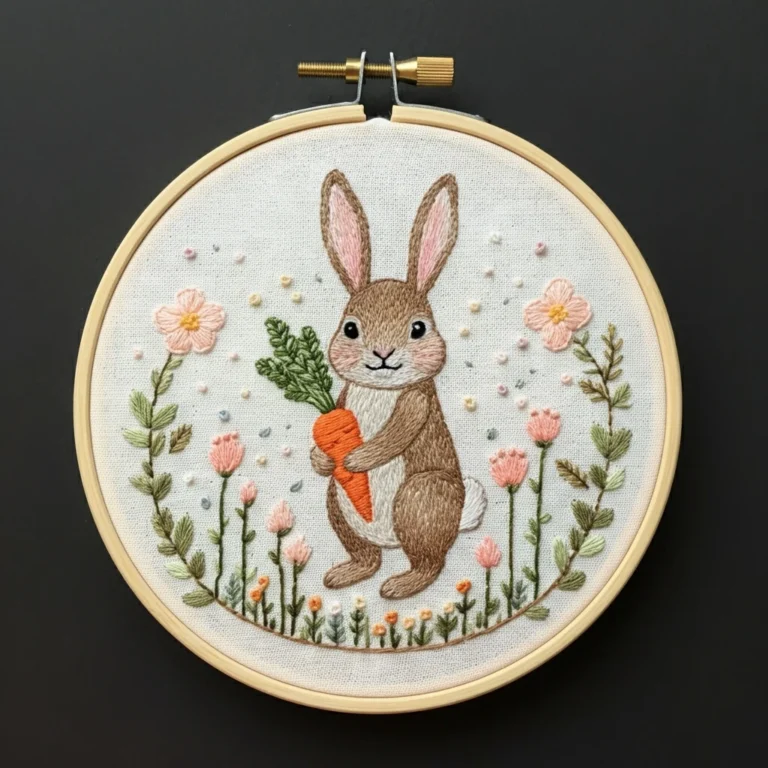
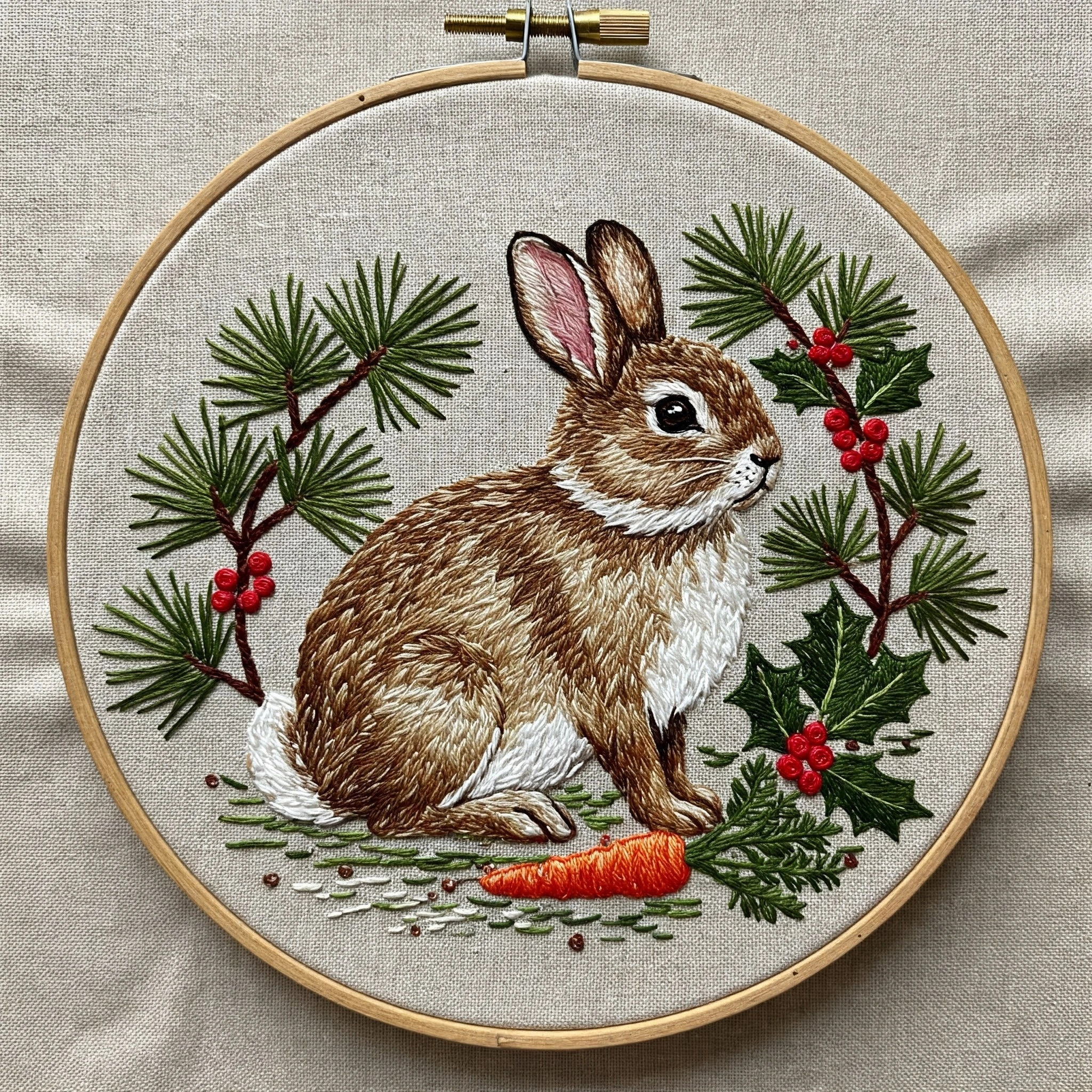
Winter Rabbit With Holly And Pine
A cozy woodland hoop with a shaded brown rabbit, white winter belly and tail, pine boughs, glossy holly berries, deep green leaves, and a bright carrot accent on natural linen.
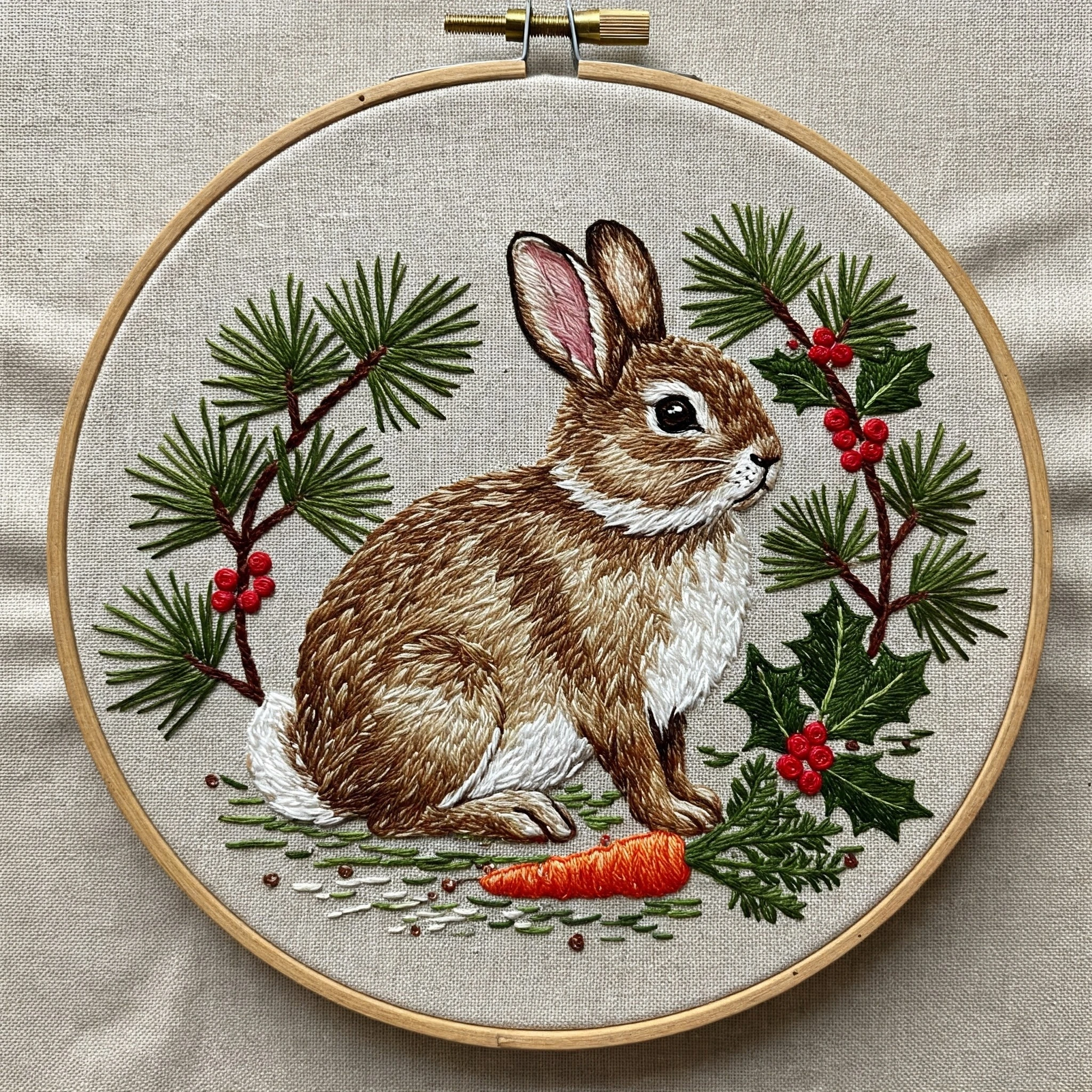
Likely DMC Color Palette
Colors are estimated from the visible hoop preview and matched to close DMC six-strand cotton shades. The design relies on warm browns for rabbit fur, cool whites for winter fluff, layered pine greens, red berry knots, and one strong orange carrot highlight.
Stitching Suggestions
Work from the largest fur areas outward, then add pine, holly, berries, carrot, and final face details. Keep directional stitches visible; this design looks best when the fur and needles are not over-smoothed.
| Element | Recommended stitch | Practical notes |
|---|---|---|
| Rabbit body and haunch | Long and short stitch with directional split stitch | Follow the curve of the back and belly. Blend 801, 975, and 3864 in uneven short strokes for natural fur. |
| White chest, muzzle, and tail | Loose long and short stitch | Use 3865 with touches of 3864 near brown fur. Leave the edges feathered instead of perfectly solid. |
| Ear interiors | Satin stitch or long and short stitch | Lay 3688 down the center, then soften the edges with beige and brown stitches so the ears feel plush. |
| Eye and facial details | Tiny satin stitch, backstitch, single straight stitches | Use 310 or 3371 for the pupil, a pin-point 3865 highlight, and one-strand whiskers to avoid a heavy face. |
| Pine branches | Stem stitch for twigs; straight stitch for needles | Stitch brown branch stems first. Add long green needle strokes radiating from each twig, mixing 3362 and 3363. |
| Holly leaves | Fishbone stitch with backstitched edges | Use dark green at the base and veins, medium green toward the leaf tips. A crisp outline helps the scalloped leaves read clearly. |
| Holly berries | French knots or padded satin dots | Use 321 for the bright face of the berry and 815 on the lower edge for a rounder, glossy finish. |
| Carrot | Satin stitch with couching or short ridge stitches | Fill lengthwise with 741. Add 742 highlights and darker short horizontal marks to suggest carrot texture. |
| Snow and ground texture | Seed stitch, straight stitch, detached backstitch | Scatter 3865 and muted green strokes loosely under the rabbit so the foreground feels wintry but not crowded. |
Thread Count, Blending & Shading Plan
Beginner-friendly order of work
- Outline the rabbit lightly with one-strand split stitch in a matching brown so the silhouette stays clean.
- Fill the rabbit body with directional brown and beige strokes, saving the face, eye, and whiskers for later.
- Stitch the white tail, chest, and muzzle, feathering white stitches into the brown areas.
- Add pine branches and holly leaves behind and around the rabbit, then work the red berry knots.
- Finish with the carrot, snow dashes, eye sparkle, whiskers, and any final dark outlines.
Texture & Finishing Notes
- Keep fur strokes slightly uneven; perfectly parallel stitches can make the rabbit look flat.
- Angle pine needles away from the branch center like little fans.
- Use a sharp needle for single-strand facial details and avoid splitting nearby stitches.
- Do not overpack the holly berries; leaving a sliver of fabric between knots keeps clusters readable.
- For a softer winter look, substitute DMC 822 for some of the 3865 snow and tail highlights.
- Press finished work face-down on a towel so berry knots and fur texture are not crushed.
Encouraging finish: This hoop succeeds through contrast: fluffy warm-brown rabbit fur against crisp pine, glossy red berries, and a bright orange carrot. Build the texture slowly in layers and save the sharpest facial details until the final pass.