Embroidered Bookshelf Still Life - DMC Palette & Stitching Tips
DMC palette & embroidery guide
Embroidered Bookshelf Still Life
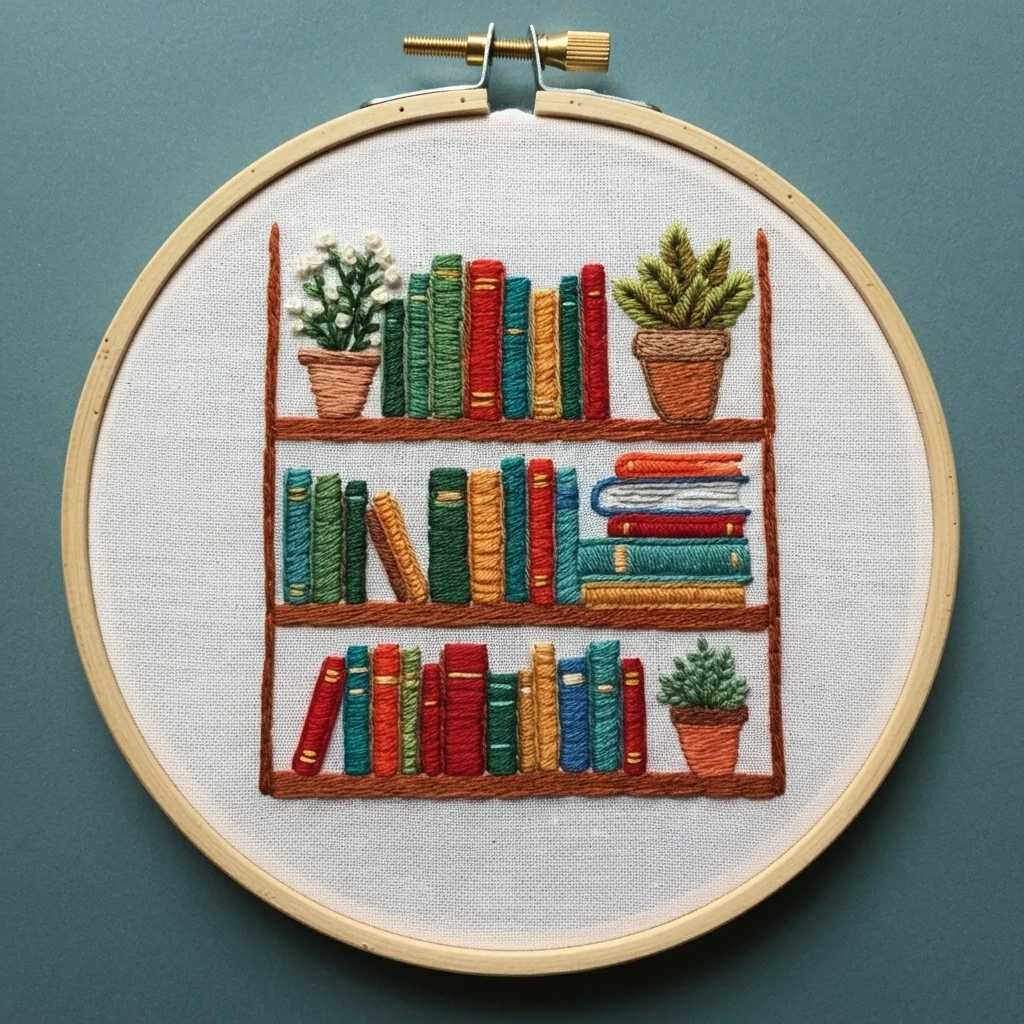
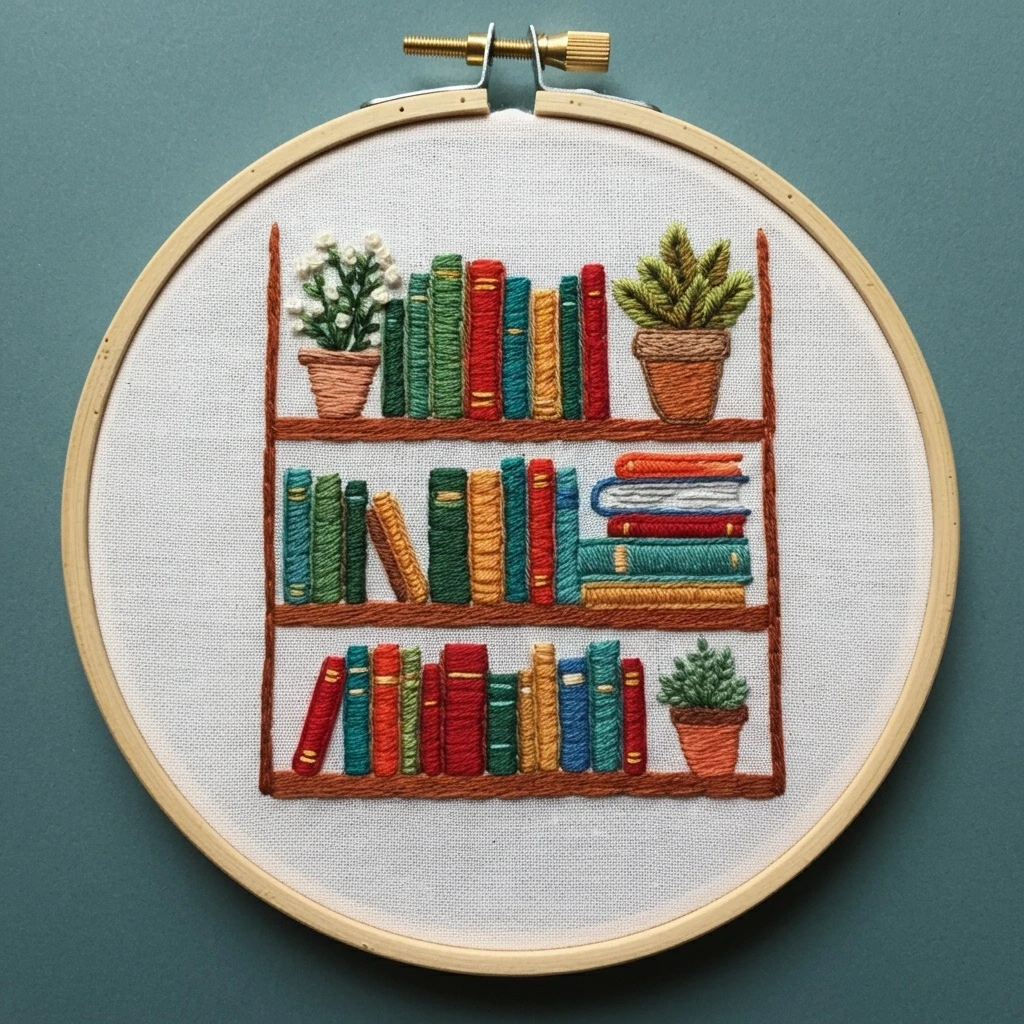
A cozy stitched still life for stacked books, warm wooden shelves, a little framed accent, leafy greenery, a cup, and soft shadowed details. This guide keeps the design polished with library-inspired jewel tones, creamy neutrals, and practical stitches for crisp book spines and small decorative objects.
Book-spine color blockingWarm shelf woodTiny still-life detailsBeginner-friendly texture
~
Color story from the reference
The bookshelf still life reads as warm, tidy, and handcrafted: wood-brown shelving anchors the composition, while book spines bring muted plum, teal, gold, brick red, sage, navy, and linen neutrals. Small decorative elements such as a plant, cup, picture frame, and shelf shadows need softer colors so the books remain the focal point.
Keep the palette slightly dusty rather than neon. Bookshelf designs look elegant when the bright colors are moderated with brown outlines, cream highlights, and small shadow stitches.
DMC 3865Winter White
Book page edges, cup highlights, label spaces, and the brightest framed-detail accents. Use 1 strand for clean narrow lines.
DMC 842Beige Brown, Very Light
Aged paper, shelf-top highlights, soft shadows on cream objects, and warm background details.
DMC 433Brown, Medium
Main wooden shelf color, picture frame, cup rim, and warm outlines around objects.
DMC 938Coffee Brown, Ultra Dark
Deep shelf undersides, gaps between books, cast shadows, and selective final outlining. Use sparingly with 1 strand.
DMC 3834Grape, Dark
Plum book covers, decorative spine bands, and a rich accent against the warmer shelf tones.
DMC 3042Antique Violet, Light
Highlights on purple books, small floral or label accents, and soft blending on decorative items.
DMC 3810Turquoise, Dark
Teal books, ceramic vase, and cool contrast areas. Pair with cream highlights for a glazed look.
DMC 3809Turquoise, Very Dark
Lighter teal accents, vase highlight bands, and small book-spine stripes that need a cool lift.
DMC 930Antique Blue, Dark
Navy-blue book spines, shadowed decorative objects, and quiet contrast beside gold and cream.
DMC 729Old Gold, Medium
Mustard-gold book covers, title bands, tiny brass-like details, and warm accents on the frame.
DMC 3820Straw, Dark
Golden highlights on book spines, shelf edges, and small decorative motifs.
DMC 3777Terra Cotta, Very Dark
Brick-red books, warm pot details, and cozy still-life accents. Shade with brown for a vintage tone.
DMC 3052Green Grey, Medium
Main plant leaves, botanical picture detail, and muted green book covers.
DMC 3345Hunter Green, Dark
Leaf shadows, stems, and dark green spine accents. Use beneath lighter green stitches for depth.
DMC 3033Mocha Brown, Very Light
Neutral book covers, page blocks, labels, and the softest highlights on wooden shelves.
DMC 3799Pewter Grey, Very Dark
Tiny title marks, punctuation-like spine details, and final definition where brown is not dark enough.
Stitch plan by design element
Book spinesUse satin stitch or long straight stitches for clean vertical blocks. Add 1-strand stem stitch along one side for a tidy shadow.
Pages and labelsUse split stitch in 3865 or 3033 for thin page lines. Keep title bands simple so the small scale stays readable.
Wooden shelvesWork stem stitch or split stitch lengthwise in 433, then add a few 938 grain lines beneath the books for cast shadows.
Plant leavesUse fishbone stitch for larger leaves and lazy daisy stitches for tiny sprigs. Shade the leaf base with 3345.
Cup and ceramicsUse satin stitch for the cup body, split stitch for the rim, and one curved highlight in winter white.
Frame and mini artUse back stitch or stem stitch for the frame. Add only a few green and cream stitches inside so it feels miniature.
Thread-count guidance
For a 5-6 inch hoop
Use 2 strands for most book fills, shelves, cup shapes, and larger leaves. Use 1 strand for titles, page lines, spine dividers, shelf shadows, and tiny framed-art details. For French knots on small decorative flowers or dots, use 1-2 strands depending on scale.
For a 7-8 inch hoop
Use 2 strands for fills and outlines, then increase to 3 strands only for chunky shelf grain or raised decorative knots. Keep lettering and spine marks to 1 strand even on a larger hoop so they stay elegant.
Clean still-life rule: stitch the big shapes neatly first, then add detail lines last. If the outlines go in too early, small books can become bulky and uneven.
Blending and shading ideas
Block in the shelves first. Stitch the horizontal shelf boards before the books so the bookshelf has a steady visual base.
Alternate book colors. Place warm and cool spines beside each other: plum next to teal, gold beside navy, brick beside linen. This gives the shelf a curated look.
Add spine shadows on one side. Use a single darker line on the same side of each book to make the row feel dimensional.
Blend pages softly. Use 3865 for the center of page blocks and 842 or 3033 near the edges for aged-paper warmth.
Use texture selectively. Smooth satin stitch suits books and ceramics; seed stitch and knots work better for plants, tiny flowers, and shelf dust details.
Finish with tiny marks. Add book titles, dots, page dividers, and frame corners only after pressing the main stitches flat with your fingers.
Beginner-friendly practical tips
Mark vertical guidesLightly draw book-spine edges before stitching. Straight guides make a bookshelf design look much more polished.
Do not over-letterSuggest titles with tiny dashes, dots, or gold bands instead of trying to write full words at small scale.
Keep shelf lines tautUse stem stitch for long shelves and avoid pulling too tightly, which can pucker the fabric horizontally.
Vary book heightsDifferent heights and widths make the shelf charming. Use the same stitch direction on all books for neatness.
Control dark outlinesUse 938 or 3799 only where two objects touch. Too much dark thread can make the shelf look crowded.
Press from the backPress over a towel after stitching so raised knots, leaves, and shelf texture stay dimensional.
Suggested stitch menu
Satin stitch: book covers, cup body, vase, and simple blocks of color. Stem stitch: shelf edges, cup rim, frame outlines, and curved decorative lines. Split stitch: page edges, labels, narrow book dividers, and clean outlines. Back stitch: tiny spine details, picture-frame corners, and final definition. Fishbone stitch: leaves and small plant shapes. French knots: tiny flowers, shelf ornaments, or decorative dots. Seed stitch: subtle shelf grain, paper texture, and shadow speckles.
For a refined bookshelf still life, balance crisp geometry with a few soft handmade details: straight book spines, warm wood grain, gentle page lines, and raised leafy texture.