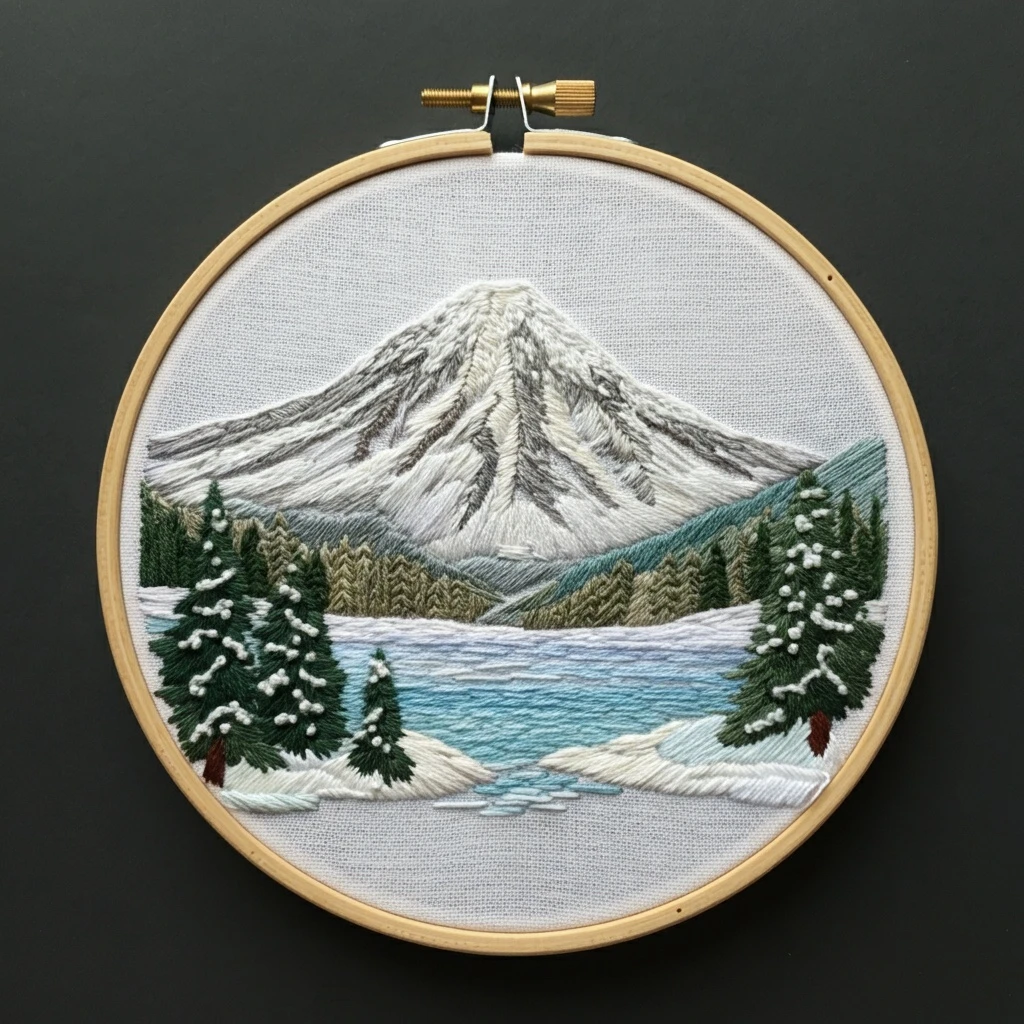

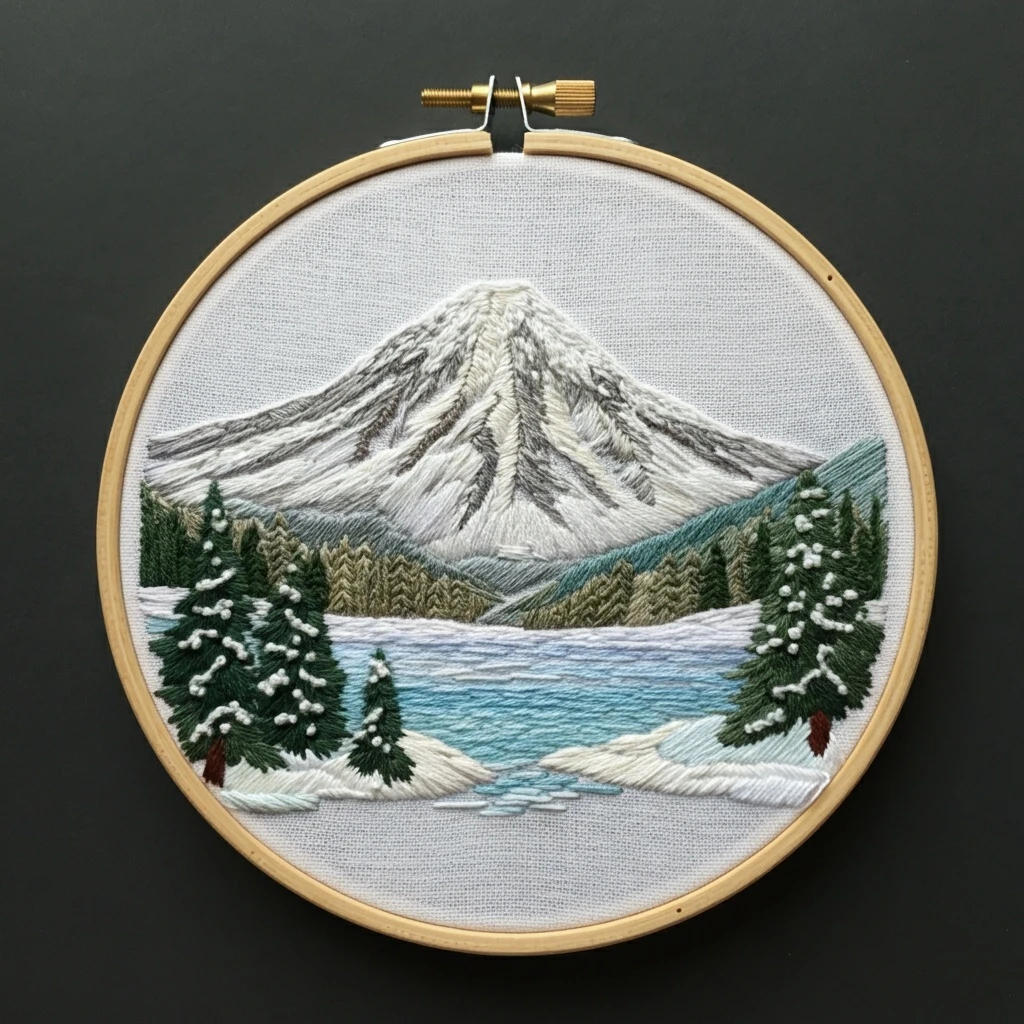
Dramatic Ocean Waves and Constellations
A moody hoop guide inspired by deep blue water, pale foam, cool grey highlights, and tiny star-like accents. Use the palette below to build movement in the waves while keeping the sky and constellation details crisp and delicate.
Suggested DMC floss palette
The image reads as a cool, high-contrast scene: shadowed blue-greens, soft greyed fabric tones, bright foam whites, and small warm metallic-looking star accents. Keep the darkest colors sparse so the highlights remain luminous.
Use for the deepest sky, under-wave shadows, and the smallest grounding outlines.
A slightly softer dark blue for wave troughs and constellation background depth.
Good for mid-tone wave bands, distant water, and cool shadow transitions.
Blend into 930 for rolling wave faces and smooth water movement.
Place on wave crests and illuminated water planes for a cool sea-glass effect.
Adds a green-blue undertone to dramatic curls, lower wave arcs, and reflected water.
Use for mist, softened foam edges, and pale linework that should not look stark white.
Reserve for the brightest foam, star points, and final sparkle highlights.
A softer white for larger foam areas so B5200 can remain the brightest accent.
Useful for shaded whitework, rocky edges, moonlit ripples, and soft separations.
Use sparingly for warm constellation stars or tiny celestial connection points.
A pale gold option for small star halos, moonlit glints, or warm stitch accents.
Stitch map
- Wave bodies: work long-and-short stitch in curved rows, following the direction of the wave rather than stitching straight across.
- Foam ridges: use stem stitch, split stitch, or whipped back stitch with Blanc, then add tiny B5200 straight stitches on the highest crests.
- Dark water pockets: use 1 strand of 939 or 823 in short directional stitches; avoid heavy fill so the waves keep a hand-drawn feel.
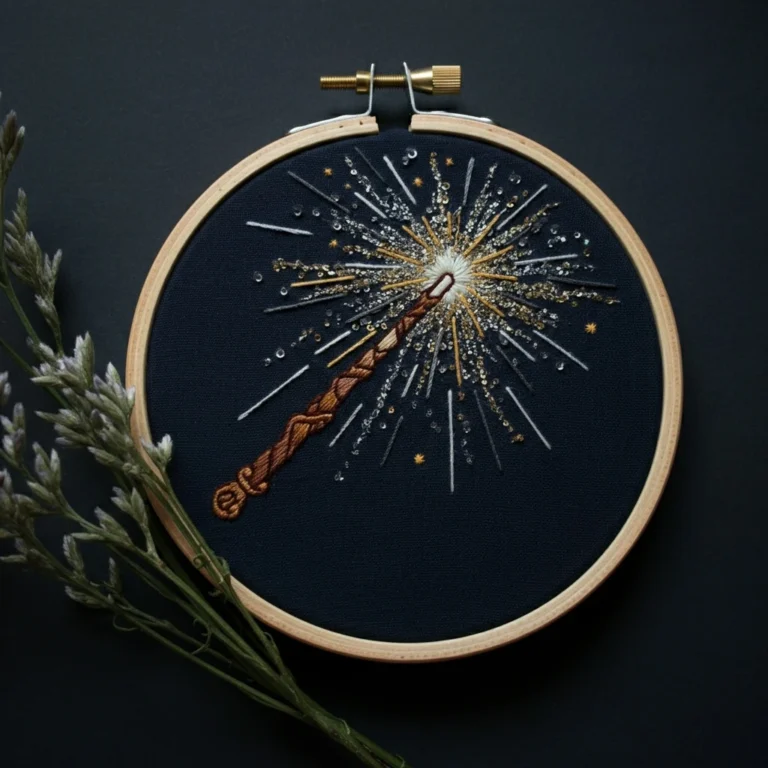
- Constellations: make French knots or colonial knots for stars, then connect only a few points with 1-strand straight stitch in 3821 or Blanc.
- Fine outlines: use split back stitch in 930 or 939; switch to 415 around foam so the outline stays soft.
Thread-count guidance
- 1 strand: constellation lines, tiny star connections, delicate outlines, distant water marks, and thin foam trails.
- 2 strands: most wave fill, curved satin areas, medium outlines, and visible ripples.
- 3 strands: foreground foam, bold crest ridges, and any places that need raised texture.
- 6 strands: rarely needed; use only for couching a thick foam line or adding a decorative raised cord.
Blending and shading plan
Deep water gradient: start with 939 in the lowest shadow pockets, blend into 823, then feather in 930 and 931. For a more dimensional sea, alternate single stitches of 930 and 3809 in the middle wave bands.
Foam transition: fill broad foam shapes with Blanc and 415 first. Add B5200 only at the end on the most raised, sparkling edges so the highlight does not flatten.
Night-sky accents: use 729 for a few warm stars and 3821 for softer points. Place the brightest knots unevenly; natural constellations look better when the spacing is slightly irregular.
Cool grey control: use 318 for shadows inside white foam and along pale edges. This prevents the white areas from looking blank and helps waves read as layered fabric.
Texture suggestions
This design benefits from a mix of smooth fills and raised details. Keep the background flatter and let the crests, stars, and foreground water carry the texture.
Raised foam
Work padded satin stitch or closely spaced stem stitches under the final white layer. Add a few loose, curved straight stitches over the top for spray.
Moving water
Use staggered long-and-short stitches rather than perfect rows. Slightly change thread direction at each wave curve to create natural motion.
Starlight
Use one-wrap French knots for small stars and two-wrap knots for focal points. Add a single tiny straight stitch beside a star for a glint.
Beginner-friendly workflow
- Transfer the main wave contours and constellation dots lightly; avoid heavy marks under white stitches.
- Stitch the darkest water and sky areas first so later pale stitches can overlap cleanly.
- Fill mid-tone water with 2 strands, changing direction with the wave curve.
- Add foam and pale grey shading after the water is complete.
- Finish with stars, knots, and final B5200 highlights after the hoop has been handled less.
Practical tips
- Use a sharp embroidery needle for dense wave areas and a slightly larger needle for raised knots.
- Keep dark navy thread lengths short, around 12–14 inches, because deep colors show fuzz quickly.
- Step back often: the wave shading should read as broad movement before tiny details are added.
- For a premium finish, lightly couch a few foam lines with Blanc and tack them down with B5200.