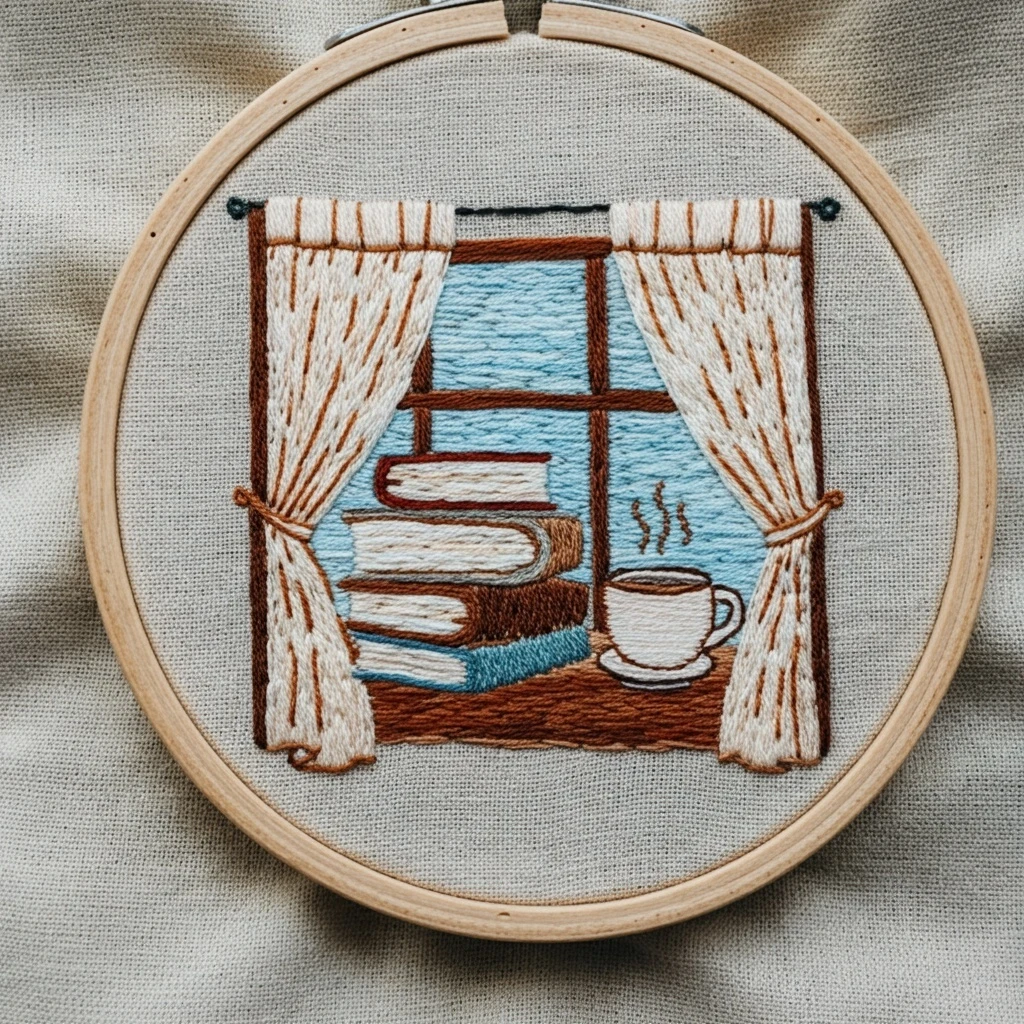

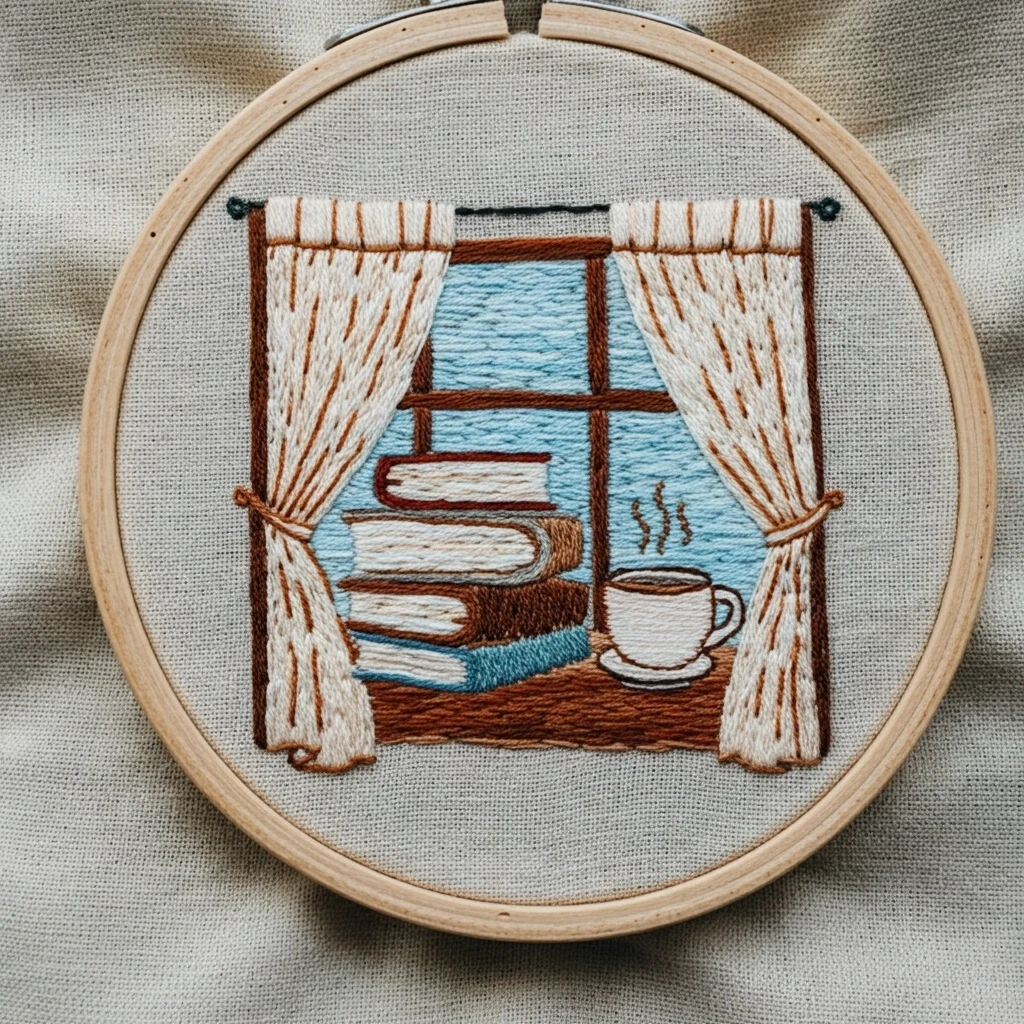
Snow-Capped Mountain and Frozen Lake
A polished embroidery color and stitching guide for a crisp winter landscape hoop: snow-bright mountain peaks, cool blue shadow planes, a glassy frozen lake, distant evergreen texture, and quiet stitched reflections that keep the design serene rather than busy.
Color story observed from the design
This scene works best with a restrained winter palette. The mountains need bright snow whites and pale pearl grays so the caps feel crisp, while the shaded slopes can move through cool blue-gray, steel blue, and charcoal. The frozen lake should read smoother and calmer than the mountains, using horizontal rows of icy blue with just a few darker reflection lines.
Small evergreens or shoreline details add contrast without taking over the composition. Use deep pine green sparingly, then soften it with blue-gray shadow stitches so the whole hoop still feels cold, quiet, and cohesive.
Recommended supplies
- 6-inch or 7-inch wooden hoop for a balanced landscape composition.
- Pale gray, ivory, oatmeal, or natural cotton-linen fabric.
- No. 7 embroidery needle for 2–3 strands; No. 9 needle for fine outline work.
- Water-soluble pen or removable transfer paper for clean mountain ridges.
- Optional metallic blending filament for a few frozen-lake glints.
Polished DMC floss palette
These DMC choices are selected for a snow-capped mountain, frozen lake, and cool alpine landscape. Use the whites and pale grays generously, then add the darker blues, charcoal, and pine tones as narrow accents so the hoop stays beginner-friendly and uncluttered.
Stitch plan by design area
| Area | Best stitches | Thread count |
|---|---|---|
| Snow caps | Satin stitch for small triangular caps; long-and-short stitch for larger sloped snow fields. | 2 strands; 1 strand for ridge cleanup |
| Mountain faces | Split stitch fill, sketchy straight stitches, and short directional lines following the slope. | 2 strands for fill; 1 strand for cracks |
| Frozen lake | Horizontal satin stitch, split stitch rows, or straight-stitch bands kept parallel to the shoreline. | 2 strands; 1 strand for ice cracks |
| Reflections | Short horizontal running stitches, broken back stitch, and thin darker blue-gray lines. | 1 strand |
| Evergreens | Layered straight stitches or fly stitch branches from trunk outward. | 2 strands; 1 strand for tips |
| Outline and distant ridge | Back stitch, stem stitch, or split back stitch for a clean but hand-drawn edge. | 1–2 strands |
Thread-count guidance
- 1 strand: ice cracks, mountain creases, distant tree trunks, peak ridges, and delicate reflection strokes.
- 2 strands: most lake bands, mountain fills, evergreen branches, and snow-cap satin stitches.
- 3 strands: only for a bold foreground shoreline or larger tree masses on an enlarged hoop.
- Metallic option: blend one strand of silver filament with one strand of DMC 747 for a few ice highlights, not the whole lake.
Blending & shading ideas
Snowy peaks
Use B5200 or Blanc at the highest points, then feather DMC 762 and 318 down one side of each peak. Leave some fabric showing between pale stitches if your cloth is light; it creates natural sparkle without extra work.
Mountain rock
Build slope color with DMC 318 and 414, then add 932 where the mountain turns cold and blue. Keep DMC 3799 for small, decisive creases instead of heavy outlines.
Frozen lake
Work wide bands of DMC 747 and 162 across the lake. Add 807 and 3761 in broken, low rows under the mountain base, then finish with one-strand white glints on top.
Outlining details
- Outline the tallest ridge with one strand of DMC 3799 or 930 only where the peak needs definition.
- Use DMC 414 for softer internal rock lines so the mountain does not look cartoon-heavy.
- For the frozen lake edge, try broken back stitch rather than one continuous dark line.
- Outline evergreens with DMC 500 and add lighter 502 branch tips over the top.
- Keep snow outlines pale; too much dark thread around white snow can flatten the highlights.
Texture suggestions
- Snow: smooth satin and feathered long-and-short stitches.
- Rock: short diagonal stitches in mixed gray and blue-gray tones.
- Ice: flat horizontal rows with tiny broken highlight dashes.
- Trees: fly stitch or stacked straight stitches for pine needles.
Order of stitching
Hoop-finishing notes
- Press from the back over a towel so satin snow and lake bands stay smooth.
- Trim dark traveling threads behind white snow and pale blue ice.
- Use a felt backing in white, gray, or muted blue for a clean winter finish.
- Keep fabric taut before stitching long horizontal lake bands to prevent ripples.
Beginner-friendly practical tips
- Choose one stitch direction per area: diagonal for mountains, horizontal for lake, vertical or branch-like for trees. Direction does much of the shading work.
- Do not overfill the snow: a little pale fabric showing through white stitches can look like natural sparkle and prevents bulky caps.
- Use darker colors last: add mountain cracks and ice lines after the lighter fills so the final definition is precise.
- Keep reflections broken: short dashes look more like frozen shine than solid stripes.
- Test blue values first: stitch a tiny sample of 747, 162, and 807 on your fabric; pale blues change noticeably on cream linen.