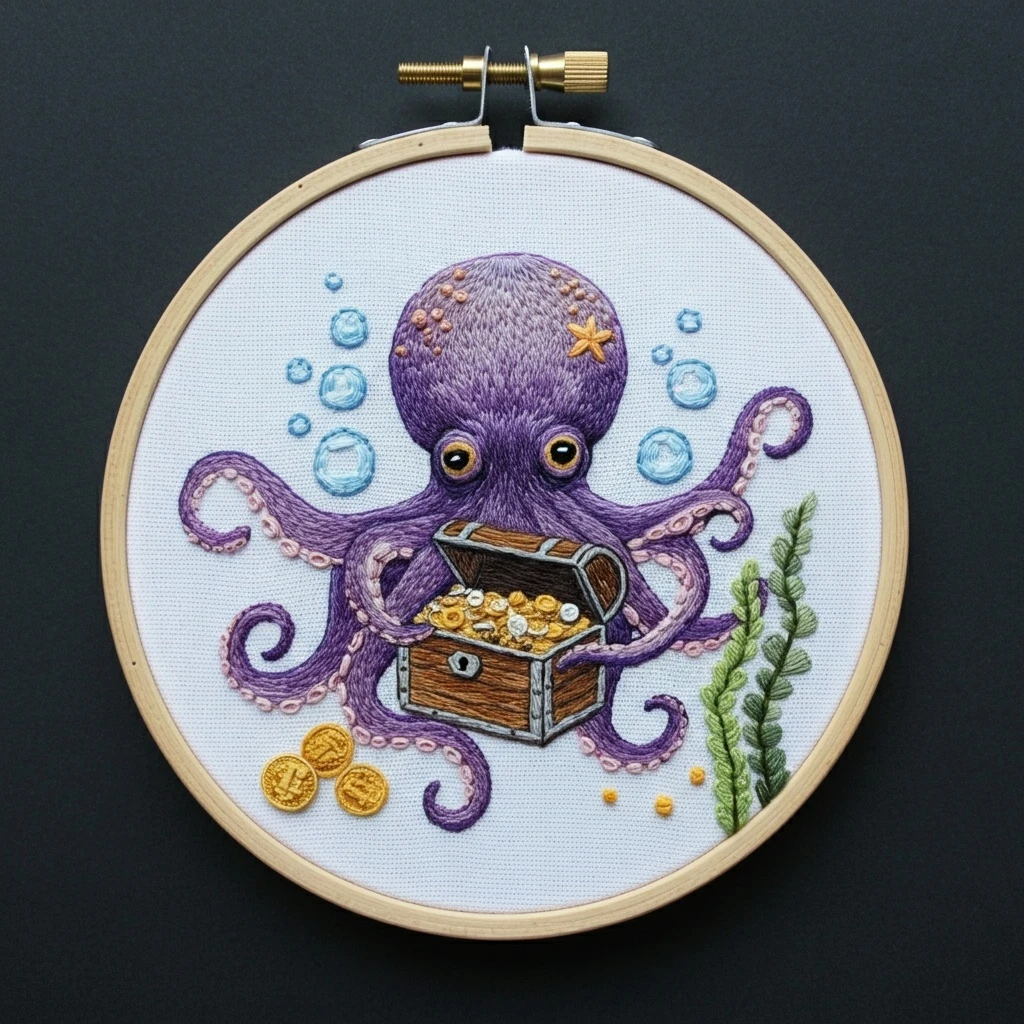

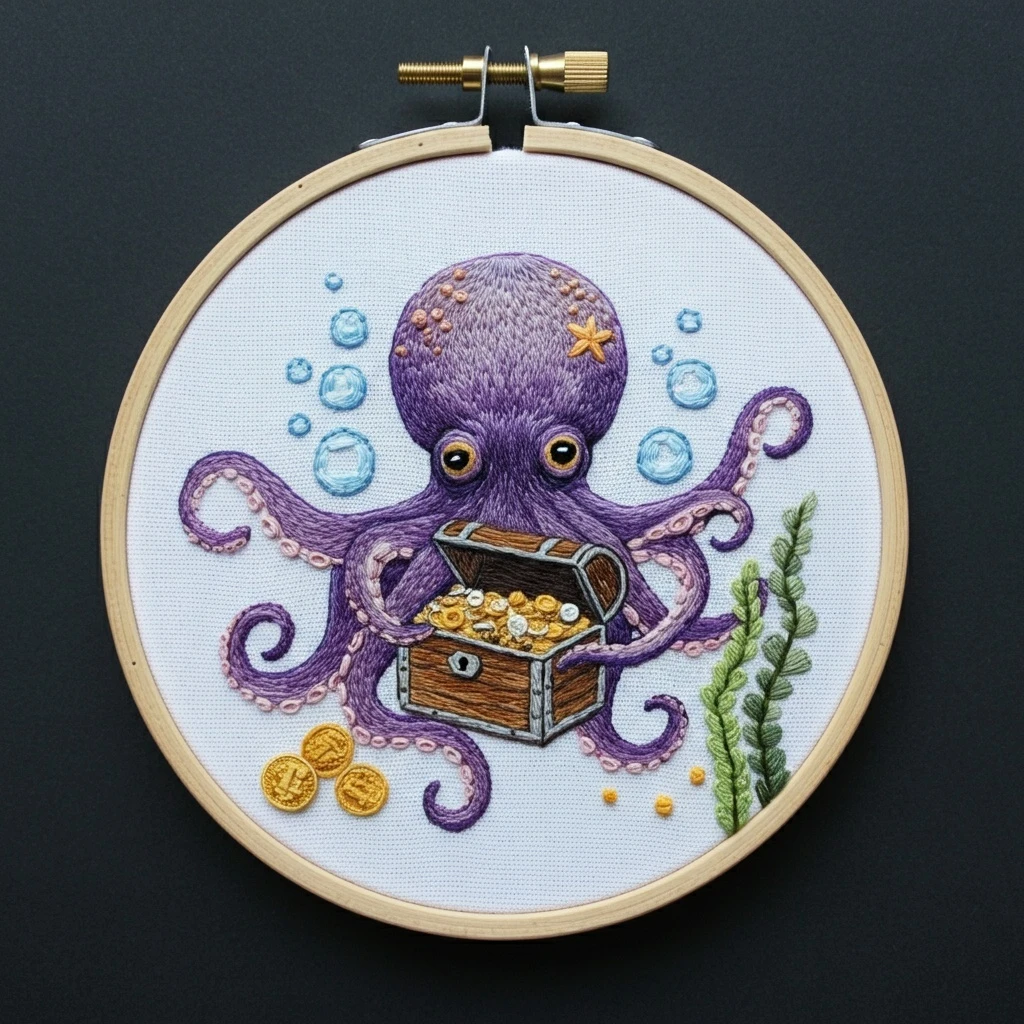
Purple Octopus Guarding Treasure
A whimsical underwater embroidery scene featuring a purple octopus curled protectively around treasure, with sea-toned accents, golden coins, sandy browns, and playful ocean details. The strongest stitched effect comes from rounded tentacle shading, tiny suction-cup texture, gleaming treasure highlights, and clean underwater outlines.
Design color read
The design centers on a purple octopus with darker plum shadows, mid-violet body color, and pale lavender highlights along the head and curling tentacles. Treasure elements introduce warm gold, sandy tan, and brown outlines, while aqua, teal, and mint ocean accents keep the scene fresh and underwater. Small coral touches can add playful contrast.
Suggested DMC floss palette
These DMC colors balance the soft purple character with bright treasure accents and gentle sea tones. Use the darkest purples mostly under tentacles and around overlapping curves to preserve the playful look.
Deep tentacle shadows, under-curl areas, eye definition, and dramatic overlaps.
Main outline and shadow violet for the octopus body and arms.
Primary octopus fill color for head, arms, and larger rounded areas.
Tentacle highlights, cheeky body shine, and soft lifted edges.
Lightest octopus highlights and tiny suction-cup accents.
Treasure coins, golden chest trim, and warm sparkle details.
Bright coin highlights, jewel glints, and pinpoint treasure shine.
Deeper gold shadows, chest wood warmth, and antique treasure depth.
Treasure chest outlines, wood grain, sand shadows, and selective detail lines.
Ocean bubbles, water accents, and cool contrast around the purple octopus.
Deeper teal wave marks, seaweed shadows, and underwater outline details.
Optional coral reef accents, blush details, or small warm sea-life touches.
Stitch map by design element
Octopus head
Use long-and-short stitch with 1–2 strands, curving the stitches around the dome so it feels round rather than flat.
Tentacles
Use satin stitch or split stitch rows that follow each curl. Shade darker on the underside and lighter on the outer curve.
Suction cups
Use tiny French knots, seed stitches, or small detached chain stitches in lavender. Keep them evenly spaced along the inner arms.
Treasure coins
Use small satin stitches or padded satin for coins, adding one pale yellow straight stitch as a glint.
Chest and sand
Use backstitch for chest edges, satin stitch for trim, and seed stitch in tan/brown tones for sandy texture.
Bubbles and water
Use split-stitch circles, French knots, or tiny running stitches in turquoise and pale lavender-white highlights.
Thread-count and blending guidance
| Area | Strands | Blending idea | Practical note |
|---|---|---|---|
| Octopus body | 1 strand for detailed shading, 2 strands for smoother fill | Use 550/333 in overlaps, 340 as the main body shade, and 341/211 on raised edges. | Follow the round body contours. Straight vertical stitches can make the octopus look stiff. |
| Tentacles and suction cups | 1–2 strands for arms; 1 strand for cups | Shade each arm from dark violet underside to lavender outside curve; add pale knots for cups. | Stitch overlapping arms back to front so the top curls stay clean. |
| Treasure | 2 strands for coins and chest trim, 1 strand for glints | Use 780 in shadows, 3820 for gold, and 744 for tiny highlight dashes. | Keep highlights small. Too much pale yellow can flatten the gold effect. |
| Ocean details | 1 strand for bubbles, 2 strands for seaweed or larger water accents | Pair 3845 with 3846 for teal depth; add 211 or 3865 for bubble sparkle if desired. | Use cool sea accents sparingly so they frame the octopus rather than competing with it. |
Recommended stitching order
- Transfer the octopus outline, tentacle overlaps, treasure chest, coins, bubbles, and sea details with a fine removable line.
- Stitch background bubbles, seaweed, and any sand texture that sits behind the octopus.
- Fill the treasure chest and coins so the octopus arms can overlap them cleanly.
- Stitch the octopus from back tentacles to front tentacles, then fill the head and facial details.
- Finish with suction cups, gold glints, tiny bubbles, and selective outlines.
Beginner-friendly practical tips
- Use short stitches around tight tentacle curls to prevent jagged edges.
- Mark overlap lines carefully; they are what make the octopus look wrapped around the treasure.
- Keep facial details to one strand so the expression stays cute and clear.
- Make a few practice French knots before adding suction cups or coin sparkle.
- Press the finished piece face-down on a towel to protect raised knots and padded treasure stitches.
Texture, outlining, and finishing notes
The polished effect comes from contrast: soft rounded purple stitching for the octopus, small raised dots for suction cups, crisp gold accents for treasure, and cool teal details for an underwater setting.
Octopus dimension
Imagine a light source hitting the top of the head and outer tentacle curves. Keep darkest violet in tucked-under areas, use medium violet across the main body, and reserve pale lavender for only the highest edges.
Treasure sparkle
Build treasure with warm gold and topaz first, then add tiny pale yellow or white straight stitches on the upper left of coins and jewels. Small, consistent glints look more convincing than large blocks of bright thread.