Detailed Dog Portrait

DMC Color Palette & Stitching Guide - Detailed Dog Portrait
Detailed Dog Portrait Embroidery in Hoop

DMC palette & hand embroidery notes

Detailed Dog Portrait

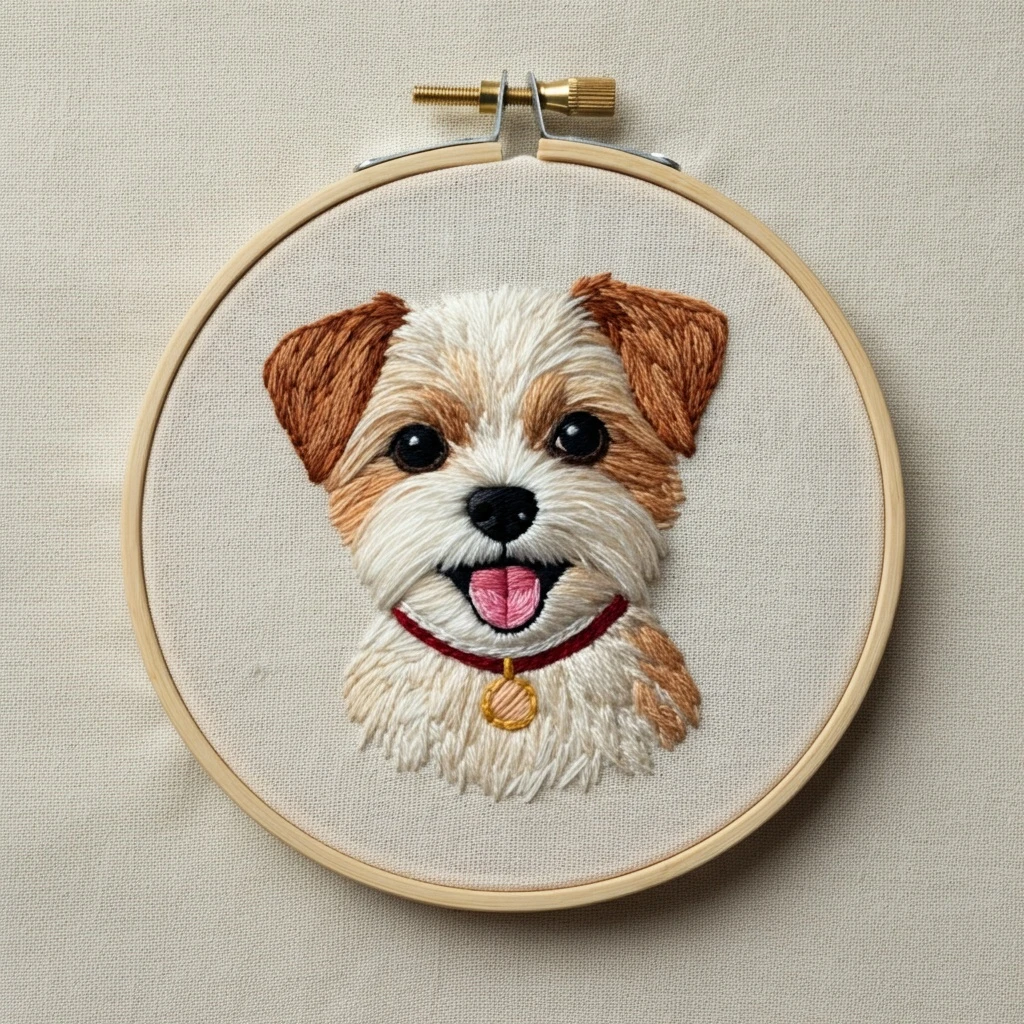
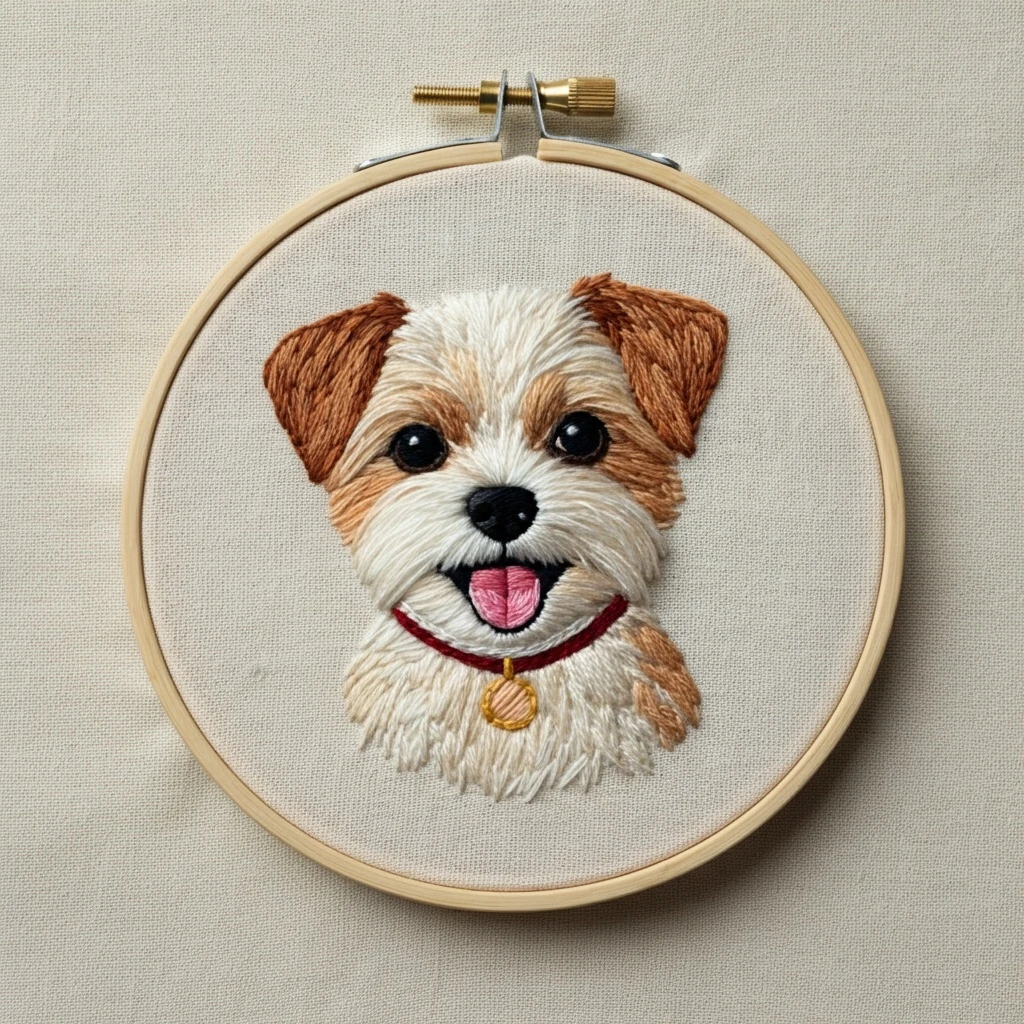
A realistic dog portrait in hoop style calls for soft cream fur, layered caramel and umber shading, dark expressive features, and fine directional stitches that mimic the natural growth of the coat.

fur textureportrait shadingwarm neutralsbeginner-friendly layers

Reference: warm, realistic dog portrait with cream highlights, tan-brown fur transitions, deep eyes and nose, and subtle hoop-art presentation.

Suggested DMC floss palette

Use these as close practical matches for the portrait: pale highlights for the muzzle and brow, honey and sienna midtones for the cheeks and ears, deeper browns for shadowed fur direction, and near-black details for the nose, pupils, and crisp accents.

DMC 3865
Winter White
Brightest fur glints on muzzle, forehead, and tiny catchlights.
DMC 822
Beige Gray - Light
Soft cream base for pale facial fur and blended transition areas.
DMC 3828
Hazel Nut Brown
Warm tan cheek, ear, and neck midtones; excellent for long fur strokes.
DMC 977
Golden Brown - Light
Golden areas around ears, brow ridges, and bridge-of-nose warmth.
DMC 3862
Mocha Beige - Dark
Soft brown shadows where fur turns under the muzzle and ears.
DMC 898
Coffee Brown - Very Dark
Deep ear folds, nostril edges, mouth line, and darkest fur seams.
DMC 3371
Black Brown
Nose, pupils, lashes, and tiny anchor points; use sparingly for realism.
DMC 535
Ash Gray - Very Light
Cool shadow on white fur and gentle shaping around the muzzle.
DMC 3052
Green Gray - Medium
If the design includes leafy hoop accents, use for muted stems.
DMC 729
Old Gold - Medium
Optional warm glow for the hoop edge or decorative accents.

Stitch types for the portrait

Long and short stitch: Main fur technique. Work in the direction of growth, tapering strokes around the muzzle, brow, and ears.
Split stitch: Use for smooth facial contour lines, nose bridge curves, and controlled outlines that do not look too heavy.
Satin stitch: Use on the nose highlight or small glossy eye sections, keeping stitches short and neat.
Single straight stitches: Add whisker roots, flyaway fur, and fine directional texture over blended base layers.
Seed stitch: Scatter softly in cheek and neck fur to break up large filled areas.
Tiny backstitch: Reserve for the mouth crease, eyelid line, and final accents where definition is needed.

Thread-count guidance

AreaStrandsWhy it works
Eyes, nose edge, mouth1 strandGives crisp detail without bulky black outlines.
Short facial fur1-2 strandsAllows subtle color changes and fine direction.
Ears and neck fur2 strandsBuilds coverage while still keeping a realistic texture.
Background or hoop accent2-3 strandsCreates contrast with the finer portrait stitching.

For a small hoop, favor one strand in the face. For a larger hoop, two strands can be used in broad fur areas, with one strand reserved for final topstitch details.

Layering, shading & texture plan

Map the direction first. Lightly mark fur flow lines from the forehead down the muzzle and outward from the cheeks. These guide all long-and-short stitches.
Start with pale base tones. Fill the brightest fur with DMC 3865 and 822 using loose, staggered strokes. Leave tiny fabric gaps where softness is needed.
Add warm midtones. Introduce DMC 3828 and 977 in the ears, brow, and cheek planes. Blend by overlapping short stitches into the cream base.
Build shadows gradually. Place DMC 3862 under the chin, along the ear folds, and around the side of the muzzle. Touch in DMC 898 only at the deepest creases.
Finish with expression details. Stitch eyes and nose last using DMC 3371, adding tiny DMC 3865 highlights so the face feels alert and dimensional.

Outlining details

Use broken outlines rather than continuous heavy lines. A few one-strand split stitches along the ear edge, jaw curve, and nose bridge give structure while preserving a soft pet-portrait look.

  • Use DMC 3862 for soft outline transitions.
  • Use DMC 898 only in recessed shadow lines.
  • Use DMC 3371 for pupils, nostrils, and the mouth crease.

Blending ideas

Blend two strands in the needle where the coat changes color. Try 822 + 3828 for creamy tan, 3828 + 3862 for warm shaded fur, and 3862 + 898 for deep folds. Keep stitch lengths varied so the blend looks like fur rather than stripes.

Beginner-friendly tips

  • Work from light to dark, then add a few light top stitches at the end.
  • Keep the fabric taut; loose fabric makes satin eyes and nose details uneven.
  • Step back often to check the dog’s expression before adding more dark floss.
  • Use shorter stitches around the eyes and longer stitches on the neck fur.

Recommended stitching sequence

Begin with the light muzzle and forehead, then stitch the tan cheek and ear masses. Add darker ear folds and under-chin shadows before working the eyes and nose. Finish with single-strand flyaway fur and tiny highlights. This order keeps the portrait clean and prevents dark threads from muddying the pale areas.
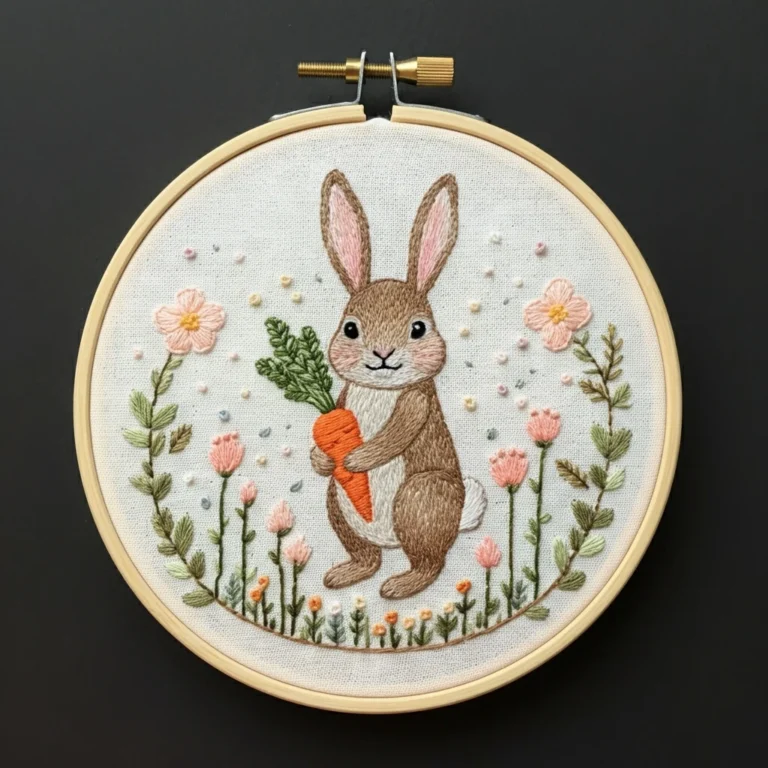
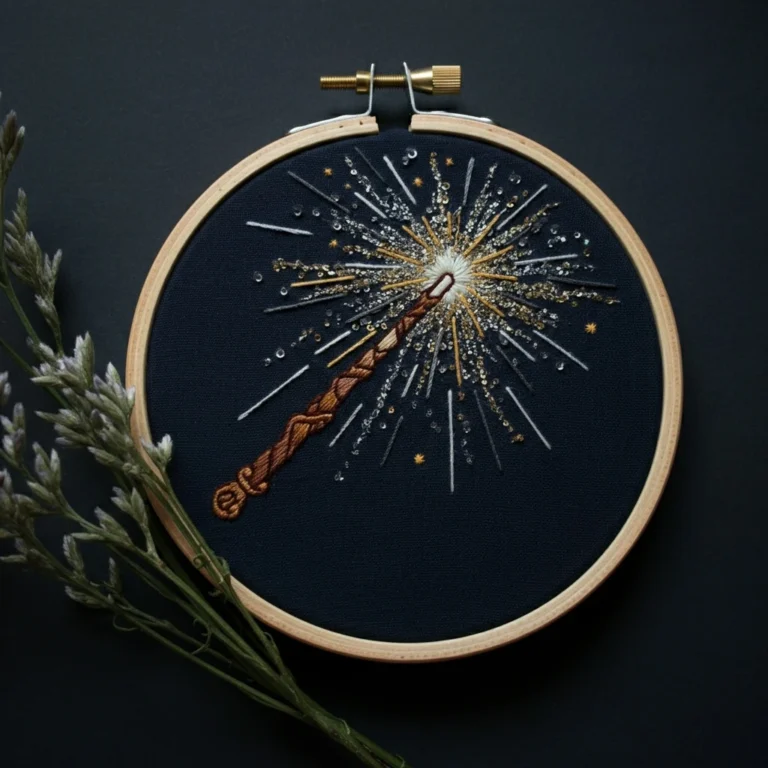
Finishing touch: A few isolated one-strand stitches in DMC 3865 over tan sections can imitate individual shiny hairs. Keep them sparse and directional for the most natural effect.

Leave a Reply

Your email address will not be published. Required fields are marked *