
Detailed Dog Portrait
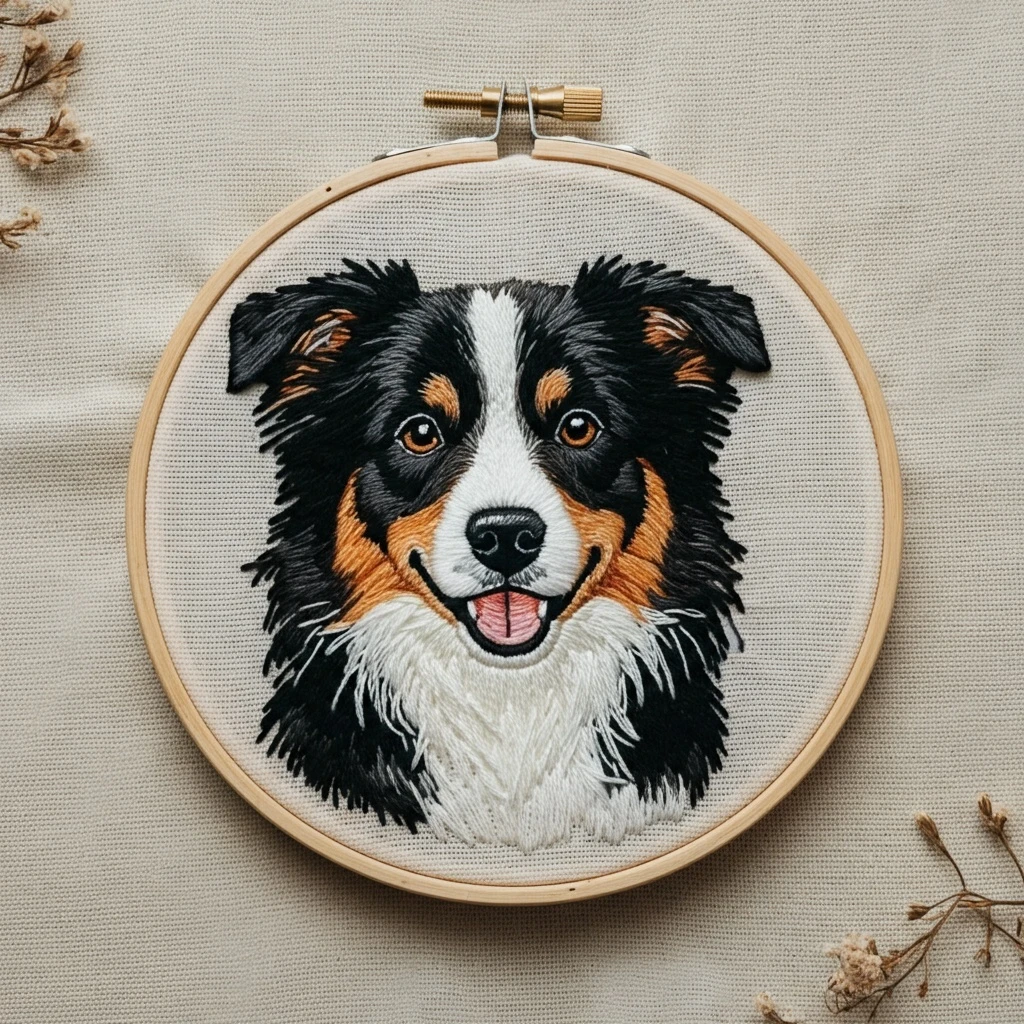
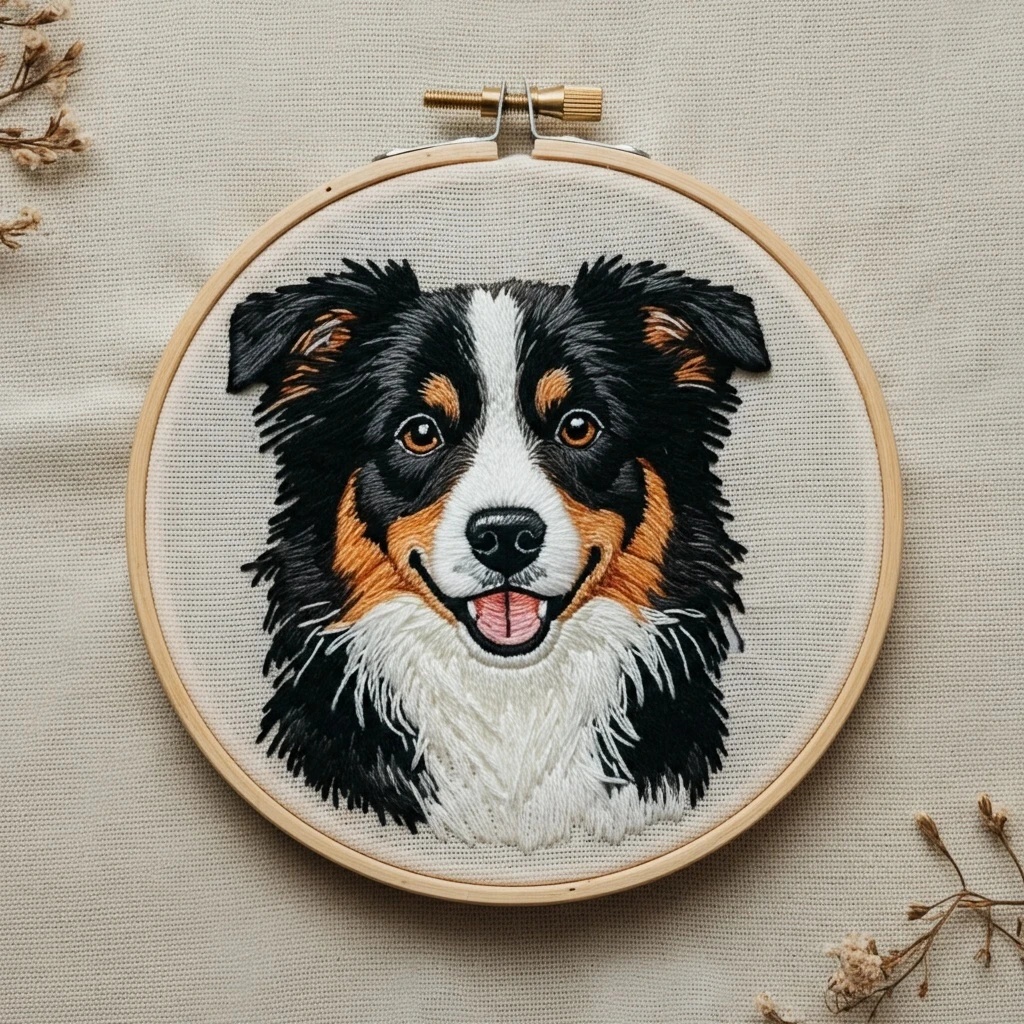
A realistic, joyful tri-color dog portrait with deep black ears and mask, warm tan eyebrow and cheek markings, bright white muzzle and chest fur, amber-brown eyes, a glossy black nose, and a soft pink tongue. The design is all about directional fur strokes, tiny highlight threads, and clean facial definition.
Suggested DMC Floss Palette
The image reads as a black-and-white shepherd-style dog with copper tan accents. Use very dark shades sparingly for depth, then break them up with charcoal and gray highlight stitches so the fur does not become a flat black shape.
Stitch Map
| Area | Recommended stitches | Thread count |
|---|---|---|
| Black ears & face mask | Long-and-short stitch following fur direction; add scattered split-stitch highlights. | 1 strand for realism, 2 strands only in heavy shadow blocks. |
| White blaze & chest | Layered long-and-short stitch, feather stitch, and a few loose straight stitches at the ends. | 1 strand B5200/3865/415 for soft fur separation. |
| Tan eyebrows & cheeks | Short satin stitches and curved long-and-short stitches radiating outward. | 1 strand for face details; 2 strands for larger cheek fills. |
| Eyes | Tiny satin stitch for iris, French knot or single straight stitch for catchlight, split stitch for rims. | 1 strand only; keep stitches extremely small. |
| Nose & mouth | Padded satin stitch for nose, backstitch for nostrils, stem stitch for smile curve. | 1–2 strands; use 310 plus 3799 for shine. |
| Tongue | Smooth satin stitch with a split-stitch center line and darker base shading. | 1 strand for clean transitions. |
Blending & Shading Notes
- For black fur, alternate 310 + 3799 rather than filling every section in solid black. Add occasional 317 strokes where the reference shows shine.
- For white fur, work from 3865 as the base, add 415 in shadowed grooves, and reserve B5200 for the brightest blaze and chest tips.
- For tan markings, blend 3828 through the center of each patch, use 977 near the edges, and add a few 921 stitches for warmth.
- Shade the tongue from 3713 at the rounded top to 3721 near the mouth opening, keeping the central line subtle.
- Use stitch direction as the main shading tool: cheeks curve downward, ear fur flicks outward, and chest fur falls vertically in loose points.
Practical Embroidery Suggestions
Outlining Details
Use one strand of DMC 310 for the mouth, nostrils, pupil rims, and the sharp outer silhouette. For softer edges around cheeks and chest, switch to 3799 so the outline blends into the fur instead of looking cartoon-like.
Fur Texture
Work in small clusters rather than rows. Vary stitch length between 3–10 mm and leave slight gaps where lighter strands will be added. The dog’s ears need jagged edge stitches to suggest fluffy fur.
Hoop & Fabric
A 6–8 inch hoop on medium-weight linen or cotton-linen works well. Transfer fine facial lines lightly; heavy marks may show beneath the white muzzle and chest.
Beginner-friendly order of work
- Start with the white blaze and chest so the face has a clear center line.
- Add tan patches next, keeping eyebrow stitches short and cheek stitches longer.
- Fill the dark ears and mask in layers, saving blackest shadows for the end.
- Finish with eyes, nose shine, mouth line, whisker hints, and final highlight hairs.
Professional finishing tips
- Comb the thread direction visually before stitching each section; fur should radiate from the center of the face.
- Do not overfill the white areas. A little fabric texture between strands keeps the portrait airy.
- Use a sharp embroidery needle and shorter floss lengths for 310, which can look fuzzy if overworked.
- Step back often. Portraits look best when contrast reads clearly from a distance.