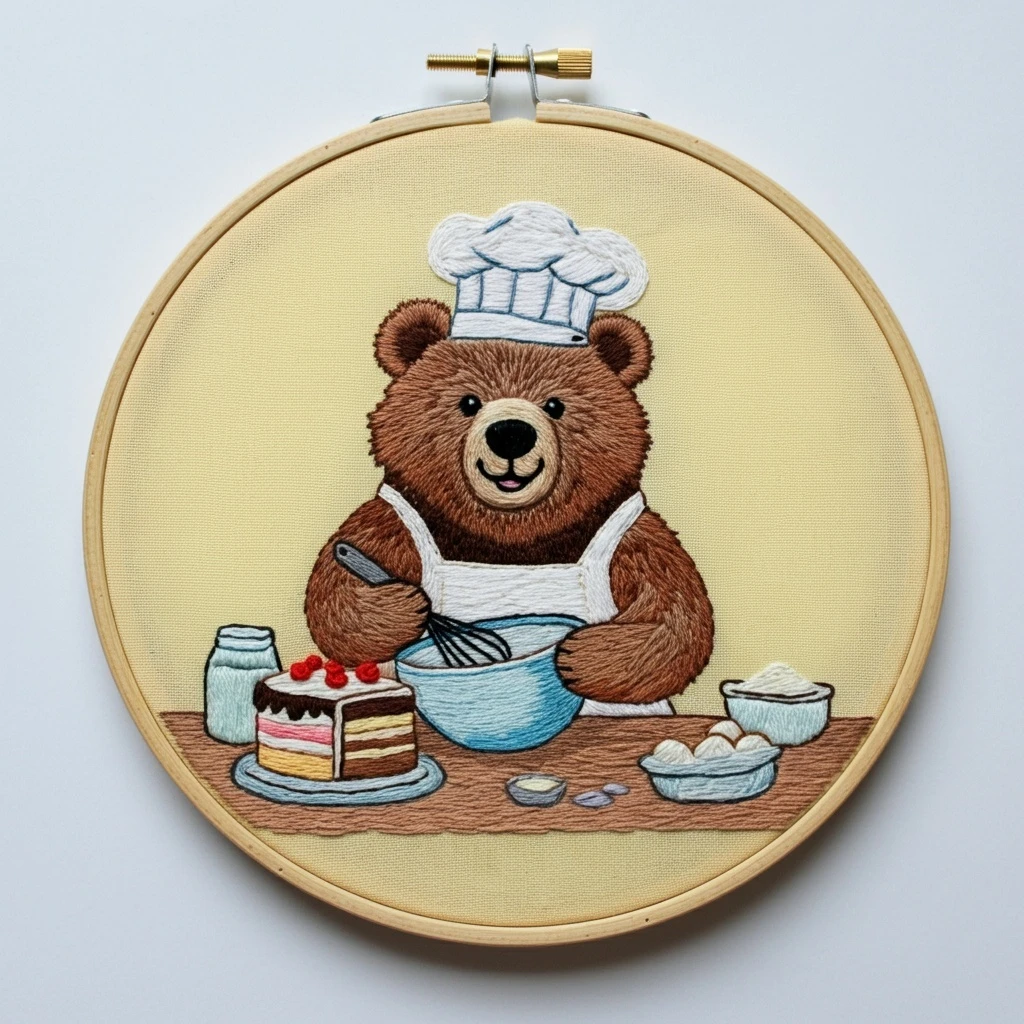

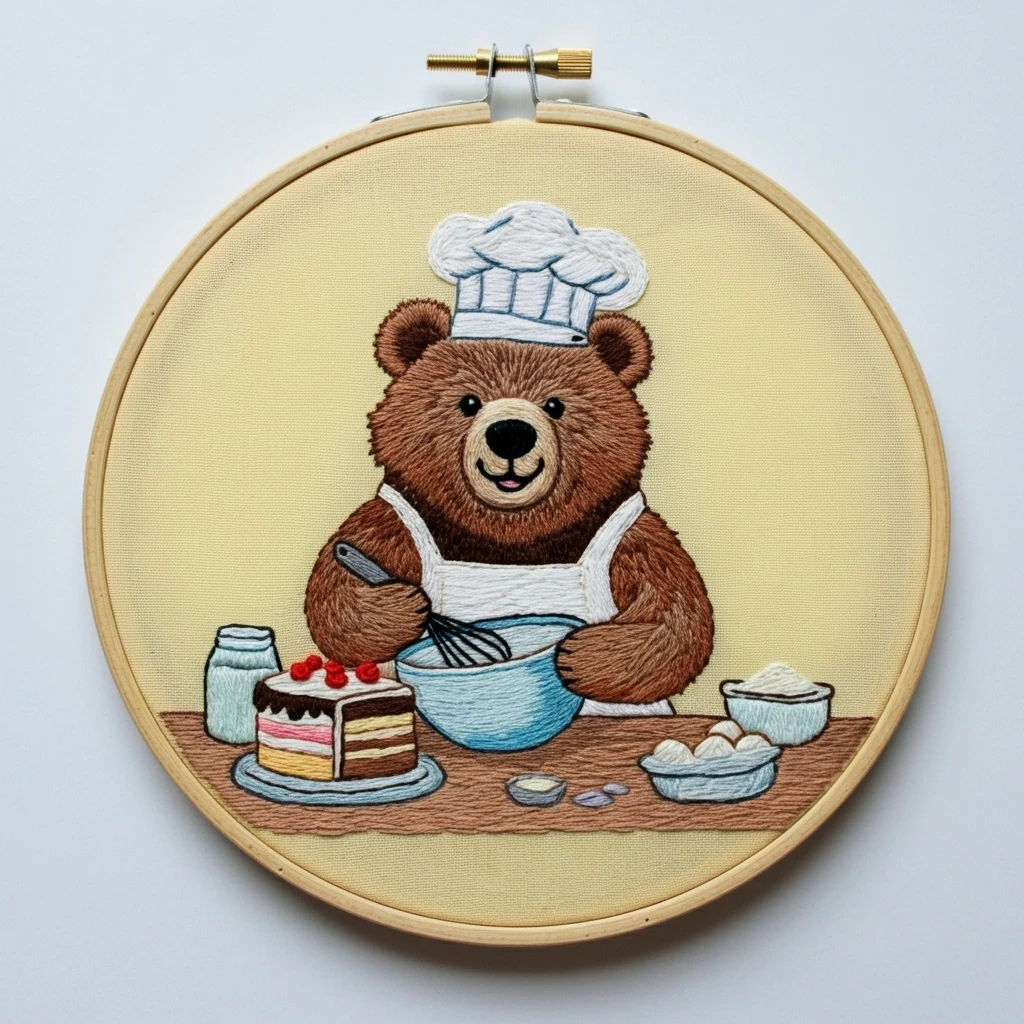
Embroidered Chef Bear Baking
A cheerful little chef bear with a puffy white hat, warm golden-brown fur, flour-dusted baking tools, dough, pastries, and tiny kitchen accents. These DMC matches are estimated from the visible hoop preview and chosen to give the design a soft handmade bakery look.
Likely DMC Color Palette
Matched to the chef hat and apron, warm bear fur, muzzle, baking counter, rolling pin, dough, cookies, flour dust, red accents, and small garnish details.
Stitching Suggestions
Work from the larger bear and chef clothing into the baking props, then finish with flour speckles, red accents, and crisp facial details.
| Element | Stitch Type | Practical Notes |
|---|---|---|
| Chef hat | Long and short stitch with split-stitch creases | Fill puffy sections with 3865, then add 762 and 415 in curved crease lines. Keep the brightest B5200 only on the top ridges. |
| Apron | Satin stitch and backstitch | Use 3865 for the apron body and 762 for fold shadows. Backstitch straps and pocket seams with one strand so the apron stays crisp. |
| Bear fur | Long and short stitch | Work in the direction of fur growth using 975 and 977. Add 839 near the ears, arms, and lower body for soft depth. |
| Bear face | Split stitch and satin stitch | Fill the muzzle with 738 and 739, outline softly with 839, then add nose and mouth details in 898 or 3031. |
| Inner ears and cheeks | Satin stitch or seed stitch | Use 3774 and 950 in tiny strokes. Blend lightly so the blush looks soft rather than like a hard circle. |
| Eyes | Satin stitch with a tiny highlight | Use 898 or 3031 for the eyes, then place one B5200 dot or tiny straight stitch at the upper edge for sparkle. |
| Paws | Long and short stitch plus backstitch | Use 975 and 977 for fur, then add 738 on paw pads and 898 for small claw or contour marks if visible. |
| Mixing bowl | Satin stitch with backstitch rim | Use cool whites or pale blues if the bowl appears light, or warm browns if it is wooden. Add a dark rim line for clean shape. |
| Dough | Padded satin stitch | Pad with 739, cover with 738, and add a few 436 or 3828 shadows underneath to make the dough look rounded. |
| Cookies or pastries | Satin stitch and French knots | Fill with 436 and 977, shade edges with 435 or 3828, and add tiny 898 knots for chocolate chips or toasted spots. |
| Rolling pin | Stem stitch and satin stitch | Fill the body with 436, then add 435 short strokes for wood grain. Use 3031 for the handle outlines. |
| Wooden counter | Horizontal straight stitch | Use 739 and 436 as the base, then add broken 435 and 898 strokes for wood grain without over-darkening the scene. |
| Flour dust | Seed stitch and French knots | Use one strand of 3865 and B5200. Scatter lightly around the bowl, counter, and paws so it reads as flour rather than snow. |
| Red accents | Satin stitch and French knots | Use 321 for bright trim, berries, or jam, then add 816 underneath for depth. Keep red details small so they do not overpower the bear. |
| Green garnish | Lazy daisy and straight stitch | Use 3347 for leaf centers and 3348 for tips. These tiny green notes brighten the bakery scene. |
| Final outlines | Single-strand backstitch | Use 3031 for the bowl, tools, paws, and chef-hat base. Keep outlines thin and selective for a soft plush-toy look. |
Thread Count, Blending & Texture
Use strand changes to separate fluffy fur, smooth chef whites, soft dough, crisp pastry edges, and powdery flour texture.
Soft bear fur
Use 2 strands for the base fur and 1 strand for final directional texture. Blend 975 and 977, then tuck 839 into the deepest fur shadows.
Chef whites
Use 3865 as the main white, not pure white everywhere. Add 762 and 415 in folds, then reserve B5200 for clean top highlights.
Dough dimension
Pad the dough lightly before satin stitching. A few tan shadows underneath make the dough look round and soft on the counter.
Baked edges
Cookies and pastries look better with darker edges. Use 3828 or 435 around the perimeter and lighter tan in the middle.
Flour texture
Use tiny seed stitches and one-wrap knots. Scatter flour unevenly near the paws and bowl; too many dots will make the scene look snowy.
Beginner control
Backstitch facial features after the fur is complete. This avoids burying the expression under later stitches.
Recommended Stitching Order
This order keeps the bear’s face clean and protects tiny bakery details from snagging.
Helpful Notes for a Polished Finish
Small finishing choices make the chef bear feel warm, plush, and bakery-sweet.
- Use a firm hoop; satin-stitched dough and the chef hat can pucker if the fabric loosens.
- Separate and recombine floss before stitching smooth whites so the hat and apron look even.
- Keep dark outlines to one strand around the face and paws; thick lines can make the bear look harsh.
- Use short stitches around the muzzle and eyes so the expression stays round and friendly.
- Do not carry dark brown threads behind the hat, apron, or flour areas where they could shadow through.
- Press the finished hoop face-down on a towel to protect knots, padded dough, and raised pastry texture.