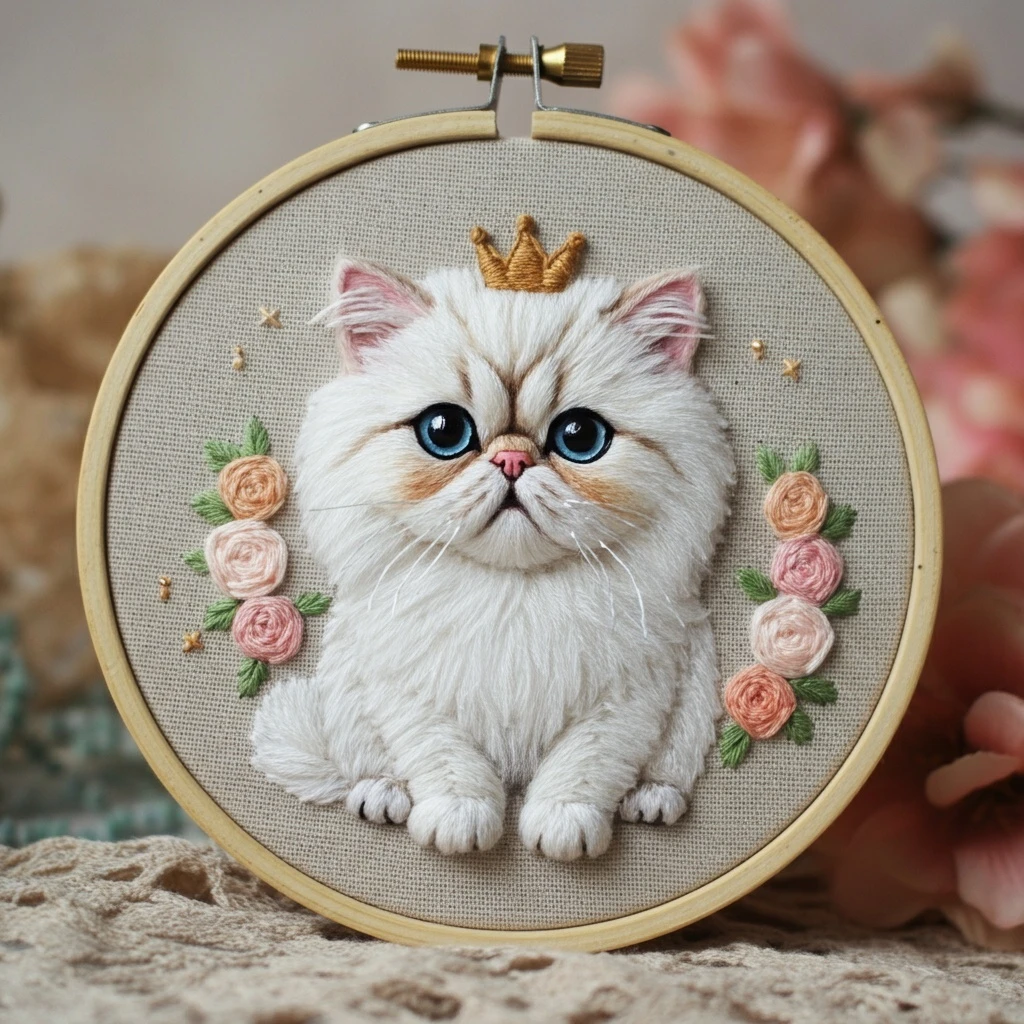

Royal White Kitten
DMC color palette and hand-embroidery stitching guide based on the visible preview: a refined white kitten portrait with soft fur, delicate facial features, regal gold accents, and polished ornamental details.
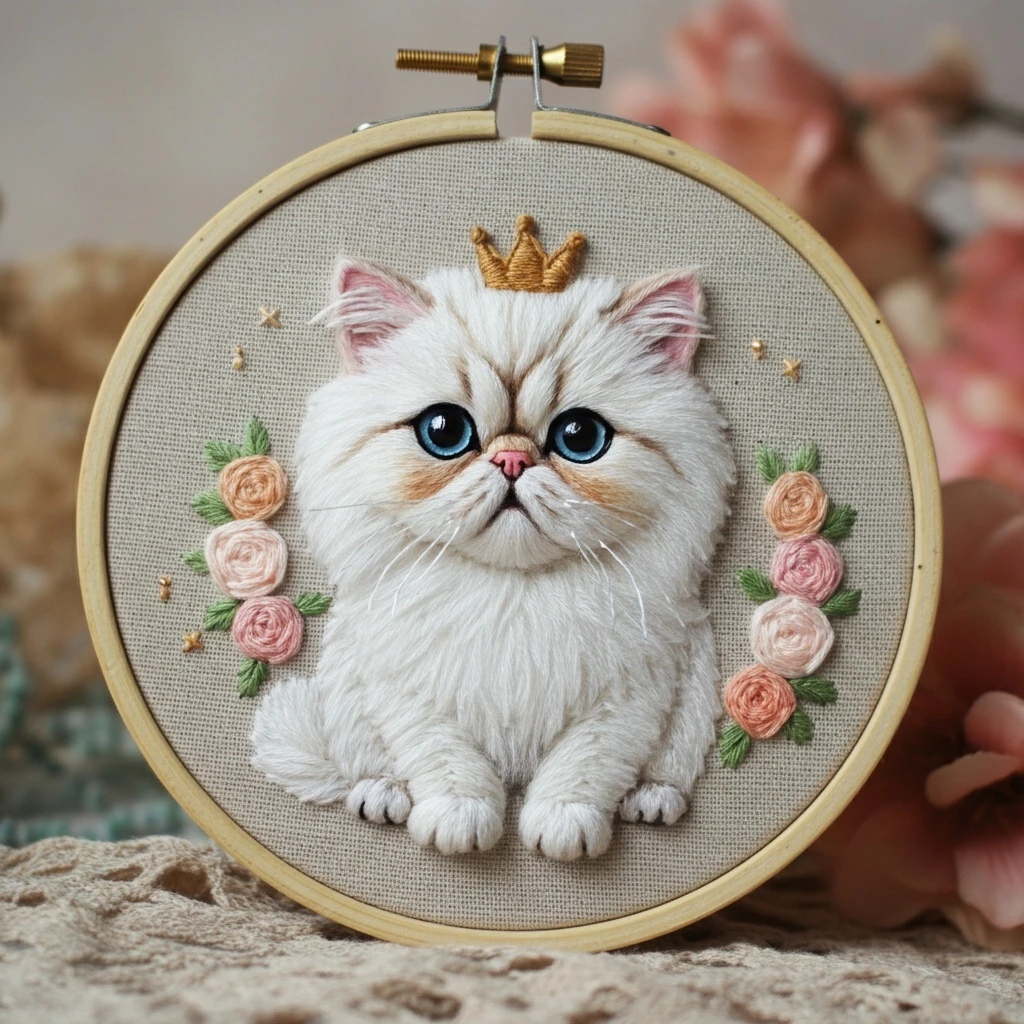
Likely DMC Color Palette
Palette estimated from the white kitten fur, warm shadowing, facial details, crown or royal accents, and soft decorative surroundings. Coverage percentages are visual planning estimates, not exact thread usage.
| DMC | Color | Thread Name | Estimated Coverage | Where It Appears |
|---|---|---|---|---|
| 3865 | #f7f3e8 | Winter White | 22% | main white fur, forehead, cheeks, chest, and brightest highlight areas |
| B5200 | #ffffff | Snow White | 8% | sharpest fur highlights, eye sparkle, whisker accents, crown shine |
| 762 | #d9d9d6 | Pearl Gray Very Light | 14% | soft fur shadow, muzzle shaping, ear edges, chest contours |
| 415 | #b8b8b1 | Pearl Gray | 9% | deeper white-fur definition, under-chin shadow, paws, lower cheek curves |
| 318 | #8f8f88 | Steel Gray Light | 5% | small outline shadows, fur breaks, inner contour around ears and body |
| 950 | #e7bfa5 | Desert Sand Light | 6% | inner ears, nose warmth, soft blush around muzzle or paw pads |
| 754 | #f2d2c3 | Peach Light | 4% | pale ear highlights, tiny nose reflection, gentle kitten softness |
| 3371 | #1f1713 | Black Brown | 5% | eyes, pupils, nose line, mouth detail, selective crisp outlines |
| 898 | #4a2c1c | Coffee Brown Very Dark | 3% | warm eye rims, softened facial definition, deepest decorative shadows |
| 729 | #c69a43 | Old Gold Medium | 8% | royal crown, necklace, frame accents, warm metallic midtones |
| 676 | #e2c878 | Old Gold Light | 5% | gold highlights, crown tips, decorative beads, polished raised edges |
| 3828 | #a36b2f | Hazelnut Brown | 4% | gold shadow, crown underside, antique royal trim, warm outline depth |
| 3041 | #8d6f95 | Antique Violet Medium | 4% | optional jewel accents, cushion shadows, muted royal background notes |
| 3042 | #b6a3bd | Antique Violet Light | 3% | pale decorative highlights, soft background flourishes, jewel glints |
Stitching Suggestions
| Element | Best Stitch Type | Practical Notes |
|---|---|---|
| White kitten fur | Long and short stitch with directional straight stitches | Use 3865 as the base and feather in 762 and 415 only where the form turns away from the light. Keep stitches short around the face and longer through the chest fluff. |
| Forehead and cheeks | Split stitch guide lines under long and short fill | Follow the fur direction from the center of the forehead outward. Avoid heavy gray outlines; the white coat should be shaped by subtle shadows, not drawn borders. |
| Ears | Satin stitch, fishbone stitch, or soft long and short stitch | Place 950 at the inner ear base, blend outward with 754, then edge with 762. A few single white stitches over the pink make the ears look furry. |
| Eyes | Tiny satin stitch with single highlight stitches | Use 3371 for pupils and 898 for warm rims. Add one B5200 stitch per eye only after all surrounding fur is complete so the expression stays crisp. |
| Nose and mouth | Short satin stitch and one-strand backstitch | Use 950 or 754 for the nose, then add a fine 3371 mouth line. Work with one strand to prevent the muzzle from becoming too dark. |
| Whiskers | Single long straight stitch or couching | Use one strand of B5200, 3865, or 762 depending on the background contrast. Couching gives more control if the whiskers are long and curved. |
| Crown and gold trim | Satin stitch, padded satin, stem stitch, and French knots | Use 3828 in shadowed recesses, 729 for the body of the gold, and 676 on top edges. Pad only the largest crown shapes so small tips remain neat. |
| Jewels or royal details | French knots, colonial knots, tiny satin ovals | Use 3041 and 3042 for muted violet gems, or substitute ruby and emerald tones if preferred. Keep jewel stitches raised but small. |
| Decorative background | Backstitch, stem stitch, seed stitch | Keep background flourishes lighter than the kitten. Use one or two strands and leave breathing room around the face to preserve the portrait focus. |
| Outer silhouette | Split stitch, whipped backstitch, or tiny fur strokes | Use 762 or 415 instead of black. A soft broken outline looks more natural for white fur than one continuous dark contour. |
Thread-Count Guidance
Fine Portrait Details
- Use 1 strand for eyes, nose outline, mouth, whiskers, crown points, and small jewel details.
- Use the shortest stitches around the muzzle and eyes; even slight bulk can change the kitten expression.
- For whiskers, one strand is usually enough. If the fabric is pale, use 762 so the whiskers remain visible but delicate.
Main Fur and Ornament
- Use 2 strands for most fur shading, chest fluff, ears, and medium decorative accents.
- Use 3 strands only for padded crown highlights, bold trim, or raised ornamental knots.
- Keep white-fur fills lighter and flatter than the metallic-looking accents so the royal details feel dimensional.
Placement and Stitch Order
- Transfer the eyes, nose, mouth, ear interiors, crown points, and major fur-direction lines with extra care before stitching.
- Stitch pale background or decorative flourishes first if they sit behind the kitten, keeping them low and smooth.
- Build the kitten fur from light base areas to shadow: 3865 first, then 762, 415, and tiny 318 accents only where needed.
- Work the ears after the surrounding fur so pink tones tuck naturally under the white edges.
- Stitch the crown and gold trim next, using the darkest gold first and the brightest highlights last.
- Add eyes, nose, mouth, whiskers, jewel knots, and final white highlights as the final detail layer.
Texture, Shading, and Depth Notes
White Fur Shading
White fur needs contrast, but the shadows should stay soft. Use 762 for broad form changes, 415 for deeper areas under the chin and ears, and 318 only as a few fine strokes in the darkest creases. Leave some fabric or 3865 visible between gray strokes so the kitten still reads as white.
Face and Expression
The eyes and muzzle should be the sharpest part of the piece. Keep the stitch direction symmetrical across both cheeks, and place the nose before the whiskers. A single bright eye highlight is more effective than several bulky stitches.
Royal Gold Accents
For a metallic effect using cotton floss, layer warm dark gold under medium gold, then add narrow 676 stitches along the top edge. French knots or tiny satin ovals can imitate gems and raised metalwork without needing metallic thread.
Soft Dimension
Use longer, slightly uneven stitches on the chest and outer cheeks to create plush fur. Keep the crown and jewelry smoother, using satin stitch or padded satin so the contrast between soft kitten and polished ornament is clear.
Finishing Tips
- Press the finished embroidery face down on a thick towel so padded gold, knots, and fur texture are not flattened.
- Trim dark thread tails behind the face and eyes; even small dark carries may show through pale fabric and white stitching.
- If stitching on white or cream cotton, consider backing the fabric with a second thin cotton layer to hide shadow threads.
- Frame in a warm wood, cream, or antique-gold hoop to complement the royal accents without overpowering the white kitten.
- Before final backing, check that whiskers sit smoothly and are not caught under hoop tension or felt backing stitches.