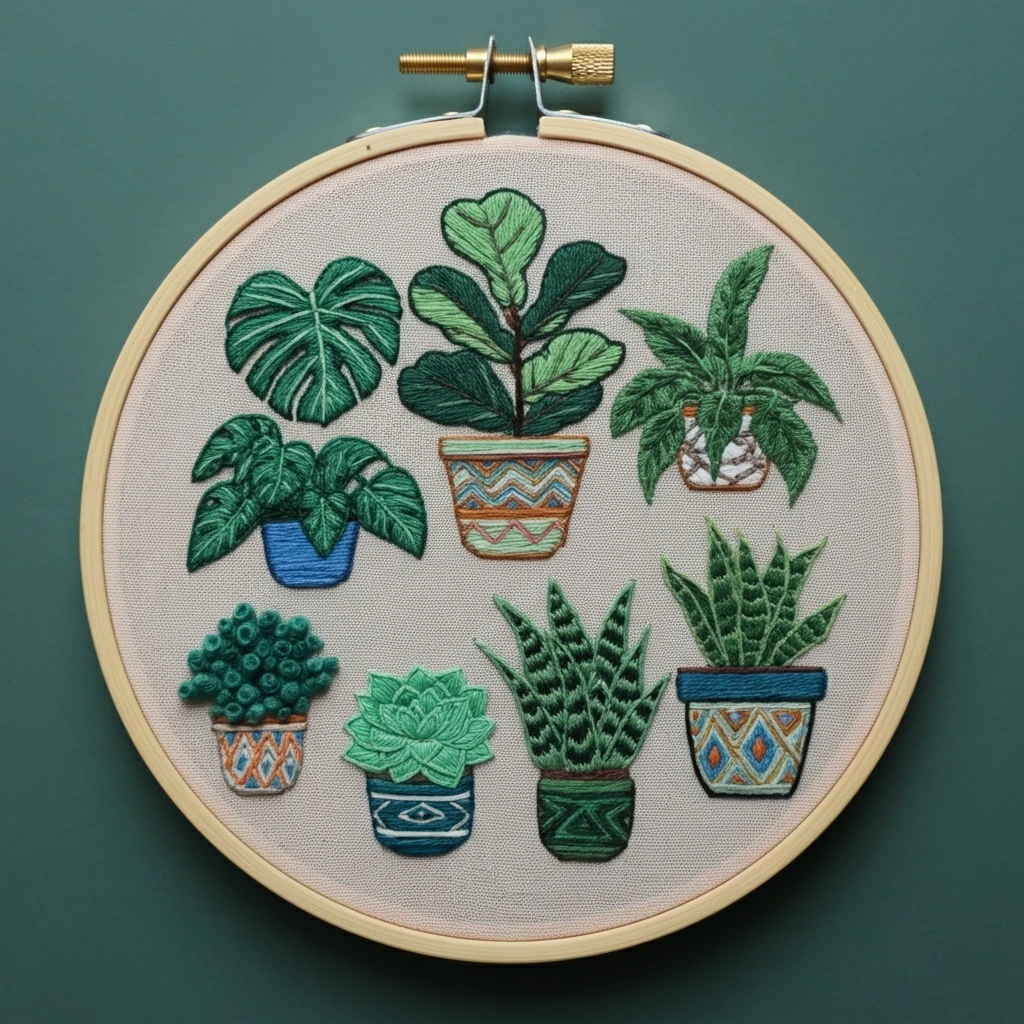

Embroidered Indoor Plant Collection
A polished embroidery guide for a cozy indoor plant collection with terracotta pots, ceramic planters, trailing vines, broad monstera-style leaves, upright snake plant blades, round pilea leaves, cactus forms, macrame texture, soil details, and layered green foliage on natural linen.
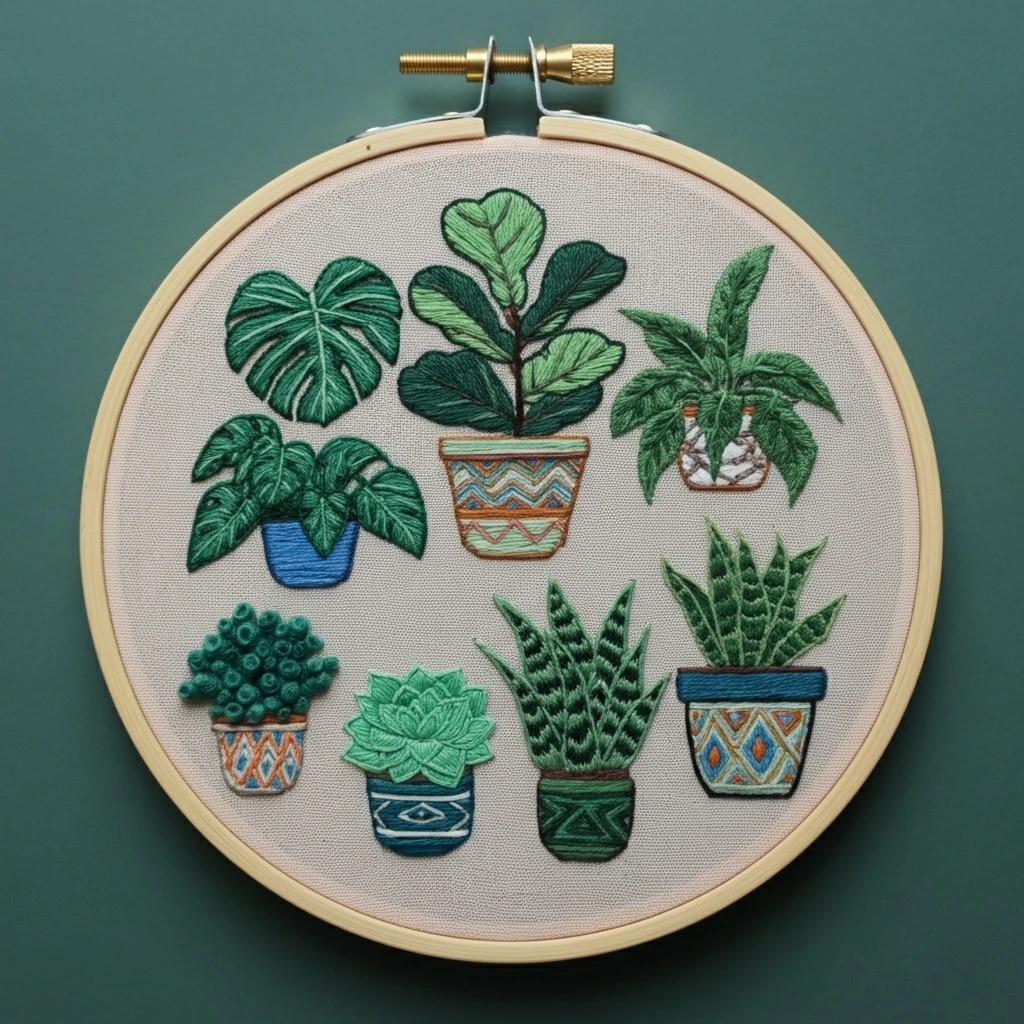
Likely DMC Color Palette
The indoor plant collection likely includes several potted plants with different leaf shapes and planter colors. The key palette is built from layered greens, deep leaf shadows, terracotta clay, cream and blue ceramic pots, soil browns, and a few warm highlight accents.
Stitching Suggestions
Thread Count & Plant Texture Guidance
Recommended strand counts
- 1 strand: leaf veins, pot decorations, macrame cord details, small soil dots, and tiny highlights.
- 2 strands: most leaves, pot fills, stems, vines, cactus ribs, and ceramic planter shapes.
- 3 strands: optional for raised pot rims, chunky soil knots, or bold foreground leaves on larger hoops.
Keeping plant types distinct
- Use different stitch directions for different plants: vertical for snake plants, curved for vines, and fishbone for broad leaves.
- Repeat a few greens across all plants so the collection feels cohesive, but vary the highlight shade.
- Keep pot colors balanced: warm terracotta, cool blue, cream, and soft pink make the collection lively without feeling crowded.
Blending & Shading Ideas
Layered leaf greens
Use 500 or 3362 at the deepest leaf folds, 3052 as the main foliage tone, 3013 for muted sage leaves, and 472 or 772 only on tips and veins.
Clay pot warmth
Use 920 for the pot body, 3826 on the upper rim, and 801 at the lower curve. Add a few broken stitches rather than solid shadows for handmade clay texture.
Ceramic shine
For blue, cream, or pink pots, keep shading smooth and add one or two small 3865 glints. This makes them read as glazed ceramic beside matte terracotta.
Outlining & Detail Notes
Where to outline
- Back stitch pot rims and bases before filling to keep each planter shape crisp.
- Use 3362 or 500 only on the darkest leaf edges; avoid outlining every leaf in the same dark color.
- Use 898 for soil lines inside pots, then add small loose seed stitches for texture.
- Add leaf veins and ceramic highlights after the main fills are complete.
Where to keep edges soft
- Let trailing vines stay light and airy with gaps between leaves.
- Use irregular terracotta shading so clay pots do not look flat.
- Keep macrame cords thin; heavy cords can overpower the small plants.
- Use small highlights on only a few leaves so the collection remains natural.
Beginner-Friendly Stitching Order
Practical Tips for a Polished Finish
Best overall approach: treat each plant like a small individual portrait. Vary leaf shapes and stitch directions, keep pot rims crisp, and use restrained highlights so the finished collection feels cozy, organized, and botanical.