
Realistic Cocker Spaniel
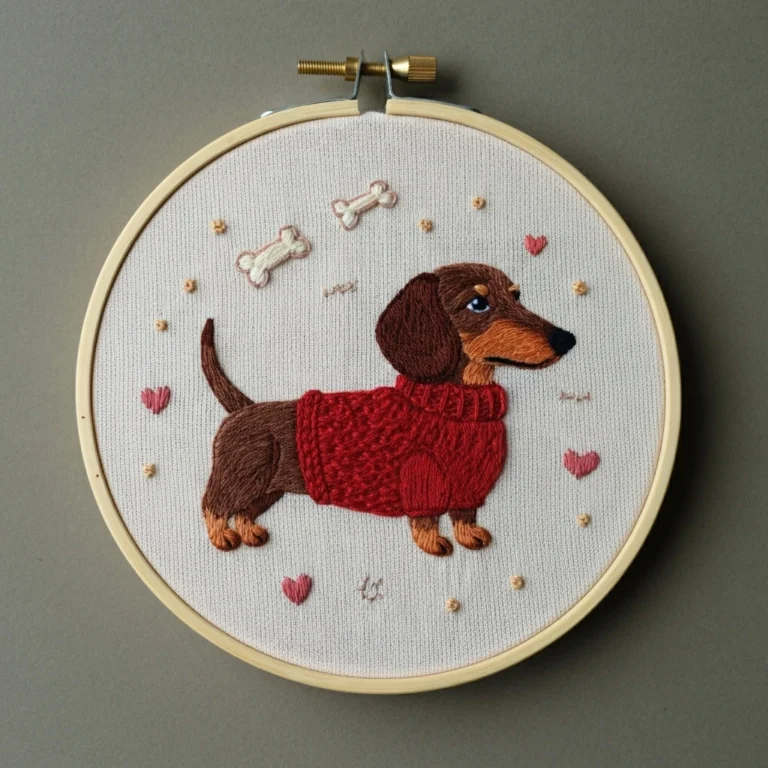
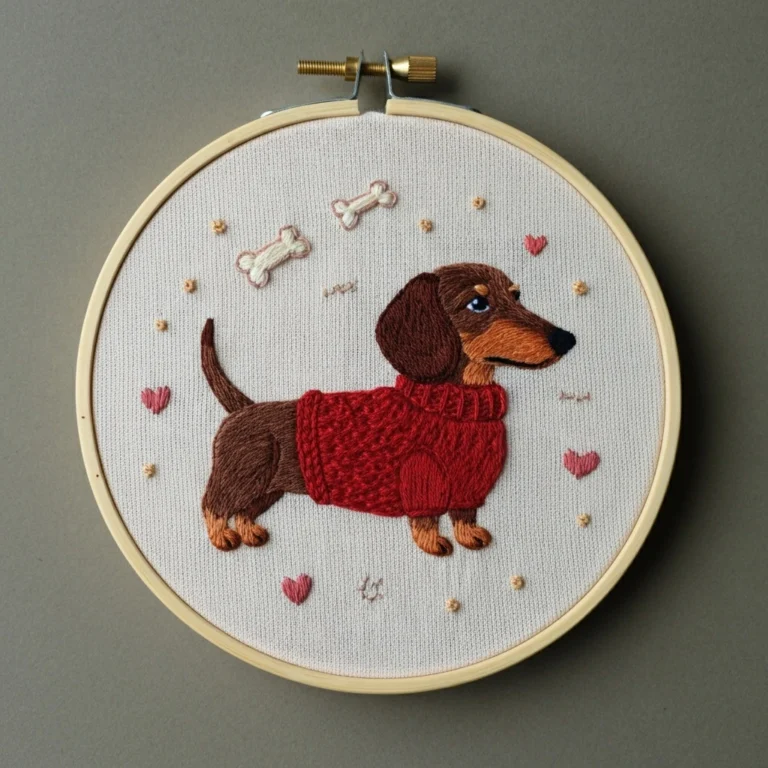
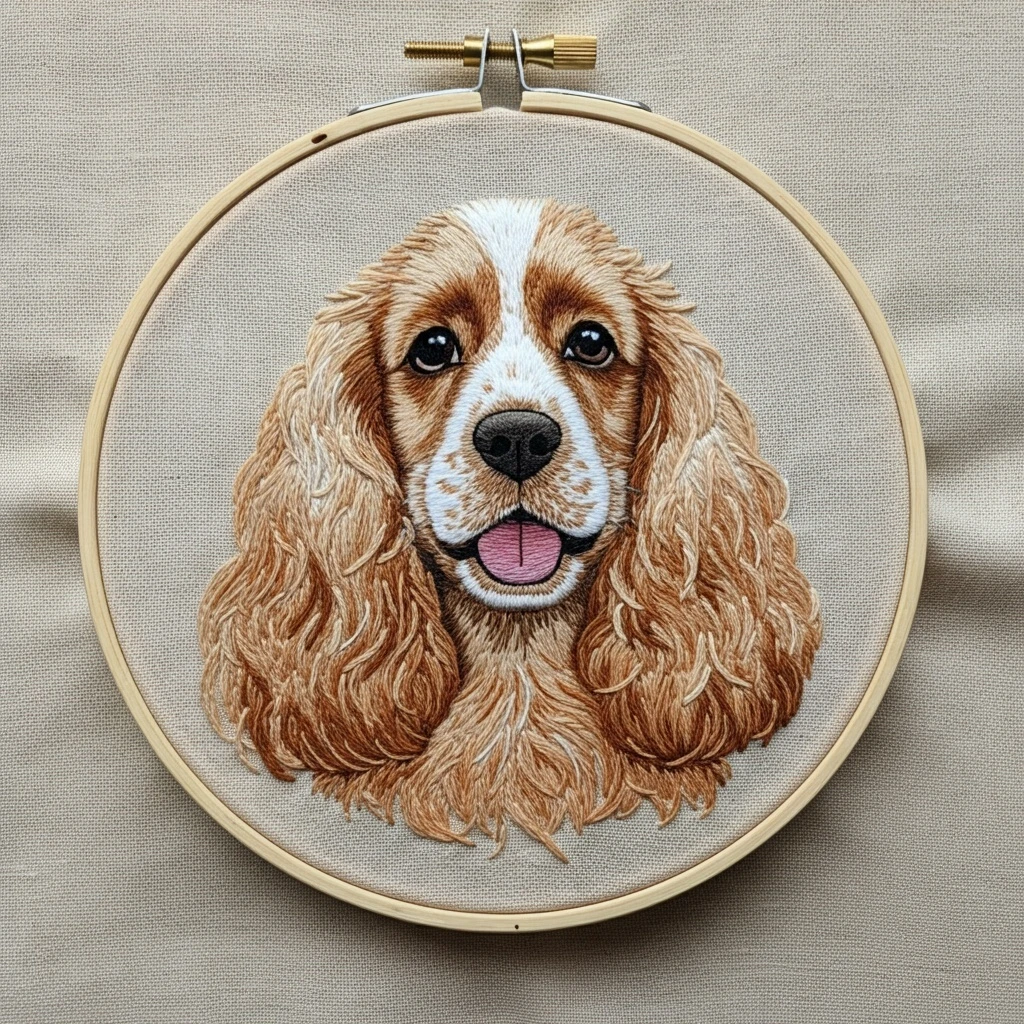
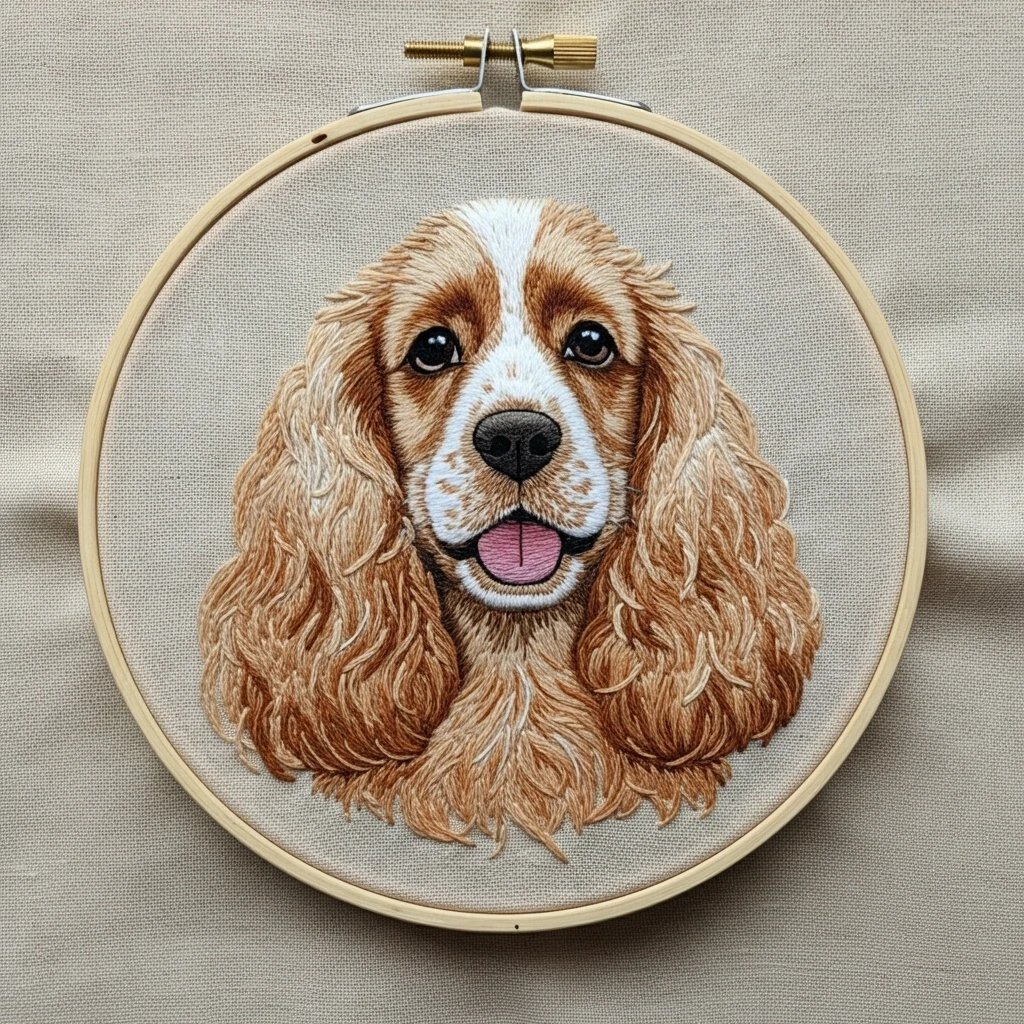
A warm, lifelike dog portrait with feathered golden-brown ears, a creamy white blaze, glossy dark eyes, a textured black nose, and a soft pink tongue. The embroidery relies on directional fur stitching, careful value layering, and fine highlights to keep the spaniel expressive rather than flat.
Color Story from the Reference
The design is built around honey, biscuit, copper, and deep chestnut browns, balanced by a cool cream muzzle and face blaze. Strongest contrast appears around the eyes, nose, mouth line, and under the ear curls; keep these darks controlled so the puppy expression stays soft.
Tiny eye sparkles and the brightest ridge of the central blaze; use sparingly.
Main white fur on muzzle and forehead; blend with 822 for natural warmth.
Soft shadows in white fur, chin edge, and around the muzzle curves.
Pale ear highlights and soft fur tips over the crown and chest.
Base golden fur across ears, cheeks, and lower chest.
Midtone strokes for wavy ear volume and cheek modeling.
Coppery warmth on lower ears, brow patches, and fur curls.
Deeper strands inside ear waves and along the underside of curls.
Warm shadows around eyes, cheek hollows, mouth corners, and ear roots.
Narrow dark fur accents, pupils' outer rims, and deepest ear separations.
Softer alternative to black for nose contour, lash line, and mouth crease.
Pupils, nostril centers, and final crisp accents only.
Nose shine and soft reflections in glossy black areas.
Subtle grounding shadows where pale muzzle meets darker fur.
Main tongue color, laid smoothly with gentle horizontal direction.
Tongue center line, lower edge, and mouth interior shadows.
Stitch Plan by Design Area
Face blaze & muzzle
- Use 1 strand long-and-short stitch following the hair growth: downward on the forehead, outward around the muzzle.
- Layer 3865 first, then add 822 and 642 in shallow curves near the nose and cheeks.
- Add a few Blanc stitches only at the highest points so the white fur keeps dimension.
Golden ears
- Build the wavy ears with loose, broken long-and-short stitches and split stitch curls.
- Alternate 738, 437, 436, and 435. Add 434 and 433 under overlapping locks.
- Let some individual stitches extend past the silhouette for a feathered spaniel edge.
Eyes
- Satin stitch the pupils with 310 or 3371, then couch a tiny Blanc highlight on top.
- Use 801 for the upper eyelid and 433 for the warm brown iris rim.
- A single dark outline around the eye is enough; too much black can make the expression harsh.
Nose & mouth
- Use padded satin or closely packed split stitch for the nose, with 3371 as the main dark.
- Work nostrils in 310, then add 535/642 short highlights on the bridge and rounded lobes.
- Outline the mouth with whipped backstitch in 3371; soften the lower lip with 433.
Thread Count, Blending & Shading Guidance
| Element | Recommended Strands | Best Stitches | Practical Notes |
|---|---|---|---|
| Fine face fur | 1 strand | Long-and-short, split stitch | Keep stitches short around the muzzle so the expression remains detailed and rounded. |
| Long ear curls | 1 strand, occasionally 2 for base fills | Long-and-short, stem stitch, couching | Vary stitch length and angle. Do not fill in rows; overlap irregularly like real fur. |
| Chest fluff | 1–2 strands | Feather stitch, loose long-and-short | Use lighter tans toward the center and darker browns under the chin for depth. |
| Nose | 2 strands for padding, 1 strand for shine | Padded satin, split stitch, tiny straight stitches | Make the center darkest, then place gray highlights asymmetrically for a wet-nose look. |
| Tongue | 2 strands fill, 1 strand detail | Satin stitch, split backstitch | Blend 3354 with 223 if you want a lighter tongue; shade lower edge with 3685. |
Beginner-Friendly Stitching Order
Transfer clean guide lines
Mark the main silhouette, face blaze, eyes, nose, mouth, tongue, and large ear sections. Avoid drawing every strand of fur; stitch direction matters more than copied lines.
Block the light and midtone fur
Start with 3865/822 on the white areas and 738/437 on the ears. Keep stitches light and directional so later layers can sit on top.
Add warm shadows
Use 436, 435, 434, and 433 to shape the ears, brow patches, cheek curves, and under-chin area. Place darks where locks overlap, not everywhere.
Finish focal details last
Stitch eyes, nose, mouth line, and tongue after the fur is complete. These small dark shapes define the portrait, so save the crispest stitches for the end.
Texture & Finishing Tips
Make the ears look soft
Use curved stitch paths that droop downward, then lift outward at the ends. A few light 738 or 3865 stitches placed over brown locks create the silky feathered look seen in the reference.
Avoid muddy browns
Separate copper, tan, and dark brown families into small stitch groups. Rinse your needle between heavy dark sections if fibers pick up fuzz or lint.
Outlining strategy
Use broken backstitch rather than a continuous cartoon outline. Darken only under the ears, around the nose, the eye rims, and the mouth crease.
Hoop & fabric
A medium natural linen or cotton-linen ground suits the neutral background. Keep the fabric drum-tight, especially while satin stitching the nose and tongue.