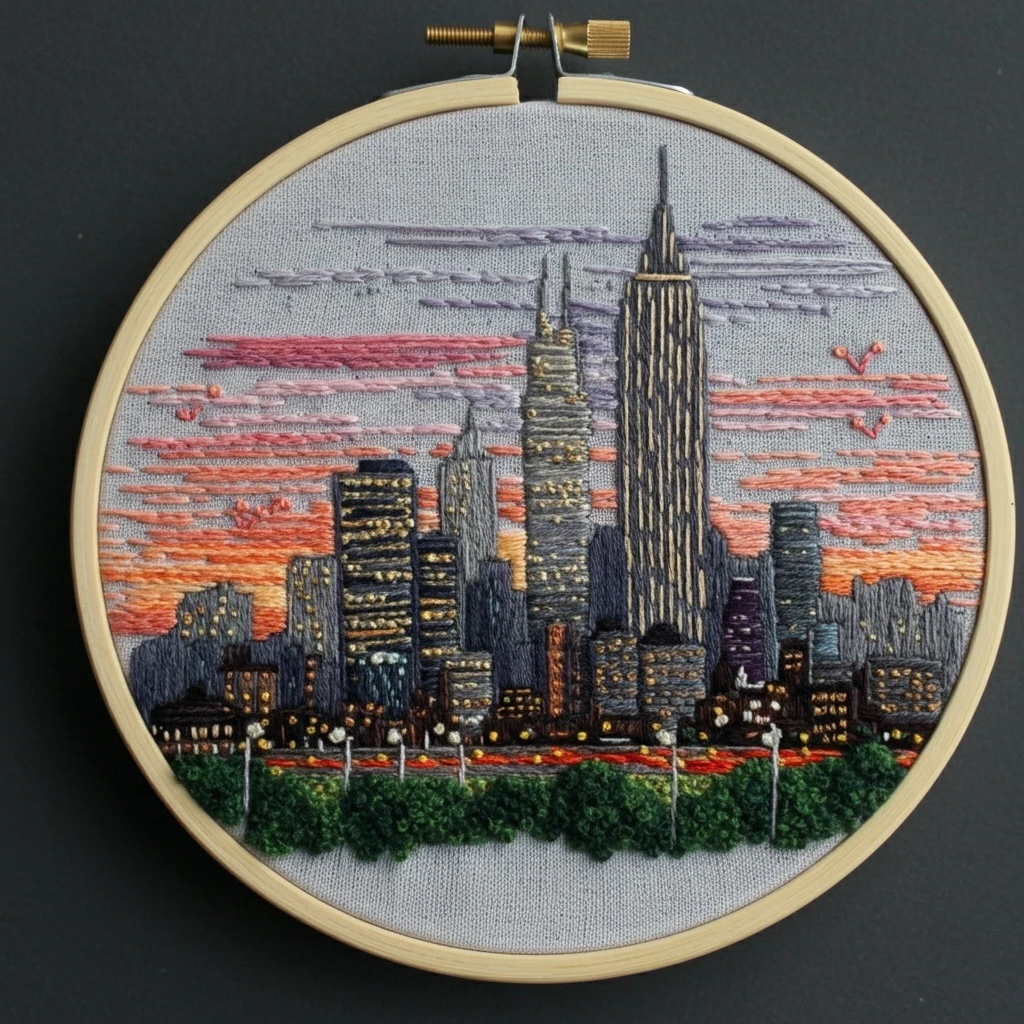

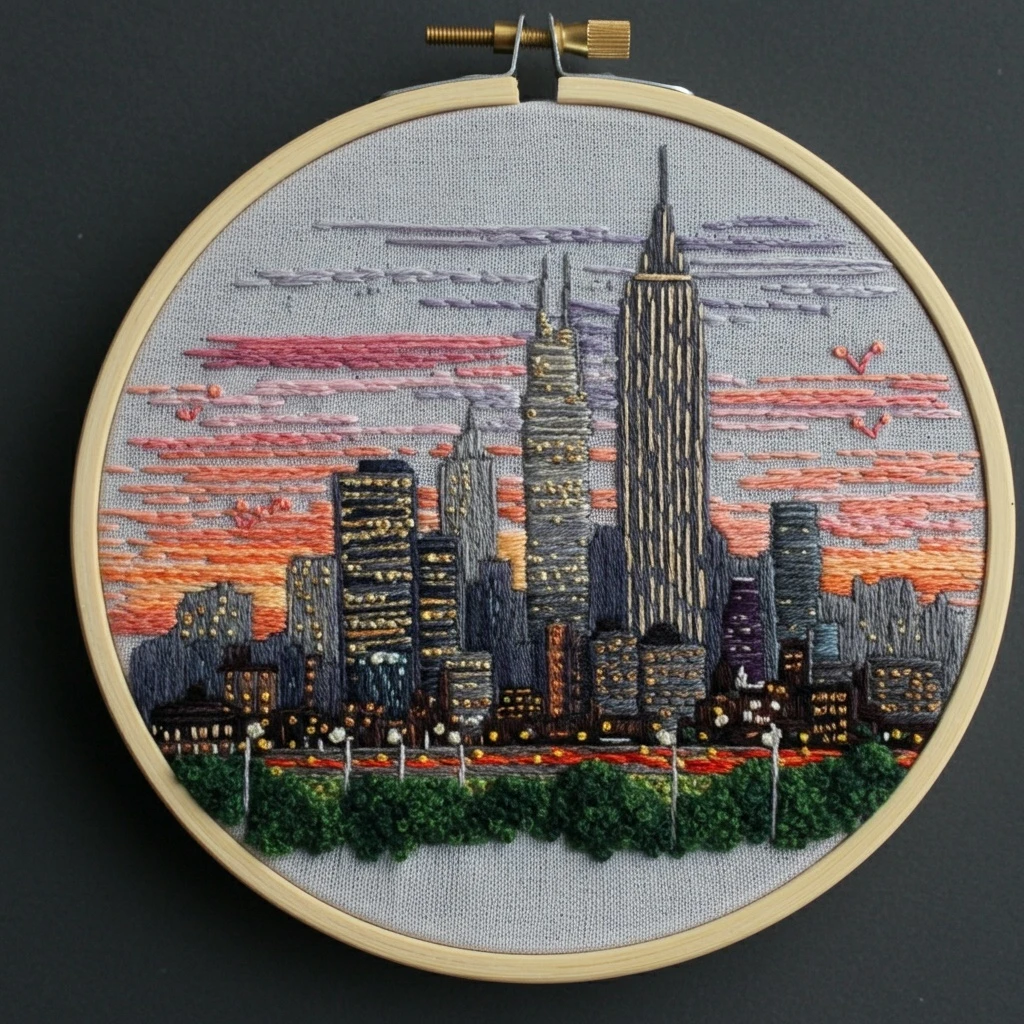
Cityscape Sunset
This cityscape sunset design is built around a glowing evening sky and a crisp urban skyline. The embroidery should feel atmospheric but clean: warm gold near the horizon, orange and coral sunset bands, lavender-blue upper sky, dark building silhouettes, tiny window lights, and subtle reflection or glow stitches that keep the scene polished without crowding the skyline.
Polished DMC Color Palette
This palette combines golden sunset light, warm orange and rose transitions, cool lavender-blue evening tones, and deep skyline colors. Keep the sky softly blended and the city edge crisp for the best contrast.
Stitch Map by Design Element
Thread Count & Blending Guide
Fine architectural detail
Use 1 strand for windows, rooflines, antennae, tiny building separations, cloud glints, and final edge corrections. One strand keeps the skyline polished.
Main fills
Use 2 strands for sky bands, building blocks, cloud areas, and reflections. Two strands give rich color while keeping gradient stitches manageable.
Raised lights
Use 2–3 strands only for a few highlighted window knots or brightest sun glints. Too many raised dots can make the city look busy.
Shading, Outlining & Texture Suggestions
Smooth sunset gradient
- Work the sky before the buildings so the skyline can sit cleanly on top.
- Use short overlapping stitches where colors meet instead of hard horizontal stripes.
- Keep the brightest yellow close to the horizon or sun area.
- Let the upper sky cool into lavender and blue for evening depth.
Crisp skyline
- Mark building tops carefully before stitching the dark silhouette.
- Use vertical stitches for building faces and horizontal stitches for roof edges.
- Vary building heights so the skyline feels natural and rhythmic.
- Reserve the darkest thread for foreground buildings and sharp rooftop accents.
Window lights
- Add windows after building fills are complete.
- Use a mix of tiny dashes and dots rather than identical squares everywhere.
- Cluster a few warm windows near the sunset side for believable glow.
- Use 3865 sparingly; 3821 and 783 look warmer and more natural.
Soft atmosphere
- Use pale lavender and blue stitches around the top of the skyline for distance.
- Keep clouds lightly textured and mostly unoutlined.
- Use broken horizontal reflection stitches if the design includes water or street shine.
- Avoid carrying dark skyline thread behind pale sky areas to prevent show-through.
Beginner-Friendly Stitching Order
- Transfer the main layout: mark the horizon, skyline rooflines, tallest buildings, sun or glow area, cloud shapes, and any reflection lines.
- Stitch the sky: build the warm-to-cool gradient first, using horizontal or softly blended stitches.
- Add clouds and glow: place pale cream, pink, and lavender highlights while the sky is still open and soft.
- Stitch the skyline: fill the building silhouettes over the sky with dark navy, pewter, and charcoal tones.
- Add building details: stitch roof edges, antennas, subtle building faces, and separations with one strand.
- Finish with lights: add windows, tiny highlights, reflection strokes, and final edge corrections last.
Practical Tips for a Clean Finish
Fabric & hoop
Warm cream, pale peach, natural linen, or light gray-blue fabric works well with the sunset palette. Keep the hoop drum-tight so long sky stitches and straight skyline edges stay smooth.
Needle choice
Use a sharp embroidery needle size 7–9 for one- and two-strand stitching. Use a slightly larger needle only for raised light knots, if you choose to add them.
Keeping it readable
Make the sky soft and the skyline crisp. That contrast is more important than adding lots of tiny windows or architectural details.
Managing dark thread
End dark skyline thread cleanly instead of carrying it behind pale sky or sunset areas. This keeps the warm gradient fresh and prevents shadow marks.