Little Gnome in the Daisy Patch

Little Gnome in the Daisy Patch — DMC Palette & Stitching Guide
DMC palette & stitching guide

Little Gnome in the Daisy Patch

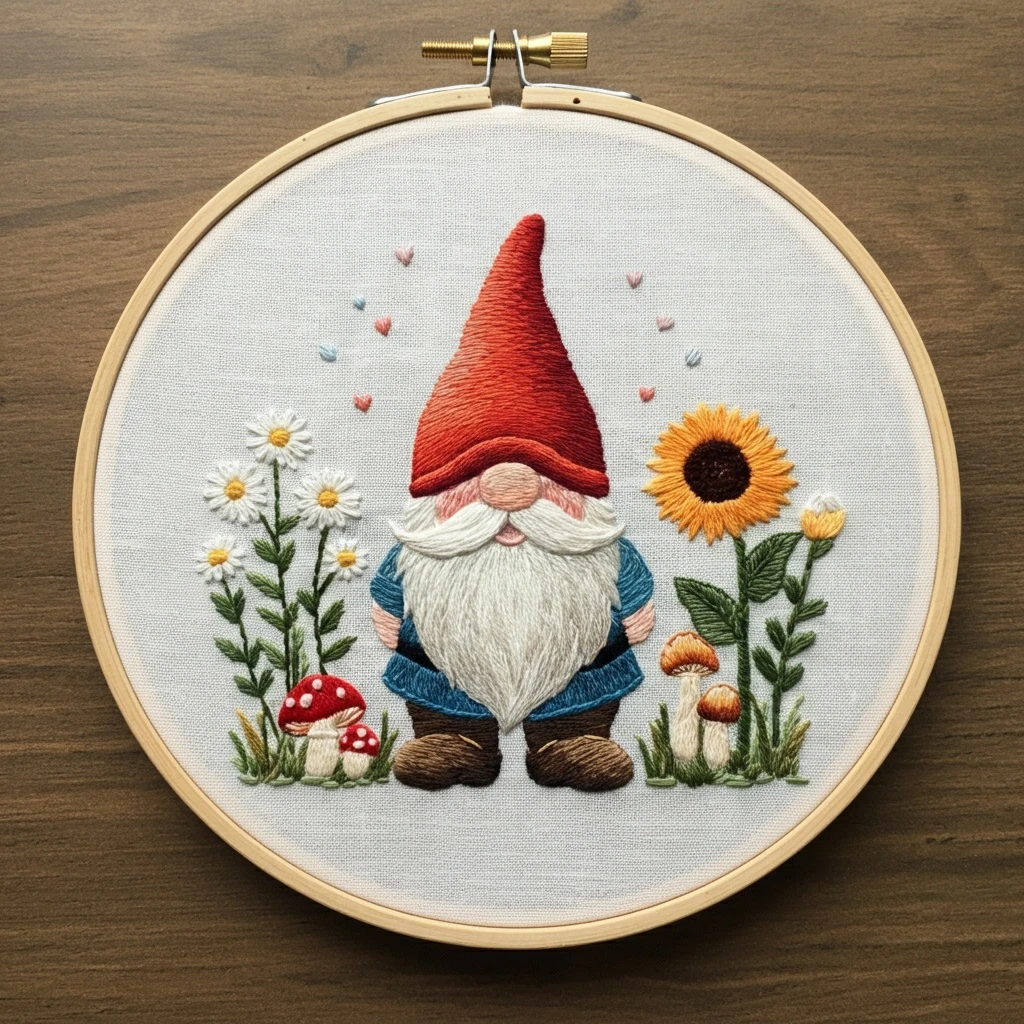
A cheerful beginner-friendly embroidery plan for a storybook gnome nestled among fresh spring daisies: warm cap tones, creamy petals, sunny flower centers, soft beard shading, and lively meadow greens.
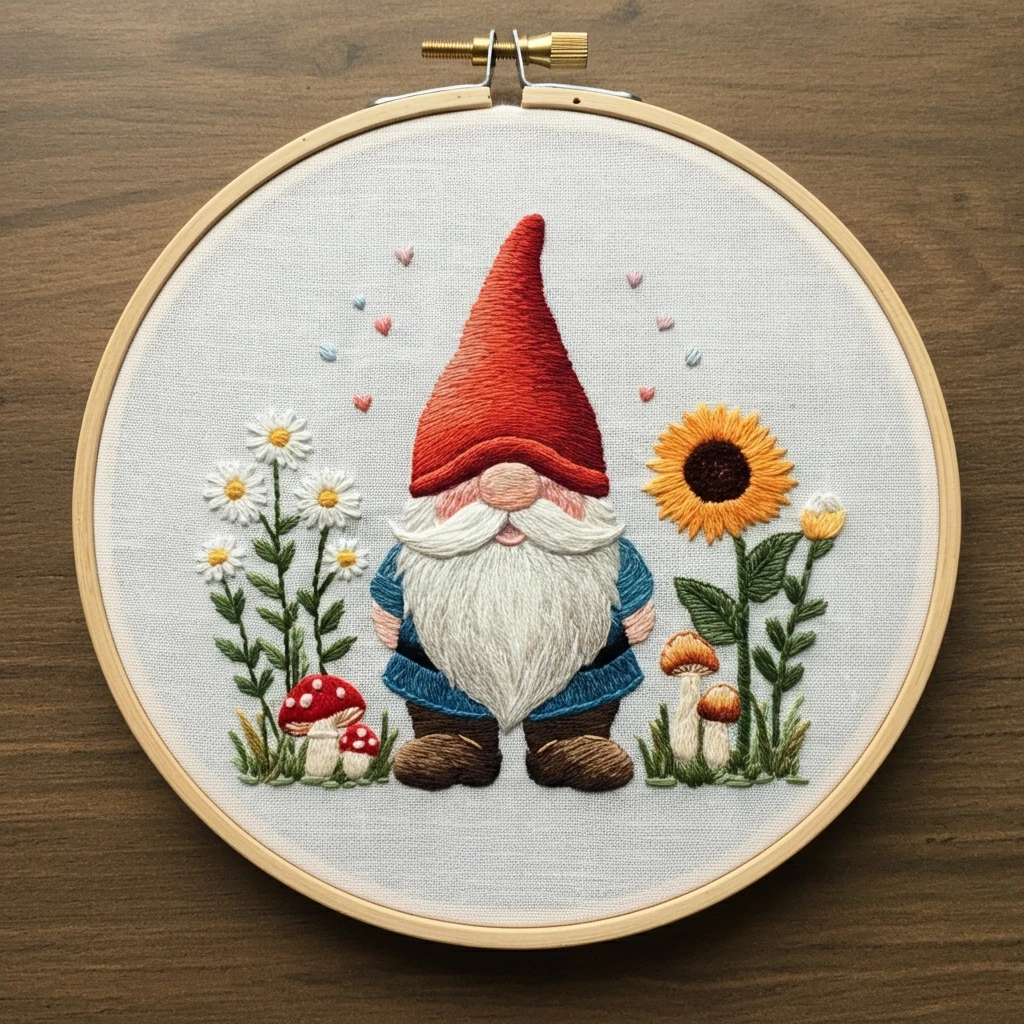
Little Gnome in the Daisy Patch

Design read

This motif works best when the gnome stays crisp and charming while the daisy patch feels airy and textured. Keep the face, hat edge, hands, boots, and flower outlines neat; then let the grass, stems, and tiny meadow fillers loosen up with small directional stitches.

Best fabric: natural linen, cotton-linen, or tightly woven cotton in cream, oatmeal, pale sage, or soft sky blue. A 6–7 inch hoop gives enough room for the daisies without crowding the gnome details.
Overall moodWhimsical spring garden, sunny daisy patch, cozy folk-art gnome.
Skill levelBeginner to confident beginner; mostly outline, satin, lazy daisy, and French knots.
Thread countUse 1–3 strands for control; reserve 4 strands only for chunky grass or bold cap texture.
Key contrastWarm red/rust hat + golden daisy centers against creamy petals and fresh greens.

Suggested DMC color palette

DMC 347 — Salmon Very Dark
storybook red-rust
Main gnome hat shadow, deep folds, and a few accent berries or tiny garden dots.
DMC 351 — Coral
warm hat midtone
Blend into the hat body with long-and-short stitch; mix one strand with 347 for fold transitions.
DMC 352 — Coral Light
sunlit cap highlight
Use sparingly on cap tips, rounded folds, cheeks, and tiny warm highlights.
DMC 745 — Yellow Pale Light
creamy daisy petals
Soft petal fill where pure white would feel too stark; lovely on cream or natural linen.
DMC B5200 — Snow White
bright petal tips
Top highlights on daisies and small sparkle accents in beard or fabric folds.
DMC 743 — Yellow Medium
daisy centers
French knots or seed stitch for raised, sunny flower centers.
DMC 3820 — Straw Dark
golden center shadows
Mix with 743 for lower half of flower centers or under-petal shadow dots.
DMC 470 — Avocado Green Light
fresh spring leaves
Main leaf and stem color; split stitch stems and lazy-daisy leaves.
DMC 469 — Avocado Green
meadow shadow green
Grass shadows, underside of leaves, and deeper stems behind the gnome.
DMC 472 — Avocado Green Ultra Light
new-growth highlights
Tiny fly stitches and top-stem highlights to keep the greenery lively.
DMC 642 — Beige Gray Dark
soft beard shadow
Low-contrast beard strands, shoe shadows, and grounding under the gnome.
DMC 948 — Peach Very Light
skin and nose
Small satin stitches for nose and hands; blend with 352 for a rosy cheek.
DMC 801 — Coffee Brown Dark
boots and fine outlines
Use one strand for eyes, shoe details, cap seams, and selective outlines.
DMC 3862 — Mocha Beige Dark
earth and basket tones
Ground line, warm beard accents, flower stems where they cross the gnome.

Stitch map

Hat: long-and-short stitch following the curve of the cap; add 1-strand backstitch along the brim and folds.
Daisy petals: lazy daisy, detached chain, or satin stitch. Keep petals slightly uneven for a handmade meadow look.
Centers: clustered French knots with 2 strands, mixing 743 and 3820 for dimension.
Beard: split stitch or stem stitch in curved strokes; use 1 strand for wispy texture and 2 strands for the lower mass.
Leaves and grass: fishbone stitch for larger leaves, fly stitch for sprouts, straight stitch for fine blades.
Face and boots: satin stitch for small filled shapes; one-strand backstitch for tiny features.
Beginner shortcut: outline the gnome first, stitch the large hat next, then add flowers around it. This prevents the daisies from visually swallowing the character.

Thread-count guidance

AreaRecommended strandsWhy it works
Fine outlines, eyes, cap seams1 strandKeeps the expression cute and avoids heavy cartoon lines.
Hat fill and clothing2 strandsGood coverage without bulky ridges in curved long-and-short sections.
Daisy petals2 strandsSoft petal body with enough brightness on natural fabric.
Flower centers2 strands, double-wrap knotsCreates raised dotted texture and a sunny focal point.
Grass and meadow fillers1–3 strandsVarying thickness makes the patch look natural and layered.

Blending & shading ideas

  • Hat depth: stitch the underside and left fold with 347, mid areas with 351, and the cap tip/high ridges with 352.
  • Petal softness: use 745 for most petals, then add a single B5200 stitch along outer tips that catch the light.
  • Greenery layers: place darker 469 stems behind the gnome, 470 for main leaves, and tiny 472 strokes at the tips.
  • Beard texture: alternate 642 and B5200 in thin curved strokes. Avoid filling it solid; the empty fabric can act as highlight.
  • Grounding: add short 3862 and 469 stitches beneath the boots so the character feels planted in the daisy patch.

Suggested stitching order

Transfer lightly. Use a fine water-soluble pen or heat-erasable pen and keep petal outlines delicate so they do not show through pale stitches.
Outline the character. Work the gnome’s hat brim, body, shoes, nose, and beard edges with 1 strand so the figure stays readable.
Fill the hat. Use curved long-and-short rows. Start with the darkest fold, add midtone, then feather highlights toward the top.
Add face, beard, and boots. Keep the facial stitches tiny; use broken beard strokes rather than a solid block.
Build the daisies. Stitch petals first, centers second. Add yellow knots after petal stitches so the centers sit on top.
Finish with meadow texture. Scatter grass, tiny buds, and filler stitches last so they can overlap naturally around the flowers.

Texture tips

Make the daisies dimensional: vary petal length and leave tiny gaps between petals instead of creating perfect circles.

Keep the gnome cozy: couch one or two subtle darker lines along the hat brim and add a few short beard stitches over the clothing edge.

Use knots sparingly: French knots are perfect for centers, but too many in the grass can compete with the daisies. Reserve knots for flower centers and a few tiny buds.

Beginner-friendly practical tips

  • Hoop the fabric drum-tight before starting; loose fabric makes satin petals and cap shading look uneven.
  • Use shorter thread lengths, about 14–16 inches, especially with pale petal colors that can become fuzzy from overhandling.
  • Start and end threads under nearby stitches rather than bulky knots where the daisy petals are light.
  • Rotate the hoop while stitching curved areas; your stitches will follow the cap and petal direction more naturally.
  • Check contrast from arm’s length. Add one-strand brown outlines only where shapes disappear.

Outlining details

  • Hat edge: backstitch with 801 or a 347/801 blend for a softer folk-art outline.
  • Daisy stems: split stitch in 470, with occasional 469 on the shadow side.
  • Petals: avoid dark outlines on every petal. Use 745/B5200 contrast and a few tiny 642 shadow stitches instead.
  • Face: one strand is enough for eyes and mouth. Tiny details look sweeter when understated.
  • Foreground grass: add final straight stitches over the gnome’s shoes and lower stems for a tucked-in meadow effect.
Designed as a practical floss-and-stitch planning page for “Little Gnome in the Daisy Patch.”

Leave a Reply

Your email address will not be published. Required fields are marked *