Cozy Treehouse

Cozy Treehouse — DMC Palette & Stitching Guide
Cozy Treehouse Embroidery
DMC palette & treehouse stitching notes

Cozy Treehouse

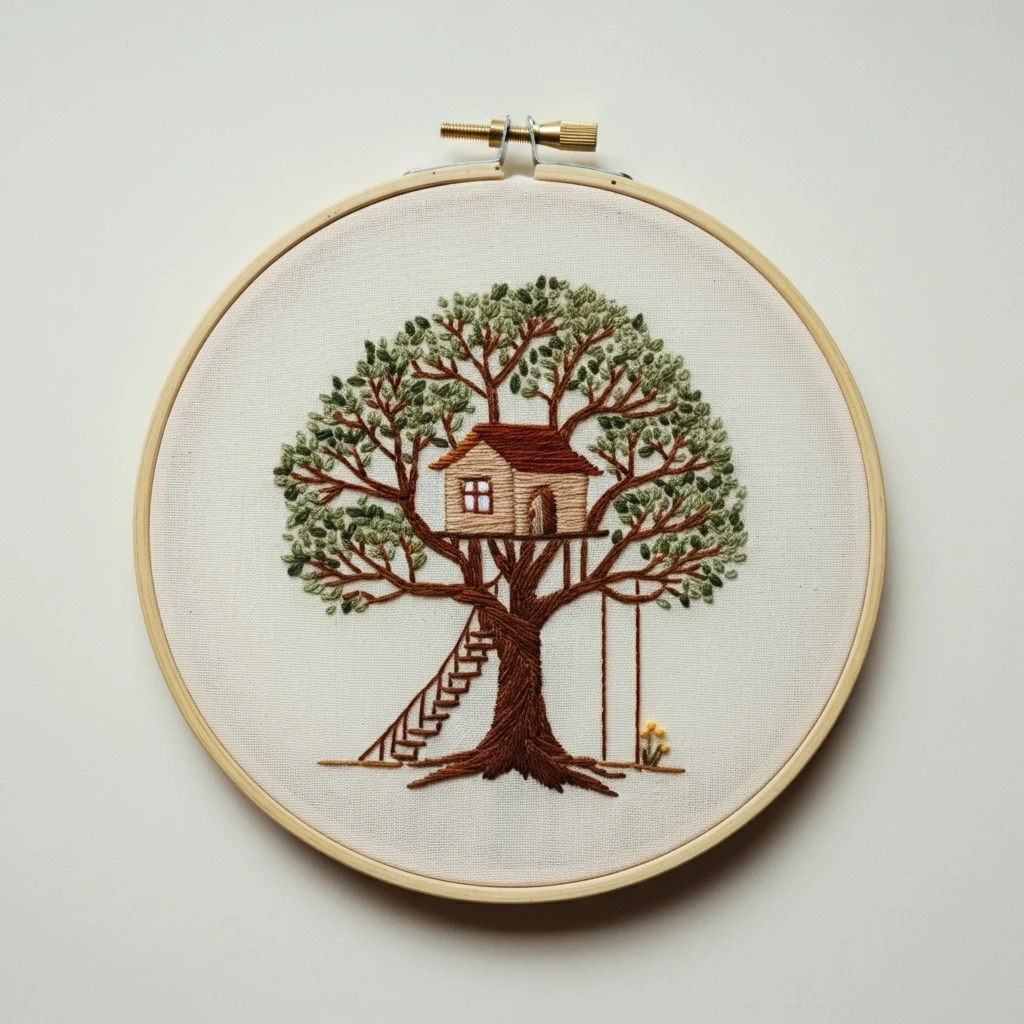
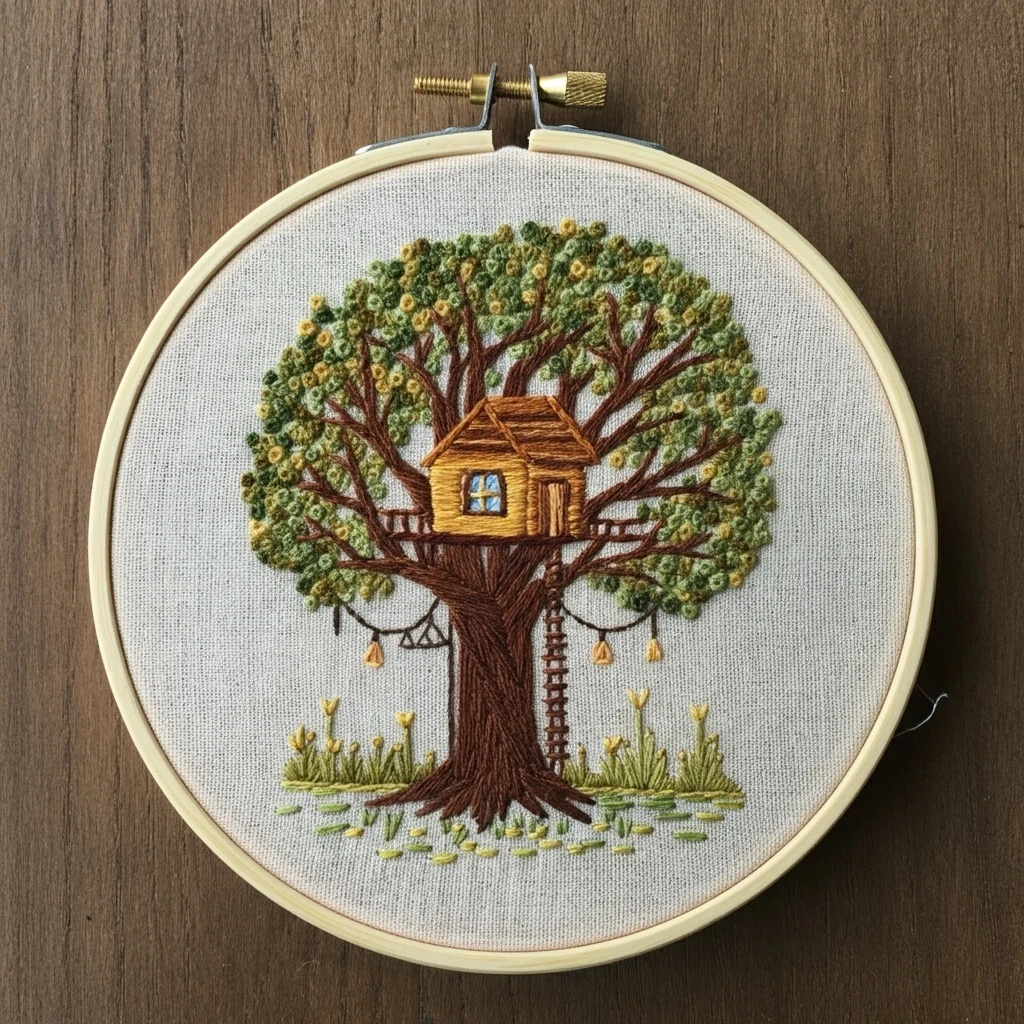
This cozy treehouse design is built around a sturdy tree trunk, warm wooden house or platform, ladder and rail details, leafy canopy, and small welcoming touches like a tiny window, rope, flowers, or soft sky accents. The embroidery should feel playful and storybook-like: textured bark, layered greens, rustic planks, neat architectural outlines, and just enough tiny details to make the treehouse look lived-in without overcrowding the hoop.

Polished DMC Color Palette

This palette focuses on warm bark and wooden planks, muted leafy greens, creamy window highlights, and small cheerful accent colors. Keep the tree trunk and house structure grounded in browns, then use greens and pale sky tones to soften the scene.

DMC 938
Coffee Brown Ultra Dark
Deep bark creases, branch undersides, ladder shadows, window interior, and strongest outlines.
DMC 898
Coffee Brown Very Dark
Tree trunk depth, house underside, roof shadow, and dark plank separations.
DMC 801
Coffee Brown Dark
Main trunk outline, ladder sides, railings, wood plank shadows, and rustic trim.
DMC 433
Brown Medium
Main treehouse planks, trunk mid-tones, ladder rungs, branch fill, and warm wood.
DMC 434
Brown Light
Sunlit plank edges, bark highlights, ladder tops, and warm branch glints.
DMC 437
Tan Light
Light wood grain, window frame, rope highlights, and pale plank faces.
DMC 746
Off White
Window glow, tiny curtain, flower centers, roof highlights, and warm cream accents.
DMC 3865
Winter White
Bright window glint, little flower dots, sky sparkle, and final crisp highlights.
DMC 895
Hunter Green Very Dark
Deep leaf shadows, tucked foliage, mossy trunk bases, and shaded canopy pockets.
DMC 3362
Pine Green Dark
Main dark leaves, branch foliage, and greenery behind the house structure.
DMC 3363
Pine Green Medium
Leaf clusters, canopy fill, vine accents, and mid-tone foliage around the roof.
DMC 3052
Green Gray Medium
Soft leaves, moss, small shrubs, and muted greenery balancing the browns.
DMC 3053
Green Gray
Leaf highlights, fresh canopy tips, grassy ground, and light foliage edges.
DMC 3013
Khaki Green Light
Pale leaf tips, moss highlights, tiny vine details, and airy canopy sparkle.
DMC 932
Antique Blue Light
Sky accents, window glass, distant background dots, and cool shadow contrast.
DMC 775
Baby Blue Very Light
Pale sky glints, soft window reflection, tiny cloud or breeze marks.
DMC 783
Topaz Medium
Warm window glow, tiny lantern, flower centers, and golden sunlit accents.
DMC 3821
Straw
Brightest lantern light, flower centers, sunshine dots, and warm decorative glints.
DMC 347
Salmon Very Dark
Tiny flowers, bunting, small curtains, or rosy door and decorative accent details.
DMC 761
Salmon Light
Light flower petals, little bunting highlights, and gentle whimsical accents.
DMC 823
Navy Blue Dark
Optional deep window interior, tiny night-sky accent, or cool shadow under roof.
DMC 414
Steel Gray Dark
Nail heads, metal hardware, cool shadow marks, and tiny structural accents.
DMC 318
Steel Gray Light
Hardware highlights, ladder nail glints, and soft neutral shadow transitions.
DMC 815
Garnet Medium
Optional tiny red door, flower shadows, flag accents, or warm decorative contrast.

Stitch Map by Design Element

Tree trunk
Use stem stitch, split stitch, long-and-short stitch, or short straight stitches following the trunk curve. Shade with 938 and 898 in deep grooves, fill with 801 and 433, and add 434 or 437 on raised bark ridges.
Bark texture
Use one-strand broken back stitches, seed stitches, and short vertical strokes. Keep bark marks uneven and curved with the trunk so the tree looks organic, not striped.
Treehouse walls
Use satin stitch, split-stitch rows, or laid straight stitches in 433, 434, 437, 801, and 898. Stitch planks in the same direction, then add one-strand dark separations between boards.
Roof and platform
Use split stitch or long-and-short stitch along the roof angle. Shade underside edges with 938 or 898, fill with 801 and 433, and add 434 highlights on the roof edge, railing, or platform lip.
Ladder and rope
Use stem stitch, back stitch, or couching in 801, 433, and 437. Keep ladder rungs evenly spaced; use one strand for rope details so they stay delicate.
Window and door
Use one-strand back stitch for frames and tiny satin stitches for fill. Use 746, 783, and 3821 for a warm glow, or 932 and 775 for cool glass. Add a tiny 3865 glint last.
Leaves and canopy
Use lazy daisy, fishbone stitch, detached chain, seed stitch clusters, or tiny straight stitches. Work dark greens behind the treehouse, then add 3363, 3052, 3053, and 3013 to lift outer leaf clusters.
Flowers and tiny accents
Use French knots, small lazy daisy petals, star stitches, or seed stitches in 761, 347, 783, 3821, 746, and 3865. Keep them tiny so they add charm without hiding the structure.

Thread Count & Blending Guide

Fine details

Use 1 strand for plank separations, window frames, ladder rungs, rope, bark cracks, tiny flowers, nail heads, door handle, and final outline corrections.

Main structure

Use 2 strands for tree trunk fill, house planks, roof, platform, leaves, and larger branches. Two strands gives visible texture without making the miniature building bulky.

Raised natural texture

Use 2–3 strands for selected French-knot flowers, mossy knots, canopy dots, or bark highlights. Use three strands sparingly so the scene stays tidy.

Blending idea: Blend 938 with 801 for deep bark, 801 with 433 for trunk mid-tones, 433 with 434 for planks, 434 with 437 for warm wood highlights, 895 with 3362 for deep leaves, 3363 with 3052 for canopy fill, and 3053 with 3013 for fresh leaf tips.

Shading, Outlining & Texture Suggestions

Tree and bark depth

  • Follow the trunk’s natural curve with vertical or slightly wavy stitches.
  • Keep darkest browns in branch forks, trunk creases, and under the platform.
  • Add lighter bark ridges in broken strokes rather than long straight lines.
  • Let some fabric show between bark marks for a rustic hand-stitched look.

Readable treehouse structure

  • Stitch the house walls and roof before adding leaves over them.
  • Use darker shadows under the roof, platform, window ledge, and ladder rungs.
  • Keep plank separations thin; heavy dark lines can make the house look crowded.
  • Use warm window glow to create a cozy focal point.

Leafy canopy texture

  • Place dark leaves behind the house and lighter leaves around the outer canopy.
  • Vary stitch direction so the leaves look natural and layered.
  • Use small leaf clusters rather than filling the entire background solid.
  • Add a few pale green tips last for fresh, sunny movement.

Outlining approach

  • Use dark brown for tree and house outlines, dark green for foliage, and cool blue-gray for window glass.
  • Avoid harsh black outlines; the cozy woodland mood works best with tonal definition.
  • Use split stitch for house curves and back stitch for straight planks, ladder, and window details.
  • Add final outlines before tiny flowers, lantern glow, nail heads, and white glints.

Beginner-Friendly Stitching Order

  1. Transfer the main layout: mark the trunk, major branches, treehouse walls, roof, platform, ladder, window, leaf clusters, and tiny accent placements.
  2. Stitch trunk and branches: build bark shadows first, then mid-tone fill, then light bark texture and branch highlights.
  3. Build the treehouse: stitch walls, roof, platform, railings, and plank separations before adding the ladder and tiny window details.
  4. Add ladder, rope, and hardware: use one strand where possible so small structural lines stay neat.
  5. Layer the leaves: stitch dark canopy areas behind the house, then mid and light leaf clusters around the edges.
  6. Finish with charm: add flowers, moss, window glow, sky dots, nail heads, and final bright highlights last.

Practical Tips for a Clean Finish

Fabric & hoop

Natural linen, warm cream, pale oatmeal, soft sage, or light sky-blue cotton-linen all suit this woodland design. Keep the hoop drum-tight so ladder rungs, planks, and window details stay straight.

Needle choice

Use a sharp embroidery needle size 7–9 for one- and two-strand stitching. A size 9 needle is especially useful for bark cracks, window panes, ladder rungs, and tiny flower details.

Keeping it cozy

Let the treehouse stay warm and simple. A glowing window, a tidy ladder, and a few flowers can create more charm than too many tiny accessories.

Avoiding clutter

Do not cover every branch with leaves. Leave small openings of fabric between canopy clusters so the house shape and trunk remain easy to read.
Best beginner shortcut: use stem stitch for bark and branches, satin stitch for planks, back stitch for ladder and window lines, lazy daisy for leaves, and French knots for flowers.
Best polish upgrade: layer from trunk and branches, to house structure, to ladder and window details, then leaf clusters, flowers, moss, and final warm highlights.
Designed as a practical DMC floss and stitch-planning companion for the Cozy Treehouse embroidery artwork.

Leave a Reply

Your email address will not be published. Required fields are marked *