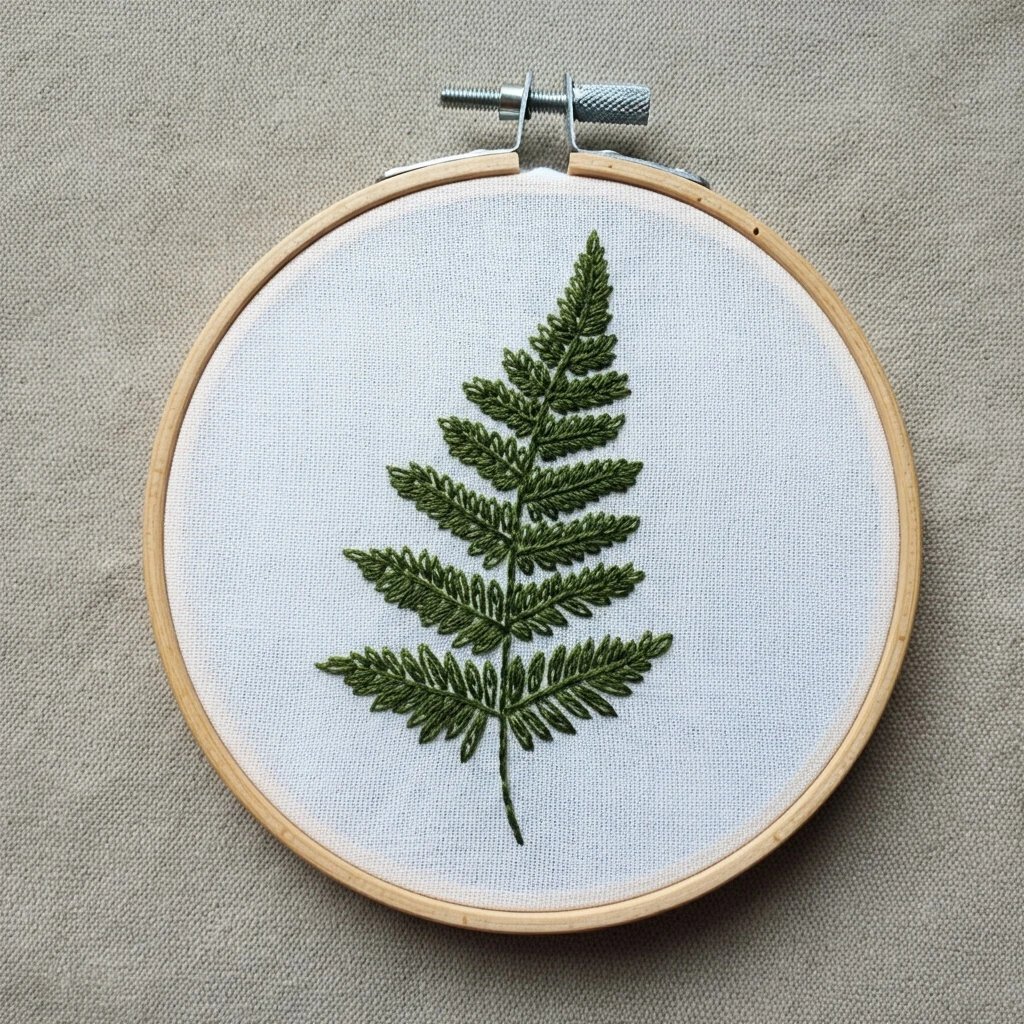

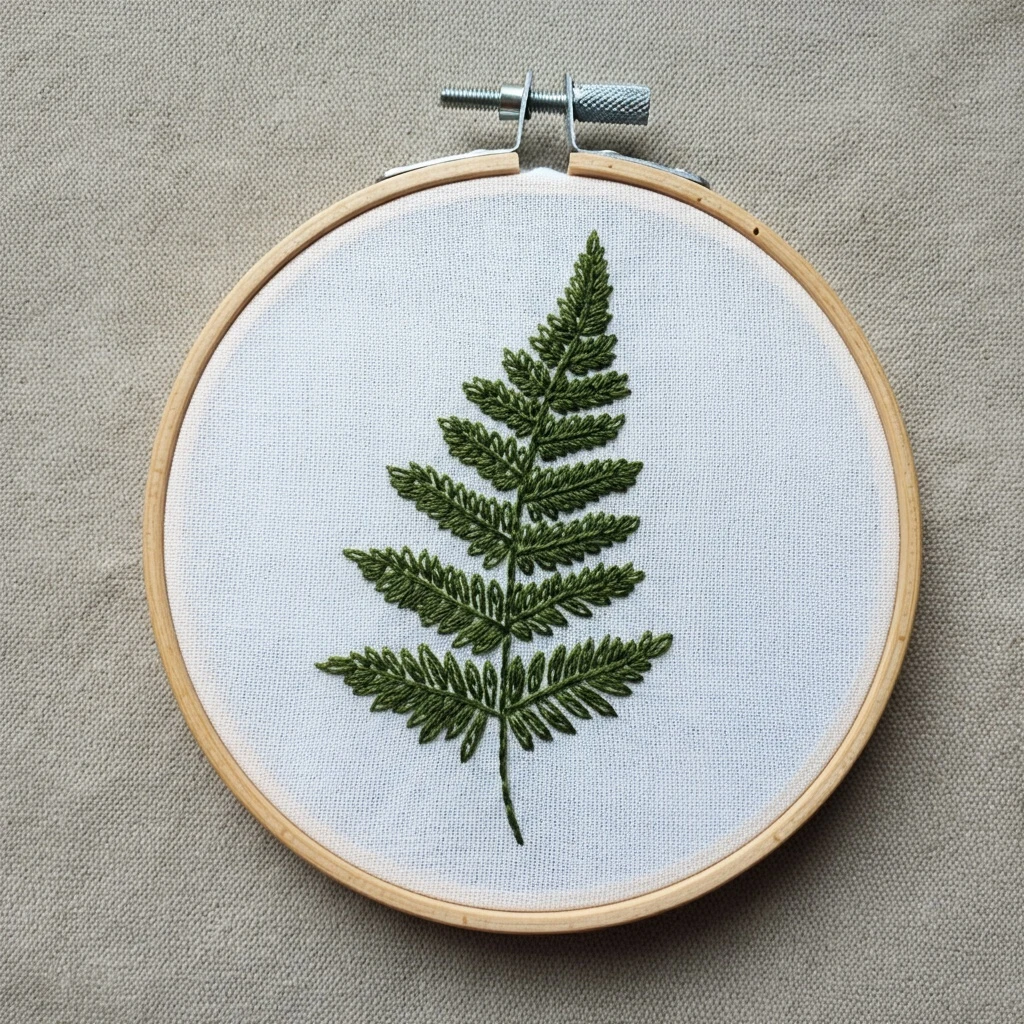
Hand Embroidered Fern in Wooden Hoop
A quiet botanical study built around layered fern fronds, soft mossy greens, warm hoop-toned neutrals, and fine vein details. The goal is graceful movement: light leaflets at the tips, deeper shadows where fronds overlap, and a natural hand-stitched texture that feels fresh rather than flat.
Suggested DMC color palette
Use these colors as a practical closest-match palette for the fern design. Work the greens from light to dark so the fronds keep their delicate, layered look.
Stitch plan by design area
Keep the embroidery airy. The fern should look light and botanical, not heavily filled.
| Area | Recommended stitches | Thread guidance | Practical notes |
|---|---|---|---|
| Main fern stems | Stem stitch, split stitch, or whipped back stitch | 2 strands for main stems; 1 strand for tip stems | Curve the stitches with the frond. Shorter stitches make smoother bends. |
| Small leaflets | Detached chain, fishbone stitch, satin stitch, or straight stitch pairs | 1 strand for fine leaflets; 2 strands for bolder leaves | Angle every leaflet away from the stem so the fern has a natural feathered rhythm. |
| Leaf shading | Long and short stitch, staggered straight stitches | Blend 3348/3011 or 772/3348 in the needle | Put lighter colors near outer tips and darker greens near the base or underside. |
| Veins and definition | Tiny back stitch, couching, single-strand split stitch | 1 strand only | Use 3052 for visible veins; use 895 only in the darkest overlap points. |
| Texture and accents | French knots, seed stitch, tiny straight stitches | 1 strand; 2 wraps for knots | Add only a few mossy knots around the fern so the composition remains elegant. |
Blending, shading, and texture suggestions
Natural green blending
For soft transitions, thread the needle with one strand of DMC 3348 and one strand of DMC 3011. This mixed needle works beautifully for the middle of larger leaflets where the artwork shifts from fresh green to olive shadow.
Use DMC 772 alone at the outer tips, then move to 3348, then 3011 or 3052 closer to the central stem.
Fern structure
Stitch the central stem first, then work leaflets from the base toward the tip. This keeps the spacing tidy and helps every small leaflet point in the correct direction.
For a graceful botanical finish, avoid filling every gap; small open spaces make the fern feel delicate.
Outlining details
Outline only where needed. A full dark outline can make the fern look cartoonish, so reserve DMC 895 for the deepest stem creases and the underside of overlapping fronds.
Single-strand split stitch gives more refined definition than a heavy back stitch.
Fabric and hoop finish
Natural linen, oatmeal cotton, or soft cream fabric will make the green palette feel fresh. For black or deep fabric, add a few extra DMC 772 highlights so the fronds stay readable.
Keep the hoop tension firm but not stretched; fern stems show puckering quickly if the fabric is loose.