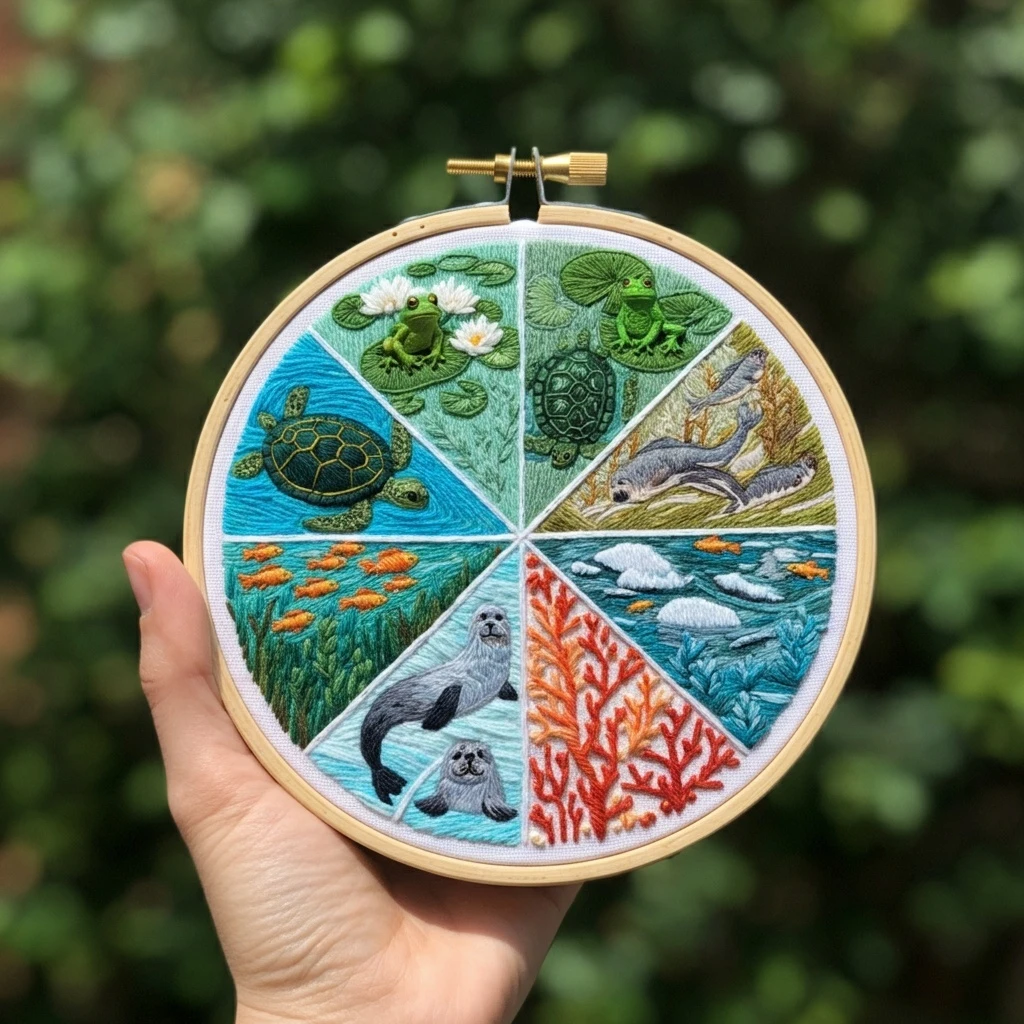

Embroidered Ecosystem Wheel
A detailed circular embroidery guide for a segmented ecosystem wheel showing lily ponds with frogs, turtles, river fish, seals, otters, icy water, sea plants, coral reef forms, reeds, and crisp white divider lines radiating from the center.
Likely DMC Color Palette
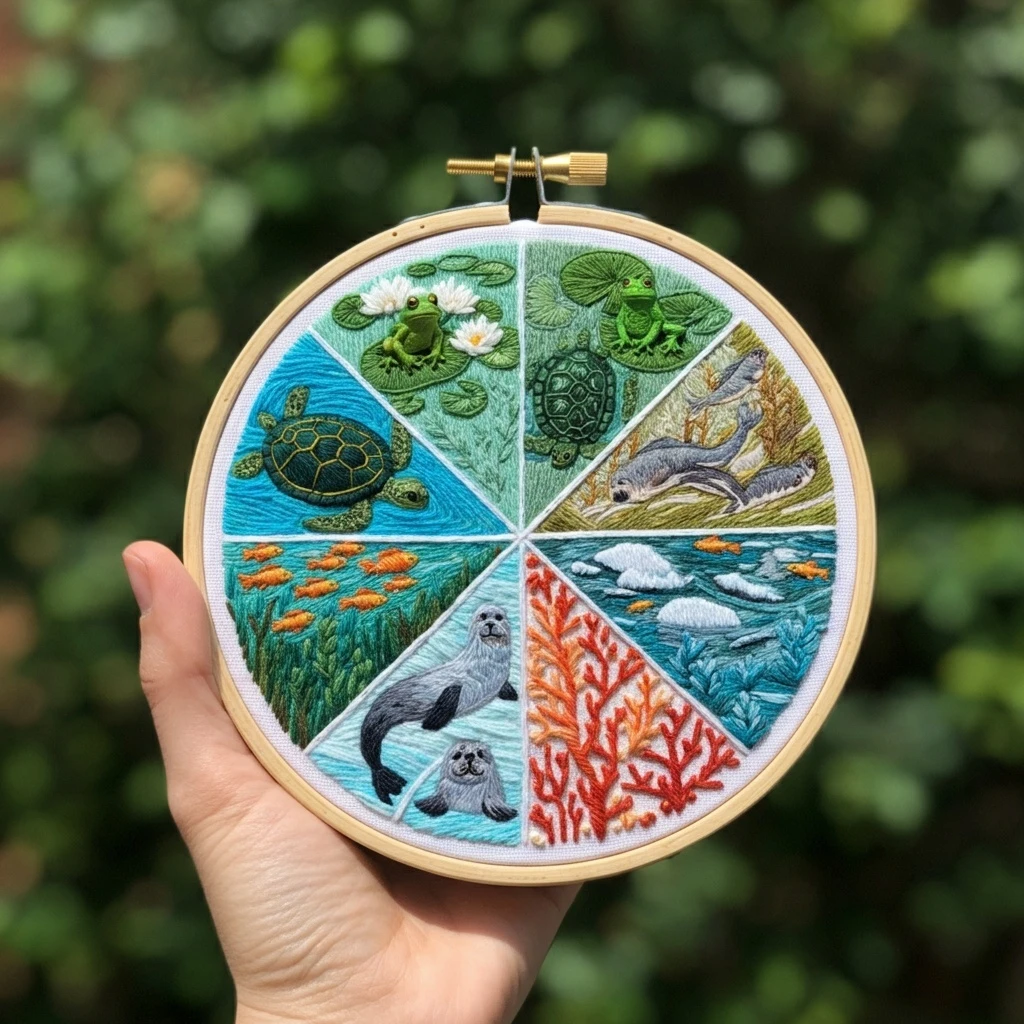
The reference is a divided ecosystem wheel with aquatic blues, pond greens, lily pads, frogs, turtles, fish, seals, otters, ice floes, coral, reeds, and bright white separators. Coverage is visually estimated from the preview, with thread suggestions chosen for practical embroidery contrast.
Stitching Suggestions
Thread Count & Layout Guidance
Recommended strand counts
- 1 strand: animal eyes, shell plate lines, fish tails, reed tips, frog toes, and fine divider touch-ups.
- 2 strands: most water fill, animals, lily pads, coral branches, ice, plants, and white divider lines.
- 3 strands: optional for raised coral tips, thick white dividers, or bold foreground reeds on larger hoops.
Working with wedge sections
- Transfer the circle, center point, and radial lines very accurately before adding animals.
- Stitch one wedge at a time to avoid accidentally carrying colors across white dividers.
- Keep the center neat; several stitch directions meet there, so trim tails carefully.
Blending & Shading Ideas
Water movement
Blend 747 into 3845 and 3844 with short broken horizontal stitches. Use lighter strokes near animals and divider lines to keep small details readable.
Animal contrast
Use 310 only for tiny eyes and nostrils. For animal bodies, rely on 415, 645, 500, and 3052 so the wildlife stays soft but still visible.
Coral and plants
Keep coral warmer with 347 and 740, then contrast it with cool blue water. For reeds, alternate dry 832 strokes with deeper 3362 shadows.
Outlining & Detail Notes
Where to outline
- Use split stitch around the circle and radial dividers so each ecosystem section stays crisp.
- Back stitch turtle shell plates and fish silhouettes with one strand only.
- Outline ice floes with pale blue-gray rather than black for a frosty look.
- Add animal faces after body shading so eyes and noses remain clean.
Where to keep edges soft
- Do not over-outline water ripples; use broken directional stitches instead.
- Let pond backgrounds remain slightly mottled with mixed greens for natural depth.
- Keep coral tips irregular and forked, not perfectly symmetrical.
- Vary fish angles and sizes so the school feels alive.
Beginner-Friendly Stitching Order
Practical Tips for a Polished Finish
Best overall approach: keep the wheel structure crisp and the ecosystem textures varied. Smooth water, raised coral, tiny fish, soft mammals, and tidy white spokes will make the design feel detailed without becoming crowded.