
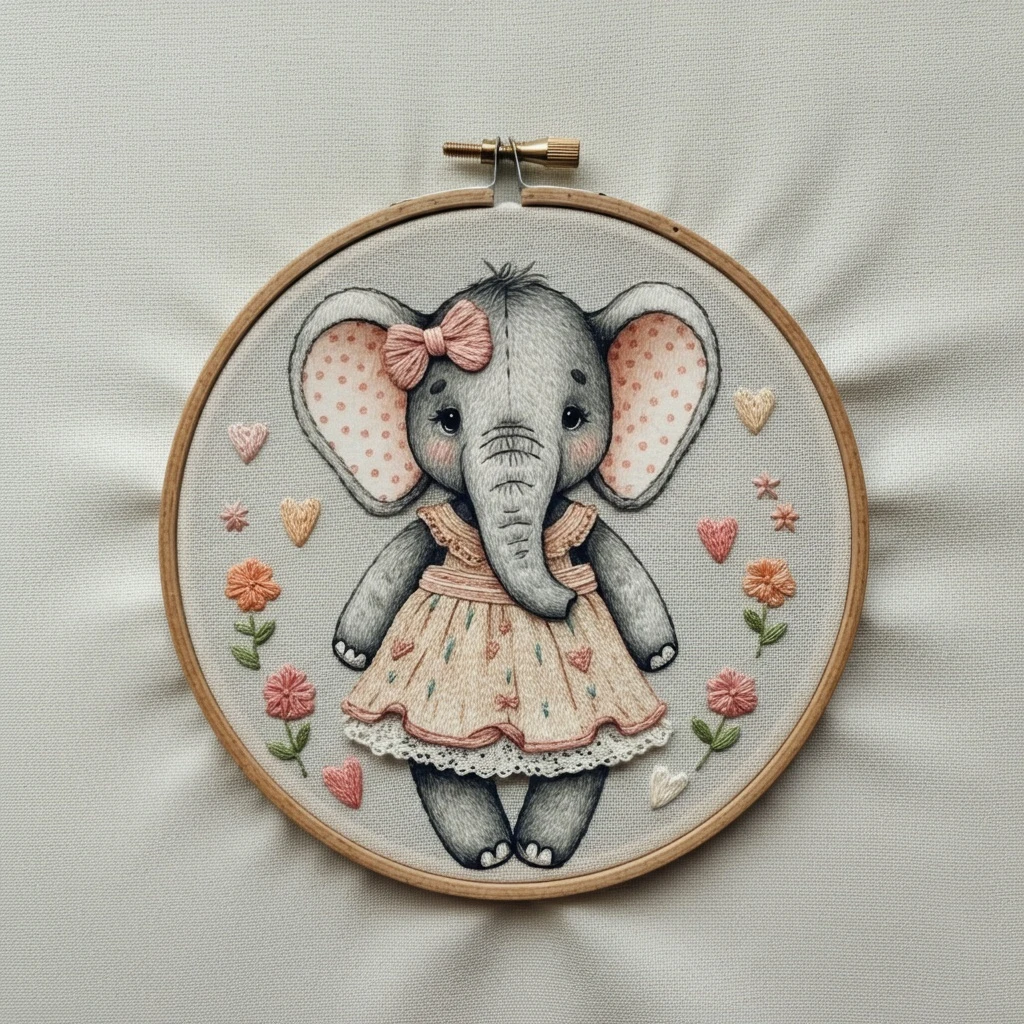
Adorable Elephant in a Dress
This embroidery planning page translates the reference design into a practical DMC palette and stitch roadmap. The artwork appears to revolve around a sweet elephant rendered in soft grays and warm taupes, paired with a gentle dress in muted rosy-beige or earthy blush tones. The overall look is tender, cozy, and beginner-friendly, with rounded forms and clean, readable details.
The best interpretation is a softly shaded elephant with delicate linework, a slightly warmer inner-ear area, and a dress that can be stitched with a dusty pink, peach-beige, or tan-rose harmony. The palette below keeps the elephant neutral and cuddly while allowing the dress and small details to feel charming and decorative.
1) Visual color analysis
The strongest colors visible in the reference are muted stone gray, warm greige, soft taupe, and a handful of rosy-beige to cinnamon accents. These make the elephant feel soft and approachable rather than strongly contrasted. A dark charcoal or deep taupe is useful for tiny definition points such as the eyes, outline accents, and inner creases.
Elephant body tones
Use layered warm grays rather than cool industrial grays. The body should feel plush and storybook-soft, with round shaping on the head, trunk, ears, and legs.
Dress & sweet accents
The dress can be interpreted with dusty beige-rose, muted apricot, or warm taupe-pink values. This keeps the outfit charming without overpowering the elephant itself.
Definition points
Small charcoal and rich brown details help anchor facial features, trim edges, and folds. Keep these accents narrow and selective so the final look stays gentle and beginner-friendly.
2) Suggested DMC color palette
These DMC choices are selected to reflect the visible tones and design mood of the sample. Use them as a practical embroidery conversion and adjust slightly if your printed pattern or fabric shifts warmer or cooler.
| Swatch | DMC | Color name | Suggested use in the design | Notes |
|---|---|---|---|---|
| B5200 | Snow White | Tiny eye highlights, gloss on the trunk, bright accents on trim | Use only as a pinpoint highlight. | |
| 3866 | Mocha Beige Ultra Very Light | Elephant highlights, raised forehead, cheek, and top of trunk | Useful as a gentle transition shade on cream fabric. | |
| 3790 | Beige Gray Ultra Dark | Main elephant body midtone | A warm stone-gray that keeps the animal soft. | |
| 317 | Pewter Gray | Secondary body shading on legs, ear bases, and trunk curve | Good bridge between light body fills and deeper shadow. | |
| 413 | Pewter Gray Dark | Deeper elephant contouring, folds, and under-body shadows | Use sparingly to keep the elephant rounded, not harsh. | |
| 844 | Beaver Gray Ultra Dark | Shadow pockets around the trunk base, under ears, inner leg overlaps | Excellent soft dark for neutral subjects. | |
| 3713 | Salmon Very Light | Soft blush accents, cheek warmth, or the lightest dress highlights | Add only lightly for a sweet finish. | |
| 761 | Salmon Light | Main dress highlight or pale decorative trim | Lovely if the outfit reads as dusty rose. | |
| 760 | Salmon | Main dress midtone, bows, or decorative clothing elements | Works beautifully in satin stitch or long-and-short stitch. | |
| 3722 | Shell Pink Medium | Dress folds and slightly deeper warm accents | A warm muted pink-beige, ideal for gentle shading. | |
| 3864 | Mocha Beige Light | Dress shadows if the outfit leans taupe; inner ear warmth | Also useful where dress and elephant meet. | |
| 3032 | Mocha Beige Medium | Stronger dress folds, hem details, and grounding warm accents | Good for linework on earthy-toned dress elements. | |
| 3031 | Mocha Beige Very Dark | Trim lines, crease accents, and small shadow seams | Use for definition without resorting to black. | |
| 3053 | Green Gray | Optional leaves, tiny accessories, or muted background details | Helpful if the design includes small botanical accents. | |
| 839 | Beaver Brown Dark | Soft outline for dress seams and selected shadow points | Excellent warm dark alternative to gray. | |
| 3799 | Pewter Gray Very Dark | Eyes, nostrils, and the deepest pinpoint contrast details | Use 1 strand for crisp but delicate definition. |
3) Stitching suggestions by design element
The design appears well suited to beginner-friendly stitches with a polished finish: split stitch for control, satin stitch for smooth small shapes, and long-and-short stitch where you want slightly more refined shading.
Elephant head, trunk & body
- Primary stitch: split stitch fill or long-and-short stitch using 1–2 strands.
- Direction: curve stitches around the forehead, cheeks, and trunk to emphasize softness and volume.
- Best palette: 3866, 3790, 317, 413, and tiny accents of 844.
- Tip: keep stitch lengths short in rounded areas to avoid a striped look.
Ears & inner ear warmth
- Primary stitch: long-and-short stitch or split stitch for gentle shading.
- Highlight blend: 3866 or 3790 into 3713 / 3864 if the inner ears appear slightly rosy or warm.
- Tip: shade darker near the ear base and soften outward toward the edge.
Dress, bow & decorative clothing details
- Primary stitch: satin stitch for small neat panels; long-and-short stitch for larger sections and folds.
- Linework: stem stitch or backstitch for hems, seams, and trim.
- Best palette: 3713, 761, 760, 3722, 3864, 3032.
- Tip: angle stitches to follow fabric folds for a more garment-like feel.
Eyes, tiny features & outline accents
- Primary stitch: backstitch, stem stitch, split stitch, and tiny satin stitches.
- Best palette: 3031, 839, and 3799, plus B5200 for highlight points.
- Tip: use 1 strand for the face so the expression remains sweet and not too heavy.
4) Thread counts, blending & outlining
Because this is a gentle character design, cleaner thread control matters more than heavy texture. Most areas will look best with 1 or 2 strands.
Recommended thread counts
- 1 strand: facial features, outline accents, seam lines, tiny highlights, fine trim.
- 2 strands: main body fills, ears, dress panels, and the bulk of decorative elements.
- 3 strands: only if you want a more rustic raised finish on a larger hoop or loose-weave fabric.
Best blending combinations
- Elephant highlight blend: 3866 + 3790.
- Elephant depth blend: 3790 + 317, then place 413 or 844 in the deepest recesses.
- Dress soft blend: 3713 + 761 for light rosy areas.
- Dress fold blend: 760 + 3722 or 3864 + 3032 depending on whether the dress reads pinker or taupier.
5) Shading guidance
Good shading will make the elephant look plush and rounded while keeping the dress sweet and tidy. Aim for gradual transitions and restrained contrast.
For the elephant
Place the lightest value on the forehead, top of trunk, outer cheeks, and upper belly. Deepen the underside of the trunk, the leg overlaps, and the base of the ears with 317 and 413. Use 844 only in tiny recessed areas to avoid a heavy look.
For the dress
Keep the center or upper-facing fold planes lighter with 3713, 761, or 760. Shade toward side seams, under the waist, beneath sleeves, or around pleats using 3722, 3864, or 3032. Small trim lines can be stitched after the fill is complete.
For facial softness
Use minimal shading around the eye and cheek area. A tiny blush tint with 3713 or a very sparse blend of 3713 + 3866 can add warmth without making the face look overworked.
6) Practical embroidery tips
These finishing tips will help the piece retain its cute, polished quality and will be especially helpful if the pattern is intended for beginners.
Transfer lightly
Character pieces often have pale fills and open areas. Use a light transfer line so no marks show through the elephant’s body or dress highlights.
Stitch the face early
Complete the eyes, trunk line, and expression details before surrounding fills are finished. This helps you keep the character balanced and symmetrical.
Build the body first
Complete the elephant before the dress trim or tiny accessories. This lets you assess how much contrast the clothing details need.
Use short directional stitches
Rounded cheeks, trunk curves, and small ears all benefit from shorter stitches. They create smoother gradients and better control than long fill stitches.
Keep outlines selective
Too much outline can age the design visually and make it feel stiff. Focus dark definition only where it clarifies shape or expression.
Finish with tiny highlights
Add B5200 or the palest highlight color last. A small eye glint or highlight on the dress trim can make the design feel lively and complete.