
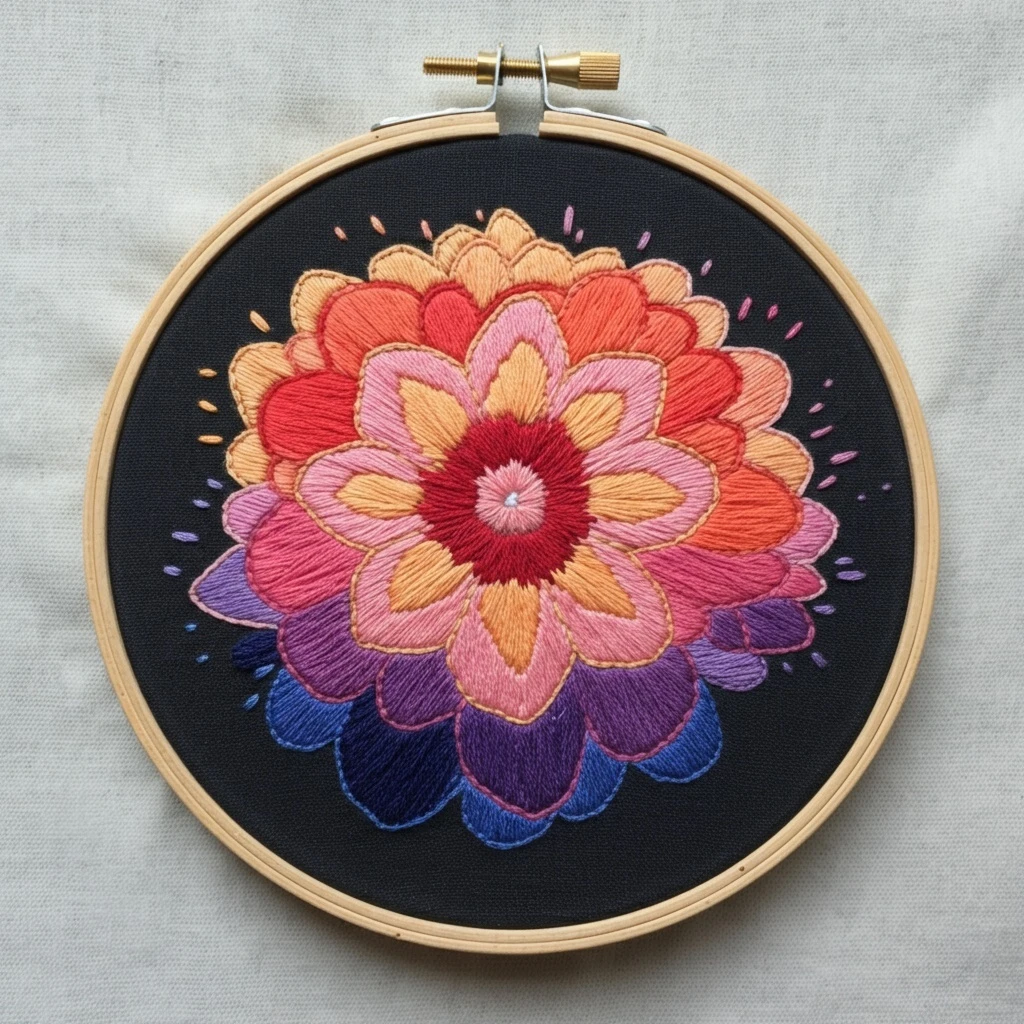
Beginner Friendly Wildflower Hoop Art
A fresh, approachable hoop design with airy wildflower stems, simple daisy-like petals, leafy sprigs, and small meadow accents. The palette below keeps the look bright and handmade while giving beginners clear choices for outlines, filled petals, greenery, and tiny texture stitches.
Design color reading
The artwork reads as a light garden sampler: pale fabric, delicate green stems, small white and yellow flower heads, blush floral accents, lavender or blue-toned blossoms, and warm brown detail lines. Keep the stitching light rather than densely filled so the hoop retains its beginner-friendly, airy meadow style.
Suggested DMC floss palette
Use these shades as a practical DMC match for the reference. The palette is intentionally compact so a beginner can stitch the full piece without juggling too many colors.
Petal highlights and light daisies; use 2 strands for clean, soft petals.
Flower centers, pollen dots, and sunny meadow accents.
Warm centers, seed heads, and subtle dry-grass texture.
Fine outlines, little branch details, and grounding stitches.
Pale leaf tips and fresh spring sprigs; blend with darker green for dimension.
Primary stems and leaves; reliable all-purpose greenery shade.
Darker side of leaves and lower stems for gentle shadow.
Soft pink blossoms and small petal clusters.
Deeper petal bases and accent flowers; use sparingly for contrast.
Lavender wildflower heads, tiny buds, or alternating petals.
Cool blue petals and airy decorative dots around the bouquet.
Only for the tiniest dark accents; one strand keeps it delicate.
Stitch map
Thread-count guidance
- 1 strand: tiny outlines, decorative dots, delicate veins, and small seed details.
- 2 strands: standard stems, most petal stitches, leaves, and clean beginner-friendly outlines.
- 3 strands: larger flower centers, bold accent petals, or areas where the printed line feels visually weak.
- 6 strands: avoid for most of this pattern; it can overpower the fine wildflower look.
Blending, shading & texture ideas
Soft leaf shading
Use DMC 469 for the main leaf body, then add one or two stitches of DMC 470 near the base. Touch the tips with DMC 472 for a fresh highlight.
Petal variation
Alternate DMC 151 and 3733 within pink flowers so some petals feel forward and others recede. For pale daisies, keep DMC 746 dominant and add only a few colored accents.
Meadow texture
Scatter single straight stitches and tiny French knots in yellow, blue, and lavender around the stems. Keep them irregular for a natural wildflower effect.
Beginner-friendly order of stitching
- Stitch the longest green stems first so the structure is clear.
- Add leaves next, alternating light and medium greens.
- Work the largest flowers, keeping petal direction consistent around each center.
- Add small buds, French knots, and decorative dots last.
- Finish with one-strand outlines only where definition is needed.
Practical hoop tips
- Keep fabric drum-tight but not stretched out of shape.
- Use a size 7-9 embroidery needle for 1-2 strand work.
- Turn the hoop as you stitch curved stems; do not force your wrist angle.
- End threads under nearby stitches on the back rather than tying bulky knots.
- Press finished work face down on a towel to protect raised French knots.
Finishing notes
This design works best with a relaxed, open finish. Leave a little breathing room between motifs, keep outlines fine, and let small raised knots provide sparkle. For a softer heirloom look, substitute white petals with DMC 3865 Winter White and reduce dark outlining to brown only.