
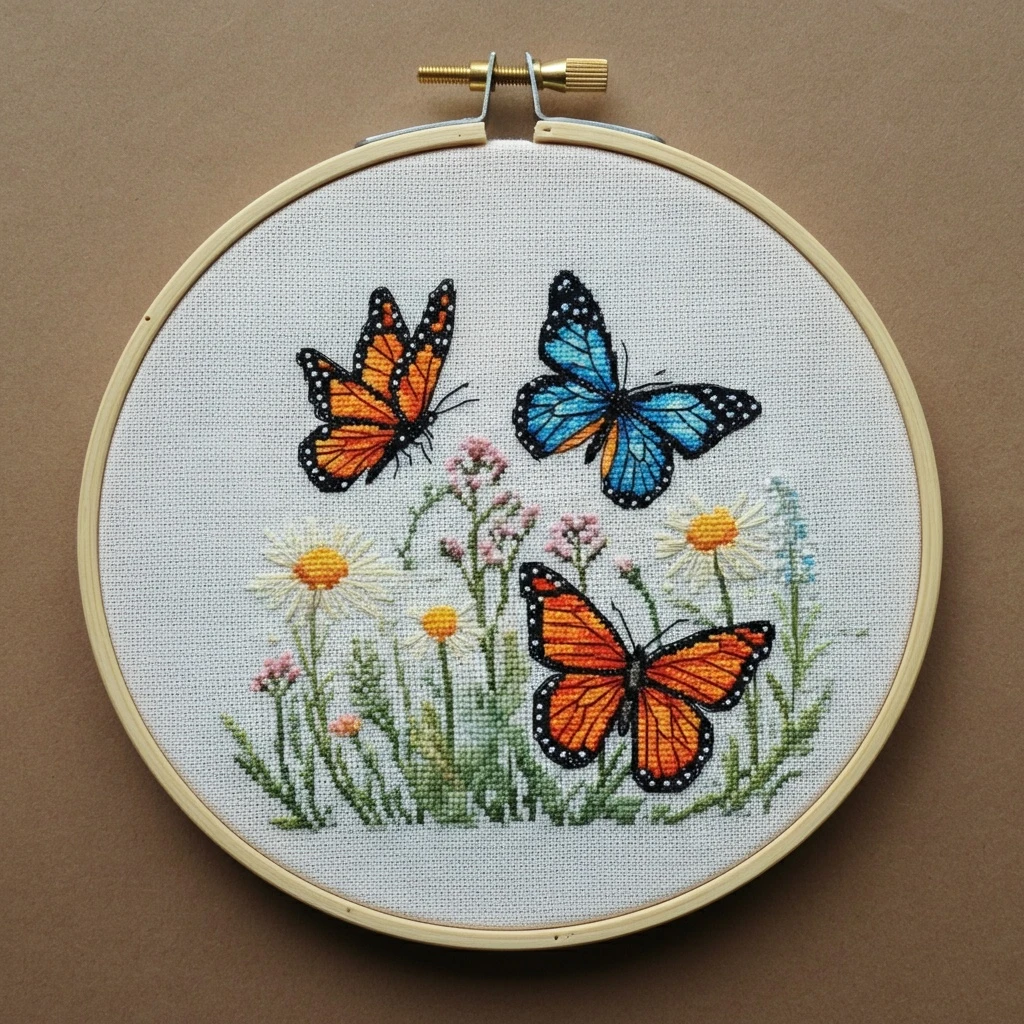
Butterfly Meadow
This meadow design brings together airy butterflies, wildflower clusters, soft foliage, and a bright, garden-fresh color story. The strongest stitched version keeps the butterflies light and graceful, balances flower color across the hoop, and uses fresh greens to create motion without crowding the composition.
Polished DMC Color Palette
The palette below suits a fresh butterfly-and-wildflower composition: layered meadow greens, warm peachy-coral butterfly accents, sky and lavender wing details, golden centers, and soft floral highlights. Keep the greens varied and use the brighter colors strategically so the butterflies remain the visual stars.
Stitch Map by Design Element
Thread Count & Blending Guide
Fine details
Use 1 strand for butterfly outlines, antennae, wing edges, thin stems, tiny flower centers, and small corrective stitches. One strand gives the design a refined illustrated finish.
Main fills
Use 2 strands for wing fills, flower petals, leaves, and most stem work. Two strands provide bright color coverage while still allowing smooth blending.
Raised texture
Use 2–3 strands for French knots and heavily textured flower centers. Three strands works well on focal flowers; two strands stays neater on smaller meadow blooms.
Shading, Outlining & Texture Suggestions
Butterfly realism
- Shade wings darkest near the body and lighter at the outer tips.
- Use stitch direction that radiates outward from the body for a natural wing structure.
- Keep antennae very fine so the butterflies stay graceful.
- Add just a touch of 3865 highlight on upper wings if the design needs sparkle.
Balanced meadow color
- Repeat each flower color at least three times around the meadow so the palette feels unified.
- Use blue and lavender sparingly as cool accents among the warmer coral flowers.
- Keep the brightest yellow mostly in flower centers rather than large petals.
- Leave small gaps of fabric visible to maintain an airy field effect.
Leaf and grass texture
- Mix fishbone leaves with straight-stitch grasses for a more natural meadow surface.
- Use darker greens low in the composition and lighter greens near tips and edges.
- Angle stems in slightly different directions to avoid a stiff, upright look.
- Use seed stitch between larger elements to soften empty spaces without clutter.
Outlining approach
- Outline only selected petals and wing sections so the design stays soft.
- Use darker shades from the same color family instead of stark black.
- Split stitch works well for curves; back stitch is best for short straight details.
- Finish outlines last so they sit neatly above the filled areas.
Beginner-Friendly Stitching Order
- Transfer lightly: mark butterfly bodies and wing shapes first, then main flower centers, larger leaf groups, and the core meadow stems. Avoid heavily marking tiny filler details.
- Stitch main stems and foliage: establish the meadow structure in 3051 and 3052 before adding petals and butterflies.
- Add larger flowers: work the most visible blossoms first, placing centers after petals are complete.
- Stitch butterflies: fill wing sections from darker inner areas to lighter outer edges, then add bodies and antennae.
- Add small filler flowers and grasses: use lazy daisy petals, seed stitch, and short straight stitches to soften gaps.
- Finish with accents: add flower centers, final outlines, pale highlights, and tiny meadow details last.
Practical Tips for a Clean Finish
Fabric & hoop
Warm cream cotton, linen, or cotton-linen suits this palette beautifully and helps both pale and bright colors read clearly. Keep the fabric drum-tight so wing fills and flower petals remain smooth.
Needle choice
A sharp embroidery needle in size 7–9 is ideal for one- and two-strand work. If you plan many French knots, keep one slightly larger needle nearby for smoother wraps.
Color placement tip
Before stitching, mentally divide the hoop into sections and repeat each accent color across those areas. This helps the meadow feel intentionally balanced instead of bunching all the strongest color in one spot.
Keeping butterflies light
Avoid overfilling wing sections with dark outlines or dense shading. The wings should feel airy and mobile, so let color transitions and stitch direction do most of the modeling.